Behind the Image is an ongoing MODELS.com series taking a more personal look at both established and emerging creative talent.
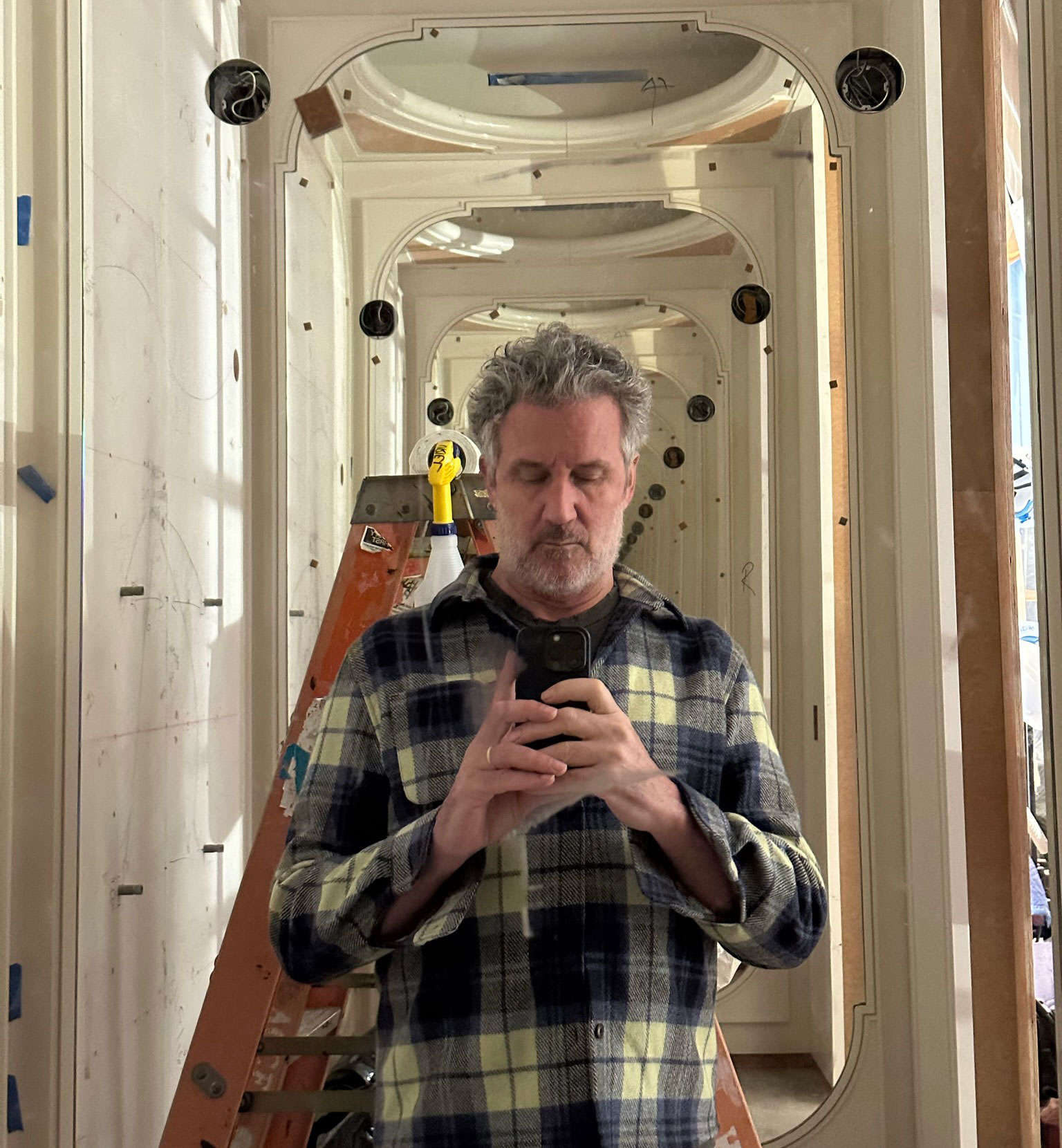
Gideon Ponte | Image courtesy of Magnet
Gideon Ponte, Set Designer
Hometown: London, England
Representation: Magnet
How would you describe your work? What’s your trademark?
1. Import and export – fracture, craft, theft.
2. Discarded images, orphaned images
3. We have GPS, but we can no longer get lost.
4. Bad art, ad hocism.
5. Interesting or wrong.
6. High and low art. Taste, no taste.
I’ve always liked the Jane Bowles quote, “Nothing original about me except a little original sin.”
I read that you began your career as a researcher in production design. What initially drew you to set design, and was there a defining moment when you realized you wanted to pursue it professionally?
I went to art school in London in the 1980s, which felt like a real moment of cultural rupture. I moved to New York in 1987 to try my luck, and it was an extraordinary time when the art world, fashion, film, and music were all bouncing off each other. I started out working for galleries, but I gradually realized I was missing the act of making things. I can be quite cerebral, but I am also drawn to the process of discovery that comes through building and experimenting. My break came when Mary Harron made I Shot Andy Warhol. I initially worked as an art department researcher, and that eventually led to recreating all the artwork for the film. That was the moment when it really clicked that this could become a profession.
You designed American Psycho, a film that remains endlessly referenced for its aesthetic. Could you walk us through your collaboration with Mary Harron on that movie? What conversations shaped the visual language of Patrick Bateman’s world?
Mary (Harron) and I were friends long before we worked together. She’s incredibly smart and very clear about what she wants, and my job is to take ideas that might exist as just a line in the script and turn them into an architectural space. With American Psycho, a lot of our conversations were about absence. Bateman is essentially a void. His world is all projection, surface, and image, with no real trace of personality underneath. The spaces needed to reflect that blankness. To be honest, it was a massive leap of faith for me, and I’ll always be grateful to Mary for giving me the opportunity. The process was really about research, looking very broadly at everything from bad commercial imagery and snapshots to strong documentary sources. Somewhere between those references, we found the film’s visual language and point of view.
Much of your work involves building environments that frame and elevate a narrative. When you approach a shoot or project, where does your inspiration typically begin?
I’m usually working from a brief, and my first response is often to come back with references. Part of the process is building consensus, making the invisible visible, and building imaginary worlds, the beautiful, the ordinary, and the stupid. At the same time, I have to collaborate closely with other filmmakers and creatives so that the set is not only visually interesting but also functional and practical to shoot. One way I do that is by drawing and producing 3D imagery of the set, thinking through how the space will actually work. This kind of previsualization is relatively new. It can, at times, take a little of the performative, live nature out of the process, but the scale of the fashion industry has grown enormously since many of us started. Now it’s normal to run multiple sets consecutively and produce far more material, campaigns, social content, behind-the-scenes, and still life, all within the same project.
You’ve collaborated with different brands like Saint Laurent, Gucci, and Valentino through the years. What’s your collaborative process like?
The process has changed a bit over time. When I started, I very much worked for the photographer, and in my mind, I still do. They are usually my first call when I hit a wall or am trying to solve something. More recently, designers like myself are often brought into conversations earlier, sometimes directly with the creative directors at the brands, which is great and very inspiring. It makes the collaboration broader from the beginning. In the end, we are relied on to create. Our skill set is taking inspiration and running with it, turning ideas into something physical. And it is always a collective effort. I work with collaborators all over the world, including my art department producer, Jenn Lee; construction teams; set decorators; lead men; greensmen; set dressers; and FX teams. And importantly, my agent at Magnet, who truly built my career.
You’ve spoken about the evolution of craft on Instagram from hand-drawing sets to working with CAD and Vectorworks. How has technology changed your process, and do you feel anything has been lost or gained in that shift?
We’re at an inflection point, and I’m not sure any of us fully know what comes next. Moving from hand drawing sets to CAD and Vectorworks has made the process faster, more explicit, and easier to communicate. But something has been lost, too. When you drew everything by hand, there was room for the ideas to breathe, grow, and evolve. It’s ironic because the ideas that shaped the 1990s, cyberpunk, William Gibson and the notion of simulacra, imagined a world where reality would be mediated through images. That’s essentially the world we live in now. As image makers, we’re reflecting that culture, but sometimes I wonder if we’re also circling back to an older mindset, the 1980s “greed is good” era, and Patrick Bateman for president.
Who’s one to watch?
As for who of the younger generation I’m looking at, there’s a whole new generation coming up, and it’s great. It’s their turn. I’m so lucky to have come across so many wildly talented people along the way, who brought so much to the sets and then went on to have their own amazing careers. I think this time is an inflection point, and I’m very interested in how artists start to reflect it. The whole world feels like it’s under a psychological experiment. Engineers may have built these new modern systems, but artists are needed to make sense of them. There is a real difference.
Selected Work
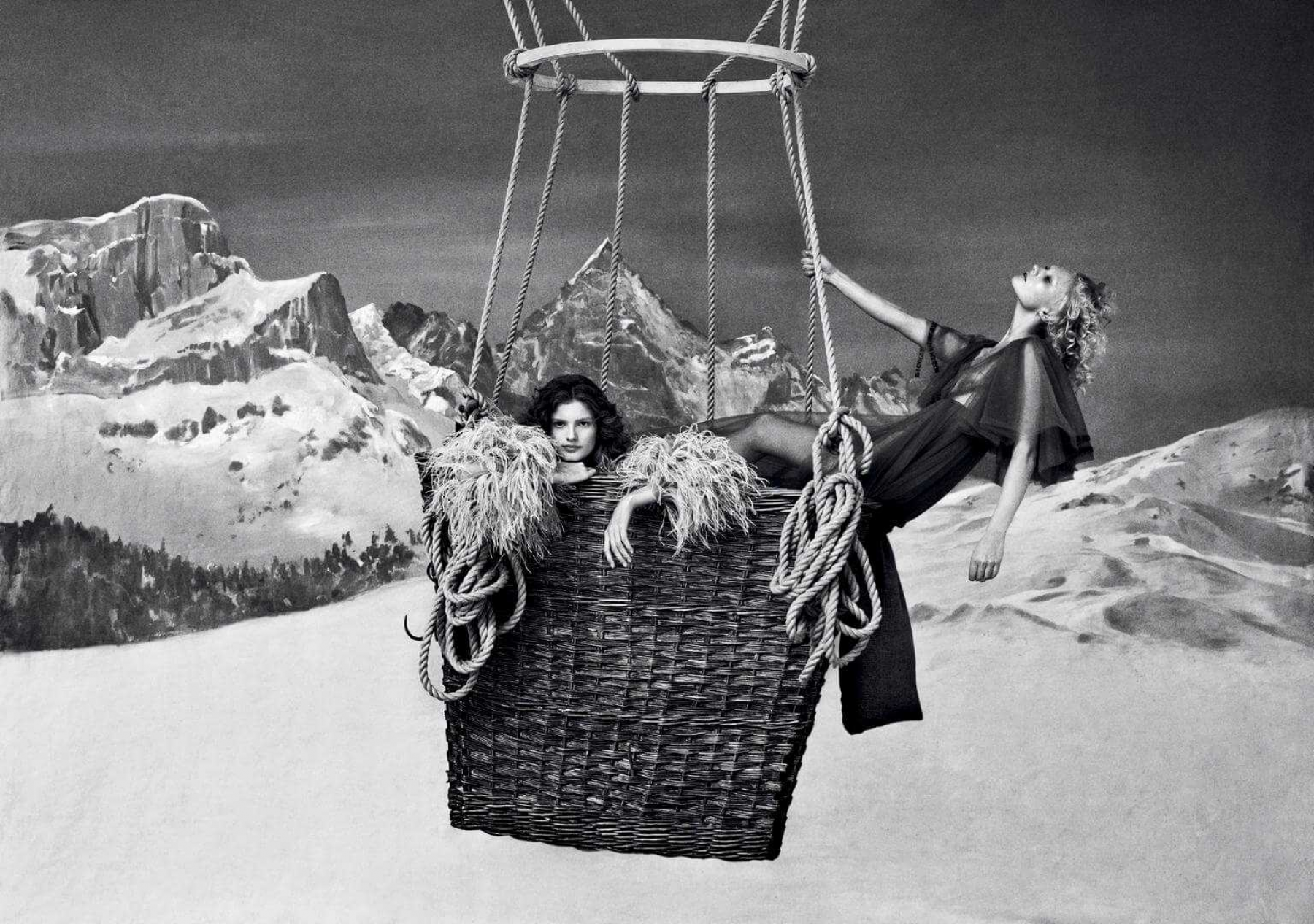
Vilma Sjöberg by Glen Luchford | Image courtesy of Magnet
Bold for Self Service
A photograph is a flat 2D space that you can play with to fool the eye. The trick is visible, and that is what makes it charming. The background is a painted backdrop. We built the balloon basket out of rope, an old laundry basket, and a hoop. We had a box underneath to support the weight, which was removed in post. It is fun to create these playful images that sit between imagination and the real.

By Glen Luchford | Image courtesy of Magnet
Gucci Pre-Fall 2018 Campaign
Working with Glen Luchford and Gucci, we rode a wave. Each season, the campaigns grew bigger and more extravagant. It was a great ride.
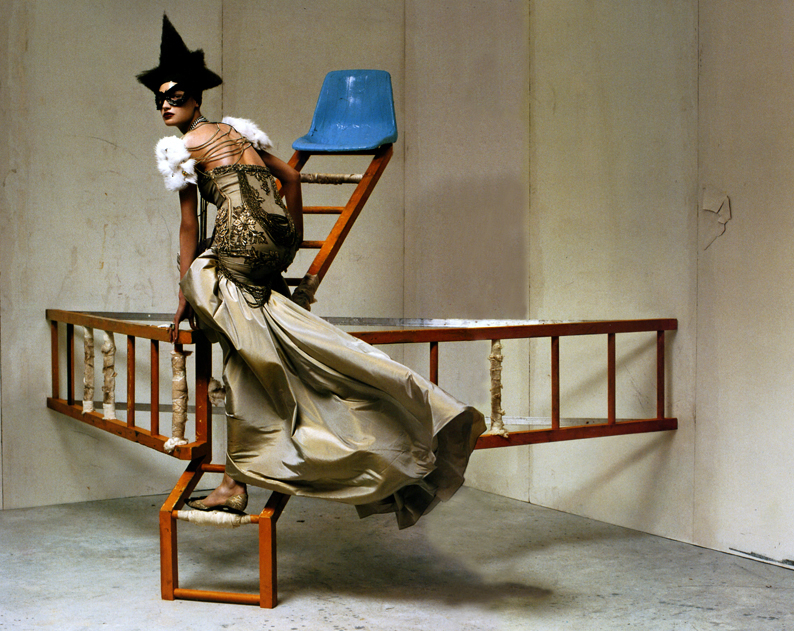
Eugenia Volodina by Steven Meisel | Image courtesy of Magnet
Exclusivity Couture for Vogue Italia
Photographed after 9/11, I was, in my own way, trying to express what I had seen. I was living in NYC on that day, and one of the planes flew overhead; it sounded terrible. I built a few structures and had no idea what to do with them until I got the studio and assembled a kind of assault course.
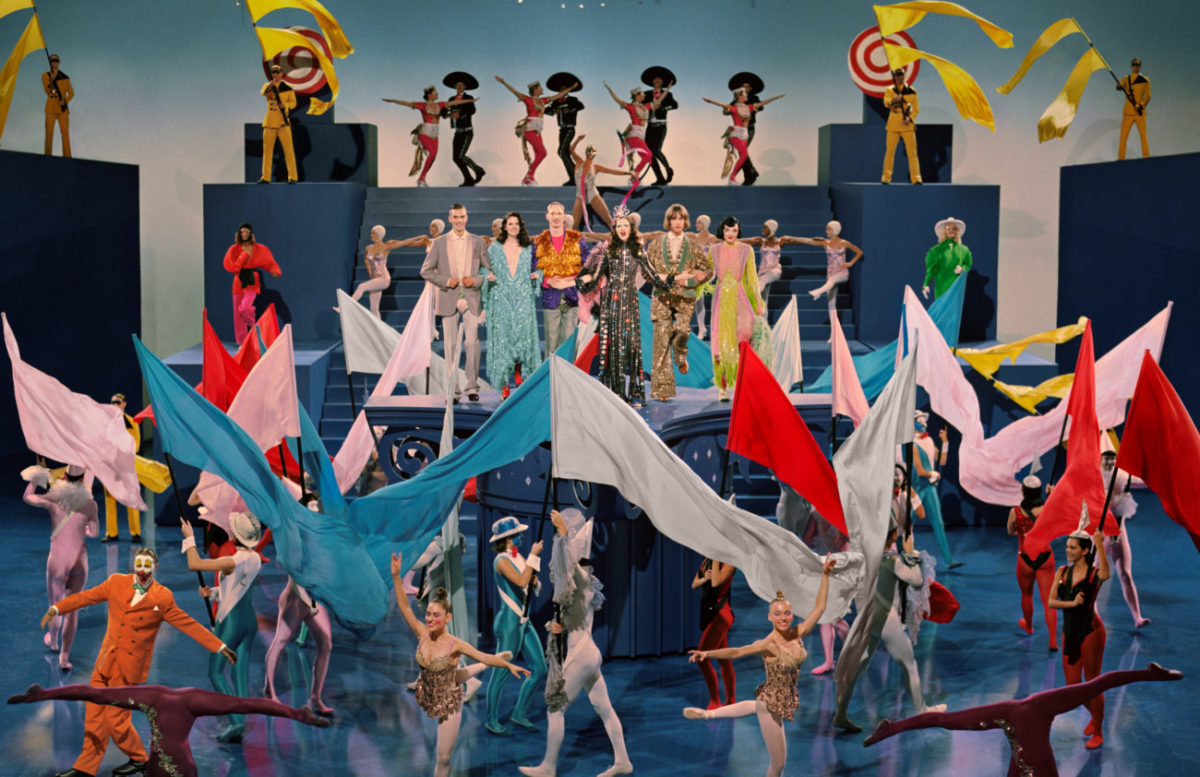
By Glen Luchford | Image courtesy of Magnet
Gucci S/S 19
Gucci showtime peak extravaganza, a fever dream, it was a love letter to a kind of filmmaking that is almost extinct, not sure I know how to unpack it.
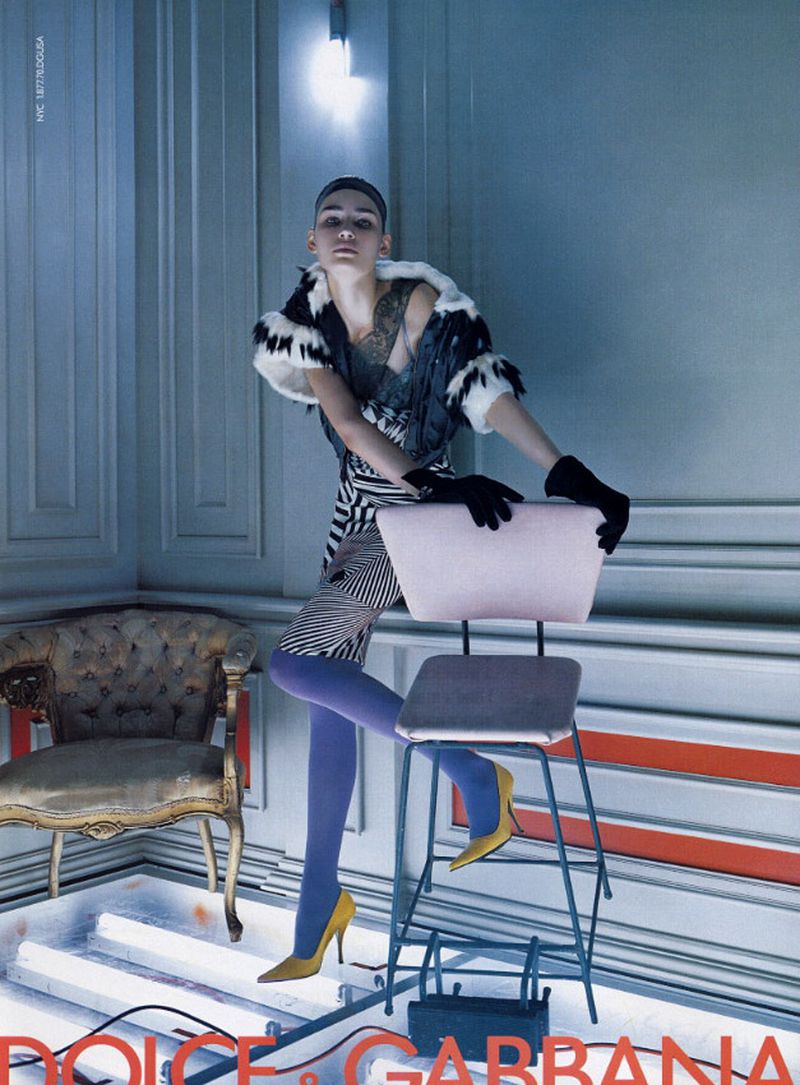
Eugenia Volodina by Steven Meisel | Image courtesy of Magnet
Dolce & Gabbana F/W 2003
The set is inspired by Kubrick’s 2001: A Space Odyssey; rather than using milk glass on the floor, I used transparent glass so the viewer could see all the cables, construction materials, and the fluorescent tubes. This made it more utilitarian and stripped back, which I really like.
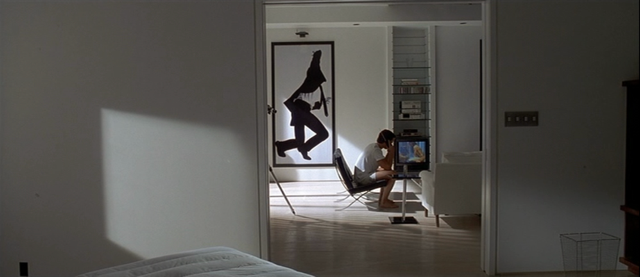
Christian Bale by Mary Hannon | Image courtesy of Magnet
American Psycho
I finished work on Buffalo 66 and went into American Psycho, very grateful for both projects, both very different.


