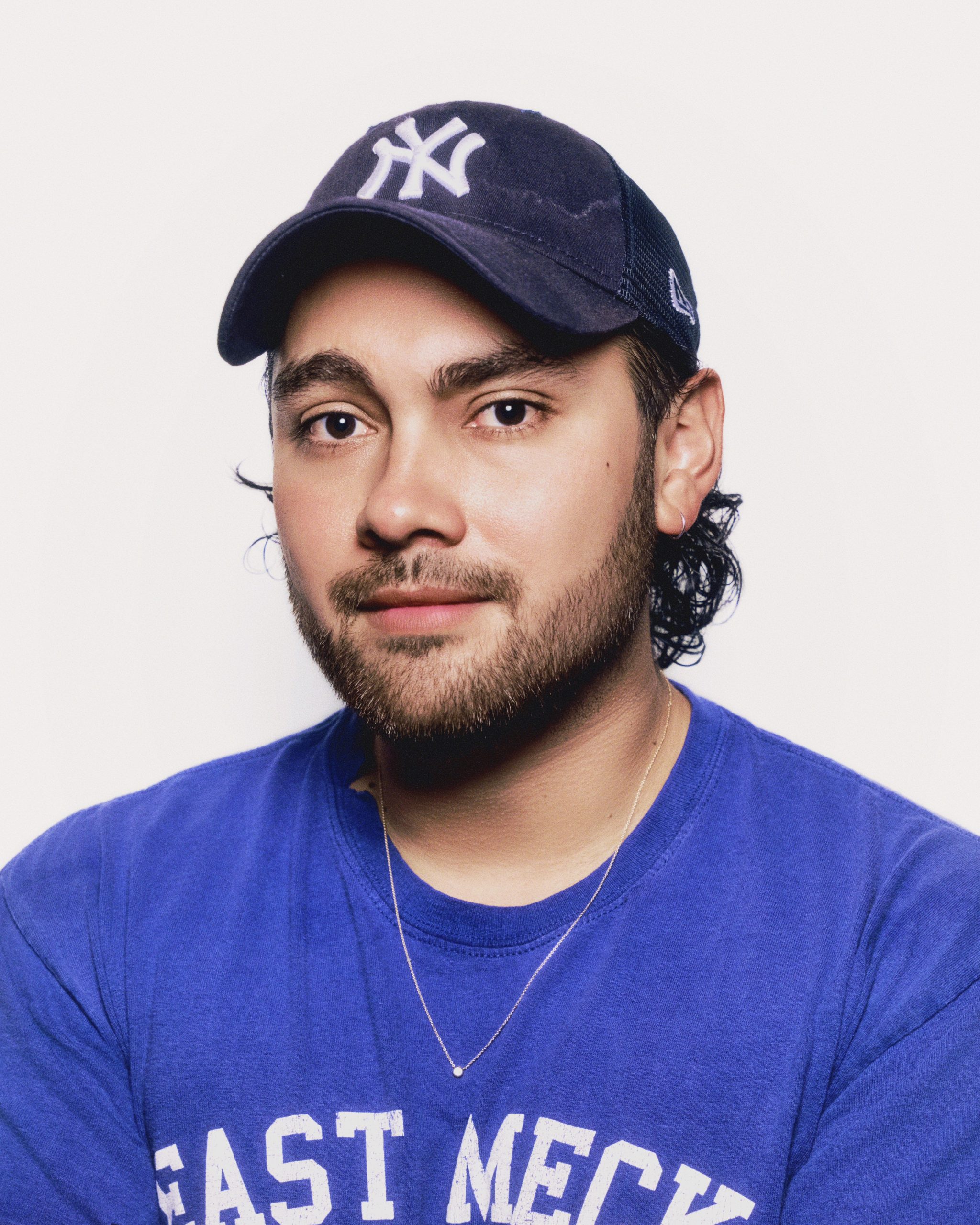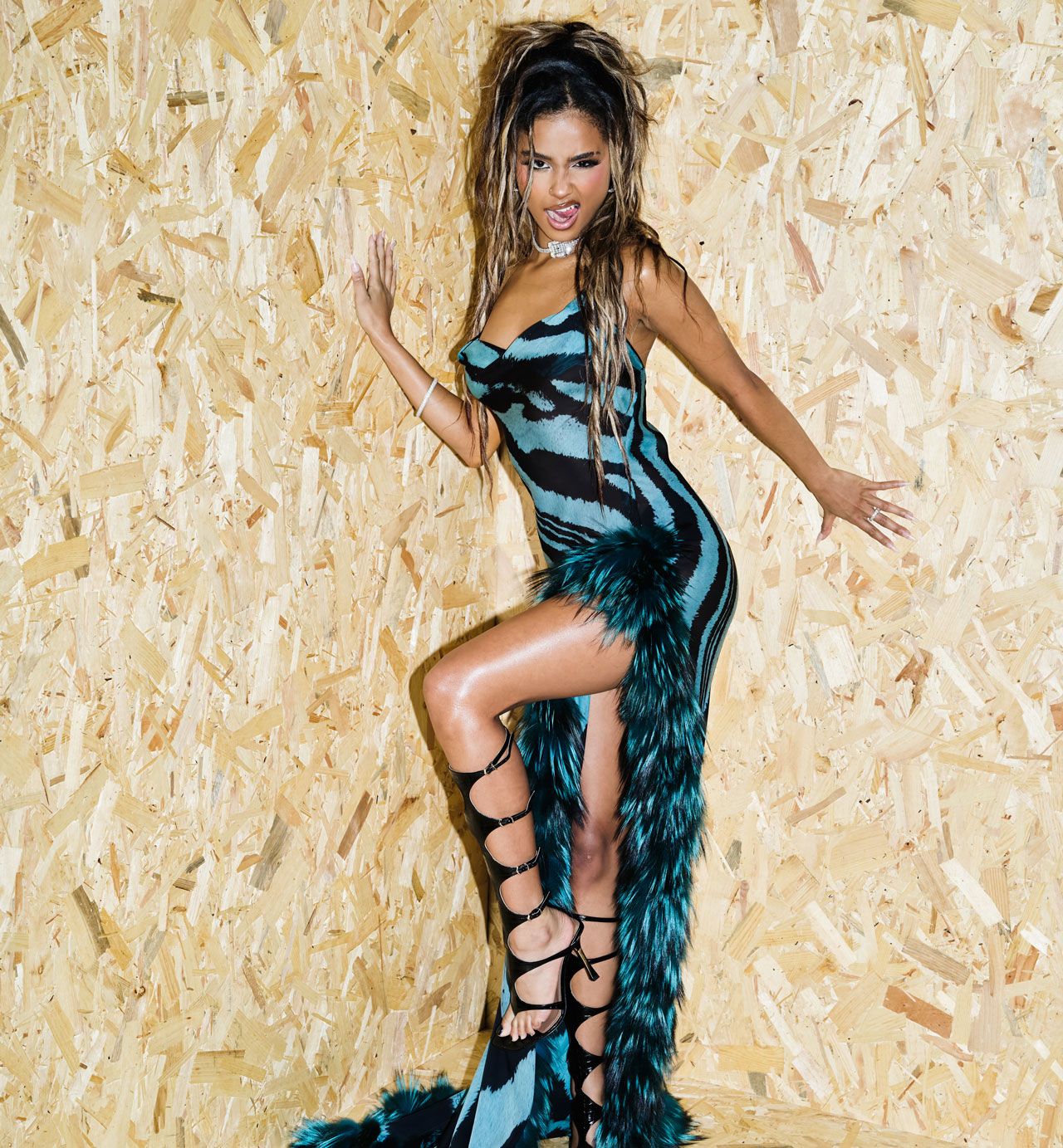
There is a gut feeling behind stylist Ronnie Hart’s work, an understanding of how an image can shift perception in an instant. It traces back to the kind of pop culture he grew up on, watching music videos with his sisters in Los Angeles, where transformation felt immediate and limitless. That early fascination still runs through his styling today, where a look is never just about the clothes, but about the world it creates. Long before shaping the visual identities of some of music’s most closely watched artists, Hart was developing that instinct through experience. Encouraged by his parents to pursue the arts, he took painting classes outside of school before eventually moving to New York to attend Parsons School of Design. With little understanding of how to enter the industry, he secured his first internship through Craigslist, a move that led him into the editorial world at V Magazine and later to CR Fashion Book under Carine Roitfeld. It was there that he refined his understanding of image-making, learning how to balance precision with ease. “One of the most important things she taught me is that everyone should feel like they are wearing a T-shirt, even when they are in something complicated or uncomfortable. People are at their best when they feel at ease.” That foundation became essential when the pandemic forced a shift. Returning to Los Angeles and working independently, Hart’s first client, Anitta, marked the beginning of that transition, followed by his work with Sabrina Carpenter, including the visual world around her “Espresso” music video. Now, in close collaboration with Tyla, Hart is shaping a styling language that feels both deliberate and intuitive, grounded less in trend and more in identity. “Now, when we approach a look, it is less about what is the newest or most exclusive piece, and more about what defines the moment. We think in terms of identity and world-building. If you hear a song, what is the image that comes to mind? What is the visual language we are building over time?” Models.com spoke with Hart about his journey into fashion, the references that shape his work, and the emerging designers on his radar.
Where are you originally from, and what were your early memories of fashion growing up?
I was born in Hollywood, and my whole family is based in LA. I grew up about an hour north, but I have always been around the LA area. My parents are immigrants; my mom is from Mexico, and my dad is from Guatemala. They were very open to my sisters and me being exposed to Western culture. Not in a way that ignored our roots, but more of embracing it, like letting us watch different movies; they were always taking us to the movies. The first movie I ever saw was Jurassic Park. My sisters also had a big influence on me. There is a five and ten year age gap, so my oldest sister was in high school while I was still in elementary school. She would watch TRL every day after school, with all the music videos playing, and I was completely enamored by the transformation of it all. One of my strongest memories of that is seeing the power of transformation through visuals and wardrobe in “Oops!… I Did It Again” by Britney Spears. It was such a shift from “…Baby One More Time.” I remember thinking, that’s Britney Spears? I was so confused at the time. My sister told me, yes, it is just her hair and what she is wearing. That really blew my mind. Growing up around LA and having older sisters so immersed in pop culture, our house was always filled with music. I was constantly curious. Who is this person? What do they do? The Spice Girls were my first concert. I was always in the mix when it came to pop culture.
You studied at Parsons and landed an early internship through Craigslist before later working at CR Fashion Book. When did you realize styling was what you wanted to pursue?
I was always interested in the arts, but I did not really know what I wanted to do. My parents were very supportive and encouraged me to take art classes outside of school, drawing, painting, things like that. I never thought much of it at the time; it just felt normal. When it came time for college, I was not ready to leave California yet, so I went to the San Francisco Art Institute for a semester. I hated it. I wanted to be in a city, but I really wanted to be in New York. I was looking for a complete shift, and San Francisco was different, but not in the way I needed. It still felt familiar. I moved back home for a bit, then decided to go to Parsons to study communication design. In retrospect, it was helpful, but at the time, I was just choosing something to get out of town. I had only been to New York once for a few days and knew nothing, but I had built a community on Tumblr with people who lived there. That was a huge draw, getting to meet people I had connected with online who shared similar interests.
Once I got to New York, I was overwhelmed in the best way, trying to figure out what to do. I knew I wanted to be in fashion, but I did not know how to get my foot in the door. I had just been immersed in it from spending so much time online. I started looking for internships on Craigslist, anything related to fashion. I found a stylist, Gus Romero, who became my first internship and my first real boss in fashion. He knew I did not have experience, but he trusted me to assist and learn. I learned how to steam, manage samples, and understand how things worked. It was very eye-opening and made me want more. While at Parsons, I interned at V Magazine, which was a great experience. I still have friends from that time. That led to an internship at CR Fashion Book, which had been my goal. I was a huge fan of Carine Roitfeld and was really drawn to her work and perspective. I was also obsessed with that era of Givenchy under Riccardo Tisci. I grew up watching The September Issue and thinking it was incredible, but I never fully saw myself in that world. I was more drawn to places like V and CR. At CR, I really got hands-on and immersed in everything. After six months, they asked if I wanted to become a fitting assistant, which was a full-time role. I did not hesitate, I took it and left Parsons. That is how it all started; it just shows that you never know what can happen until you put yourself out there and try.
What skills did you take from your time at V Magazine & CR Fashion Book that continue to inform your work as a stylist?
I learned everything there. I learned everything from working at V and CR. A lot of styling is instinctual, but it is also about common sense and being hyper-organized. That is what makes you a valuable asset in any magazine or styling environment. It is about supporting the person in charge and showing that you understand their rhythm and can move with them. At CR, I learned the fundamentals, shooting credits, working with advertisers, and handling shipping and logistics. All of the less glamorous parts that are essential. But Carine (Roitfeld) really taught me how to get the best out of a subject, how to push someone outside of their comfort zone in a way that still makes them feel understood, while presenting them in a new and exciting light.
One of the most important things she taught me is that everyone should feel like they are wearing a T-shirt, even when they are in something complicated or uncomfortable. People are at their best when they feel at ease. Fashion can be physically uncomfortable, but the goal is to make someone feel confident and natural, even when faced with something unfamiliar. That is what makes an editorial work. What I took most from her was how she interacts with people. She does not force anything. She suggests and nudges in ways that make someone feel supported. It is about creating trust and guiding them, letting them know they can do it and that it will look great. I was at CR for five years, and I often ended up working on the celebrity editorials. I had a natural ability to work with talent. I had the patience and the awareness to navigate any concerns they had and help them feel more at ease. It became second nature to talk to people I might not have initially felt comfortable approaching, and to guide the conversation in a way that made the process collaborative. That was something I did not expect, but it turned out to be one of my strengths.
How did you navigate the shift from CR to building your career as an independent stylist?
After my time at CR, I began to understand how to push things in a constructive way and build an image. That really set the foundation for where I am now. Then COVID happened, and the office shut down. They were just like, we love you, good luck. I had been in a structured environment for five years and had left school for it, so I was thinking, what am I going to do? I was worried no one would want to work with me or that I would not have the same level of opportunities. It became a period of figuring things out, taking on odd jobs and commercial work that was not always aligned with what I wanted. I spent a lot of time in LA, working as a local. I was pushed out of the nest in a way that was scary, but necessary. Then I got a call from Anitta’s team. They were looking for someone to help reinvent her and make her more fashion-forward as she entered the US market. That became my introduction to working with celebrity clients, and I worked with her for two years. Coming from a magazine background, it was overwhelming at first. With editorial, you can have weeks to prepare. With celebrity work, everything moves quickly. Something comes up, and you have a day to figure it out. It was a huge learning curve, but my past experiences helped me manage it.
From there, I started working with Sabrina Carpenter, which surprised me. Anitta has such a bold and unapologetic image, so I wasn’t sure what Sabrina would want from me at that time. But when we met, I really connected with her. She was intentional and wanted to define a clear visual identity, and I could tell she wanted to carve out a lane for herself that was not tied to how people had previously perceived her. She gave me a lot of creative freedom, and it became about building a world together, thinking about silhouettes, colors, and how everything aligned with her music. It was much more considered, and it worked. I am really proud to have been part of that. That experience also reinforced something I learned from Carine Roitfeld, which is not to approach things with envy or negativity. If something ends with a client, you keep moving. There is always more work and more people to collaborate with. It is about being part of something meaningful.
Then I connected with Tyla’s team. She had always been a dream for me. A friend of mine showed me one of her early music videos, “Thinking About You,” and told me I would work with her one day. I remember thinking she was incredible. Eventually, her team reached out. The first project we worked on together was the artwork for her deluxe album. I approached it instinctively, focusing on what felt right for her world. Her and her team responded well to it, and we have been working together for about a year and a half, it’s created this very potent bond between us. It’s really getting into a swing where I feel confident about everything.
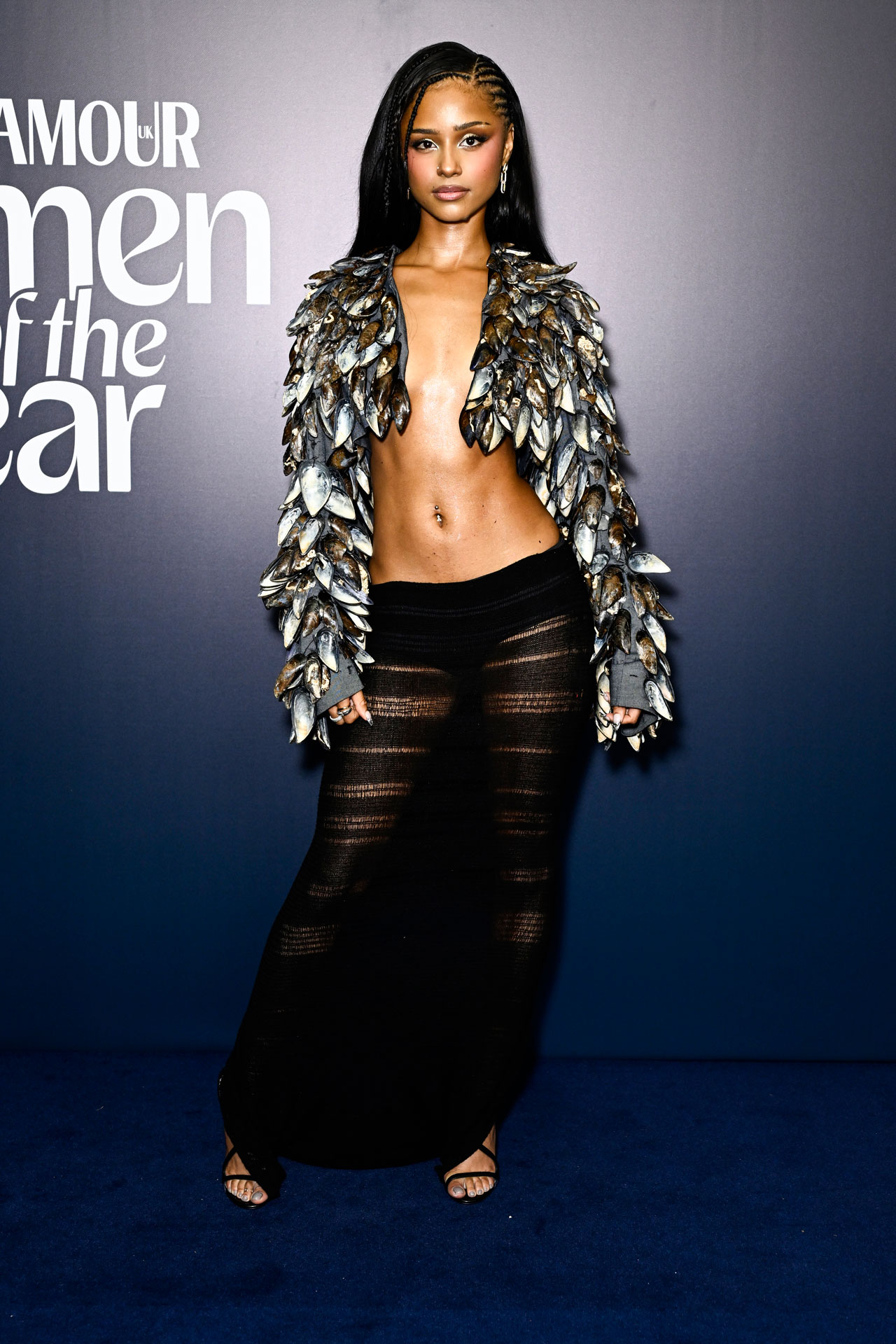
Tyla | Photo by Gareth Cattermole/Getty Images for Glamour
When you collaborate with Tyla, how do you go about brainstorming together? What inspires you when you’re thinking of a look for her?
At the beginning, we did not really have a shared language. I come from a fashion background where I know the references, the history, and why a look matters in a specific context. She comes from a place of instinct, what feels right, what feels exciting, what represents her. There was a bit of a disconnect at first. It is not my role to dictate what she should wear. It has to be something she arrives at on her own, with my support. There was a lot of learning about understanding each other and giving space to try things the other person might not immediately agree with. Over time, that built trust. We would try something, even if it was unexpected, and then come back to it and realize it worked. That process helped us find a rhythm. Now, when we approach a look, it is less about what is the newest or most exclusive piece, and more about what defines the moment. We think in terms of identity and world-building. If you hear a song, what is the image that comes to mind? What is the visual language we are building over time? It is a much bigger picture approach, and often something we will not fully see the results of until much later. Her personal style sits somewhere between polished and unpredictable. I always describe it as chaotic minimalism. It is clean, but there are unexpected colors, textures, or combinations that should not work but do because it feels authentic to her. For me, it was about leaning into that sense of unpredictability, and for her, it was about trusting my more structured, editorial eye. That balance is what brought us to where we are now. It has been a really rewarding process to build something together at this stage in her career. She had already established herself before I came in, but shaping a visual identity with someone who is still evolving has been a rare and exciting opportunity.
With Tyla, your work spans from pulling from heritage fashion houses and emerging designers, from Tom Ford’s Gucci era and Roberto Cavalli to Trochopoulos and Lovett. How do you and Tyla collaborate to create something that still feels distinctly her own?
For her, labels do not matter at all. She understands when something is coveted, cool, or historically significant, but she is not thinking about what wearing a specific garment culturally or intellectually represents. It has to speak to her immediately when she puts it on. She is very instinctual in that way, so I have to start from that place. Whatever it is, she has to feel it right away. But at the same time, I do want there to be depth, some legacy or intellectual value behind what she is wearing. Because of that, my edits tend to be much wider than with other clients. I am always looking for the piece that makes everything click. I always say it has to sing. She has that ability to bring something to life, so it becomes about finding the right piece, even if it is something obscure or unexpected, something that surprises even me when she wears it.
What does your process look like when preparing for major moments like red carpets or tours, and how do you also collaborate with the glam teams?
It’s a really fun collaborative conversation each time, like we are making an editorial.We’re thinking about the image and, the color of her lips and what that could relate to the song that she’s dropping a month from now or whatever. I try to have the foresight to see something and think, I do not know what this is for yet, but I know it will be right for something down the line. For example, there was this vintage Gianfranco Ferre bodysuit we found months before we shot a music video. I knew immediately that I needed it, even without knowing exactly where it would be used. That instinct is a big part of how I work with her, because we do not always have the time to fully prepare or search endlessly for the perfect piece. That look ended up aligning perfectly with the start of an EP centered on color, energy, and nightlife. It felt like a strong way to introduce that world, while still maintaining a sense of elevation. It balanced what I see as a strong look with what she connects to, and what ultimately leaves a lasting impression within a specific era of music. People assume there is plenty of time to prepare for events like tours or major appearances, but that is not always the case. So I rely on instinct and preparation in a different way. I collect ideas, references, and pieces ahead of time, even without a clear plan, because I trust that they will eventually find the right moment. It does not always work out, but most of the time it does. Even early on, I had a sense of what could be possible with her, and I still approach it that way. I often see how something works in a certain context or aligns with a future release or visual direction. It is not the most traditional way of working, but it has been effective. At the same time, everything still comes down to instinct. It is a very involved process, but it is also very rewarding.
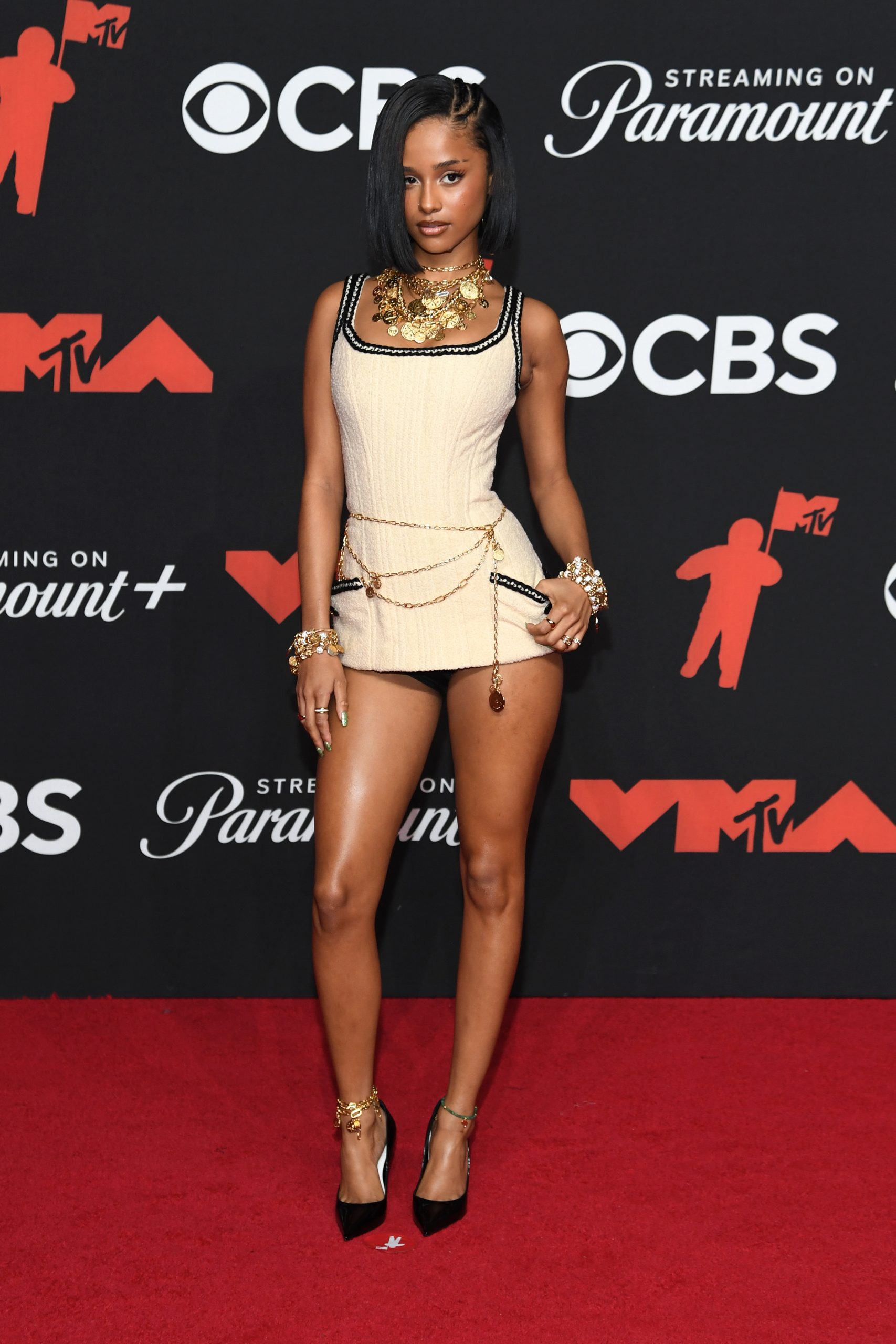
Tyla | Photo by Noam Galai/Getty Images for MTV
Where do you find inspiration, whether that’s music or culture or arts, you know, just on a day-to-day basis, where do you find inspiration?
Movies are my number one source of inspiration. I watch a lot of anime, a lot of music videos. I am not someone who can sit in silence. I am always watching something that is stimulating me or making me think. You can find inspiration in anything. It does not have to be literal. It is not about seeing something like Uma Thurman’s yellow jumpsuit from Kill Bill and wanting to recreate it exactly. It is about the feeling that moment creates and how that can translate into something that makes sense in a different context. Some of the best fashion has already happened. That is part of why I am known for pulling vintage. Now, everyone has access. Anyone can reach out to PR and request a look. So for me, it is about digging deeper and finding pieces that are not as accessible, things that feel more considered. What I enjoy most is bringing a garment’s history into the present. For example, the Tom Ford Gucci black lace dress we wore to the CFDA Awards. The vendor told me it was the best thing that had ever happened to them because it made so much sense for her to wear it, because she would have been a Tom Ford Gucci girl in that era. It felt like a continuation of something that already existed. That is what excites me, taking something from a past era and reintroducing it in a way that feels relevant now. It brings back a sense of how bold and expressive fashion used to be. I would not call myself a historian, but I do think about how to bring those references to a younger generation.
How do you make archival pieces feel current while still honoring their original context?
I never put anything on her that does not feel right for the moment we are in. There are so many pieces I want to pull, dresses I know exist that might make sense in five or ten years, but I do not force it. With vintage today, people sometimes wear it just to say they wore it, without it aligning with who they are. Not in a physical sense, but in terms of identity. It ends up feeling disconnected. So I try to be very intentional. It has to make sense for her and for where she is at that time. She also always puts her own spin on it. It might be the wrong shoe, the wrong necklace, something slightly off that ends up feeling right. That contrast is what makes it feel current.
How does your approach shift when styling for music videos versus still imagery?
Practicality is the first thing. You can wear something extreme for a photoshoot that you cannot actually move in, but that does not work for a music video. You need to be able to lip-sync, move, hit your marks, and work with lighting and camera. There are more variables, so the look has to function in motion. Beyond that, it is about making sure the look feels believable. For music videos, I have worked closely with directorAerin Moreno, who has incredible taste. We share a similar visual language, which makes collaboration easier. There is a mutual trust, so even something very simple can feel intentional. She understands when I see value in something understated or in choosing a direction that contrasts with what was initially expected. With music videos, the goal is also to create something lasting. When you think about “Baby One More Time” or “Dirrty,” those looks are instantly recognizable. There is a sense of iconography. That is always the challenge: to create something that stands on its own and still feels strong years later. Sometimes that means not doing the most obvious thing. A more classic look, like a tank top and jeans vibe, can actually have more impact. If everything is happening at once, the image can feel overwhelming. It is about finding that balance so the look supports the moment without competing with it.

Tyla | Chanel music video
What is one of the most memorable looks that you’ve styled so far?
1. I loved what Tyla and I did with the Chanel music video. That felt like a playground for me. I was able to fully lean into a world I love, that 90s supermodel energy, while still keeping it true to her.The off-the-shoulder tank with the Chanel mini skirt, which we tailored to an extreme length, stands out to me. It feels like something that will last.
2. I also think Sabrina Carpenter’s “Espresso” look is one of the most defining looks I have done. The blue monokini with the star and the pink headscarf feels iconic to me. It represents a shift in how she was perceived and will stand as a key visual moment in her career.
During Paris Fashion Week, Tyla’s look in the Simon Carle tattoo top went viral. How did you decide on that look?
I had started to become familiar with Simon Carle’s work. He works at Margiela and is incredibly talented. I saw the tattoo tops he designed and thought they were amazing. We ended up becoming friends, and I showed them to her, saying we had to do something with this. We send each other references all the time, so not everything lands immediately. Then, about a month later, she sent it back to me and said we had to do it. I was like, “I know, I told you.” We decided to do it in Paris. We were there, having fun, not overthinking it. Everyone is always trying to have a moment in Paris, but for us, it was more about enjoying it. She is often perceived as being very exposed, but in reality, she is quite covered. She just wears things in a way that creates that illusion. With this look, she was unsure at first but it ended up coming together in a really natural way. Simon was available to apply it while we were in Paris, and we all took a risk. It paid off because it became such a strong moment. That is where we meet creatively, it is about pushing things and going for something bold. She has the presence and the confidence, so it is about taking advantage of that and doing something unexpected. For me, it also goes back to foresight. I saw that piece months earlier and knew it would work for something, even if I did not know exactly what. We kept coming back to it, and eventually it found the right moment.
You just trusted your intuition. How long did that take to apply?
Intuition is everything in styling. You have to trust your instincts. It is not formulaic, and it is not something you can piece together like a puzzle. You have to feel it in the moment. I am always in a mindset of figuring it out as we go, because there is no other option. You have to trust that you will get there. Applying the tattoo was actually pretty straightforward. Since it was our first time, it took about an hour to an hour and a half. It is not a single piece you place on the body; it is made up of multiple sheets that you have to align so it reads as a garment. It took time, but it was completely worth it.
“Intuition is everything in styling. You have to trust your instincts. It is not formulaic, and it is not something you can piece together like a puzzle. You have to feel it in the moment.”
What are some emerging designers or brands that are on your radar and why?
Simon Carle is a great one, he is a genius. He has his own line, but he is not focused on doing runway shows right now. If he ever decided to, he would be incredibly successful. He approaches fashion in a really interesting way that feels reminiscent of Galliano’s era. George Troch is also amazing. What he does with knitwear is incredible. His work is a great example of something that looks complex or exaggerated but feels very easy to wear. The silhouettes and scale can be extreme, but the pieces are still very wearable. There are also a lot of strong talent coming out of Central Saint Martins. Zeina, who presented her graduate collection there, created these bejeweled headphones, which I found really exciting. It is that kind of work, where people are fully committed to an idea, that stands out to me. In the US, there are also designers doing interesting things on a smaller scale. Zoe Kestan, who is behind the brand WeedSlut, is someone I really admire. She has worked with Addison Rae, but her work goes far beyond that. She has a strong understanding of construction and brings a very considered, feminine perspective to her designs. There are a lot of exciting talents right now, and often it is more rewarding to work with younger designers. They are open, collaborative, and genuinely excited about the process. They are willing to experiment and build something together in a way that larger houses are not always able to. That energy is what I am drawn to.
Is there a favorite country that you’ve been to through this job, and how has the style inspired you?
Japan and Korea are incredible; there is a real sense of experimentation there that feels very natural. I also always come back to South America and Latin America. Being Latin, there is a certain energy and sense of expression that feels very familiar to me. Places like Brazil or Mexico are so rich in life. It is not just about the clothes, but the way people wear them and the confidence behind them. The way someone wears a bikini and shorts in Brazil, or a flouncy dress in Mexico City, creates a fantasy. That energy stays with you and influences how you approach your work with clients. I also love New York more than anywhere. I do not think I ever want to leave. There is constant inspiration just from being outside. You can get ideas from walking down the street, going to dinner, and observing how people move and dress in real life. It is one thing to study fashion, to watch documentaries, or follow runway collections, but you also have to experience it in person. Seeing how a coat moves, how a bag is carried, and how a shoe actually looks on someone. That is just as important. Everywhere I have been has been inspiring in its own way. Each place shifts how you see things and adds something new to your thinking about style and storytelling.
What advice do you have for emerging stylists who are trying to carve their path in this industry?
I might sound old saying this, but a lot of young people today feel that having a surface-level understanding from the internet means they know how to do something or are ready to take big swings. That is not how it works. It takes time, experience, rejection, and failure to get to a place where you can consistently do strong work. I would not have had the confidence to do what I am doing now ten years ago. That comes from putting in the time. My biggest piece of advice is to assist. I really believe in learning from people who have more experience than you. It is invaluable. I do not believe in being taken advantage of, but being in the room and observing how things are done is a huge opportunity. I feel very lucky to have worked with Carine Roitfeld for as long as I did and to have been in environments with people like Tom Ford, Steven Meisel, and Steven Klein. Being able to watch and absorb how they work gave me a much deeper understanding of how to create something meaningful.
It is important to learn from people you respect and to keep your ego in check. Right now, there is a lot of emphasis on visibility and numbers, but none of that replaces experience. You have to be willing to put in the work, figure out who you are, and understand what you want to say.It is not about copying something iconic. It is about how you interpret it and make it your own. That is what makes something stand out. So my advice is to remove the ego, do the work, and reach out. Send the emails. Not everyone will respond, but someone will. Showing your commitment over time leads to the next opportunity, and then the next. I can say now that I am living my dream every day. That still feels surreal to me, especially considering how I grew up with immigrant parents, but it came from working consistently, going through difficult moments, and not giving up. I never let my ego or pride stop me from trying again.