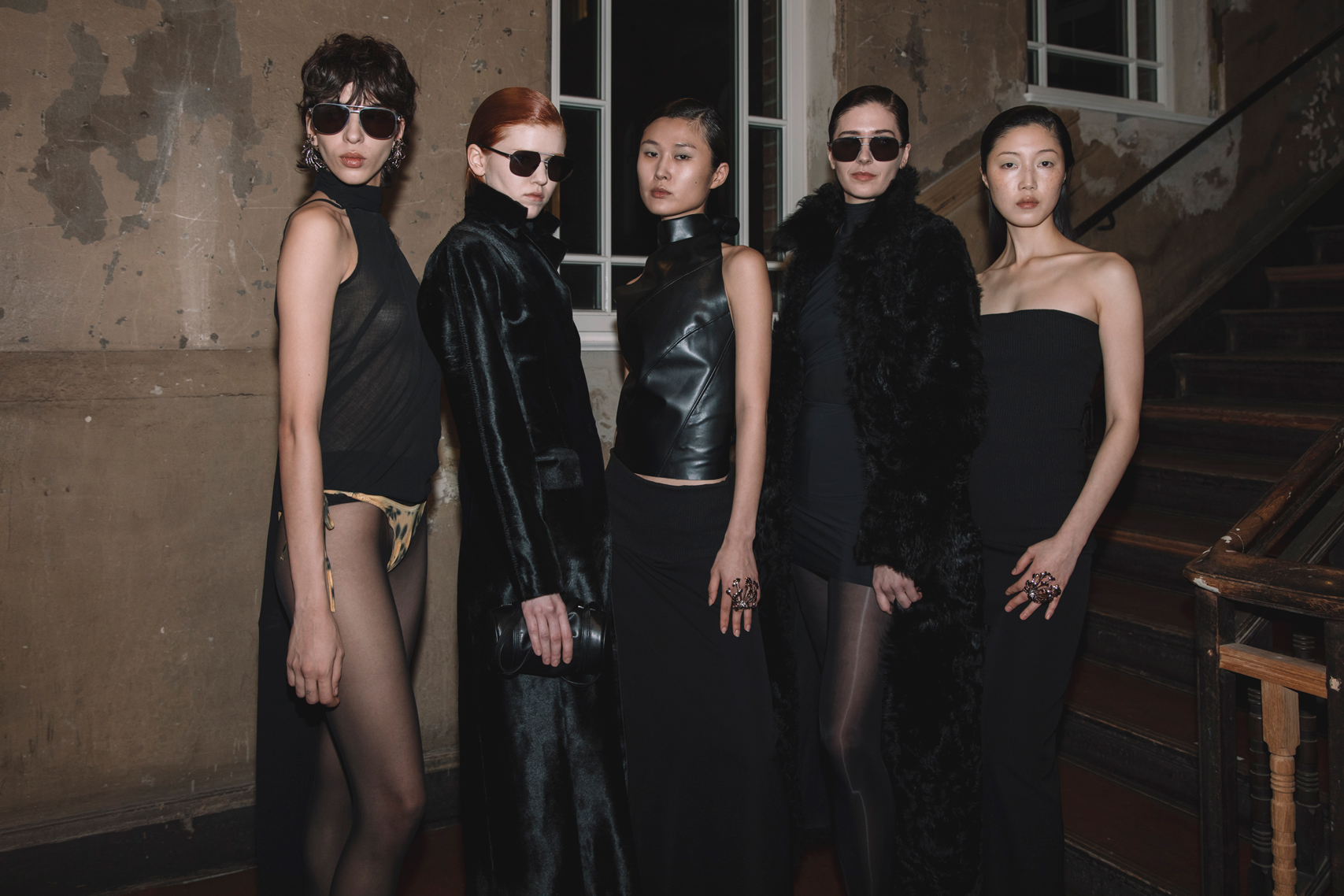
Berlin Fashion Week’s Fall/Winter 2026 season proved that the German capital’s fashion scene is hitting a new stride, after back-to-back seasons of solid fanfare. Over a frigid, four day-weekend (with temperatures dipping well below freezing), Berlin showcased 42 runway shows – more than ever before – drawing a global crowd of spectators seeking to see how the city leads in sartorial conversations around sustainability. A dynamic mix of up-and-coming local talents and international names converged, unified by an ethos of authenticity, diversity, and green practices. From Ioannes’s slick sophistication to Buzigahill’s rebellious upcycling, Lou de Bètoly’s button couture to GmbH’s politicized clubwear, the breadth of vision was remarkable and the week was a testament to the city’s creative risk-taking and experimental spirit. If one theme unified the week, it was authenticity: nearly every designer seemed committed to telling their story, their way – whether through cultural narratives or subversive artistry. In doing so, they collectively cemented Berlin’s reputation as a hotbed of innovation and inclusivity in fashion, and perhaps the Big Four should take note. With images by Tonya Matyu, Models.com recaps the standout shows and presentations that defined the week.
Ioannes
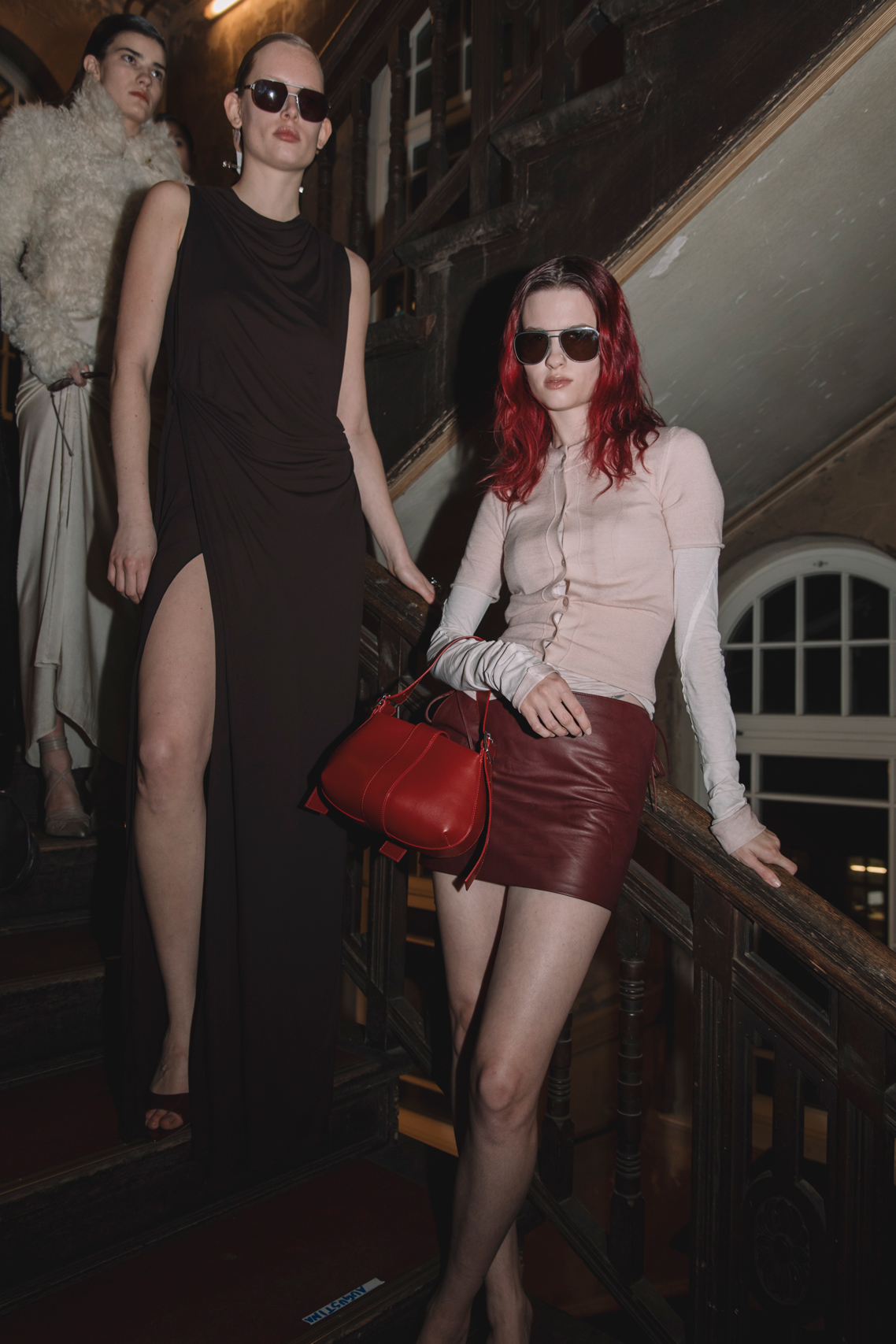
Ioannes, designed by Johannes Boehl-Cronau, has quickly become one of Berlin’s most hyped womenswear labels, and it’s easy to see why. For what may be Cronau’s final traditional runway show (he has hinted at moving the brand off the seasonal calendar), Ioannes delivered a collection oozing expensive chic and sharp sensuality. The opening look set the tone: a cropped shearling bomber paired with high-waisted black flared trousers, complete with a peek of satin lining along the inner thigh. Each outfit exuded confidence: impeccably tailored two-piece suits and ruched dresses cut daringly close to the body, all styled with pointed stilettos and sleek sunglasses. The palette ranged from deep aubergine and eggplant tones to rich coffee, slate gray and inky black, adding to the Euro-jet-set mood. There was a subtle ’90s glamour meets modern Berlin vibe, with Cronau even using pyrography (burned wood prints) to add floral motifs to bodycon slips for a tactile twist. Watching the show, one couldn’t help but feel aspirational – you just want to be the woman who wears Ioannes.
MARKE
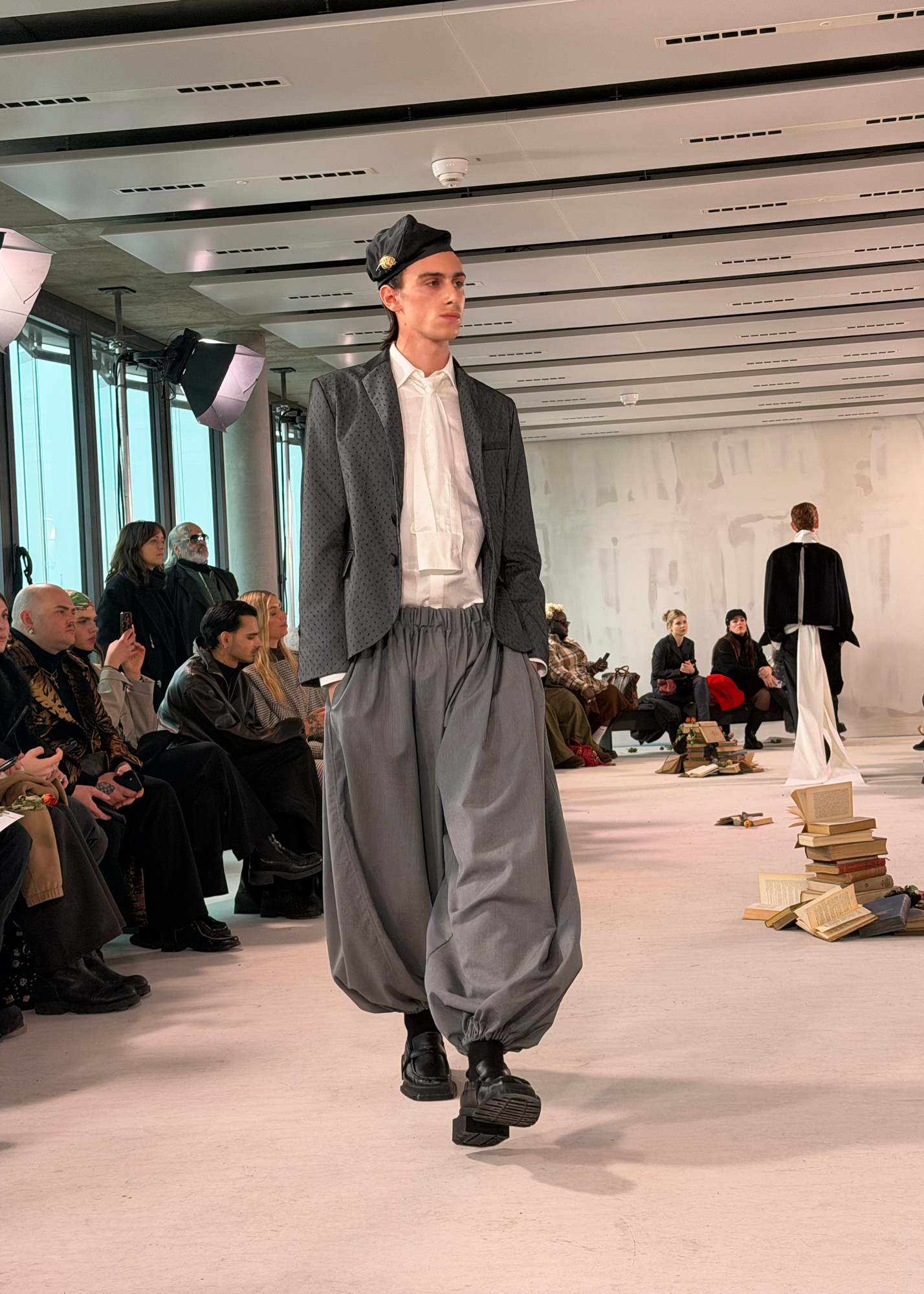
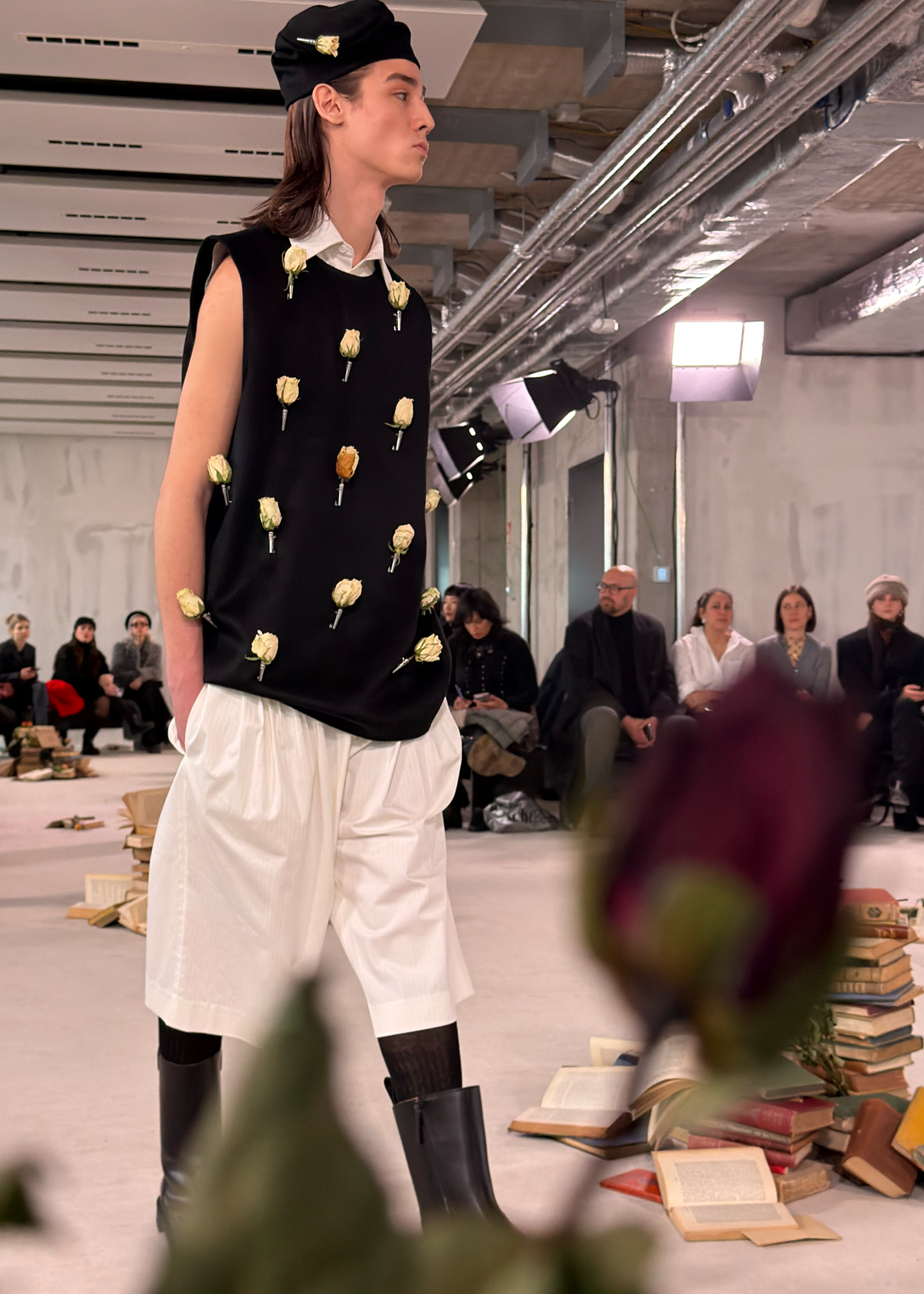
Cologne-based MARKE by Mario Keine offered a poetic counterpoint in menswear – a masterclass in romantic tailoring with an edge. Upon arrival, guests found dried roses strewn on the benches and a ceramic diffuser scented with Farina 1709 (the original Eau de Cologne) at each seat, setting an elegiac mood. This multisensory touch foreshadowed a collection that fused classic structure with dark romance. Oversized charcoal-gray trousers were tucked into boots, and traditional suits came embellished with trailing trains of fabric peeking from under sweaters. In a clever styling trick, spare jacket sleeves were repurposed as ties, adding a whimsical, deconstructed flair. One notable look – a tailored vest adorned with withered roses – nodded to Simone Rocha’s signature floral touches and underscored MARKE’s blend of rigidity and emotion. Titled The Owl, the Fall 26 collection was Keine’s response to the anxiety of information overload, likening our era of misinformation to a neo-Rococo of decadence and distraction. In palette, MARKE stayed mostly in disciplined blacks and greys with moments of eggshell, merlot, and petrol blue. Yet amid the somber tones, the designer introduced vulnerability: black veils, resin-dipped roses, and flowing drapery brought an unexpectedly sensual softness to the menswear. As the final model exited, the entire venue felt caught in a quiet, powerful spell – one of poetic restraint. Even Mario Keine himself, seen at the exit with a relieved smile, seemed moved by the cinematic romanticism he had conjured.
Andrej Gronau F/W 26 | Photo by Boris Marberg | Courtesy of Agnès Kausoko PR
Andrej Gronau
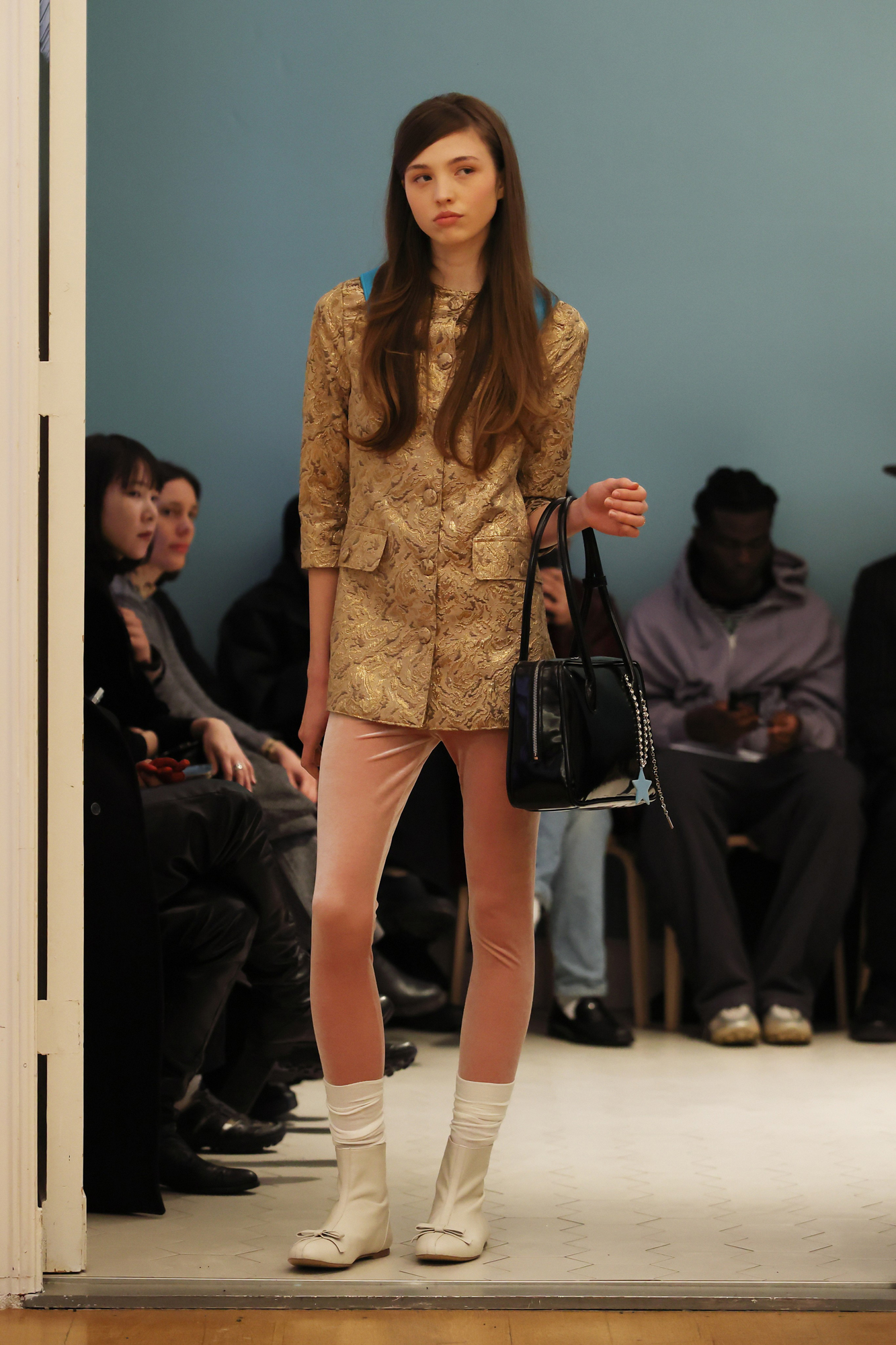
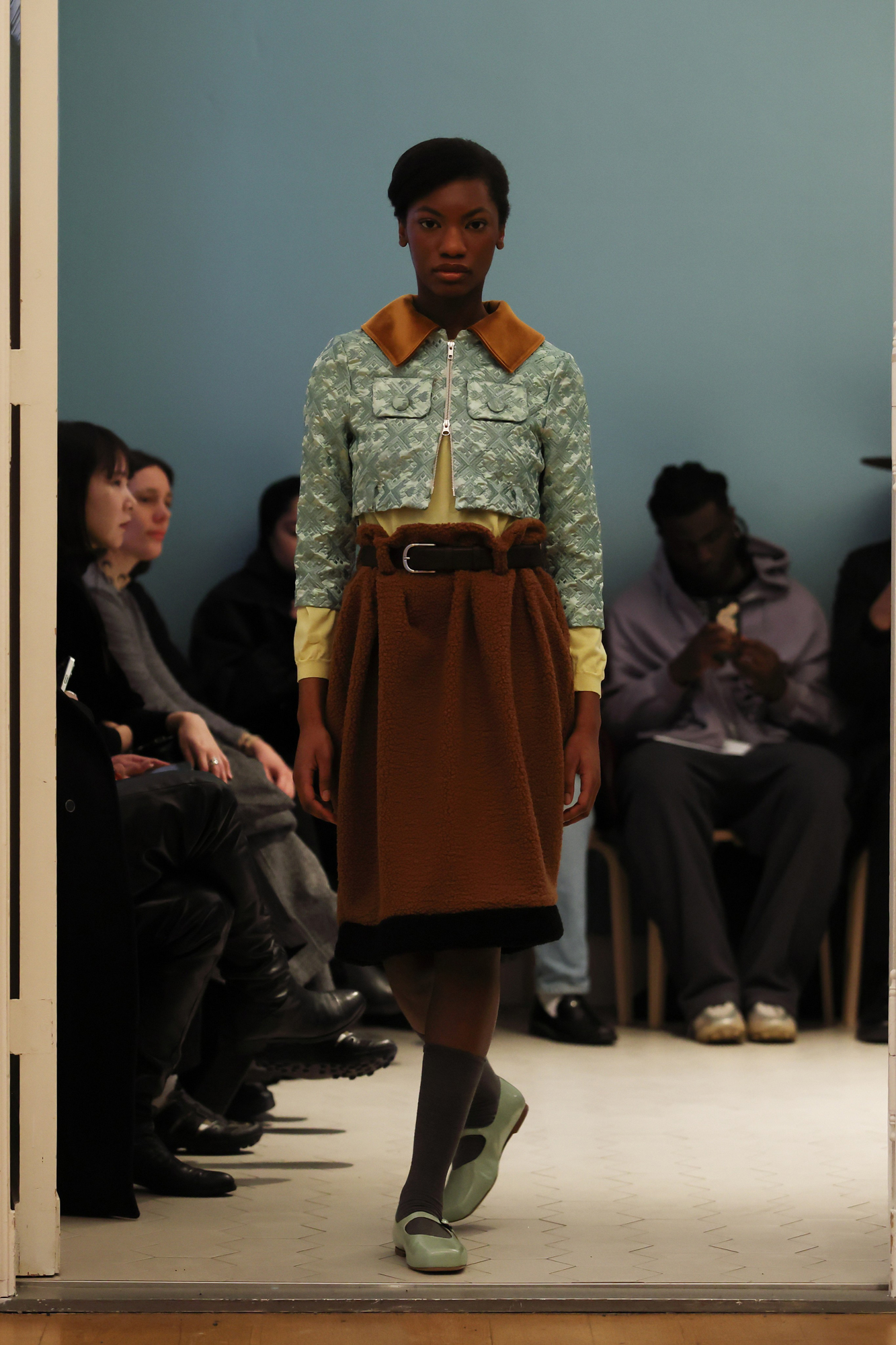
With his Fall/Winter 2026 show titled Room for Play, Andrej Gronau delivered one of the season’s most intimate and quietly subversive moments. Presented with a sense of warmth and domestic familiarity, the collection was inspired by the designer’s grandmother—an influence that translated into clothes that felt protective, nostalgic, and gently mischievous. Gronau, characteristically soft-spoken, came alive backstage when discussing the emotional underpinnings of the work, describing a desire to explore comfort as both refuge and provocation. The garments reflected this duality. Brocade prints on car coats and tailored jackets were lifted from interior textiles, evoking upholstery and lived-in spaces. Thick brown belts were woven directly into paperbag-waist skirts, creating silhouettes that felt cocooned and slightly childlike, reinforced by beauty looks featuring pigtails and other girlish markers. Yet the sweetness was deliberately unsettled: men wore tailored shorts with socks and hard-bottom shoes, injecting a subtly perverse edge into the otherwise tender narrative. As the show notes read, “Welcome inside. Behind closed doors, taste loosens its tie.” In Gronau’s hands, intimacy became a site of play, where innocence, memory, and discomfort coexist in quiet tension.
Andrej Gronau F/W 26 | Photo by Boris Marberg | Courtesy of Agnès Kausoko PR
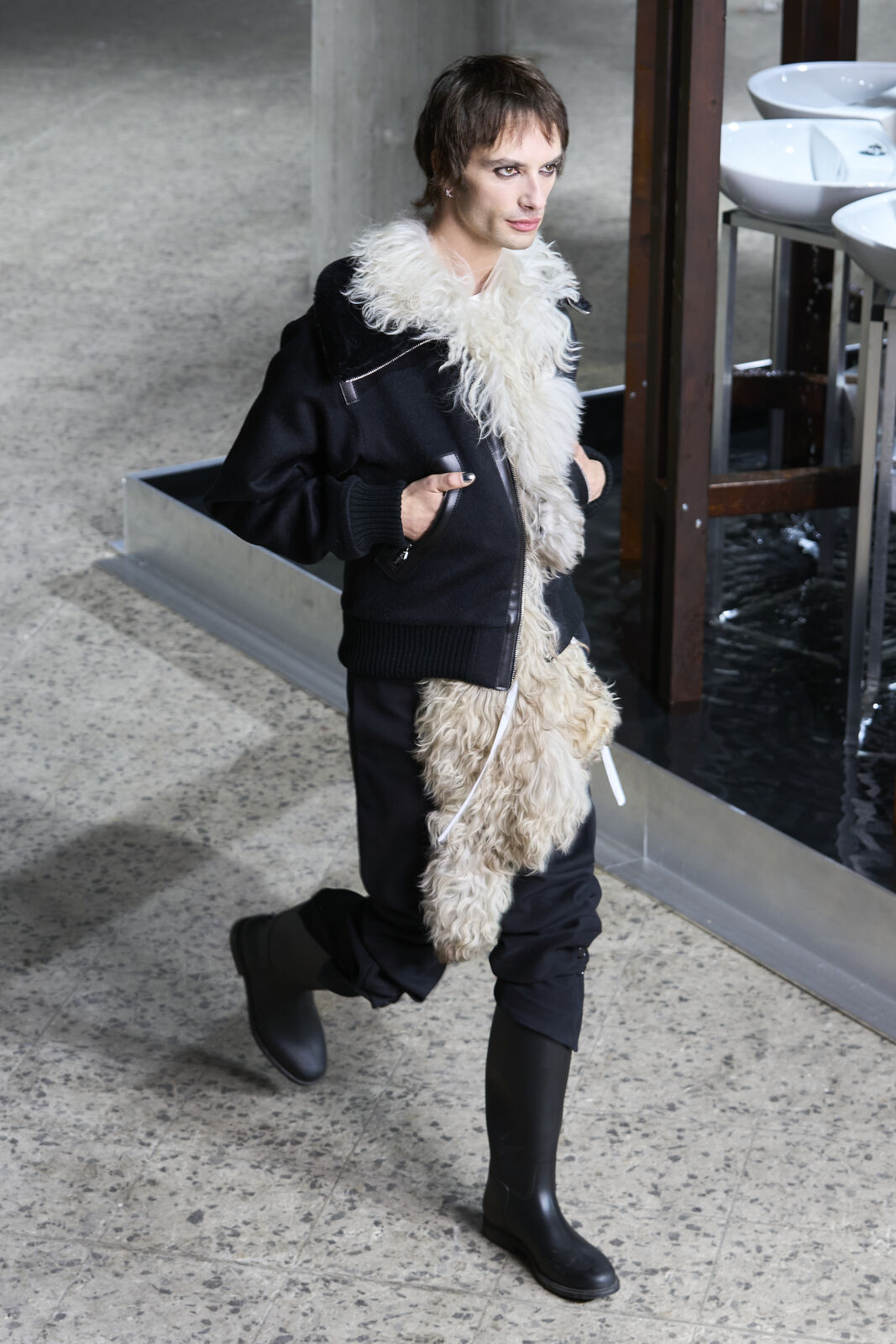
SF1OG F/W 26 | Photo by Tom Funk | Courtesy of haebmau.ATELIER
SF1OG
Berlin’s own SF1OG (pronounced like “es-eff-one-O-G”) leveled up this season, channeling a gritty rocker chic energy far beyond the logo hoodies of last season. Designers Rosa Marga Dahl and Jacob Langemeyer used their Fall/Winter show to explore the tension between privacy and exposure, asking pointedly: “Who are we when no one is watching?” Set in a stark brutalist venue, the collection unfurled with a confident sense of self. SF1OG’s looks played with concealment and revelation: models strode out in high-collared coats and oversized hoods that obscured their faces, followed by slinky low-rise denim and sheer knits that felt intimate and worn-in. The designers drew inspiration from early-2000s paparazzi snaps of tabloid icons like Amy Winehouse and Lindsay Lohan, fascinated by those unguarded moments of fragility and exhaustion. This translated into garments that were distressed, textured, and layered – antique linens and velvet appeared frayed and rubbed, as if imbued with the memory of repeated wear. Signature SF1OG pieces made a return, like the sculpted bar jacket with a flared peplum, now paired with chunky hand-knit scarves for a grunge-meets-couture vibe. Notably, SF1OG doubled down on its upcycling ethos: leather and shearling were recycled, and even footwear got an update through the brand’s ongoing partnership with Converse (this season debuting a new take on the Chuck Taylor sneaker boot.) By honing their vision – part indie sleaze, part post-punk Victoriana – SF1OG proved why they’re among the most compelling emerging labels in Germany.
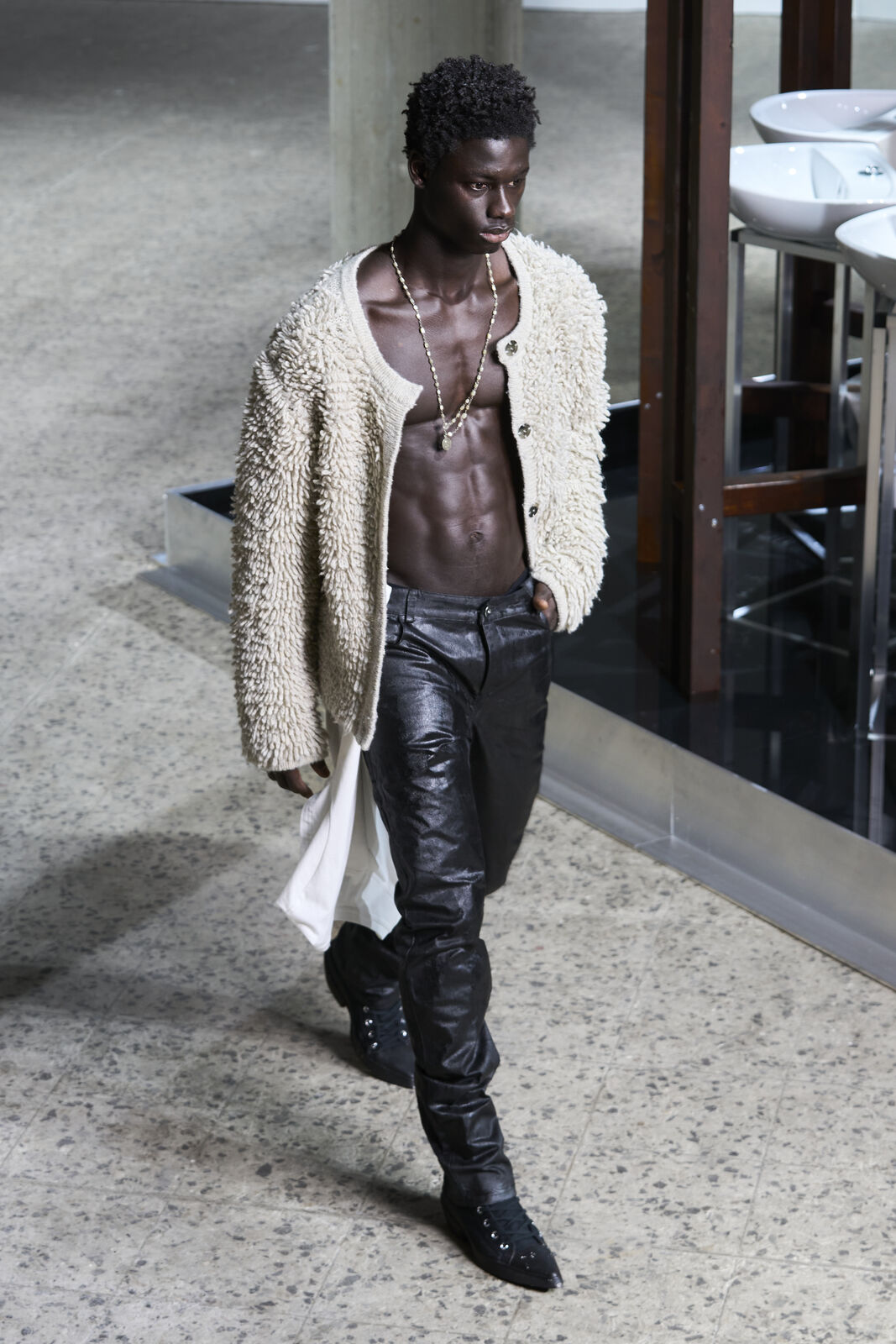
SF1OG F/W 26 | Photo by Tom Funk | Courtesy of haebmau.ATELIER
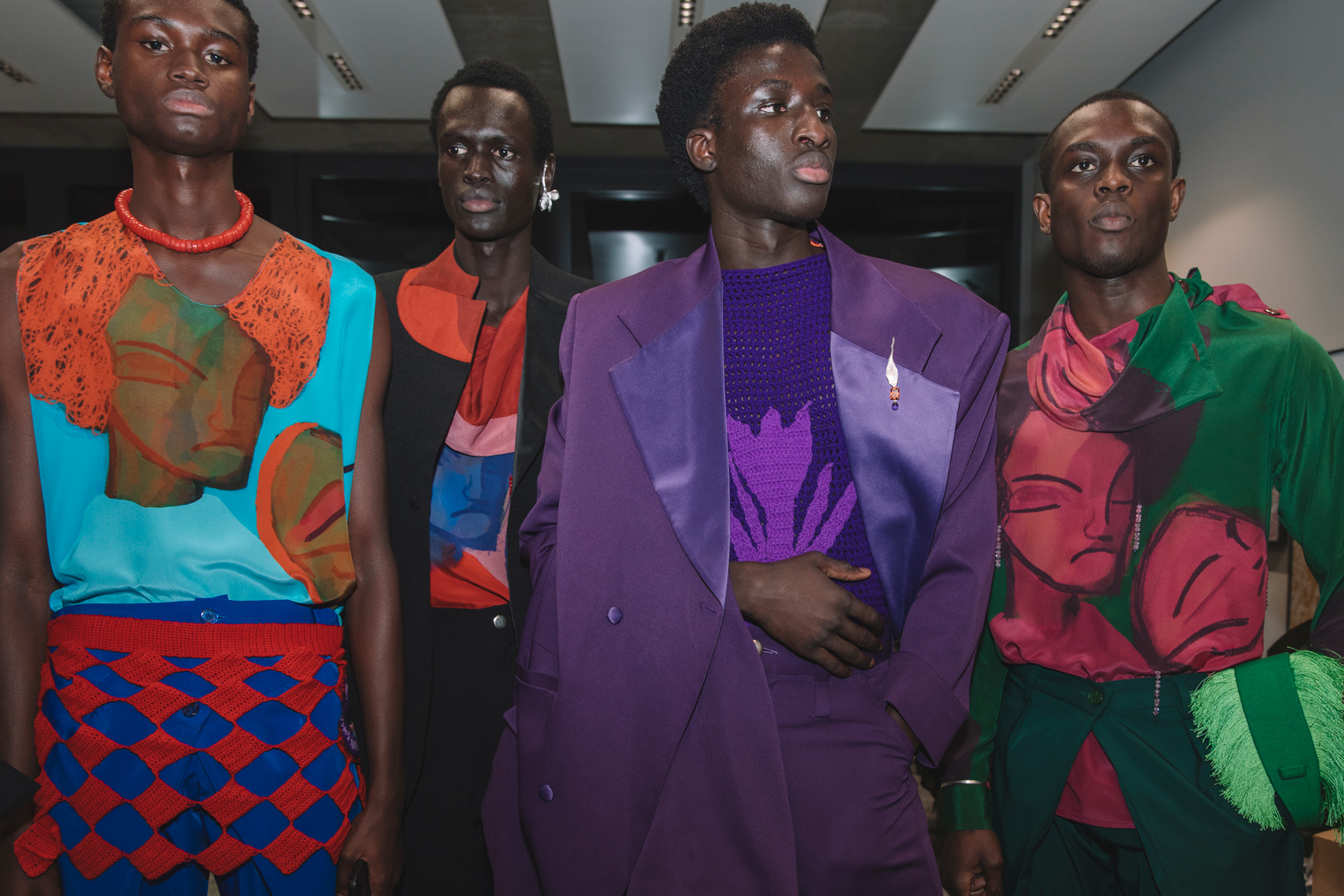
Orange Culture
Bringing a burst of color (and sunshine) to grey Berlin, Orange Culture by Adebayo Oke-Lawal transported us to Lagos for Fall/Winter 26. His collection, “Backyards of Memory,” was a joyful exploration of heritage and hue, a deliberate antidote to Berlin’s dark winter palette. Last season in Nigeria, Oke-Lawal had paid tribute to his late mother with an all-white collection; this time, he celebrated life and nostalgia through vibrant color and craft. The clothes drew directly from the designer’s childhood memories of his Nigerian backyard – a place of warm sunlight, hanging laundry, and children’s laughter. This translated into garments that felt wrapped in love: think grand, sweeping trenches in rich reptilian greens, sunlit oranges and cobalt blues, alongside softer earth-toned knitwear. True to Orange Culture’s gender-fluid ethos, silhouettes were a mix of sculptural tailoring and flowing ease. We saw hand-dyed fabrics set with ombré sunset tones, fringed shawl-collar coats, macramé and crochet details on tops, and trousers pleated as meticulously as origami. Texture was everywhere – chunky sweaters with fringe, touchable velvets and silks – giving the sense of garments made to be lived in. Oke-Lawal also wove collaboration into this collection, working with fellow African artisans like Sisiano Paolo, Omonigho and Gdwn macrame, Kisara Handbags, Monimorgan and Kkerele shoes, InJewels fine jewelry and more. The result was sculptural handbags, artful prints, and handcrafted footwear and jewelry embellishing looks styled by Ola Ebiti. The final rollout was personal yet universal, with each look that spoke to anyone yearning for comfort and color. In a city dominated by black coats, Orange Culture’s joyful show reaffirmed that African designers are not just participating in the conversation, but leading it with confidence and soul.
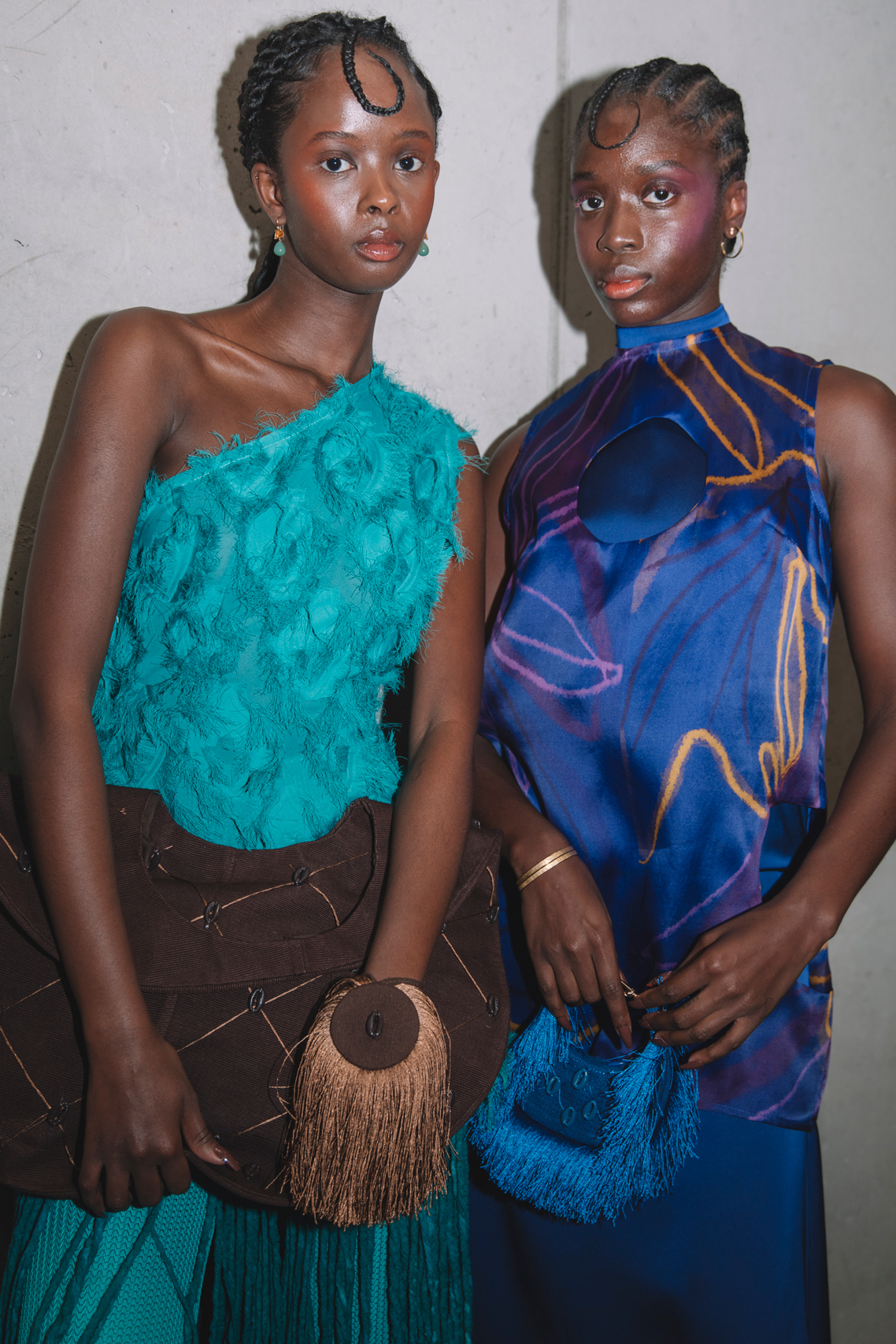
Kasia Kucharska
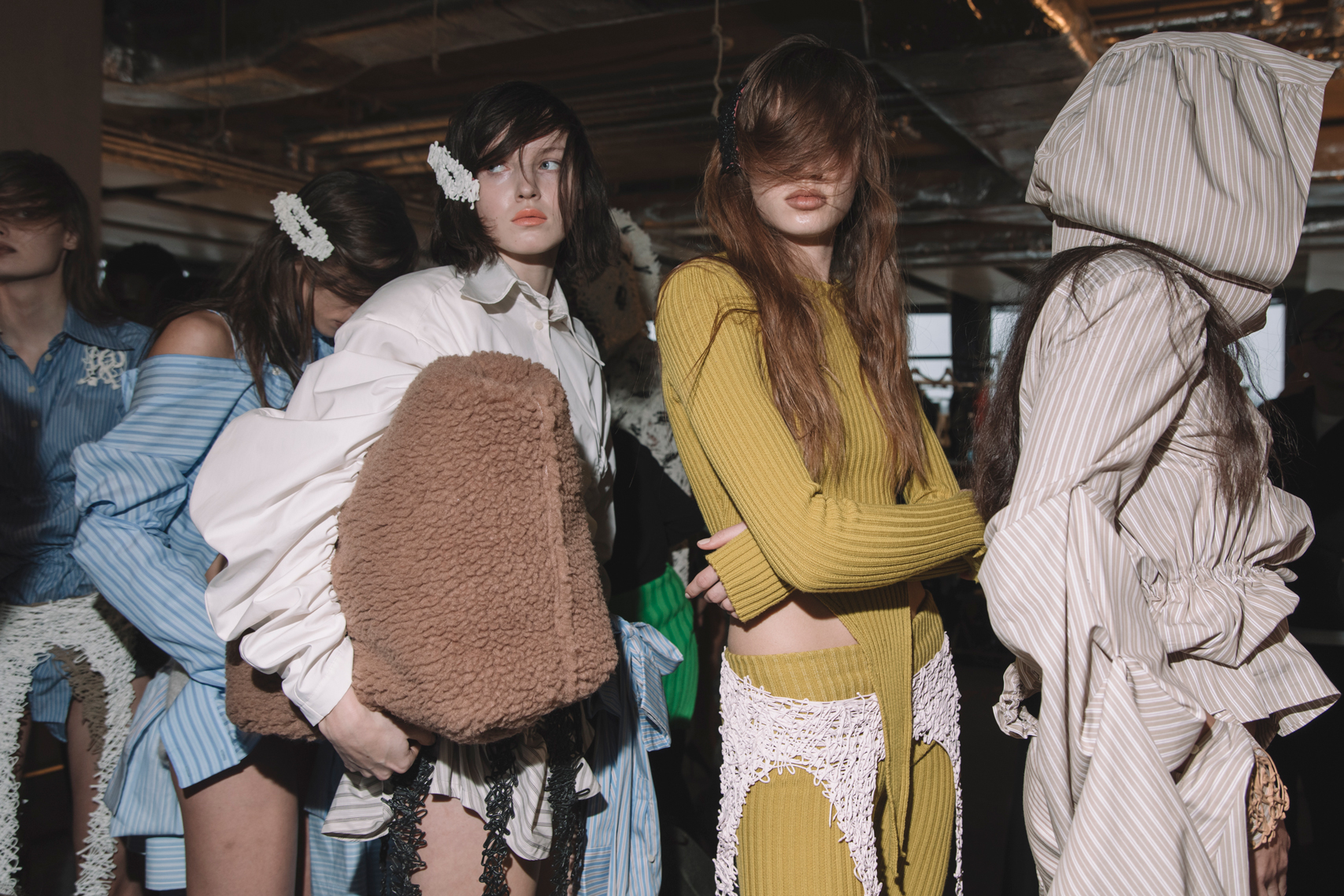
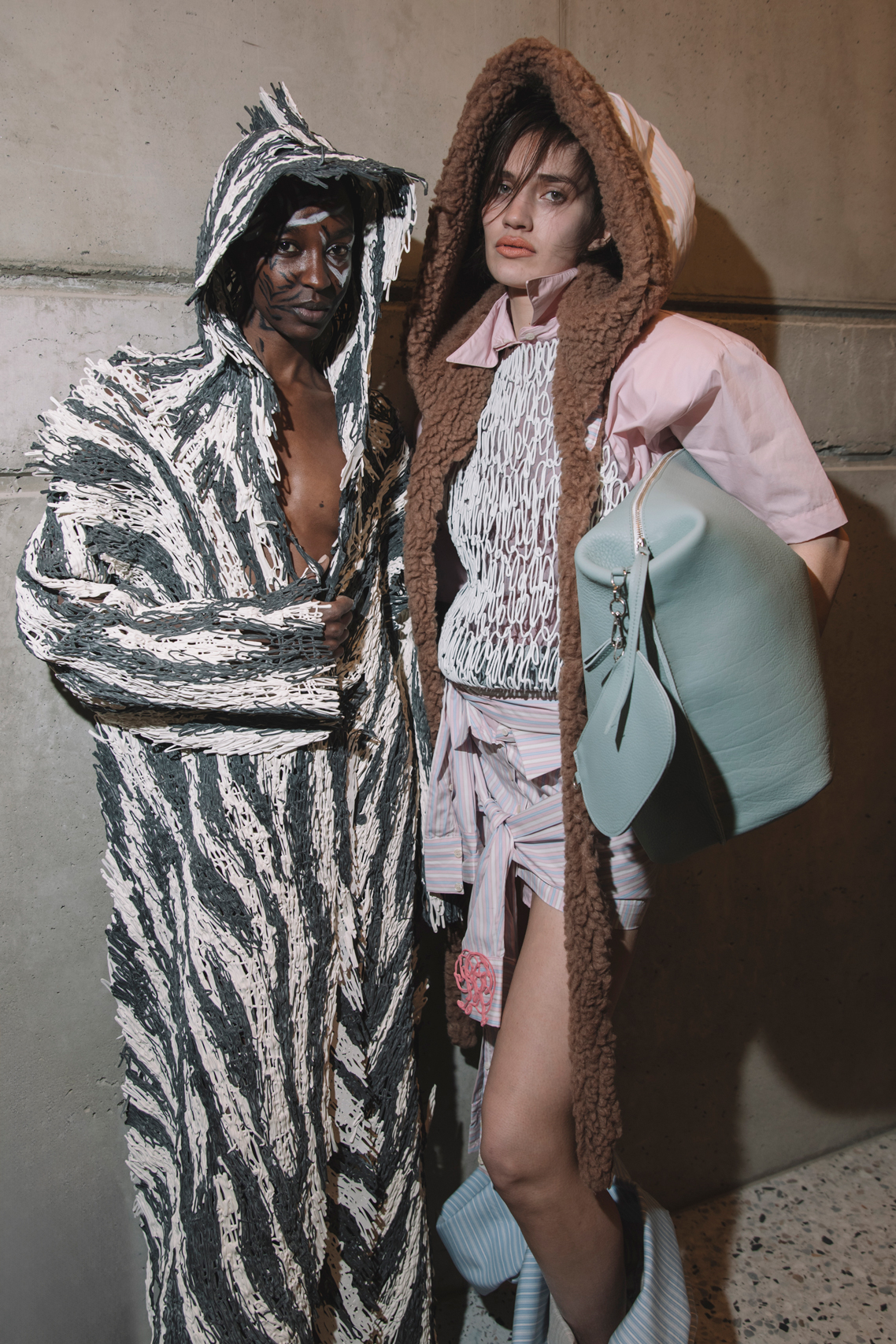
Another highlight of the week was Kasia Kucharska, a Polish-born designer based in Berlin, who presented a deeply personal womenswear collection that many insiders were raving about. (It was one of the few shows I missed in person – and I truly regret it. It haunts me even.) Styled by Georgia Pendlebury, Kucharska’s Fall 26 collection explored the extremes of femininity – vulnerability and strength, innocence and defiance – through an innovative use of materials. Central to her vision was a unique technique: liquid latex used as a printing medium, grown layer by layer into garments instead of traditional fabric panels. This yielded pieces with incredible texture and form: latex “lace” dresses that fit like second skin, sculptural coats that appeared molded rather than sewn, and glossy black latex bodices juxtaposed with soft plush pink accents. Kucharska’s theme drew on the emotional labor of womanhood – in fact, she symbolically referenced motherhood and girlhood throughout. There were whimsical touches like furry cartoon-animal motifs (a nod to familiar childhood characters) giving a twisted sense of play. At the same time, sharp tailoring and modular construction (shirts reworked into quick-change garments, ties replacing buttons) conveyed the relentless pace of a modern woman’s life. The harsh contrasts in the collection – black latex vs. soft pastel plush, rigid pinstripe wool vs. flowing silk – mirrored an internal turmoil of “joy and rage” coexisting. By the finale, it was clear why this show caused buzz: Kucharska managed to turn deeply private experiences into avant-garde fashion, framing female vulnerability as a form of resilience. It’s safe to say I won’t be missing her show next season.
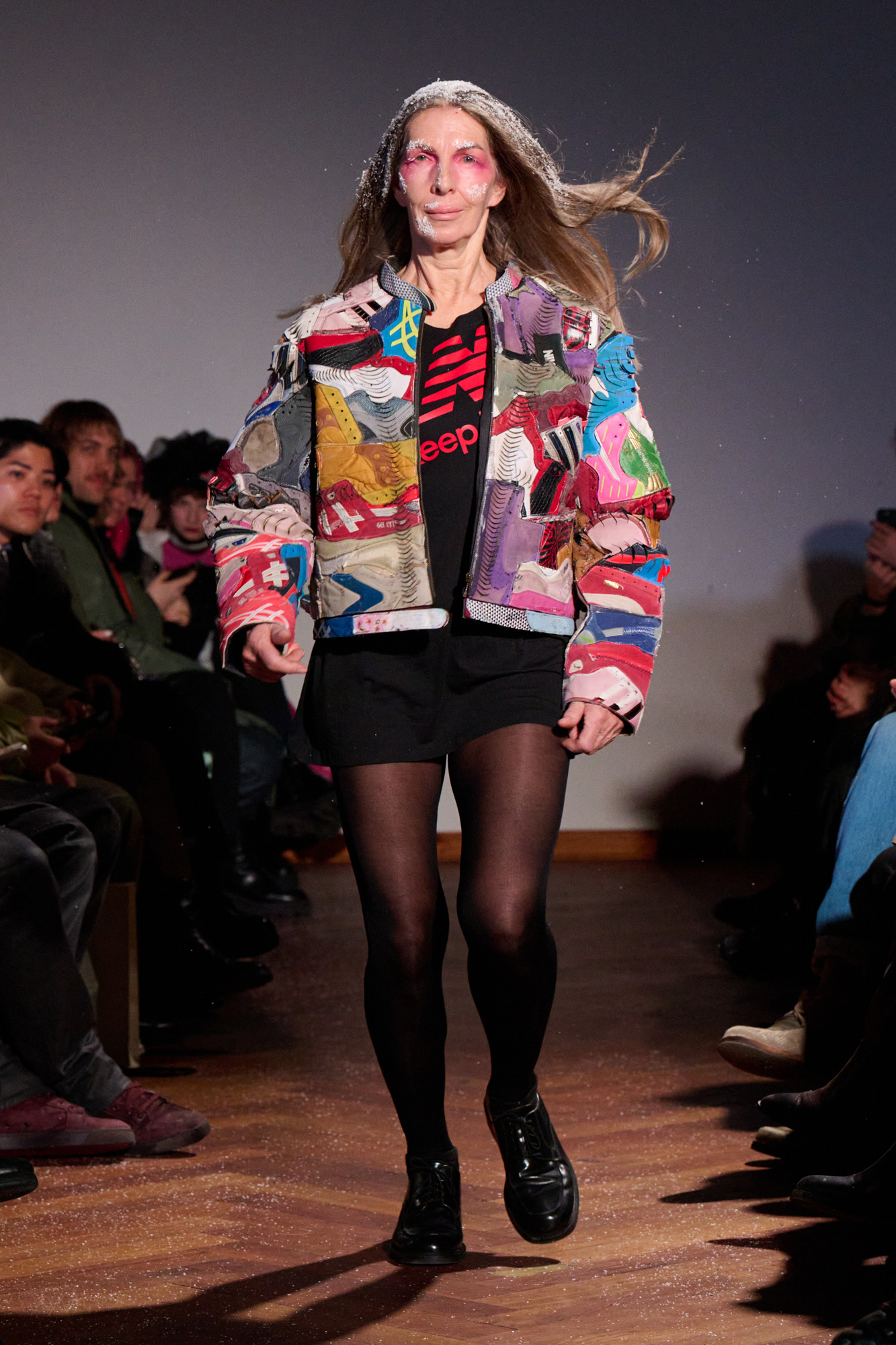
PLNGNS F/W 2026 | Photo by James Cochrane | Courtesy of The Lobby PR
PLNGNS
Ukrainian label PLNGNS (short for “Palingenesis”) made waves with a truly cutting-edge upcycling showcase. A winner of the Berlin Contemporary program, PLNGNS has a niche specialty of transforming old sneakers into unique high-fashion streetwear, and their Fall/Winter “Error As Asset” collection drove that concept home. The brand’s design team, led by Mitya Hontarenko, takes discarded sneakers, deconstructs them, and rebuilds the components into garments in astonishing ways. This season featured about 30 looks split into two thoughts: an “ICONIC” line of one-of-a-kind pieces made entirely from shredded and reassembled sneakers, and a more commercially adaptable “SIGNATURE” line blending sneaker fragments with stock fabrics. One sculptural coat, for instance, was patchworked from dozens of sneaker uppers, with recognizable rubber soles forming a trim along the hem: a literal shoe coat. The palette was mostly monochromatic black, grey, and white, which put the spotlight on texture and form. Many silhouettes had a utilitarian, futuristic flair like structured bomber jackets with chunky sneaker-tread panels, cargo vests assembled from Nike, ASICS, and Adidas scraps, and voluminous unisex trousers where a patch of mesh from running shoes might be stitched alongside leather from old basketball high-tops. PLNGNS’s commitment to zero-waste, closed-loop production shone through – every component was recycled, and each garment told a story of transformation. By turning manufacturing “errors” and waste into design assets, PLNGNS cemented itself as a frontrunner in sustainable fashion innovation.
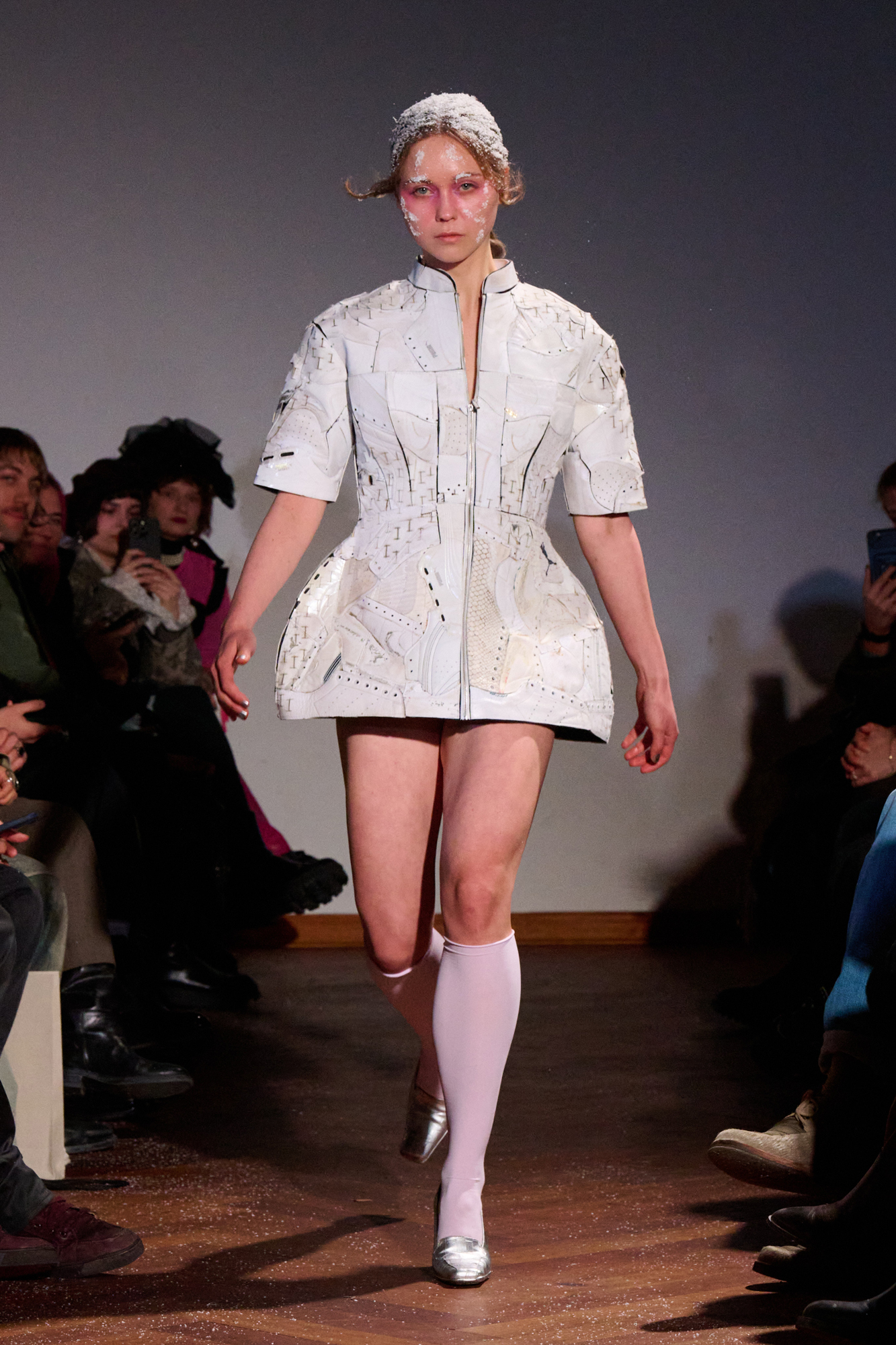
PLNGNS F/W 2026 | Photo by James Cochrane | Courtesy of The Lobby PR
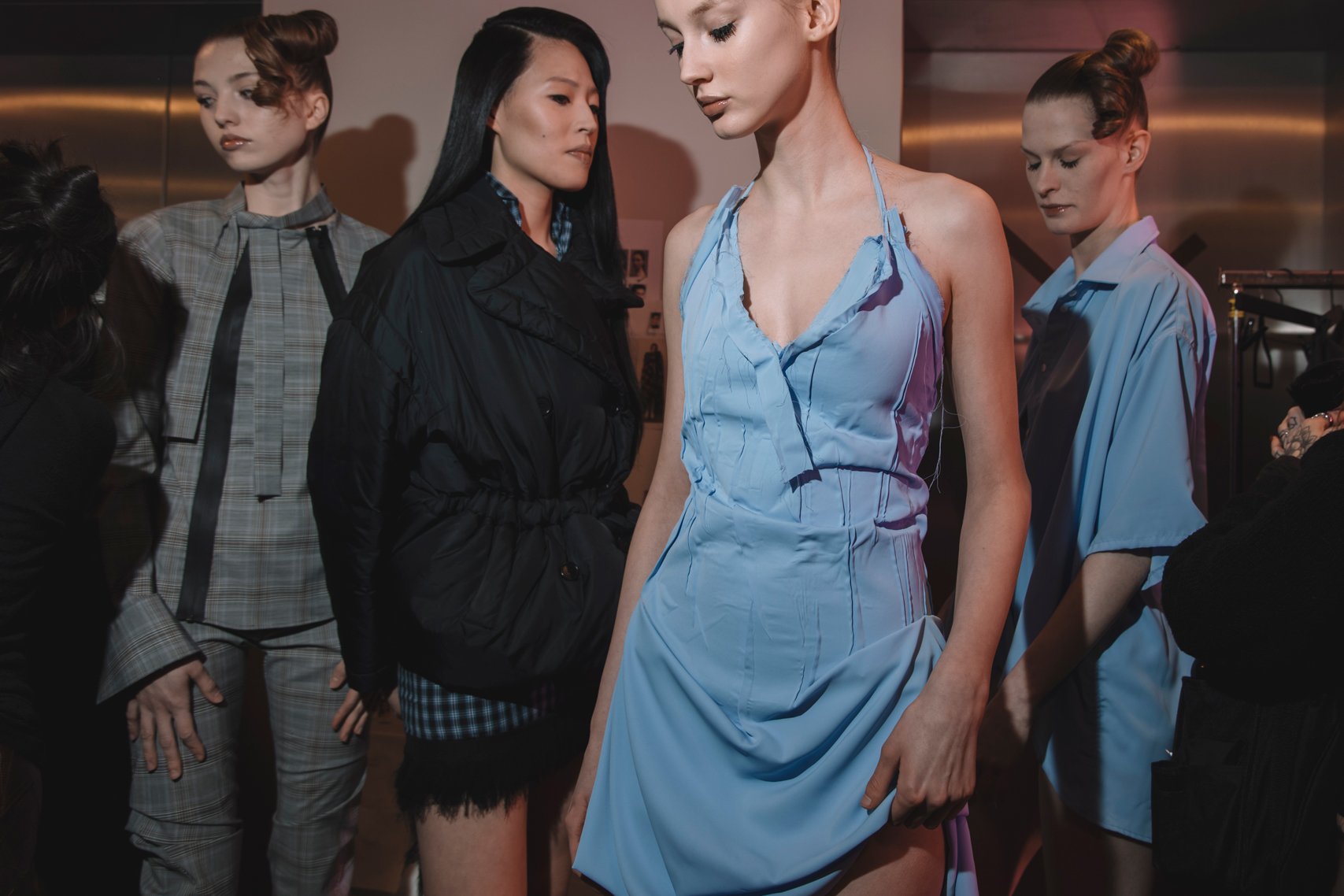
Sia Arnika
Danish-born, Berlin-based Sia Arnika delivered one of the week’s most conceptually intriguing presentations with her F/W 26 collection, aptly named “OVERTIME.” True to the title, Arnika’s show was a theatrical journey from office drudgery to after-hours freedom. Staged on the sixth floor of a mundane office building, the experience began amid unflattering fluorescent lights, stark carpeted runway, and working Xerox machines that continuously spat out blank pages – a symbol of the soul-numbing repetition of 9-to-5 life. As a throbbing beat kicked in, the mood shifted: one by one, models “worker” outfits morphed into party-ready looks. A blazer came off to reveal a mesh club top; a pinstripe pencil skirt shed panels to become a flowing silk slip; a Swarovski full-length opium-core look closed the parade. Sculptural tailoring met soft jersey and transparent mesh as the show progressed, illustrating a literal and figurative unbuttoning. The palette moved from drab, earthy “office” tones to more vibrant night-life hues as the transformation climaxed. Throughout, Arnika maintained a sustainable approach using deadstock materials and eco-friendly Tencel alongside upcycled elements, ensuring the experimentation was conscious as well as creative. Notably, she even partnered with Kylie Cosmetics for the beauty looks, using her former KHY collaborator as a dash of pop culture glam to the mix. In the end, “OVERTIME” felt like a celebration of breaking free: clothing as a means of sexual liberation rather than mere function. Sia Arnika solidified her voice as a designer who can turn the banalities of modern life into something weird, subversive, and undeniably, throbbingly alive.
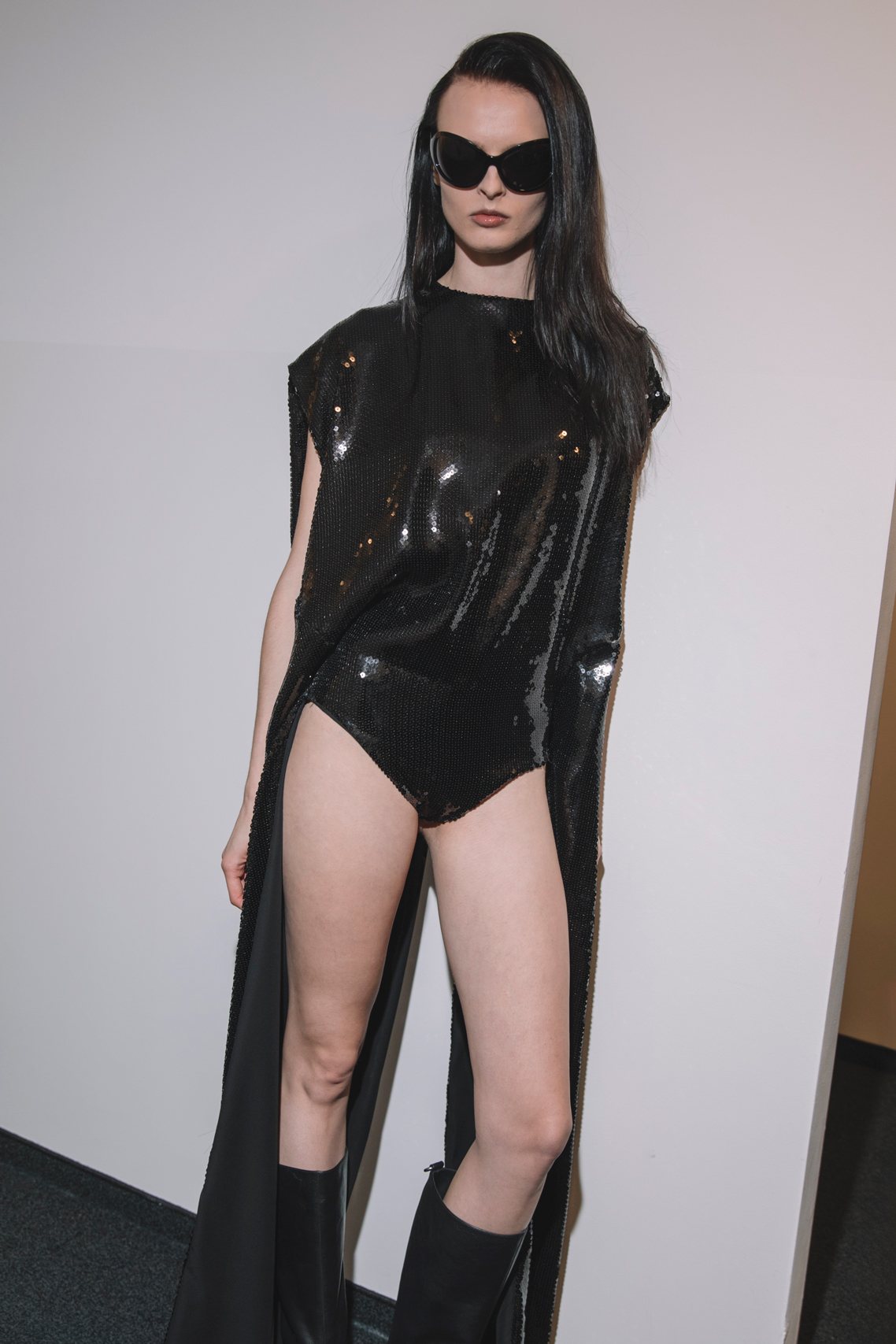
Lou de Bètoly F/W 2026 | Courtesy of Berlin Fashion Week
Lou de Bètoly
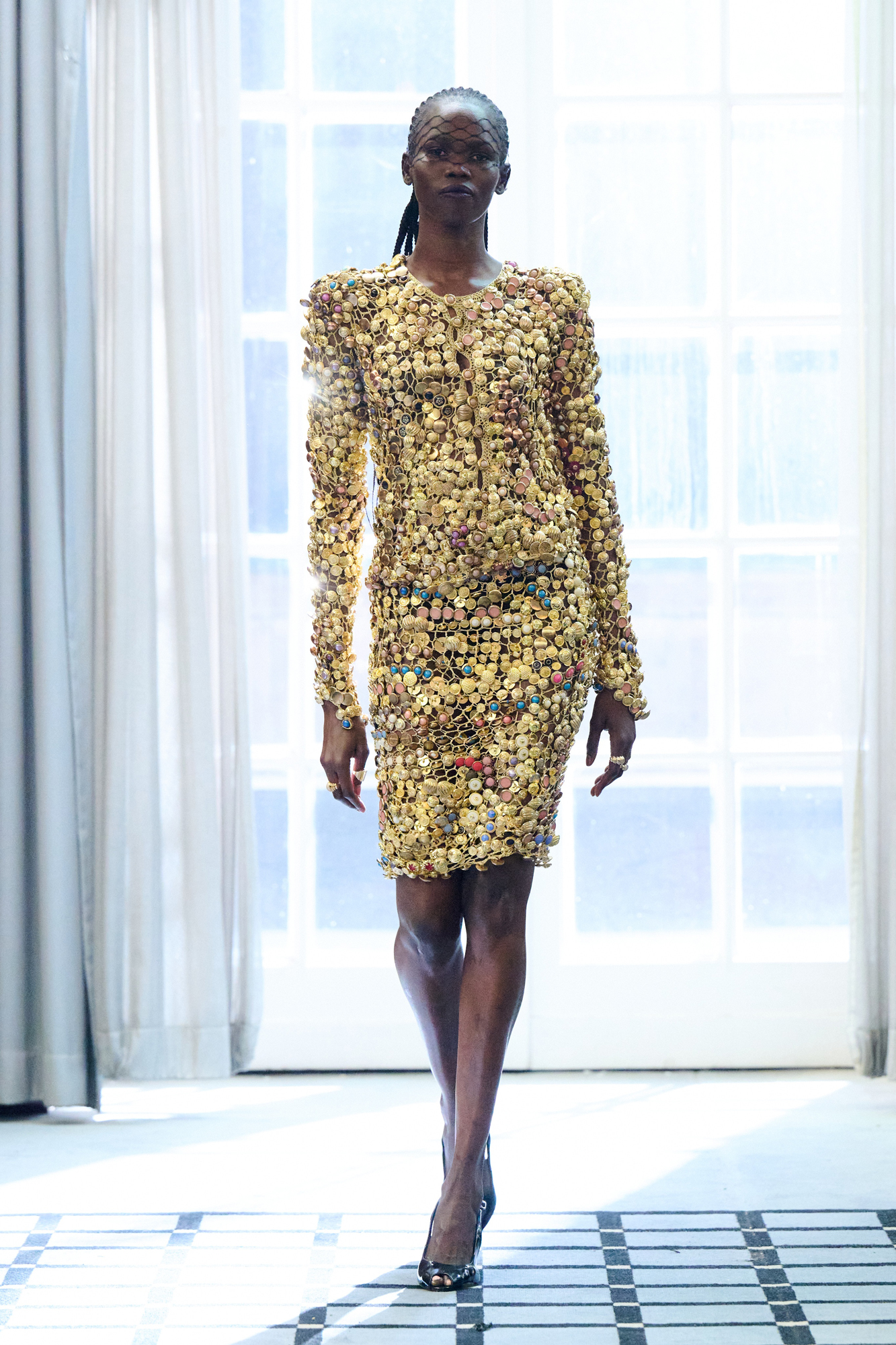
Lou de Bètoly, the alter ego of French designer Odély Teboul, delivered what was perhaps the season’s biggest surprise and delight. Already beloved by pop icons like Dua Lipa, Rosalía, and Beyoncé for her one-of-a-kind creations, Lou de Bètoly returned to Berlin Fashion Week with an upcycled fantasia of a collection. Hosted in the historic Rathaus Schöneberg (the very town hall where JFK once proclaimed “Ich bin ein Berliner”), the show cleverly juxtaposed Old World grandeur with Lou de Bètoly’s edgy DIY couture. The collection was built on reclaiming lingerie and vintage trash into treasure. In partnership with Dutch lingerie brand Hunkemöller, Teboul took deadstock corsets, bra tops, and hosiery, including pieces from Hunkemöller’s 140th anniversary line, and transformed them into avant-garde party wear. From a distance, the color palette seemed muted with a base of black, ivory, rose-beige, and chocolate brown, but up close, each garment was a marvel of detail. One look featured panels of antique lace and satin underwear cleverly patchworked into a sleek cocktail frock. Another ensemble layered vintage leather scraps into a sharp tailored two piece, yet somehow it all felt light and modern. Lou de Bètoly’s signature dense handcraft was everywhere: crocheted button panels, intricate beadwork, and delicately tattered tulle gave the clothes an almost mythical texture. The absolute show-stopper was a look consisting of a bralette and skirt crocheted entirely out of 7,727 collected gold buttons sourced from Berlin-based Hatay Juwelier, which jingled softly as the model moved. (Teboul had apparently been saving those buttons since childhood. I mean talk about commitment!) With creative direction and styling by Tim Heyduck, the presentation maintained a perfect balance of nostalgia and punk futurism, bringing the past into thrilling dialogue with the present. Lou de Bètoly proved that sustainability can be seductive: this was lingerie-couture alchemy at its finest, and unquestionably one of the week’s most inspiring moments.
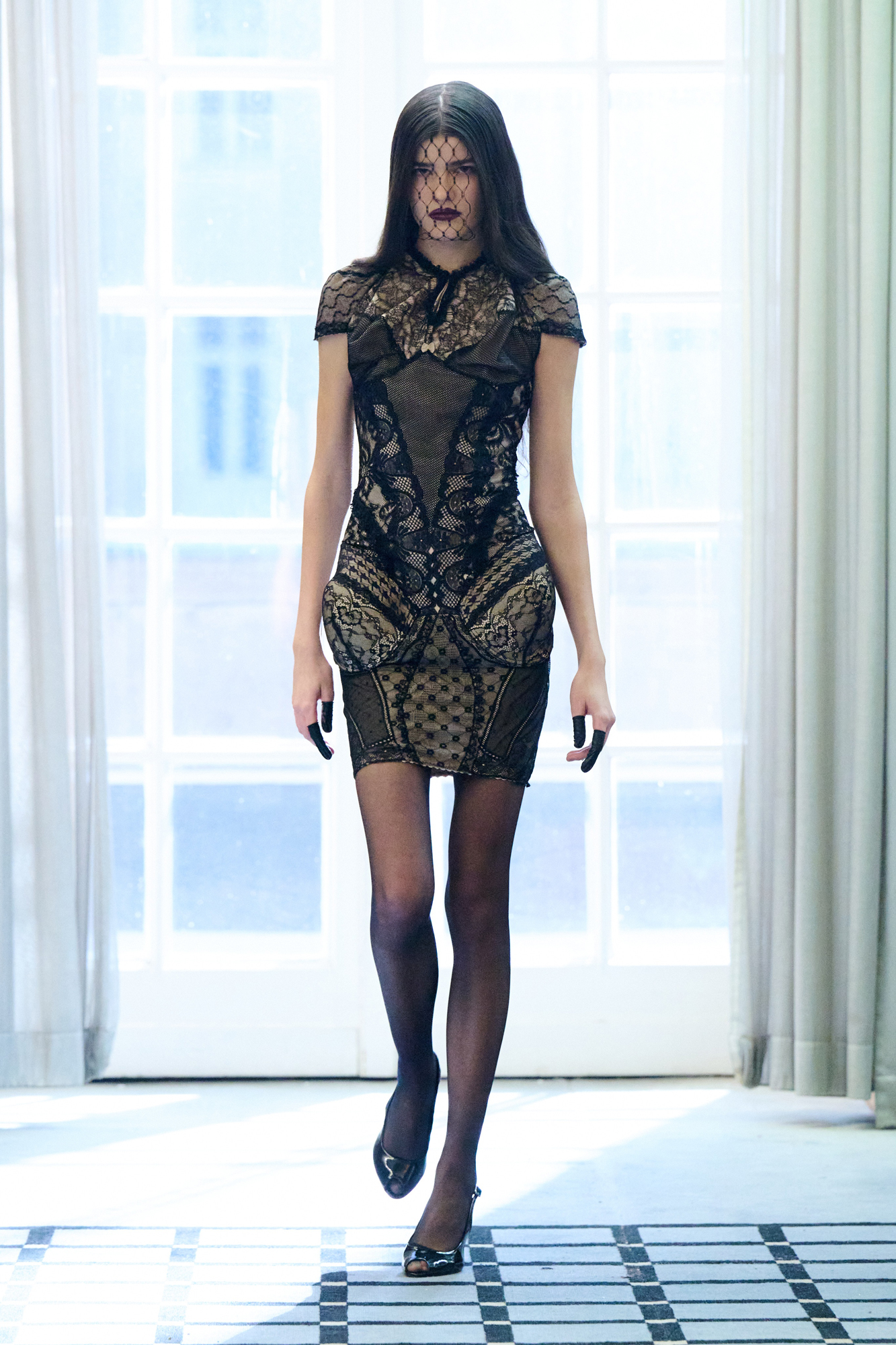
Lou de Bètoly F/W 2026 | Courtesy of Berlin Fashion Week
Buzigahill
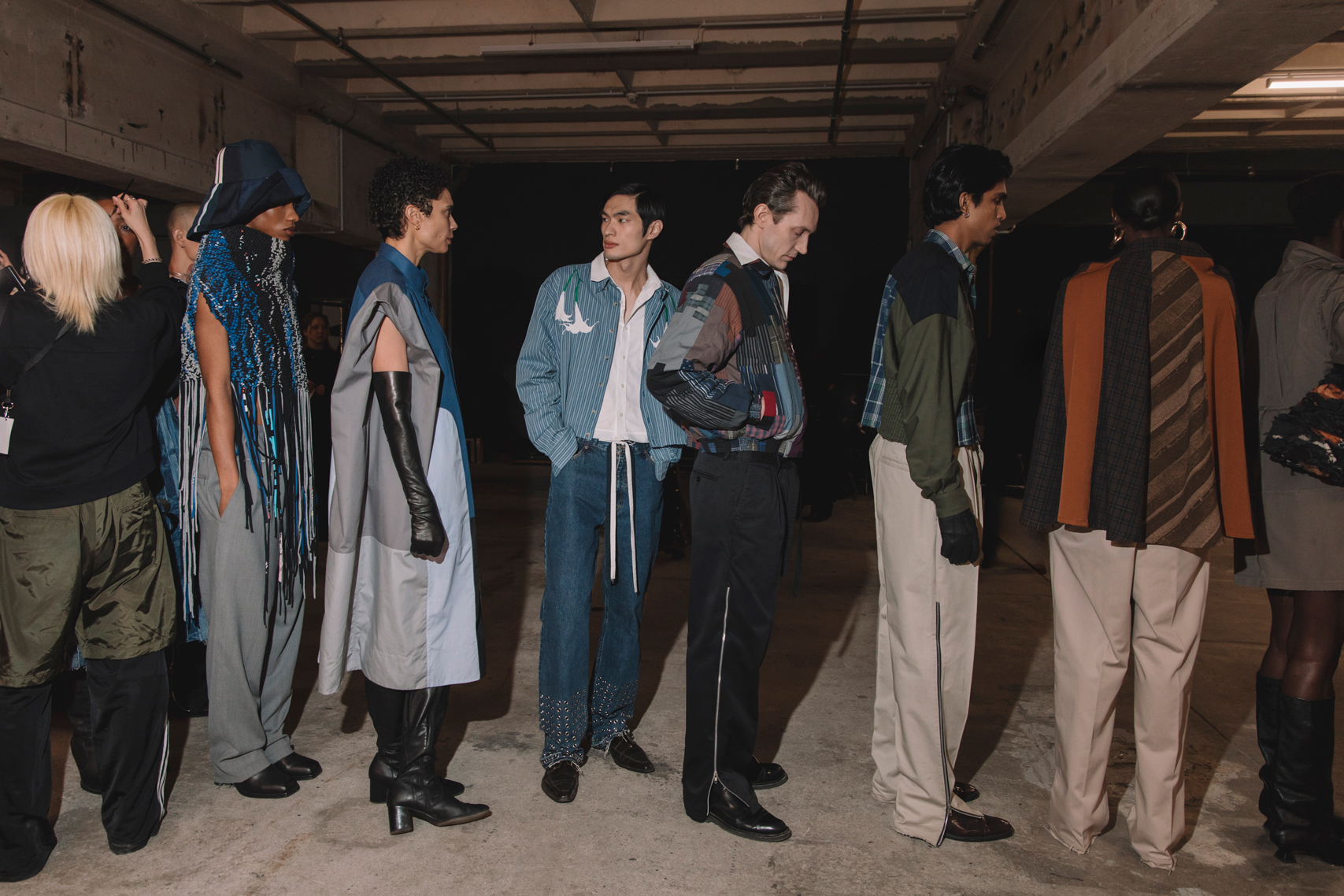
In a fashion week filled with statements, Buzigahill stood out as a brand on a mission. Ugandan designer Bobby Kolade has created something truly unique with Buzigahill, the first Ugandan label to merge cutting-edge fashion, art, and political activism on the global stage. His Fall/Winter 2026 collection, “Return to Sender 12,” was not just clothing but a defiant act of commentary. The premise: take the West’s cast-off secondhand clothes which flood African markets and send them right back – transformed into provocative new garments that challenge the status quo. Presented as part of the INTERVENTION showcase, Buzigahill’s show opened with a model wearing a reconstructed trench coat emblazoned with the hand-painted question, “Who Is to Blame?” – immediately setting a confrontational tone. Kolade drew inspiration from a nostalgic vision of 1960s–70s post-independence East Africa, when there was optimism, local textile production thrived, and personal style was bold and proud. He juxtaposed that era’s vibe with today’s reality: shipping containers of used clothes arriving from the Global North into East Africa. On the runway, this narrative came alive through garments that literally combined past and present. One look paired a vintage Ugandan-made wide-collar shirt (evoking Kolade’s grandparents’ time) with a jacket constructed from patchworked secondhand T-shirts and motorcycle jackets sourced from Kampala markets. Another model wore a dramatic cloak pieced together from random donated garments – you could spot fragments of Western logos and fabrics, but Kolade remixed them into an entirely new design, as if “colonizing” the colonizers’ cast-offs. Throughout, tailoring was intentionally a bit raw: hems left fraying, layers misaligned, prints clashing – a visual critique of the chaos that secondhand influx creates. Yet the styling by Peninah Amanda was superb, often accessorizing looks with bold Ugandan cultural touches that asserted ownership over the narrative. The collection’s message of reclamation was crystal clear: Buzigahill is sending these clothes back to where they came from, now imbued with Ugandan identity and protest. As Kolade has explained, even exporting these upcycled pieces poses challenges due to outdated trade codes, but that hasn’t stopped him.
Kenneth Ize
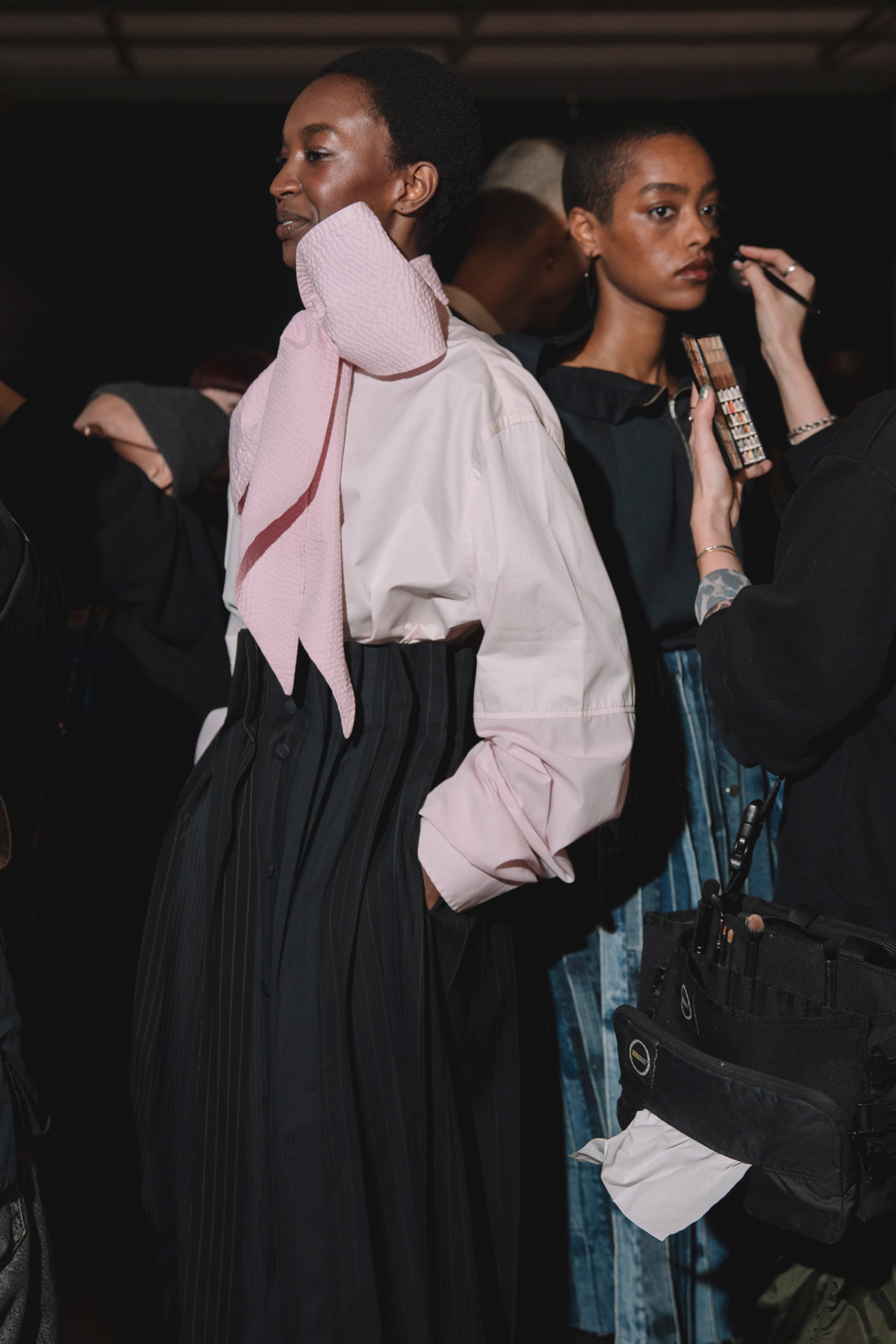
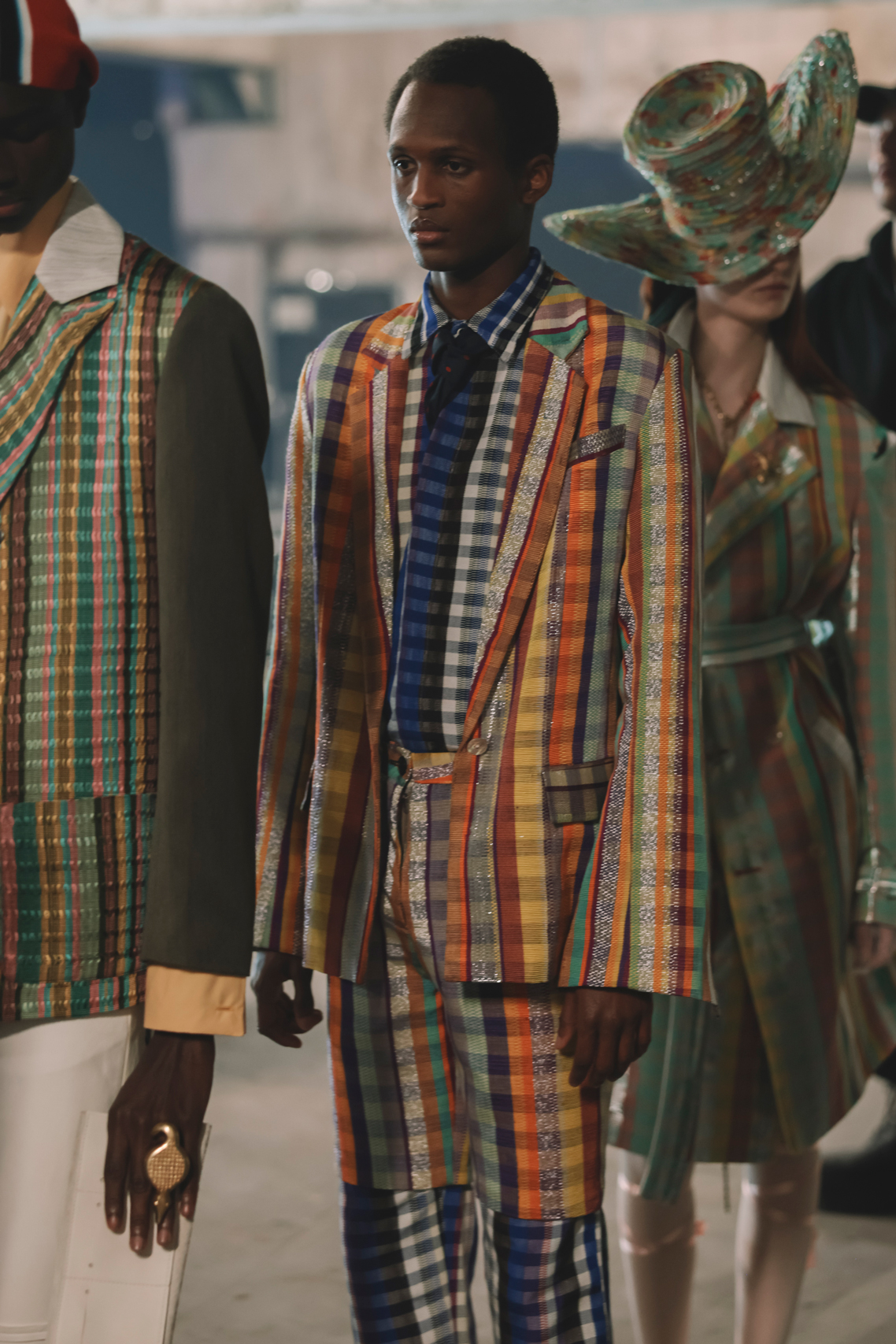
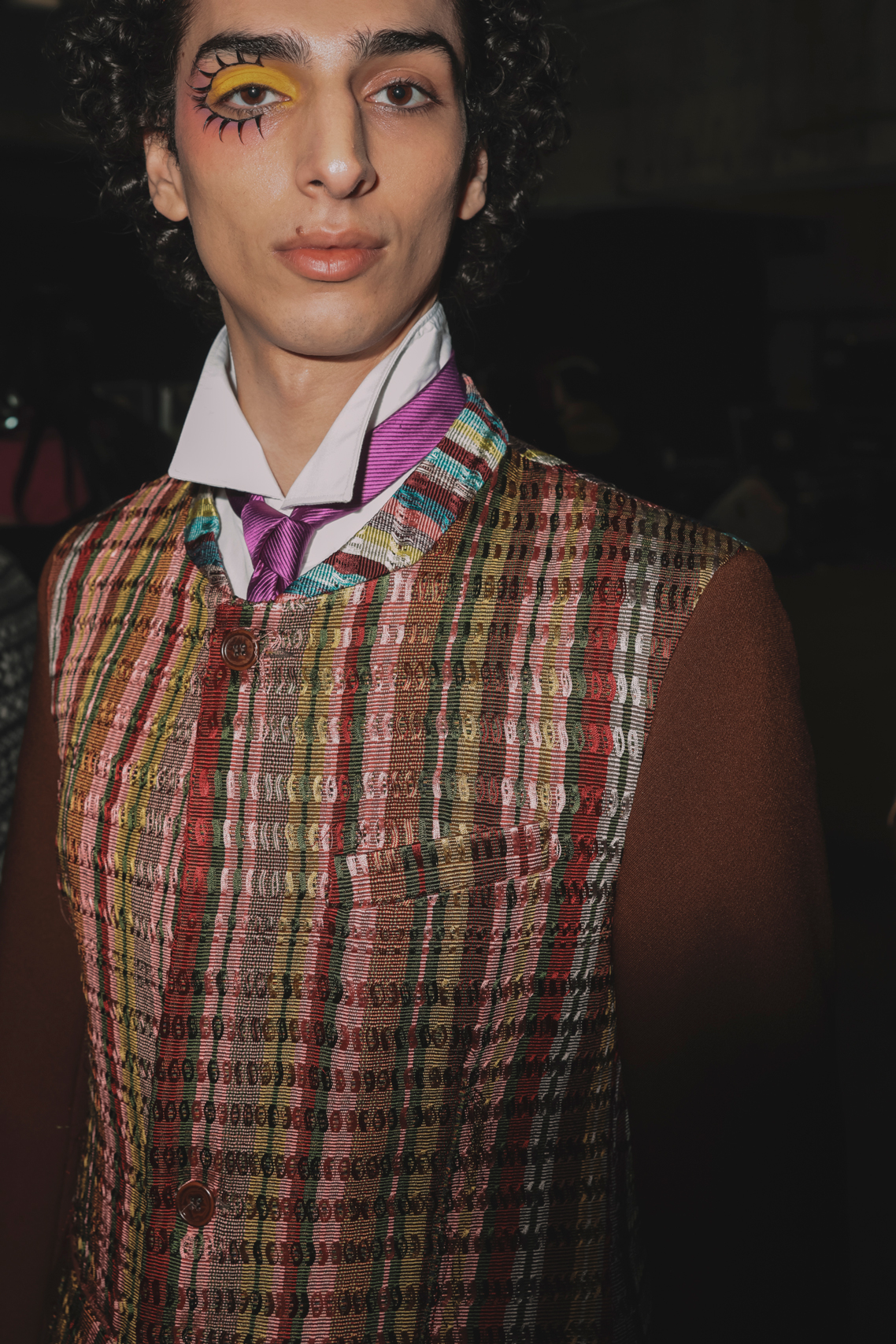
One of the most anticipated international additions to Berlin’s lineup was Kenneth Ize, the Nigerian designer known for his exuberant Aso Oke weaves. Showing as part of the Reference Studios-curated INTERVENTION program, Ize did not disappoint: his Fall/Winter 2026 collection, titled JOY, was a vibrant ode to resilience and community. Staged in the cavernous Kraftwerk hall, the presentation took on a performance-art quality as models stepped onto a raised platform one by one, where photographer James Tennessee Briandt (dressed in the collection) snapped their portraits live as the audience circled around. It was a fitting setup for a collection that turned introspection into spectacle. Ize conceived “JOY” during a period of collective fragmentation and exhaustion, pondering how to find light amid darkness. Rather than offer simple answers, he approached joy as a layered, complex emotion, something that starts internally and then manifests outwardly through dress. As always, Aso Oke – the traditional hand-woven cloth from Yorubaland – was central, appearing in gorgeous strips patched into trench coats, flowing jumpsuits, and wrap skirts. But Ize expanded his textile repertoire too, using lush velvets, sturdy cotton twills, indigo-dyed denim, and cozy wool plaids that were spliced together. The silhouettes riffed on classic tailoring but with deconstruction: a trench coat had slashed sleeves and panels of weave peeking through; a pinstripe blazer was artfully draped like a cape; trousers were tailored with one leg in denim and one in woven cloth. In a beautiful embodiment of collective creation, Ize collaborated with a wide circle of friends and family on this collection from New York milliner Esenshel (who contributed bold, sculptural hats) to stylist KK Obi and casting director Affa Osman. The palette was bright and uplifting with sunset orange, emerald, royal blue, and pops of canary yellow, grounded by black and sand tones, underscoring the joyful optimism set amongst the concrete cavern. As the final lineup of models stood at the platform’s edge, facing the crowd in united solidarity, there was a tangible energy in the air; a sense of communal joy that transcended the clothes all the way backstage as crowds gather around to hear more on Ize’s perspective. Kenneth Ize’s return to the runway was not just a fashion show, but a heartfelt celebration of finding hope and beauty in togetherness.
Laura Gerte
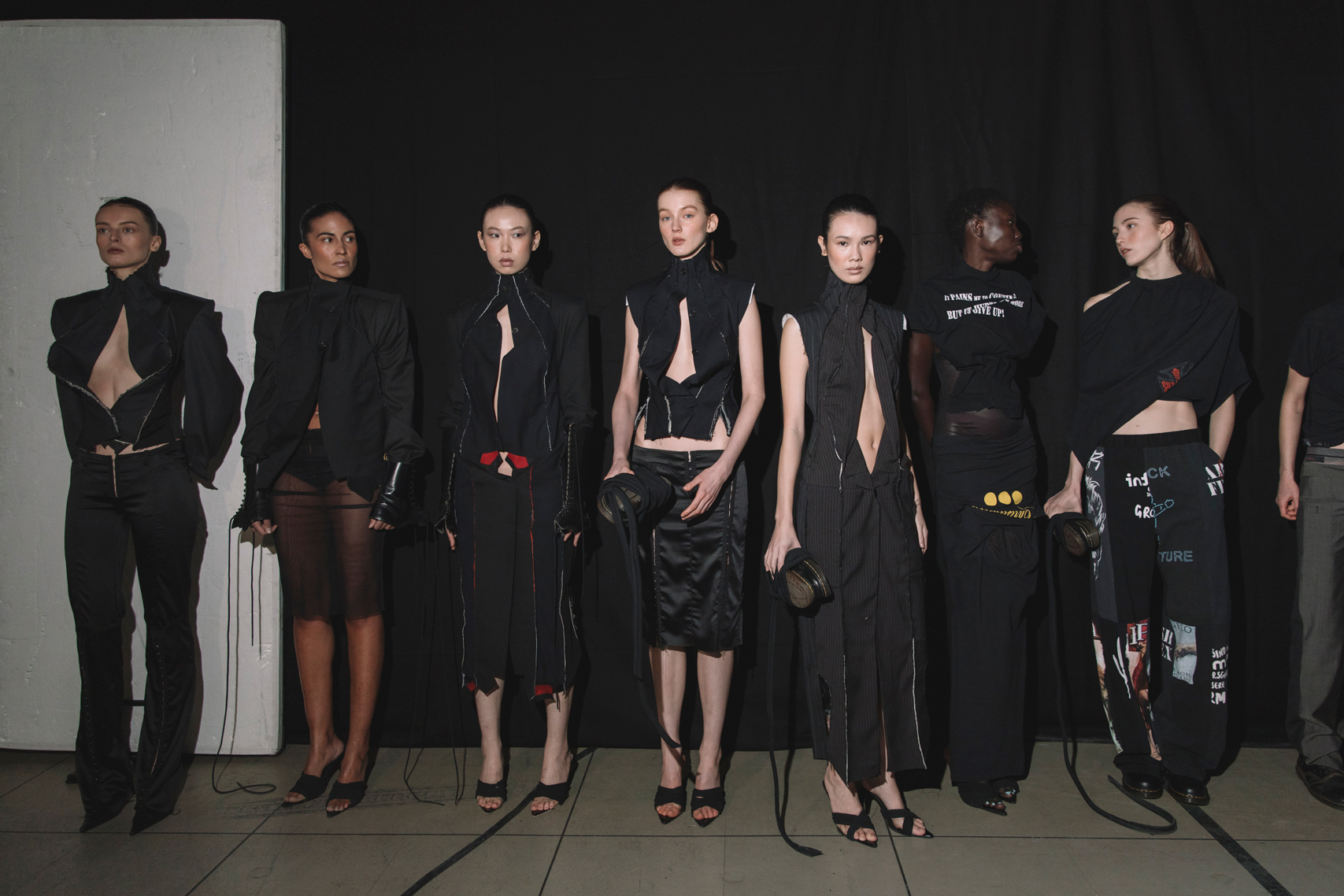
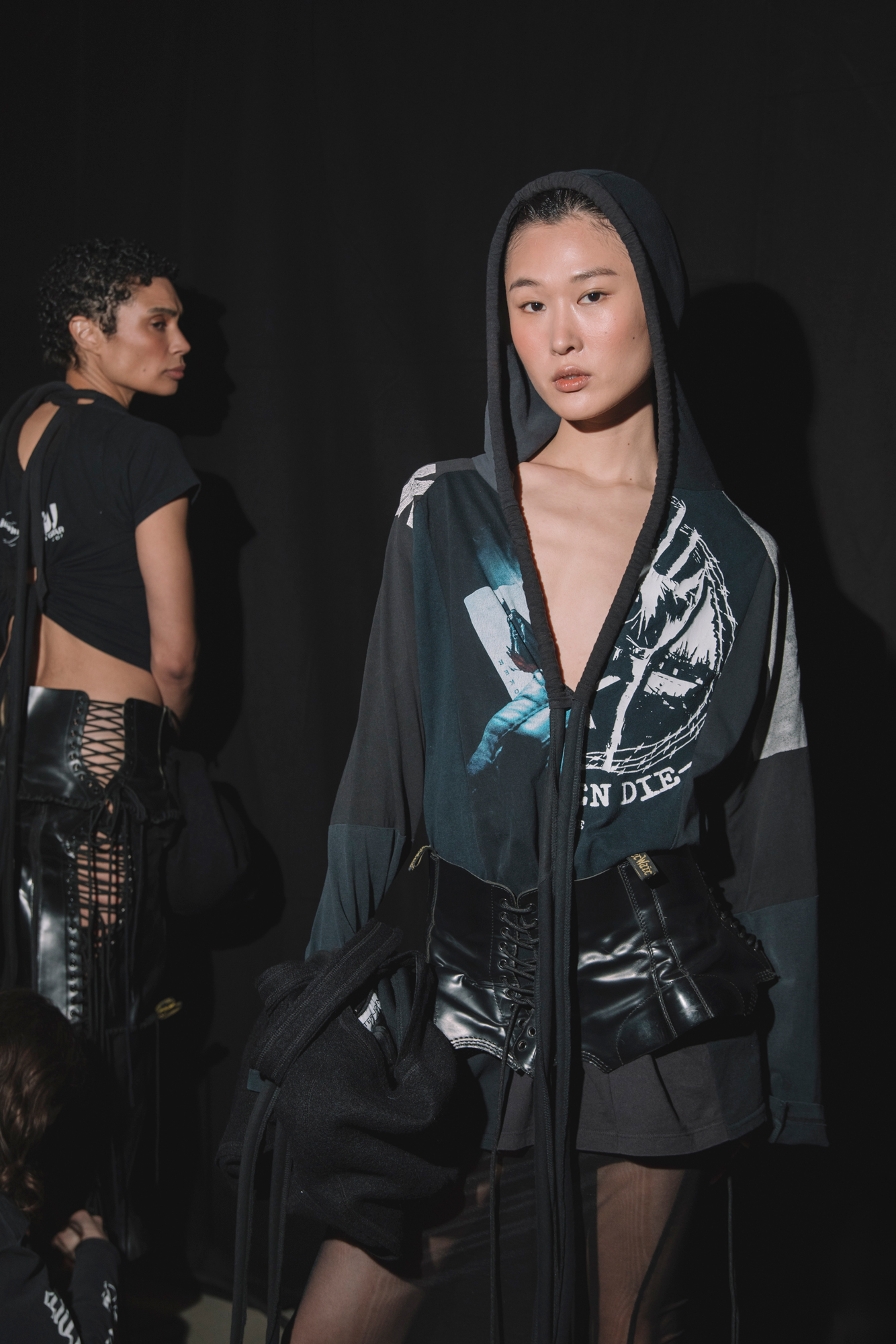
Berlin-based Laura Gerte used her Fall/Winter 2026 collection to send a bold message that so-called “villainous” woman will no longer be contained. Titled Deviant Defiant, Gerte’s collection was an ode to female agency and rebellion, reimagining the archetype of the female villain as a hero of her own story. A rising star known for fusing sustainability with strong concepts, Gerte this season sculpted radically new silhouettes from old materials. She worked almost entirely with reclaimed garments, deadstock fabrics, and recycled textiles, transforming these remnants of the past into fashion futures. The result was a fierce yet poetic lineup that mixed raw femininity with a futuristic punk edge. Models resembled modern warrior sirens: one wore a long gown made from draped vintage satin and jagged panels of black leather; another strode out in a slim, elongated suit in sculpted wool that had dramatic, pointy “wings” at the hips. Gerte played with contrasts – fragility and strength – at every turn. Diaphanous mesh and lace were inset into structured coats; tight corset-like tops were paired with flowing asymmetrical skirts. The color story was appropriately dark and moody: predominantly black, deep burgundy, and midnight blue, with glints of silver and poison-green. Texture was key: we saw rich velvet panels, glossy patent strips, and shredded tulle detailing that all added depth to the monochrome hues. A major highlight was Gerte’s collaboration with Dr. Martens – she literally upcycled iconic Dr. Martens boots into garments and accessories. For example, one model wore a bustier crafted from sliced-and-reconstructed Doc Martens leather uppers, complete with the yellow stitching, while another carried a mini shoulder bag that had once been the shaft of a boot (complete with lace grommets). This inventive partnership not only underscored Gerte’s sustainable cred but also served the collection’s theme: repurposing a symbol of subculture rebellion into high fashion. The show’s ambiance – set in a cavernous, dimly lit reclaimed department store – amplified the drama, as did a haunting spoken-word monologue that opened the show, touching on “when fear and arousal become one,” reflecting the collection’s erotic undercurrents. In the end, Laura Gerte succeeded in creating clothing that is provocative yet empowering, serious yet full of life. She’s reframed the “villain” not as someone to be defeated, but as a symbol of uncompromising autonomy. It’s no wonder many are calling Gerte a designer to watch – she’s fearlessly pushing fashion into bold new territory, one audacious silhouette at a time.
GmbH
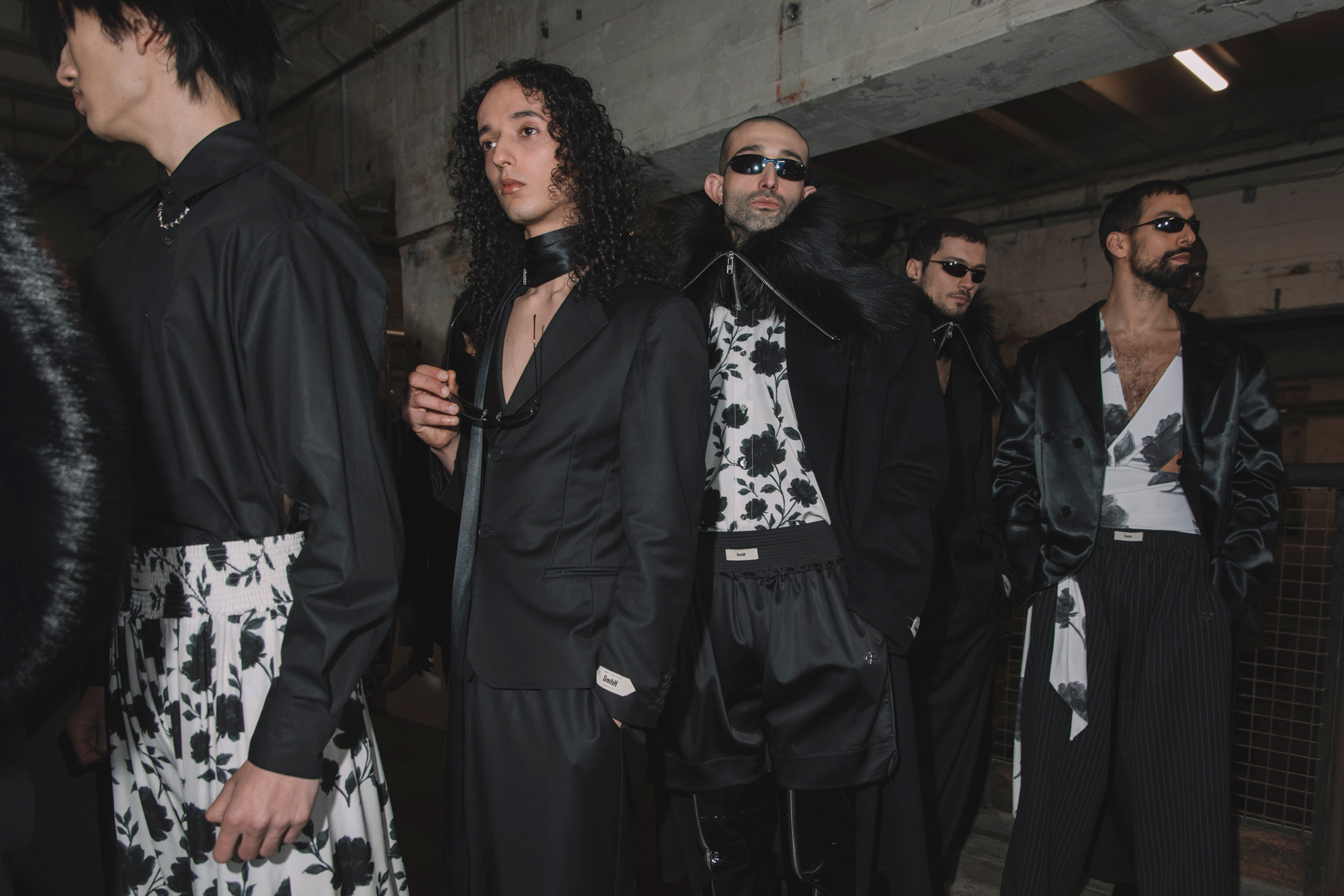
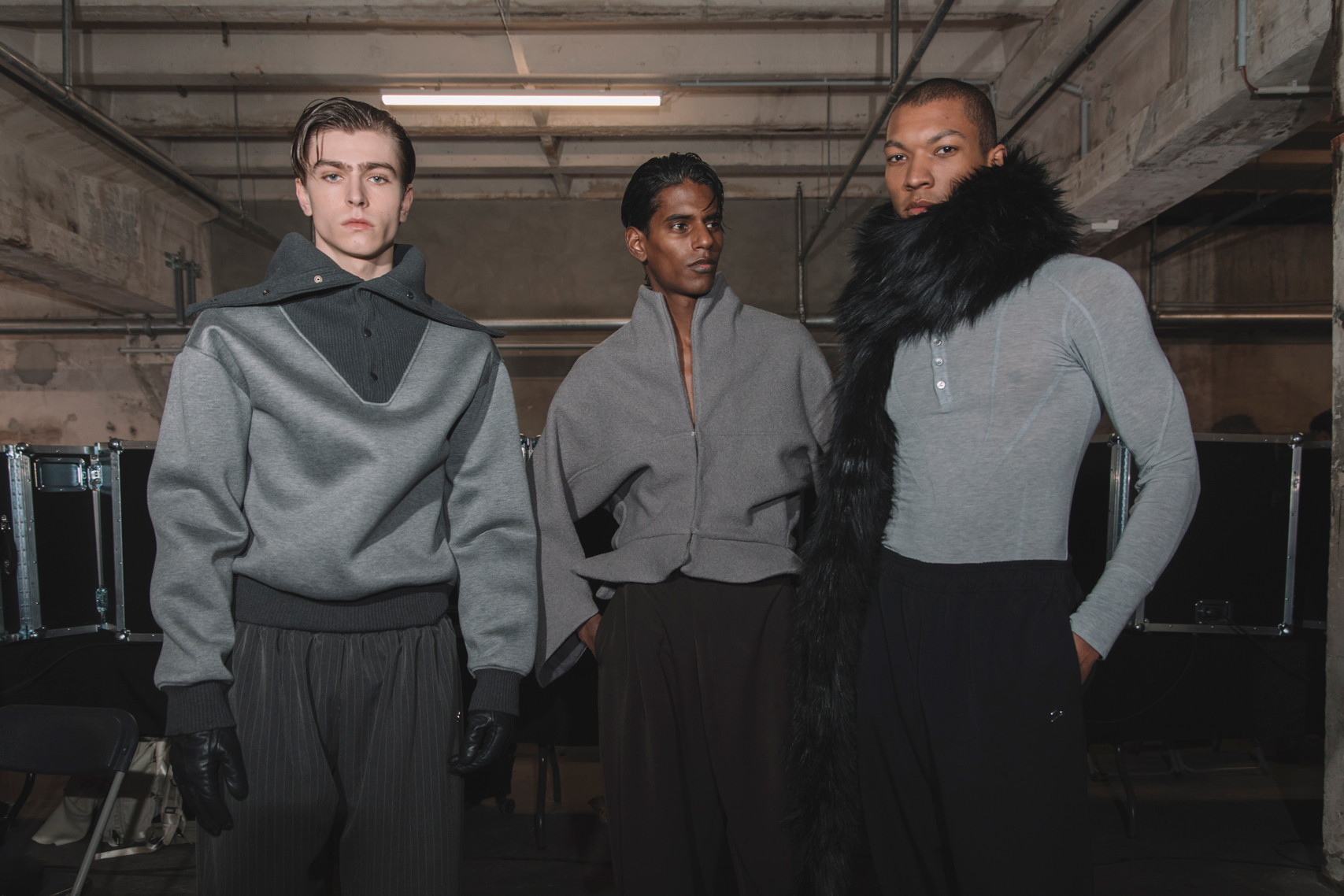
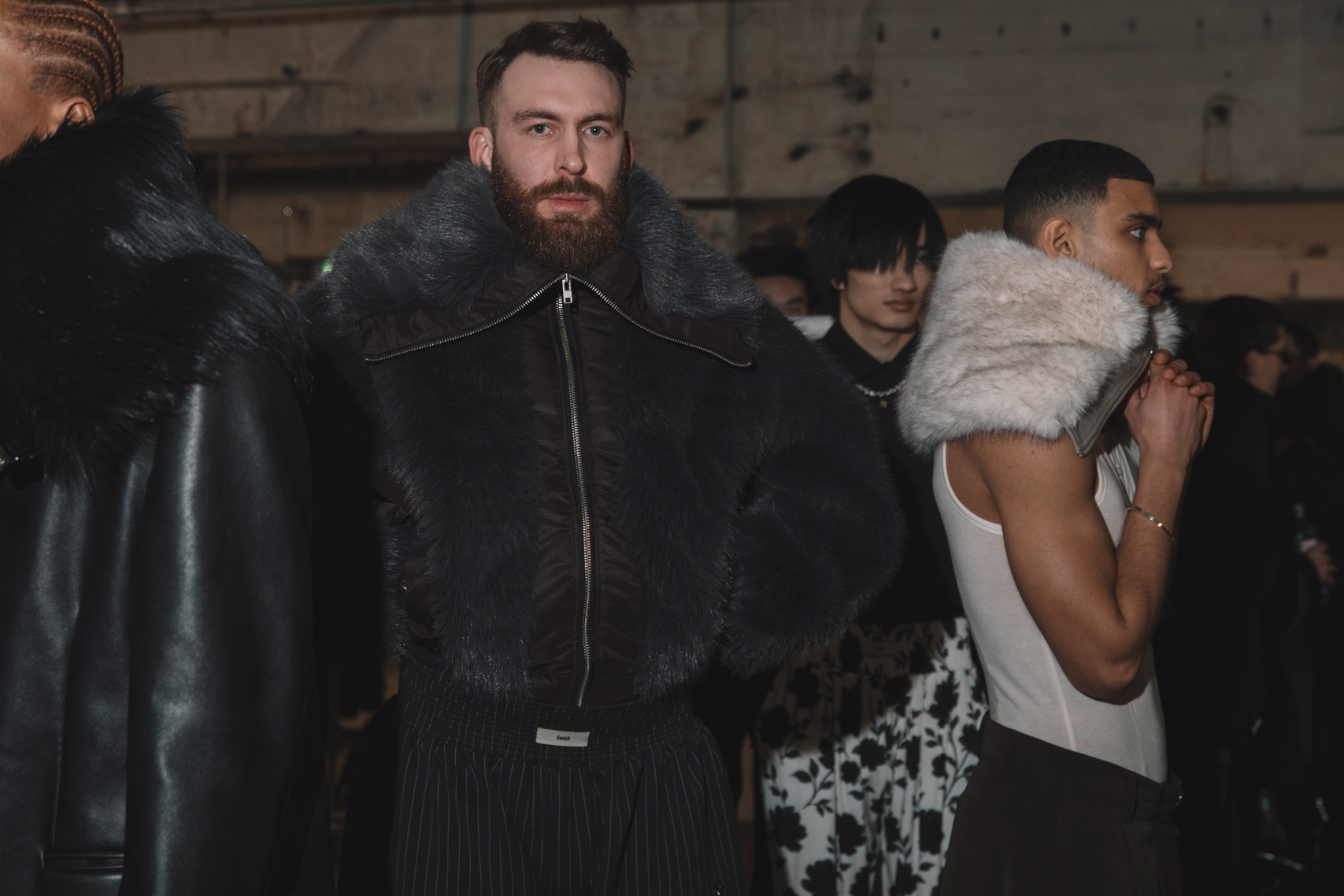
Closing out the week with a bang, Berlin’s own GmbH returned to its hometown runways and delivered a tour-de-force that merged club culture and political commentary. Designers Serhat Isik and Benjamin Huseby titled their Fall/Winter 2026 collection Doppelgänger, and used it to hold up a mirror to a world of distorted realities. GmbH has always been vocal about social issues, and this season their focus was on the unsettling concept of “Friedensangst”, German for “fear of peace,” referencing those who profit from war and thus fear its end. The collection channeled that tension through an ’80s Berlin lens, drawing inspiration from the city’s early-80s experimental music and underground scenes. On the runway that translated to looks balancing hard and soft, past and future. Silhouettes took a cue from power dressing of the 1980s: broad, exaggerated shoulders, cinched waists, and pleated high-rise trousers that gave a nod to both new-wave club kids and old-school tailoring lines. Styled by Ellie Grace Cumming, the key GmbH signature pieces were all there: glossy over-the-knee patent boots, tough leather pants bristling with zipper details, faux fur bomber jackets with oversized Edwardian collars. Yet there was a twist of tenderness too — flowy long-sleeve tunic tops layered under structured vests, extra-long scarves in delicate knits wrapped around necks, and a striking black-and-white floral print that interrupted the mostly neutral palette. The materials were chosen for tactility: some fabrics that looked like hard vinyl were actually soft to the touch, and vice versa, playing into the doppelgänger theme of deceptive appearances. The designers’ message came through not just in the clothes but in the casting led again by Affa Osman as models of diverse backgrounds and body types walked. As freezing rain fell outside, GmbH proved that fashion in Berlin can be beautiful, provocative, and socially engaged all at once. It was a triumphant homecoming on the eve of the brand’s 10-year anniversary, reminding everyone why GmbH remains one of Berlin’s most relevant voices.
Der Berliner Salon
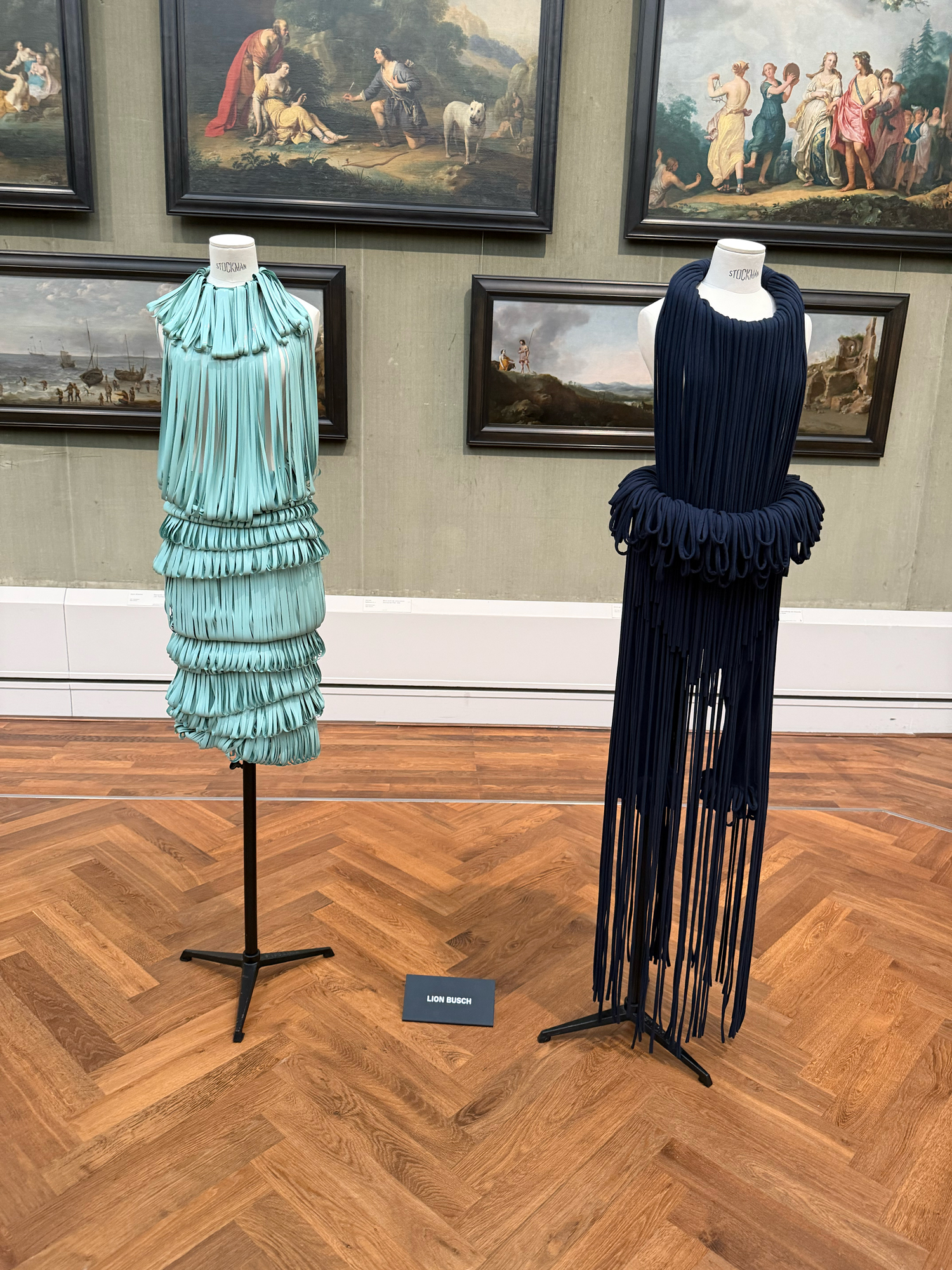
Last but not least, the Fall ’26 edition of Der Berliner Salon offered a refreshing palate cleanser and a compelling glimpse into the future of German design. More exhibition than traditional runway show, the Salon—curated with the discerning stylistic eye of former Vogue Germany editor Christiane Arp — took over the stately halls of the Gemäldegalerie. Against a backdrop of Old Master paintings, 45 emerging and established designers from across Germany presented their work in a collective showcase that underscored fashion’s place within a broader cultural dialogue.
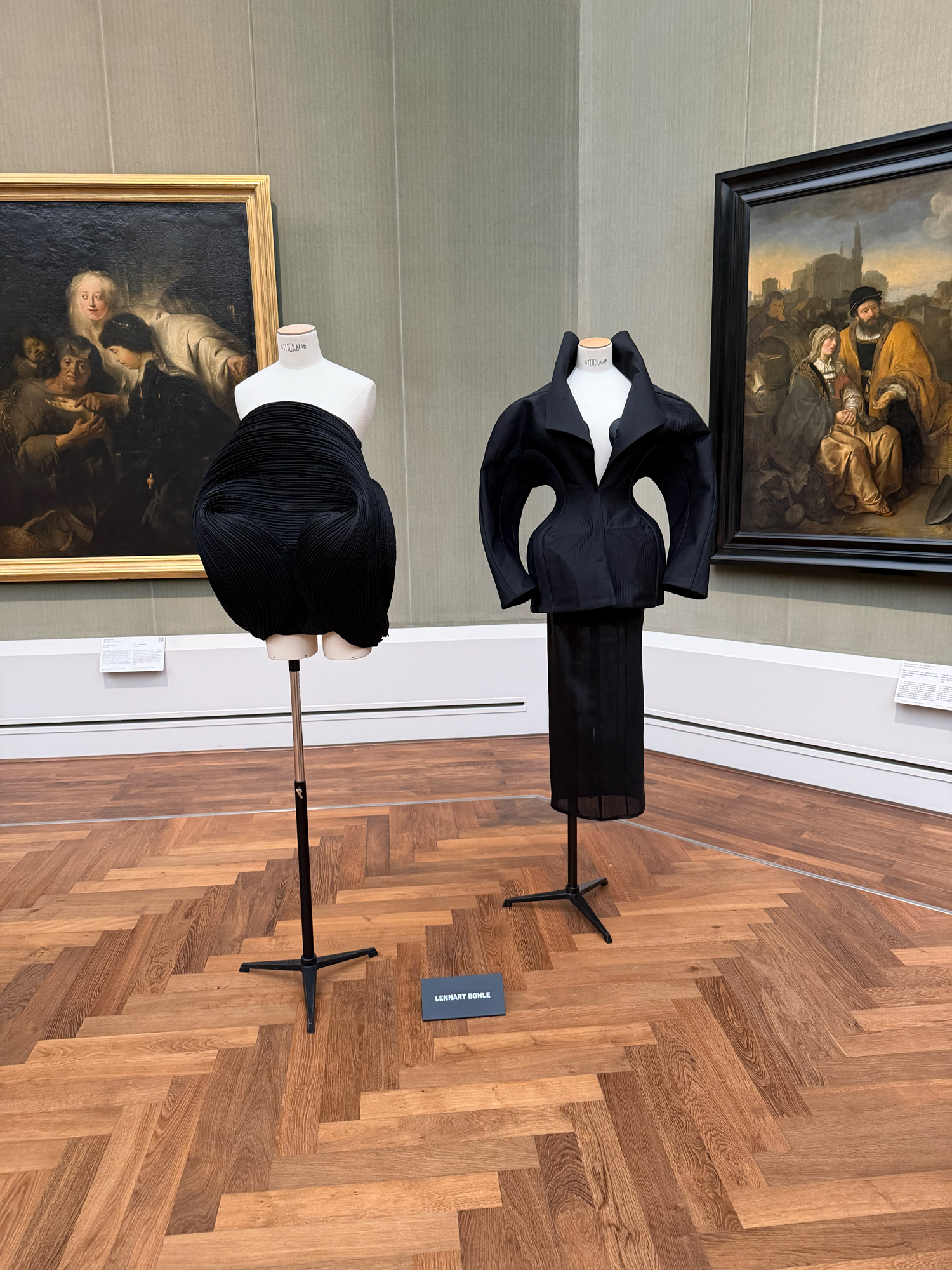
Each designer’s practice was thoughtfully staged with historic artworks emphasizing fashion’s role as cultural expression as much as commerce. The roster reflected the breadth of Germany’s next generation: Lennart Bohle’s sculptural, tailoring-driven silhouettes informed by digital experimentation; Clara Rathke’s material narratives exploring transformation through contrast and construction; Haus Linsenhoff’s couture-led work rooted in activism and women’s rights; Lena Vuotta’s textile-driven universe built on knitting, embroidery, and handcraft; Jon Liesenfeld’s intricate surface work and technical leather explorations; Helen Eisen’s slow-fashion, handmade approach; and Lion Busch’s research-led use of Shibori dyeing and sustainable textile innovation. Together, they formed a layered portrait of a design culture deeply invested in process, craft, and meaning.
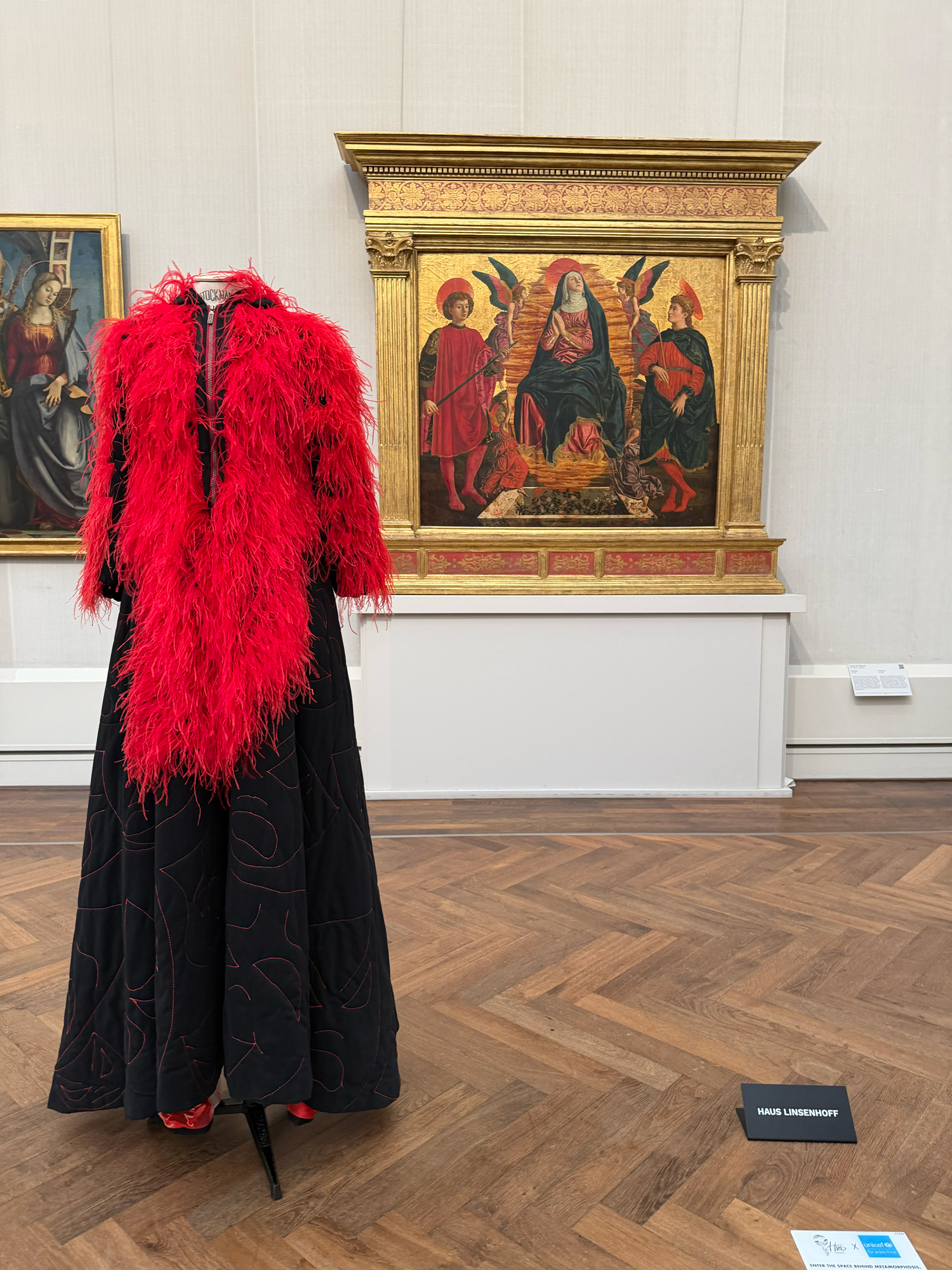
Moving through the Salon, one might encounter a rigorously constructed garment positioned beside a Caravaggio painting—moments that sharpened the dialogue between past and present. In doing so, Der Berliner Salon not only highlighted the diversity and creative strength of Germany’s fashion landscape, but also reinforced Berlin’s role as a crucial incubator for emerging talent. By situating new design voices within an art-historical context, the Salon reaffirmed fashion’s legitimacy as a cultural asset, exactly as Arp and co-organizer Marcus Kurz intended. As a closing chapter to Berlin Fashion Week, Der Berliner Salon felt both considered and optimistic—a clear testament to Germany’s commitment to nurturing the next era of design innovation.