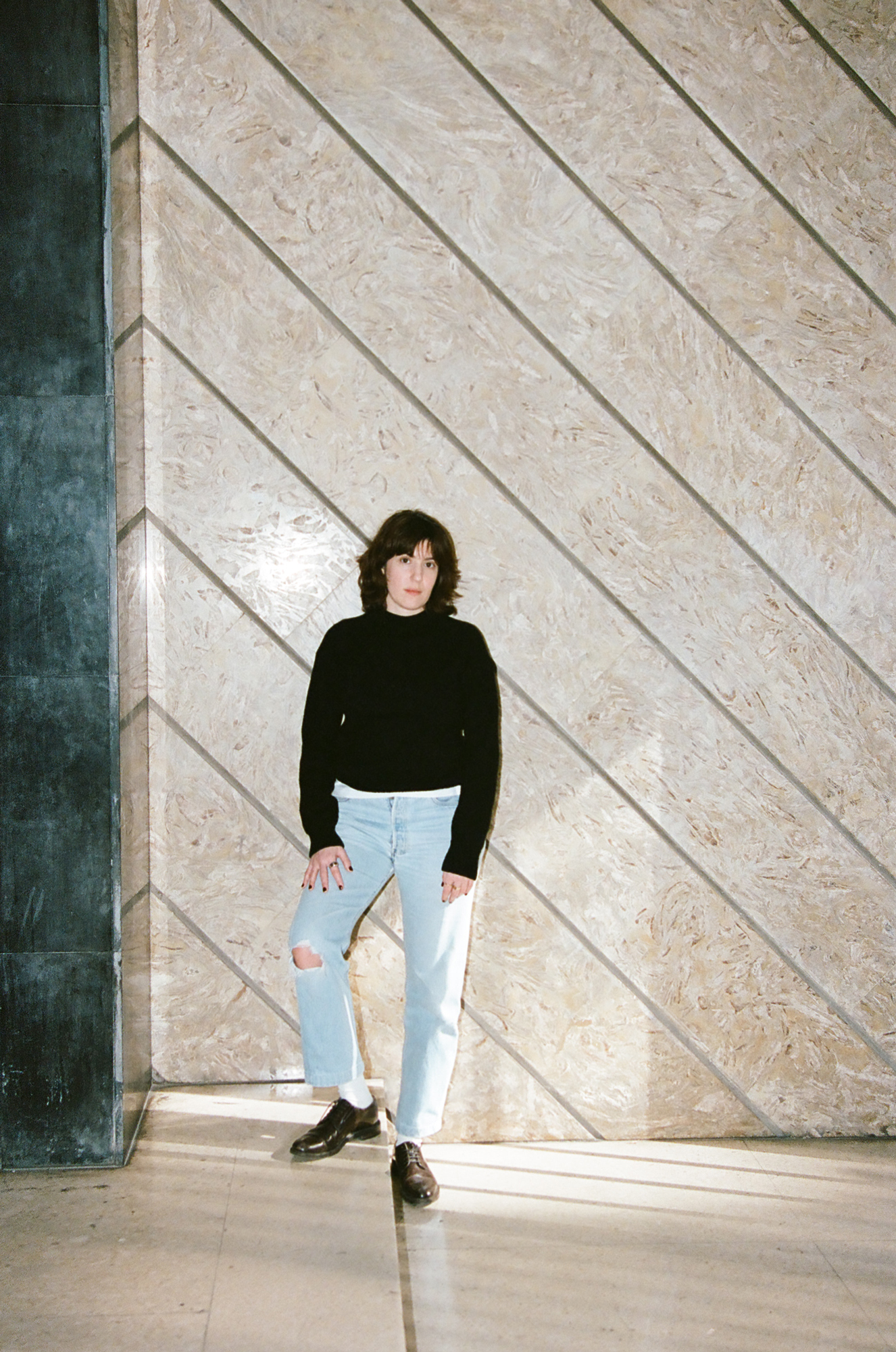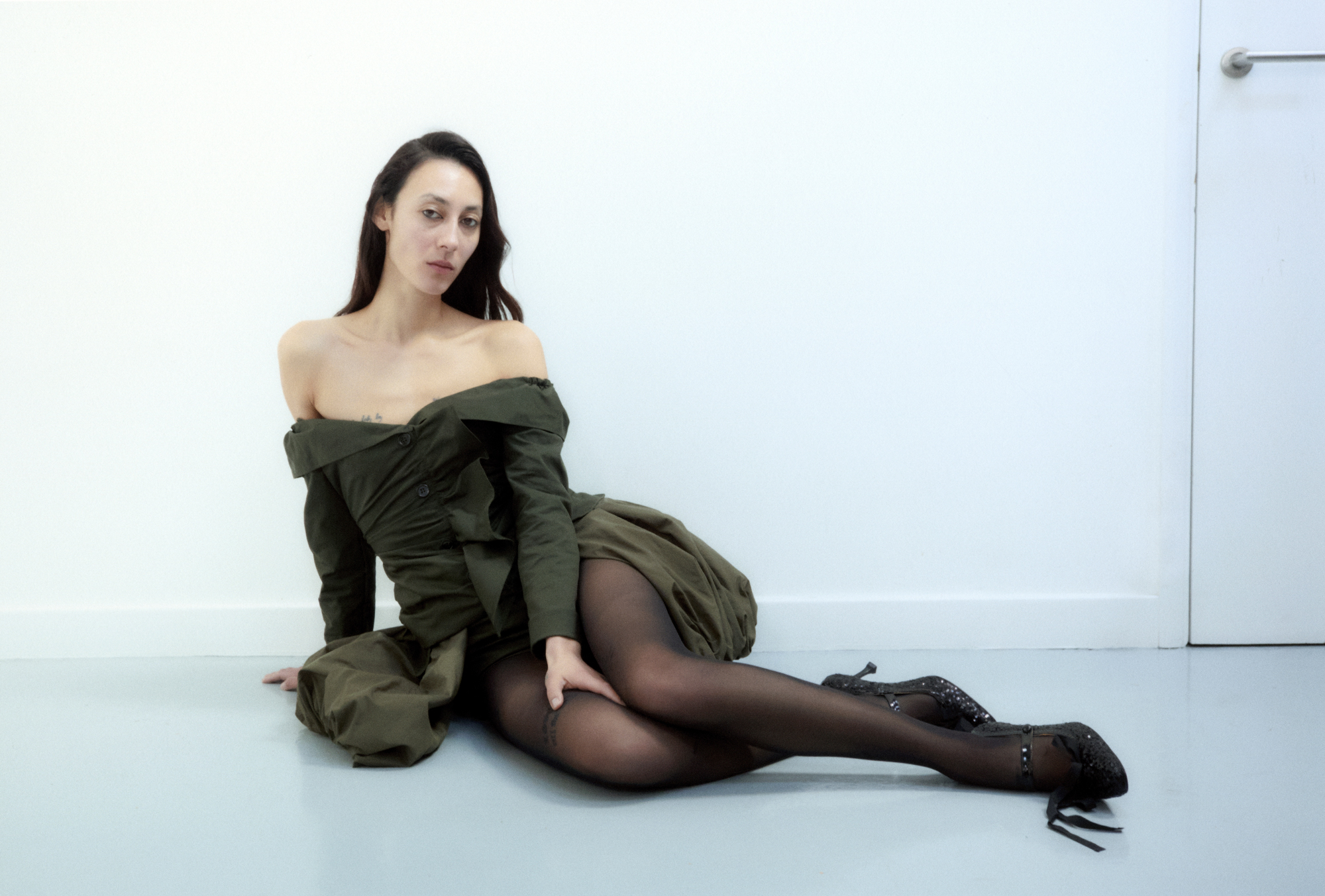
It’s evening in Beirut—one of the world’s oldest cities and long a crucible of culture—and Renaissance Renaissance designer Cynthia Merhej is reflecting on Maya Deren’s Meshes of the Afternoon. The avant-garde silent film follows a woman’s dreamlike journey after she discovers a flower upon returning home and becomes swept into the surreal sequence that unfolds. “Is it a dream or real life?” Merhej asks of the 1943 picture, seeing in it an echo of her own artistic essence. Weaving her love of the surreal and reverence for lineage, Merhej has intuitively crafted the ethos of the fashion brand Renaissance Renaissance, incorporating skills she acquired while studying visual communications and illustration at Central Saint Martins and The Royal College of Art.
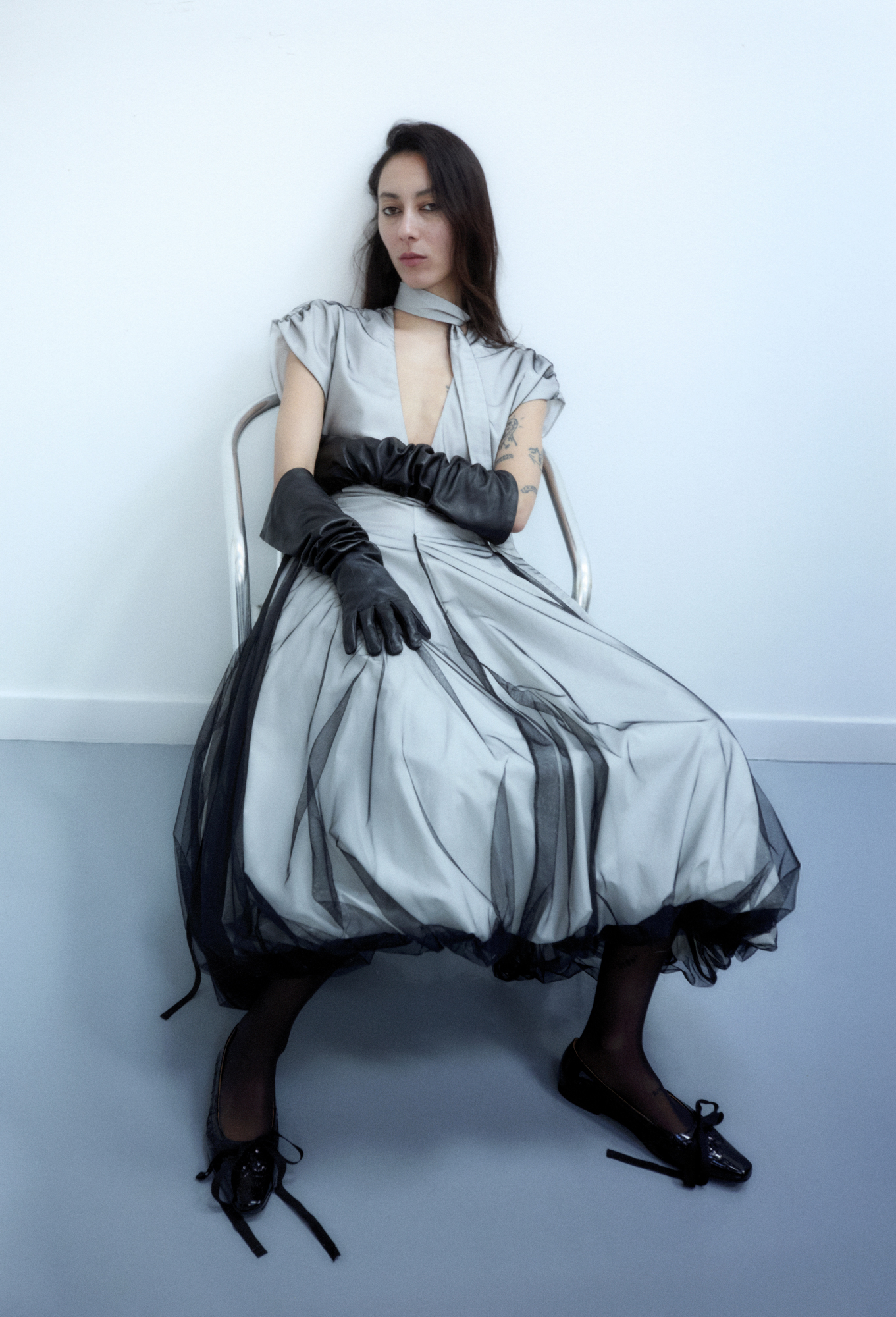
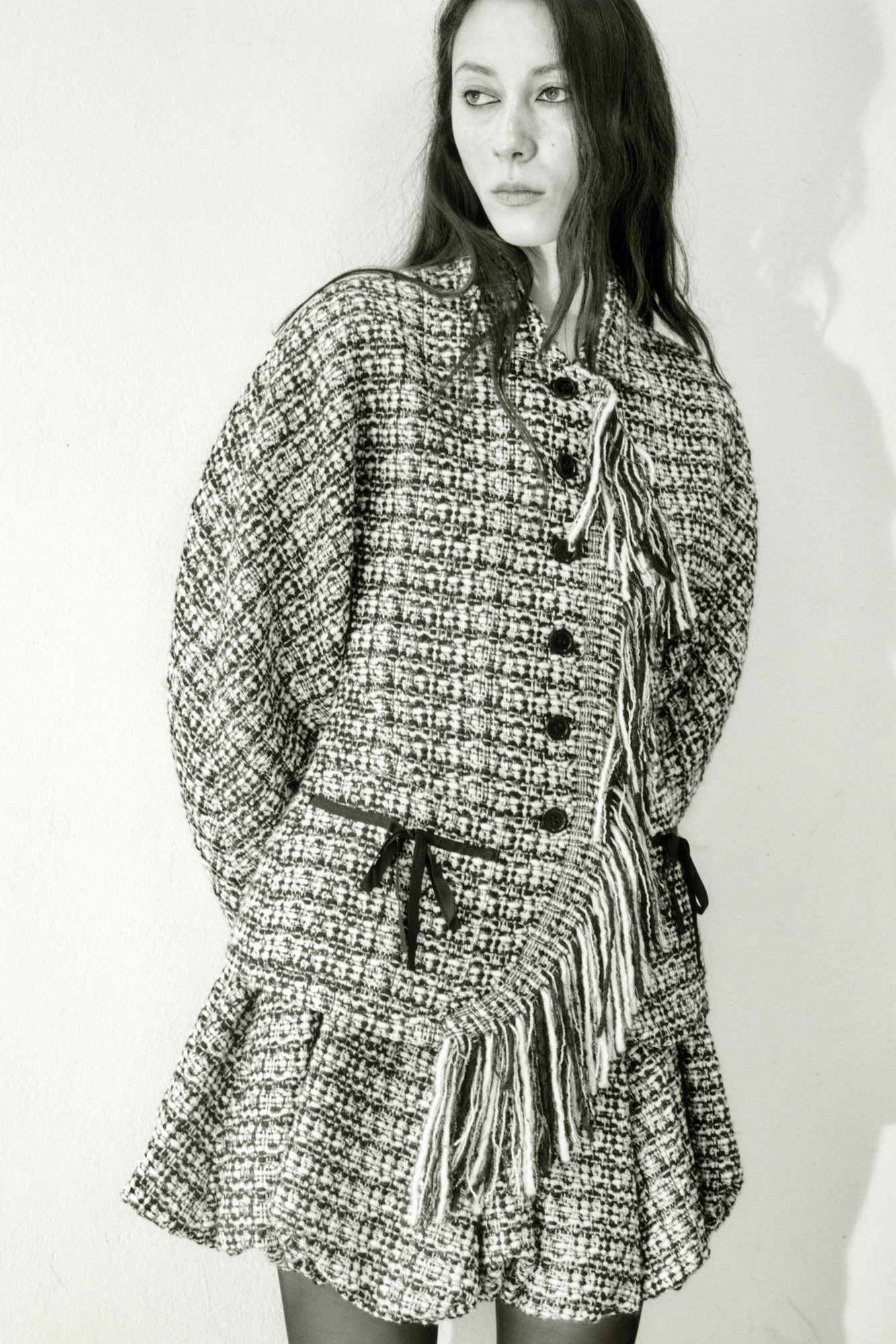
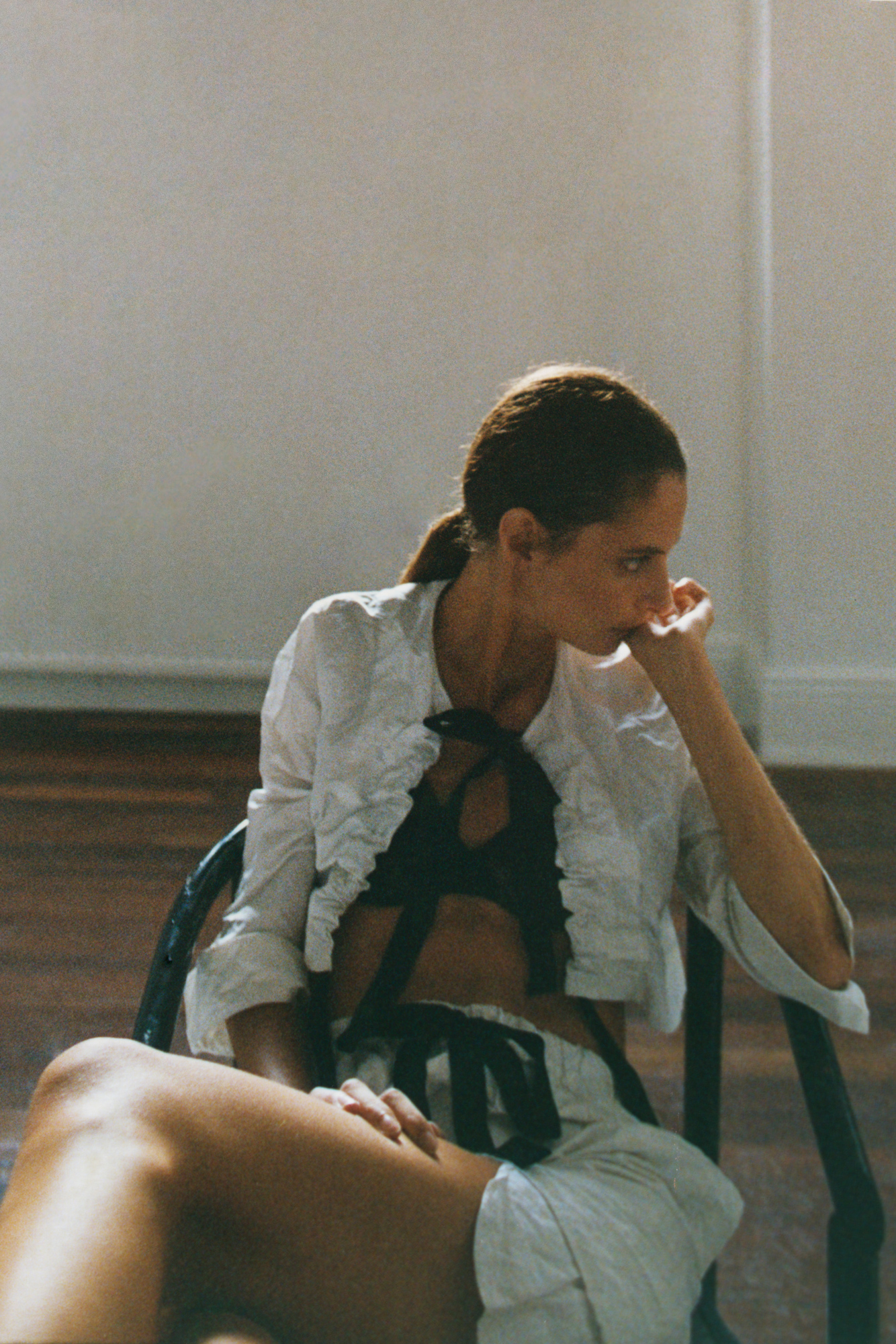
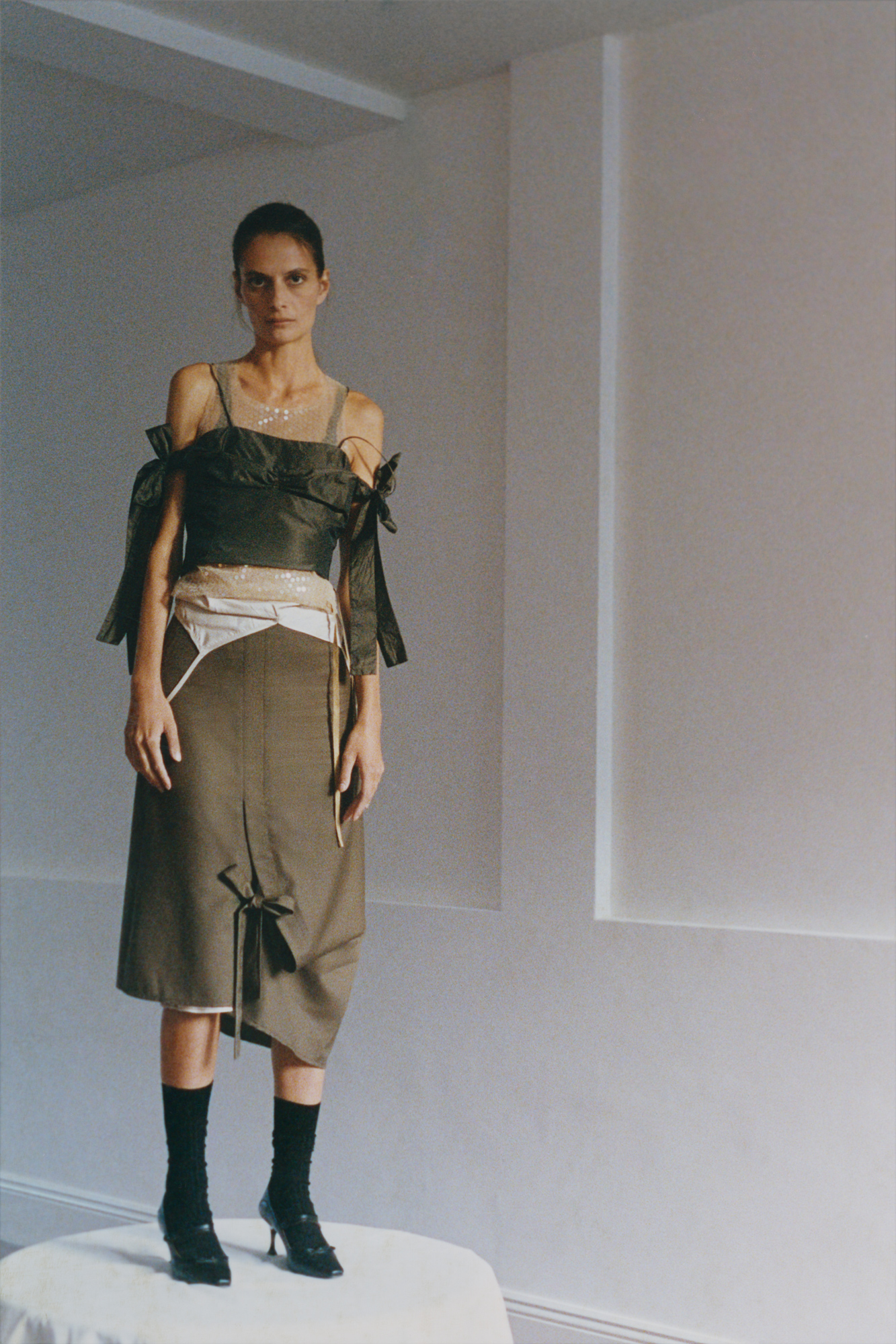
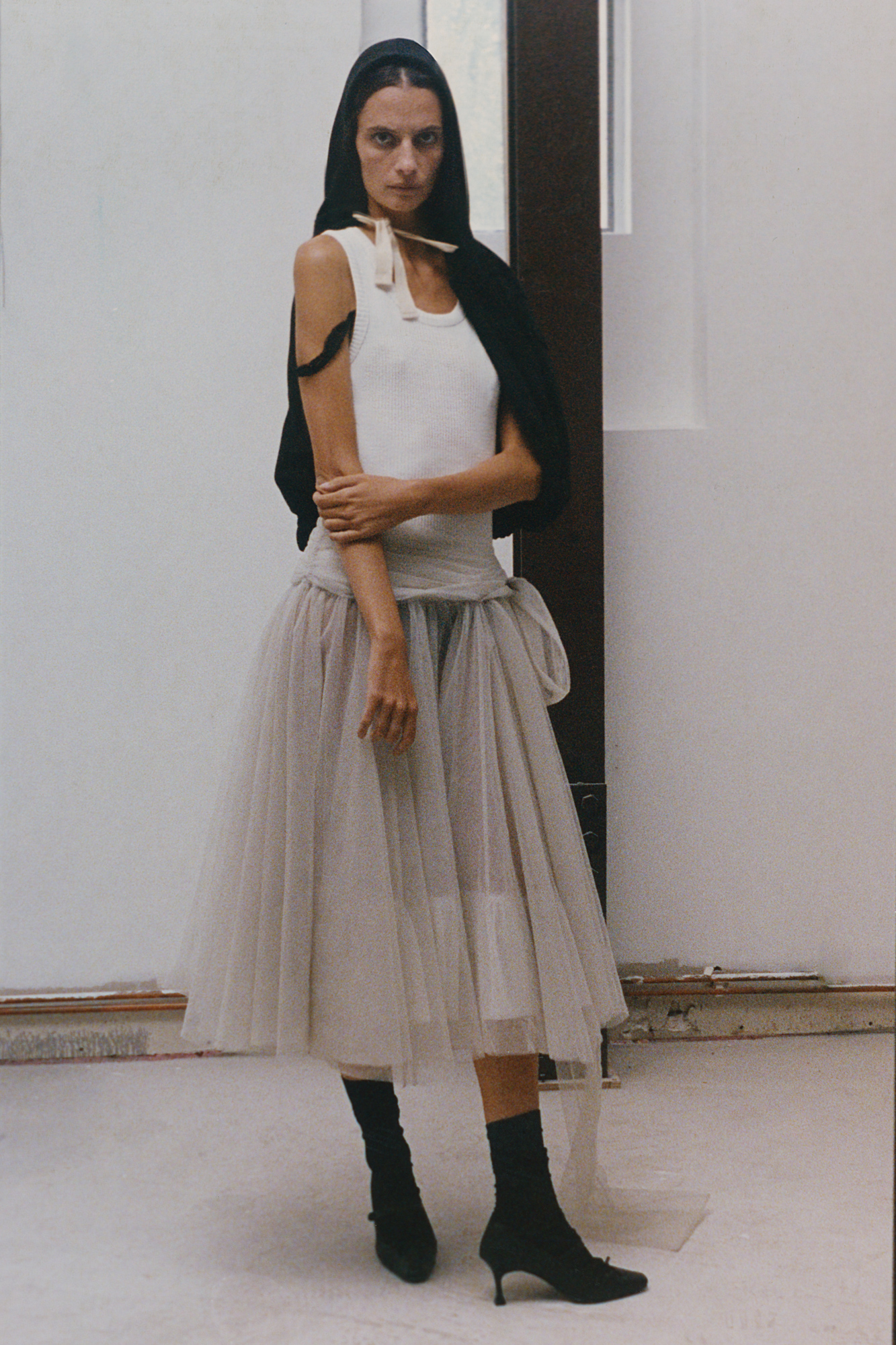
Characterized by tulle, ruched fabrics, and drapery, the designer’s garments have been donned by Chloë Sevigny, Dua Lipa, and Lady Gaga, ultimately cementing her as a 2025 LVMH Prize semi-finalist. Merhej’s success as a designer is practically predestined; her great-grandmother owned a couture atelier in Jaffa, Palestine, before being displaced as a result of the Nakba, and her mother continued the family tradition by establishing a vibrant atelier of her own in Beirut during the Lebanese war. Renaissance Renaissance exists as a visual representation of her Palestinian-Lebanese heritage, encapsulated by romance, fantasy, playfulness, and homage to her past. Models.com contributor Nia Shumake spoke with Merhej on her creative process, influences, and self-care rituals.
How would you describe the cultural atmosphere of Beirut when you were growing up, and how has the city’s creative scene evolved since then?
When I was born, the civil war in Lebanon had just ended, so there was essentially nothing. By the time I was a teenager, many artists and creatives who had left during the war had returned and reestablished a vibrant cultural scene. I was really curious—there were interesting exhibitions, performances, and concerts happening, and I wanted to see everything. But a couple of years later, another war began, and Israel was bombing Lebanon. That political turmoil disrupted the creative scene again. I went overseas for university and spent about seven years studying. When I moved back in 2015, many of the people who had left during that conflict had also returned. There was a very active creative period roughly between 2014 and 2019.
Then, in 2020, following the port explosion and the country’s complete financial collapse, the creative class left Beirut once again. The trauma and instability made it unsustainable at the time. Things have stabilized somewhat now, and I feel energized being back as businesses and resources are finally able to operate. I wouldn’t say it’s fully functioning, but it’s significantly better than it was five years ago. The cultural landscape in Beirut has always been a dynamic, ever-changing cycle.
Regarding style, what were popular sartorial influences in Lebanon during your formative years?
At the time, Puma sneakers, low-rise jeans from Diesel, and Zara were popular. My parents were strict financially, and my mom—who’s Palestinian—had an immigrant mentality of not wasting anything. We didn’t buy anything unnecessary. I never went without growing up, but my parents weren’t purchasing the cool things either, so I had to make do with whatever I could find in the house. Sometimes, I dipped into my dad’s or my sister’s closet. I loved thrifting, which was nearly nonexistent in Lebanon, and I often wore my old ballet shoes. I learned how to play around with clothes. But I was also really inspired by the looks in Elle Girl.
You’re a third-generation couturier, considering your mother and grandmother’s ateliers in Jaffa and Beirut—is there a defining moment that inspired you to become a designer?
I don’t think I had a defining moment, partly because I was interested in photography as well. That’s also why I didn’t end up studying fashion. There wasn’t one discipline that encompassed everything I wanted to do. All I knew was that I wanted to do something creative. I spent a lot of time at my mom’s workplace, and it felt natural to sketch and create mood boards. I was into fashion, but I didn’t think there was a school or job for fashion specifically.
In Journal NYC, you mentioned creating your own curriculum to learn garment making. What did that self-directed education look like, and what tools or resources were most essential along the way?
Books and magazines were important because I could learn and expand my imagination. In terms of pattern making, I took classes for two hours a week for a year, learning the craft while developing collections at the same time. I learned a lot from making things with my mom—what fabrics suited the body and which silhouettes worked.
Why did you choose to study the arts at Central Saint Martins and then The Royal College of Art, and how did those experiences impact your discipline?
My dad was very supportive of my attending art school, while my mom wanted me to study graphic design at a university in Lebanon. I was looking at schools in the U.S., but they were expensive. I remember a friend mentioning Central Saint Martins, and I had no idea what it was. I looked into it because it was more affordable, and I applied. I didn’t do my first year at Saint Martins because it was too late to apply, so I just needed to get in somewhere.
In school, I learned technically, but also absorbed valuable information about building a brand beyond the clothes. I was always looking at the shows and reading magazines. But it helped that fashion wasn’t the only thing I was focused on—I was looking at illustration, cinema, graphic design, typography, and fine art. That shaped my perspective. I initially thought I needed validation from certain institutions to be accepted in the fashion world, but I realized that my multi-disciplinary background was actually my strength. Now, I don’t really think of myself as a fashion designer, but more as a director.
What is it like conceptualizing a new design?
I have so many ideas in my brain, and I let them out by scribbling. The scribbling process, or vomiting process as I call it, is valuable because it’s the first round of ideas, and that’s usually enough sketching for me. When I try to do very precise, technical sketches, I end up losing all the fun and the playful, experimental bit that’s really important in my work. I scribble, then drape or collage.
Your brand’s ethos is deeply rooted in tradition. How do the customs of Jaffa, Palestine, and Beirut inform the world of Renaissance Renaissance?
I exist between the real and the imaginary. My work is the blending of two worlds: one that is fantastical, mysterious, and ambiguous, and another that is realistic. I took tradition for granted because I grew up in it. Then I realized not everyone makes clothes the way my mother does, or even thinks about clothes the way she does. Everything she makes has to be well-made, and I think it’s this immigrant mentality of not wasting and making things that last. My parents thought like that about everything.
I also learned how much it costs to make something well. When you start working with factories and external people, you realize it takes more time and money, and you wonder if it could be done faster. There are many ways to finish or sew a garment, and so many details to consider. But I believe it’s worth it. It’s difficult to merge interesting design whie also being well-made—especially with the production barriers emerging designers face—but I can’t compromise.
“…I wanted women to feel the way she made her clients feel.”
Your mother launched her business during the Lebanese war in 1984—and it thrived. What do you think were the key elements behind its success? Are there lessons from her experience that you carry into your own practice as a designer?
One of the reasons for its success was—strangely—because there was a war. Access was limited, businesses often shut down, and you couldn’t physically travel to certain parts of the city. Stores were closed, and there was internal displacement. Sometimes war was profitable in certain ways because there was less competition, fast fashion didn’t exist, and importing clothes was difficult.
My mother had style and knew what women liked. She loved dressing women; she knew what fit and what was flattering, and she had a very pragmatic approach to dressing. She empowered her clients. Women in the Mediterranean are typically curvier and petite, and my mother dressed and styled different body types. Many of her clients still own pieces she made nearly 30 years ago. I wanted women to feel the way she made her clients feel.
During the war, Mugler and Comme des Garçons had a particular resonance in Lebanon. Why do you think those brands captured the local imagination at the time, as opposed to houses like Chanel, Dior, Alaïa, or Saint Laurent?
My generation grew up with those brands, but my parents’ generation during the war didn’t because no one had the license to sell those brands. I know some people had Alaïa, and I don’t know where they were getting it from. In the 80s, there were more boutiques, and in each one, they would bring certain brands. There was Patchwork, for example, who would carry Ungaro. There was another store that brought Mugler and Claude Montana. Then, there was a store called If, which first opened in New York and then moved back to Lebanon. If was the first to bring Comme, Junya, and Yohji. In my generation, we had a store called Aïshti, which got the license to distribute LVMH brands.
Lebanon was quite developed in the 60s and 70s; it’s nearly 7,000 years old and sits on the Mediterranean. It has a long history of cultural exchange with surrounding countries, and the architecture is influenced by Venetian forms. There’s a rich culture and a strong tourist industry. When the war broke out, things became fragmented. Some areas you couldn’t go to because they were being bombed or you might get sniped at, so things shifted. Nightclubs moved to the north, and people followed. The nightlife and dinners didn’t stop entirely; things just slowed down. People always find ways for things to happen.
Who are the designers who’ve inspired your work?
My mom is number one, but then there’s Vivienne Westwood, Miuccia Prada, Alexander McQueen, Azzedine Alaïa, Issey Miyake, Rei Kawakubo, Yohji Yamamoto, and Nicolas Ghesquière—he made me really want to do fashion again, seriously.
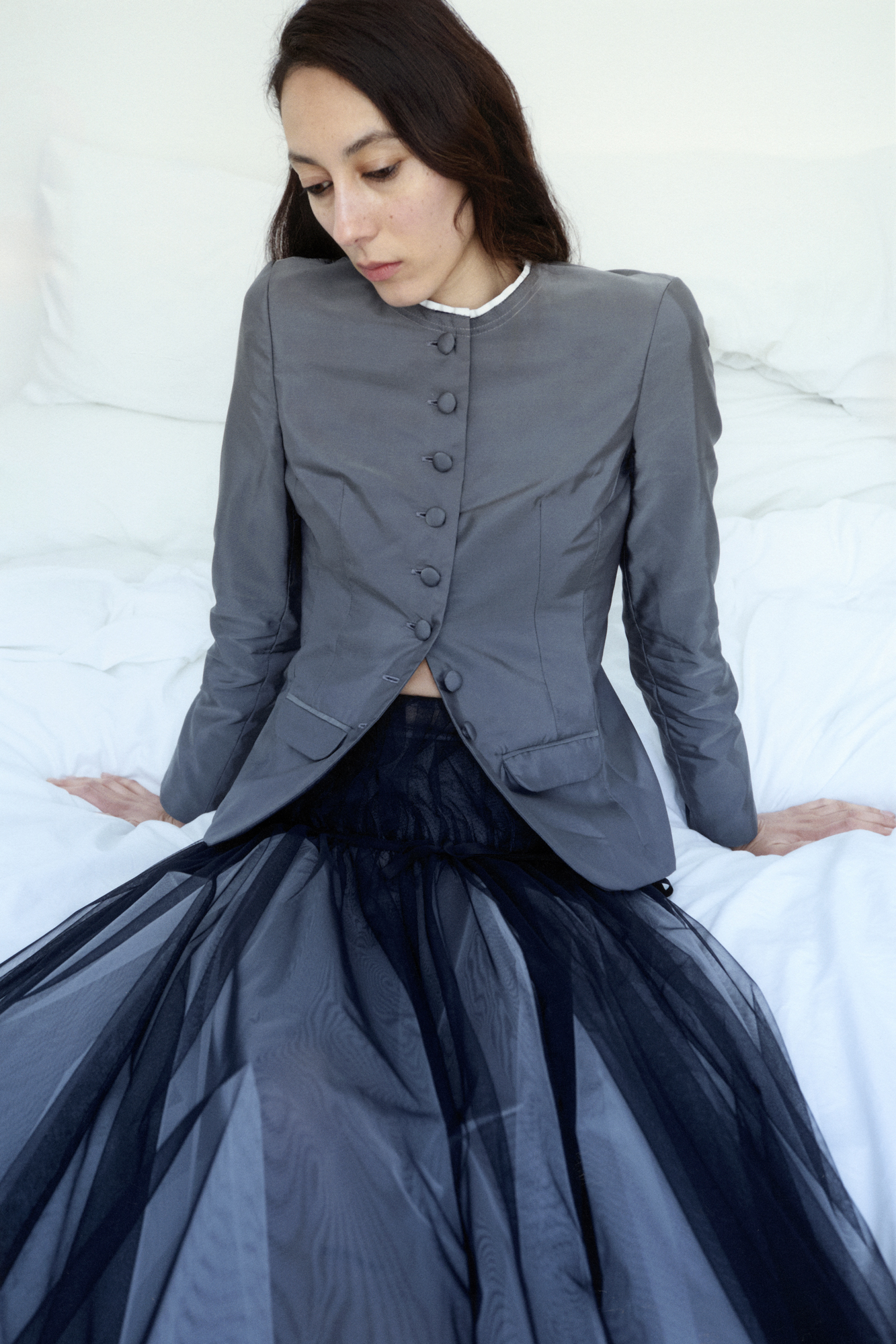
You and your mother have both discussed working and creating despite turmoil and pain. What forms of self-care do you build into your practice, and what continues to drive you to create even in difficult times?”
I was actually talking about this recently. I went to see my knitwear producer, whose factory is in an area that’s constantly being bombed by the Israelis. It’s in the suburbs of Beirut and is usually one of the first targets. He told me that during the bombings this year, he just didn’t give a fuck. He said, “I get in my car, drive, and park in the middle of the road.” I told him, “But they’re going to see you if you’re in the middle of the road,” and he replied, “That’s the point. I put it in the middle so they know I’m not hiding or running. I open all the car doors so it’s obvious when I’m going in, when I’m coming out, what I have with me, what’s in my hands.”
I remember thinking, thank God he’s not dead—but what else is he supposed to do? How else do you survive and feed your family? We both said that unless we’re actually killed, we’re going to keep going. Because stopping feels like surrendering—it’s letting them control your life, and if you’re not living, that’s its own form of being dead.
So what does self-care actually look like for me? Getting a steam, sitting by the pool and reading, watching movies, going to the hammam or the beach. I love sleeping, staying in bed until I absolutely have to eat something, and enjoying hours where I don’t have to speak to anyone.