Behind the Image is an ongoing MODELS.com series taking a more personal look at both established and emerging creative talent.

Ariella Starkman | Image courtesy of Ariella Starkman
Ariella Starkman, Executive Creative Producer
Hometown: Toronto, Canada
Based: New York City, New York
Representation: Starkman & Associates
How would you describe your work? What’s your trademark?
I really believe time is our most valuable currency. When someone leaves their house, gets dressed, and travels across the city, they are offering hours of their life they cannot get back. We take that seriously. The work is a success if people feel their time was honored, if they want to linger a little longer, or if the experience feels worthy of the effort it took to be there. This idea of honoring time is our foundation, and we build everything from there. Our goal is to create something memorable, so we do not think in terms of event components like music, food, or lighting. We think in terms of a world, an environment with emotional texture and cultural meaning. The work is meant to be felt and experienced.
As part of that world-building, I always look for at least one unexpected element to anchor the experience. It might be the venue, a hero moment, or what guests leave with, but there has to be some sense of tension or surprise to make it feel special. Often this comes from unexpected juxtapositions, when two things that do not naturally belong together suddenly make sense. It is not about being strange for the sake of it. It still has to feel coherent and aligned with the brief. But that shift from “what is this?” to “I get it” is what makes people feel something and remember it.
Like the custom Nike x Vaquera disco ball at their party last December. You always expect a disco ball at a party, but now it is lit from within with logos. The diamond-encrusted K for Kim Shui’s show spun in the fountain at New York’s beloved Barbetta patio, a Rococo dream with a Y2K material taking up space outside. The movie night on the beach for Fara Homidi Beauty’s bronzer launch trip in St Maarten last spring blended the luxury of the trip with the coziness of a movie night, and on the beach. We are continuing to build on these examples so the trademark is undeniable in the outcome. The key is that the surprise is never random. It is grounded in emotion and culture. People feel curious and delighted because something familiar has been reframed. The goal is not just spectacle; it is to design an experience in which that tension produces meaning.
What sparked your interest in creative production, and was there a defining moment that made you pursue it professionally?
My interest in creative production began before I realized the job existed. I had no awareness of what it would be like or that it was even an option for me. When I was a teenager, we moved to a suburban area, a shift marked by a sense of isolation and a kind of mundane sameness. I always longed for experiences that would help me feel more connected to myself and to those around me, and to create more joy in the process. I studied art history in college, and after a few gallery internships, I quickly realized it wasn’t for me. Not because I didn’t love being around art, but because I wanted more action and to be in the middle of creating the thing that made an impact. In 2015, I decided to produce a large group show that was part traditional art show, part panel, part party. It made me realize that I had the agency and ability (hello free will) to create the experiences I was craving. When I moved to New York three years later, I realized that sense of connection and joy, creating meaningful reasons to gather, was something other people, and by extension brands, were craving too. That early art show, and the willingness to figure it out myself, really cemented my desire to pursue what I later learned was creative production. The grit required to make it a career started the moment I got to New York.
What non-fashion/beauty influences (art, film, literature, music, etc.) shape your creative perspective?
When I spoke at FIT last year to the Intro to Entrepreneurship class, the professor asked me to put together a slideshow. Within it, I dedicated one page to various inspirations. This slide was a mixed bag of images: Skins (I was in awe of their freedom and fun), a ‘89 Comme Des Garcons ad (some big fish and bold text), a screenshot from the Spice World movie (I think about the production design weekly), a Martin Parr image (woman smoking on beach), a Charles Traub image (woman smoking on street), SATC Season 3 Finale (the roof scene), Richard Serra architecture (how does he make this!), Jenny Rubbell’s work (experiential food installation at its peak), and snippets from Lauren Greenfield’s seminal book “Girl Culture” (I feel seen!).
For a long time, after moving to New York and starting in fashion event production, I was really self-conscious about my inspirations and what gnawed at my foundation of influence, because I felt they weren’t in line with or additive to what was happening around me. I used to feel like everything I referenced had to be super highbrow. Because postmodernism made us (often subconsciously) value irony over all else, we end up being afraid to enjoy things sincerely. Part of getting older, accepting myself, and growing this business at the same time has been learning to embrace my unique sources of inspiration and joy. It’s everything from a Tiffany & Co. tablescape book to Bernadette Corporation’s creative legacy in New York. Rembrandt’s The Jewish Bride and Nan Goldin’s work from her time on the Bowery are both favorites because they both make me feel something. It’s accepting that movies like Clue and Marie Antoinette built worlds that you can feel totally absorbed in. It’s constantly thinking about how Cookie Mueller lived her life / what she left us with in her short time, what Bell Hooks talks about in Outlaw Culture, and being just as obsessed with Miranda July’s All Fours as every other woman you know. Inspiration comes from experiences that resonate within and echo out a kind of unfettered, palpable joy that’s rooted in feeling truly accepted or seen. I want to create spaces that engender that reaction as much as possible. The biggest and most important thing for me is leaning into the things that elicit a positive internal response.
When you’re planning an experience, what are the first details you focus on?
When we’re planning an experience, before any details are ideated or determined, the first question is: What is the goal? A lot of people overthink this. For us, a goal can simply be a feeling. Do you want people to have fun? Do you want them to learn something? More often than not, for a brand, it’s about leaving people with an emotional residue that keeps them thinking about the experience and the brand, long after it’s over. Creating a lasting memory requires effort, tact, creativity, and an obsessive attention to detail. If it’s void of that, you may as well be on the street giving away free samples. Which works, but does it create a lasting impact? Likely not. Once we understand the goal, we decide the best format to support it. Then we determine where the experience will take place, the venue or location. From there, it’s all about the details, and respectfully, none matter more than the other.The details are what shape the energy of the experience. Everything from the shade and temperature of the light to the guest layout and flow, the height, texture, and color of the flowers, and the feeling of the napkins. All of these parts make up the whole. Brand objectives resolve naturally as a byproduct. By centering the details, people are less on their phones. There is more to notice and connect with. Guests speak more openly, share organically, and form lasting associations and impressions.
What’s something that can really make or break a production, even if it seems small?
ENERGY! Be aware of how you show up. I would 1000% rather someone on my team tell me they’re not in the mood and leave for the day than have them suffer in silence and end up in a funk. We’re all part of an ecosystem together, whether that’s an 8-hour day on set, a 4-hour event, or a 5-day work week. We need to be aware of the energy we bring into a space. The importance of this cannot be understated. When we’re responsible for crafting the emotional architecture of a space, the success of which rides on the energy within, we always need to be conscious of what else is taking shape.
As you’ve produced shows for Luar and Lii. What factors are essential when planning a show, and roughly how many people are involved behind the scenes?
Shows are the absolute best. They’re high-pressure, high-intensity, magical endeavors where everyone comes together for a 20-minute moment. The most essential factors when planning a show are:
1. The Right team. This is NOT the time to teach you to fish. We need experienced fishermen in the room, and ASAP.
2. Space. A Big Back of House. Anything is possible in production; however, having enough room for everyone to do their best work without stepping on figurative or literal toes leads to a happier crew and the best output overall.
3. Adequate Power. I do not want the smoke from the key hair artist!
4. LIGHTING! We need to see the clothes! It sounds obvious, but it’s surprisingly overlooked. The audience is there to see a collection and even more importantly, the photos of the collection need to clearly show how the designer has chosen to put it on the runway (the casting, the hair, the makeup, etc.), as nothing happens by accident in a show. Please, for the love of God, hire people who understand how to light in person and for good photos. A fashion show is really like any other experience: all the pieces matter, but if you can’t properly see the garments, nothing else really works.
Depending on factors such as the number of looks, models, timing, and overall creative ambition, it can range from a minimum of 75 people to 200-300 [backstage]. There are so many factors in determining what is needed in terms of physical hands. It’s a game of Tetris every time!
How has working more closely in creative direction and production design changed the way you approach producing overall?
As we’ve taken on more creatively-led work, honestly, it hasn’t really changed how we approach production. From the beginning, we have been rooted in service, attention to detail, and creative problem-solving, and those values carry through. They don’t switch on and off depending on the project’s phase.I’ve never really seen creative and production as separate things. The idea doesn’t end when you start building it. If anything, that’s when it becomes more real as you have to put into practice what’s been committed to. Of course, we focus on pitching ideas that are grounded in reality. However, you are constantly adapting, adjusting, and figuring things out while still protecting the feeling you set out to create. A lot of the actual creativity happens there: in how you respond to constraints and still make something feel considered and intentional. I learned so much about this when I was Managing Director at HommeGirls. One of my favorite shoots was a cover with Grace Burns (Christy Turlington’s daughter). We managed to convince an active NYC yellow taxi to swing by on his lunch break for the shot with John Yuyi, or a more recent HommeGirls cover with SZA by Mitch Ryan and Stella Greenspan, where we found a lake in the hills of LA. The breadth of experience I gained at the magazine illustrated in practice what is essential to the story and what creative elements are worth fighting for. This built a muscle in the work we do with Starkman, as some things you learn to let go of, but never at the expense of the core vision.
What’s the biggest challenge when translating a brand’s identity into a physical experience or environment?
The biggest challenge is cohesion. A brand usually has a pretty broad audience, and you’re trying to create a single physical experience that all of those people can step into and feel like it makes sense to them. You’re also balancing what the brand needs with what a good experience naturally wants to be. Sometimes those two things come together easily, and sometimes they don’t. The job is making sure the brand shows up clearly without the event feeling over-branded or forced. I always try to protect the specific qualities that make a brand distinct while avoiding the obvious tropes (either event or brand clichés) because that’s when things start to feel shallow. When it works, people don’t feel marketed to. They just feel like they stepped into a world that makes sense.
What other jobs have you had?
I’ve kind of done every job on the production ladder. I was a production assistant, production coordinator, production manager, line producer, technical producer, project manager, creative account lead, senior producer, managing editor, managing director, and executive producer. I’ve always understood the work and the lift required from a lot of different angles because I’ve sat in most of the seats. Outside of the industry, I was a camp counselor for many, many years, which set the foundation for how I work now. Producing is a job centered on care-taking: you’re anticipating needs, managing emotions, keeping people calm, and making sure everyone feels supported while something (inevitably) chaotic is happening around them. I was briefly a gallery girl (too quiet for me), and a bartender… dare I say mixologist? It was 2014. Those were the times!
What’s one thing outside of your work that you would like people to know about you?
I’m a Capricorn. I’m the eldest daughter. I love to craft, and I will be bringing back Craft Night (a night of making silly stuff with our hands – no brand, no call sheet) this year, so stay tuned <3. Last time we beaded and made felt puppets. We also made magnet frames. Watch out for me and my hot glue guns.
Who do you think is one to watch?
Hard to choose! I love watching and celebrating how people take time in their craft to develop something special. In New York, I’m so excited to see what amazing things continue to happen for Commission, Colleen Allen, Climax Books and too many others to name.
Selected Work
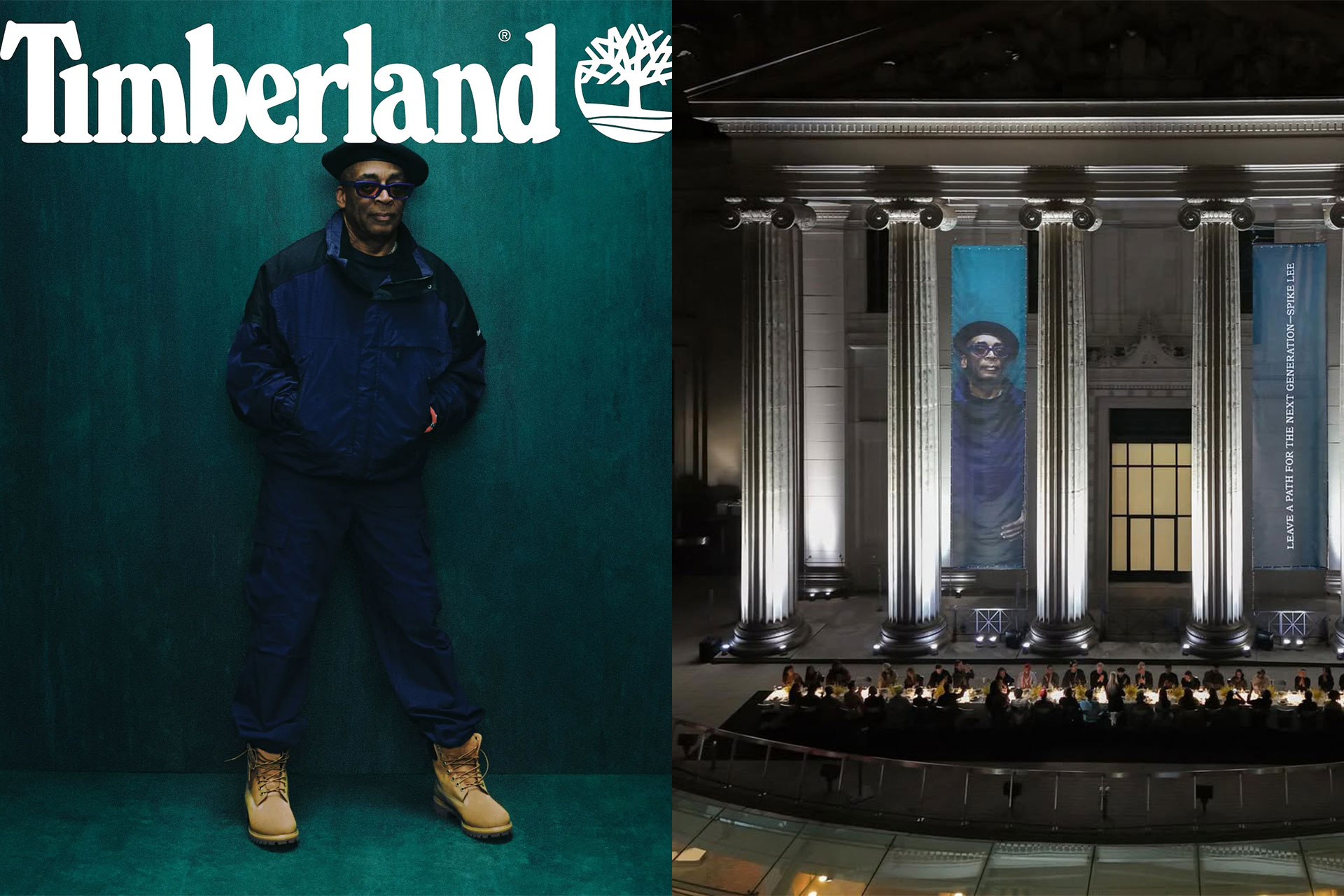
Spike Lee by Gabriel Moses | Image courtesy of Ariella Starkman
Timberland Advice of an Icon Fall 2025
Working with Timberland on their “Advice of an Icon” global campaign was a dream come true, thanks to the gargantuan scale of the project and the trust and collaboration we’ve built with them as a client. Not only did we get to work with icons like Spike Lee, Skepta, Kiko Mizuhara, Gabriel Moses, and Miyako Bellizzi, but we also got to ideate and bring to life the launch dinner held on the portico of the equally iconic Brooklyn Museum, in a space where no one has ever hosted a dinner before.
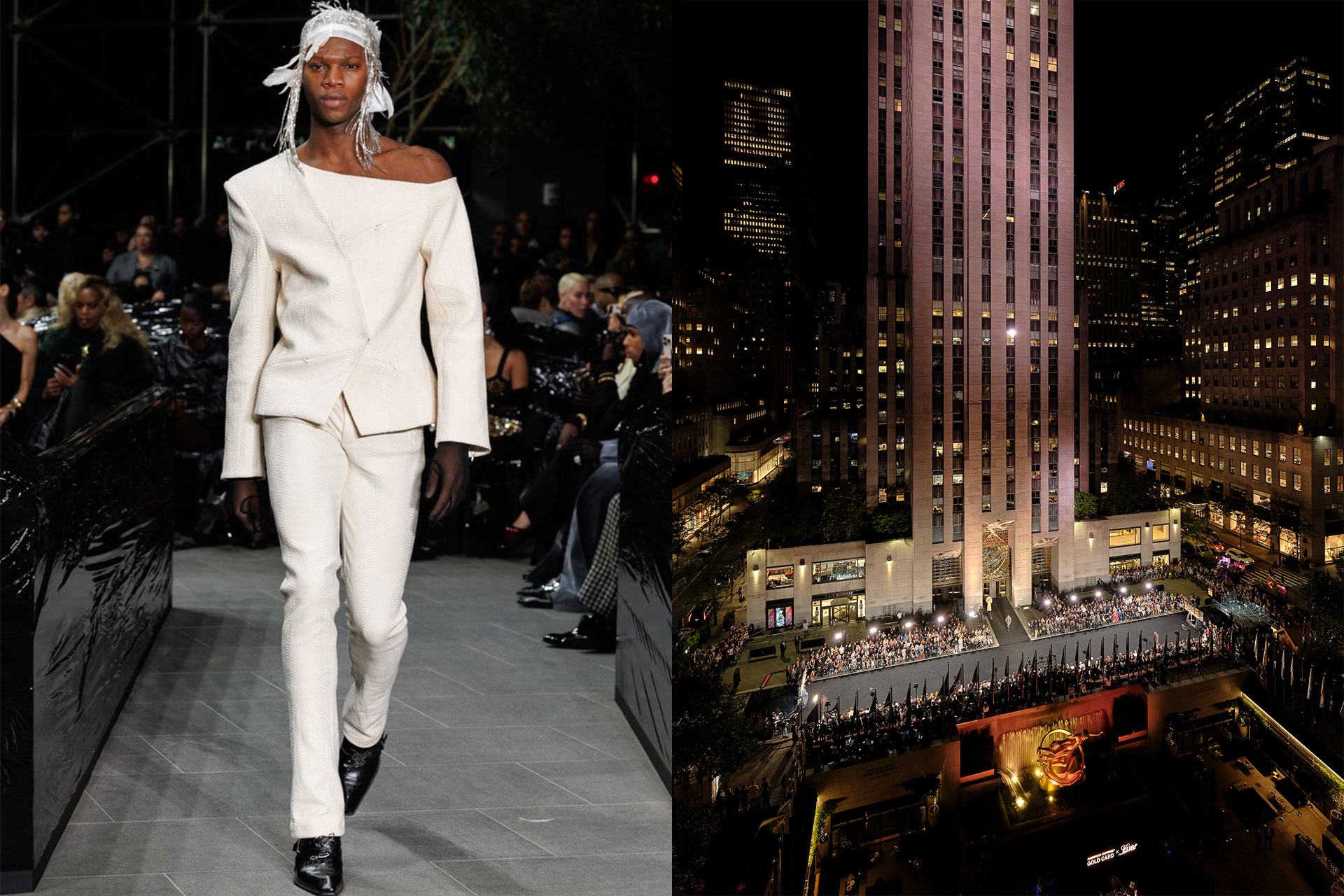
Razak Salifou | Image courtesy of Ariella Starkman
Luar F/W 25 Show
I am so proud of this project. It was a labor of love. A true logistical BEAST, and we did it in just under a month. Raul (Lopez) wasn’t convinced this was the right location, but I knew there was nowhere else to host the show. It was stressful because of the scale, because of the public nature of the venue, and because Madonna was there. I am so in awe of how impactful this moment was for Raul, for Luar, and for everyone who contributed to it. Talk about visibility! Talk about drama! Talk about glamour!
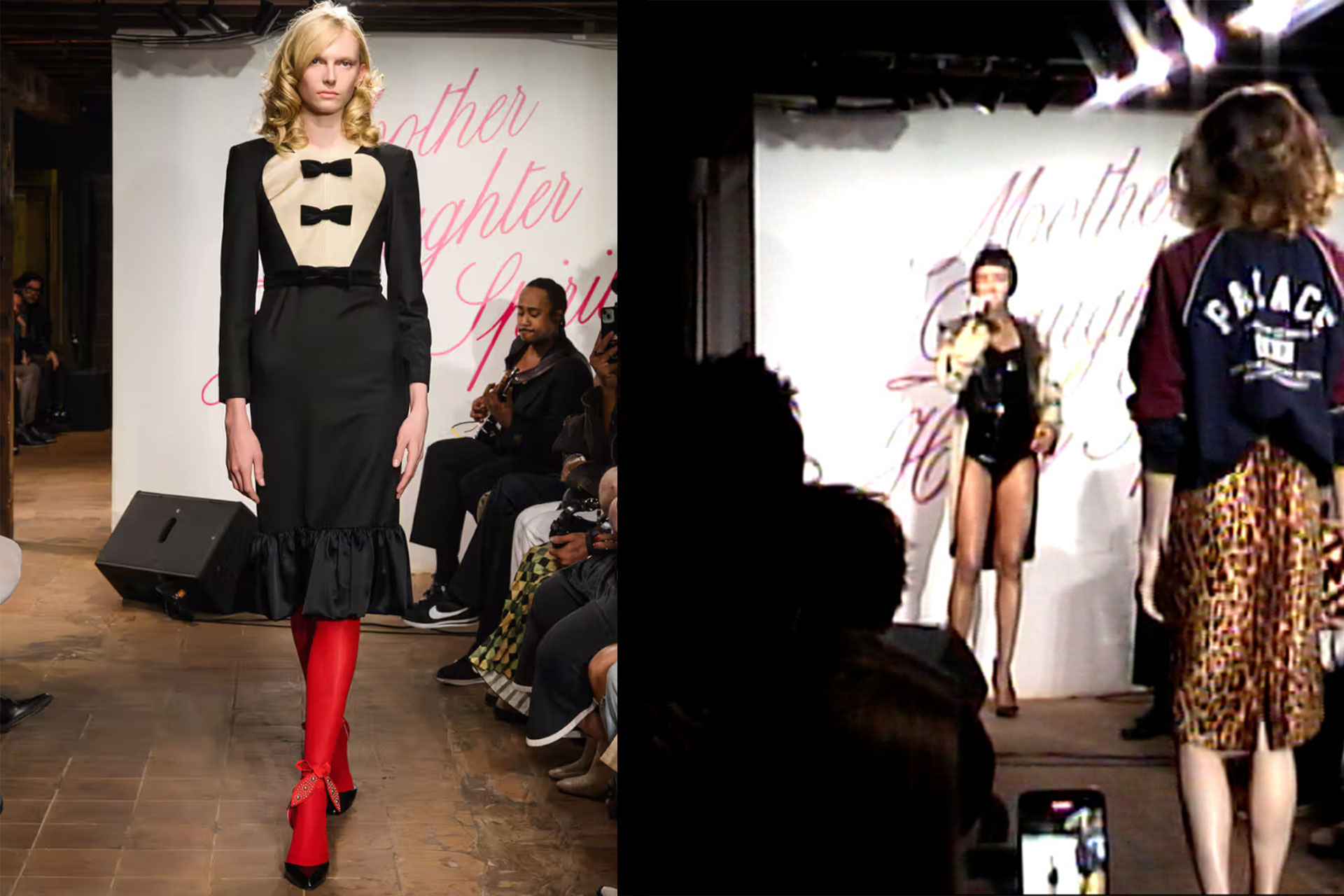
Alex Consani | Image bcourtesy of Ariella Starkman
Mother, Daughter, Holy Spirit 2025 Show
It’s not often that working on a project has such significant meaning and purpose. Mother Daughter Holy Spirit is a three-part grassroots fundraiser for the Trans Justice Funding Project. We were asked to bring part one, the fashion show, to life. We worked with an incredibly committed and passionate team, had an amazing shoot during our fitting days, and made something so beautiful because of the power of community. It felt like it took on a new life because everyone involved gave it power and meaning.
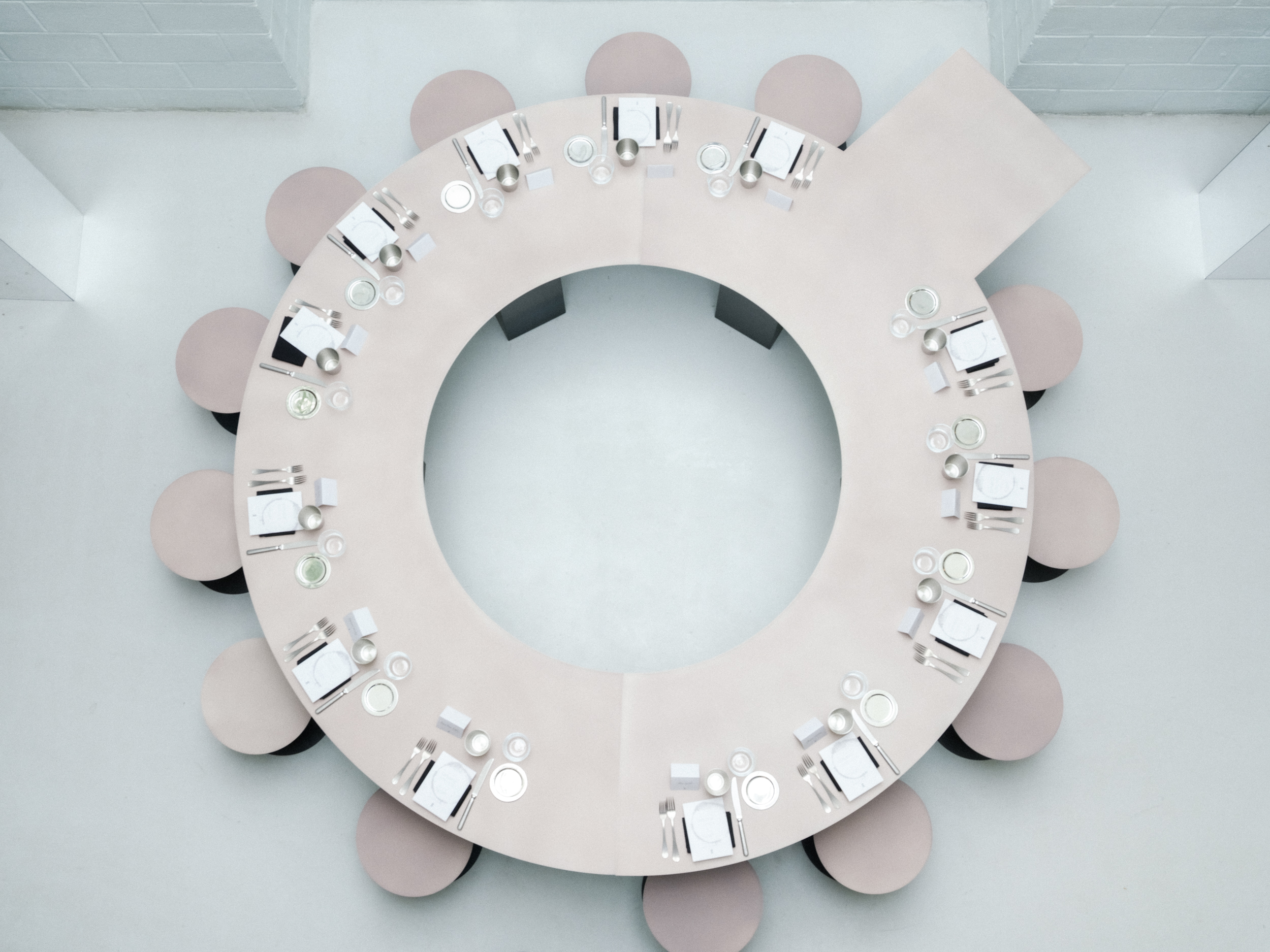
By Lucas Chemotti | Image courtesy of Ariella Starkman
On Running Paris Fashion Week Dinner
This was our first time working with the On Running team, and I am so happy with how this dinner turned out. They really let us cook on the design and concept, and we ended up with a custom table shaped like their logo, finished with thermochromic paint that changed color at different temperatures. Their brief was to create something that embodied their “mysterious beauty” collection direction, unveiled details on closer inspection, and fostered a connection between attendees. I think we nailed it, as the table also went viral. Fun!
By Kunning | Image courtesy of Ariella Starkman
Hinge x Esther Perel Event
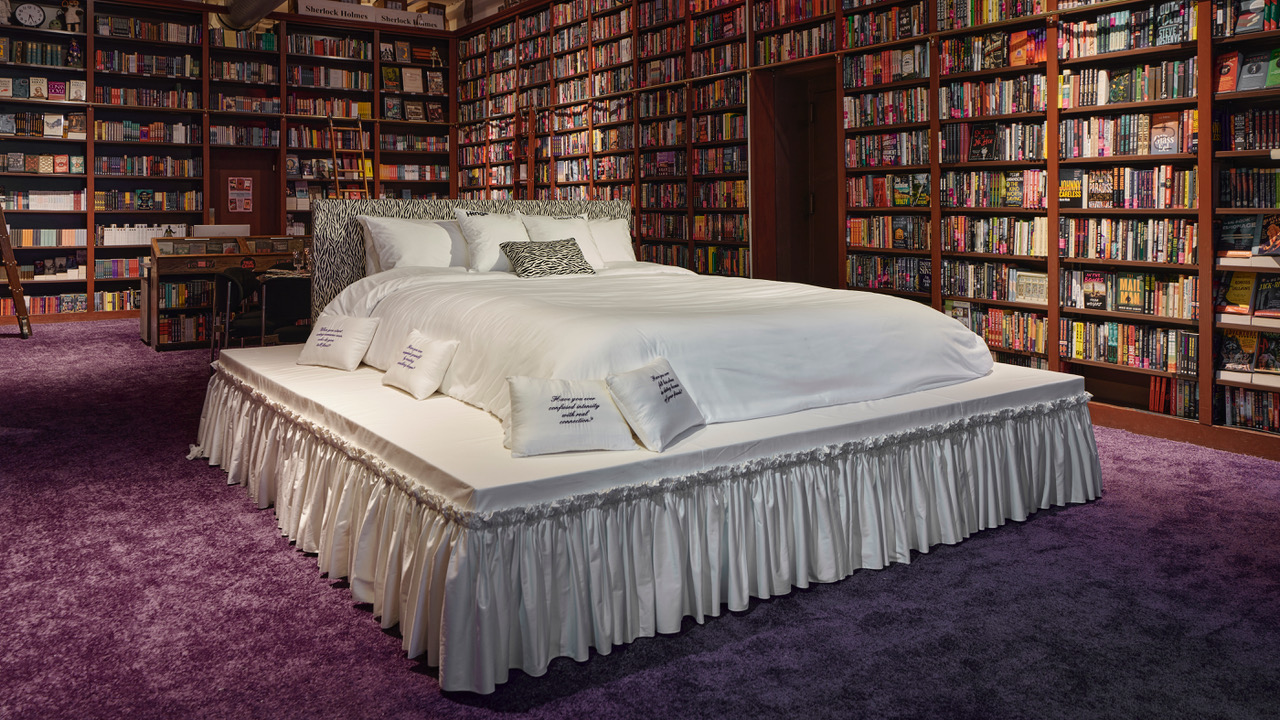
This project was such a dream brief. We adore working with Hinge, and they really trusted us with the location, creative, and execution of a dinner and a giant bed in a bookstore for their first event with the iconic and esteemed Esther Perel. Ten creators joined for an intimate conversation around modern dating, and we were honored to bring it to life.
By Matthew Kavanaugh | Image courtesy of Ariella Starkman
goop x Maybach Cocktail Event at The Chateau
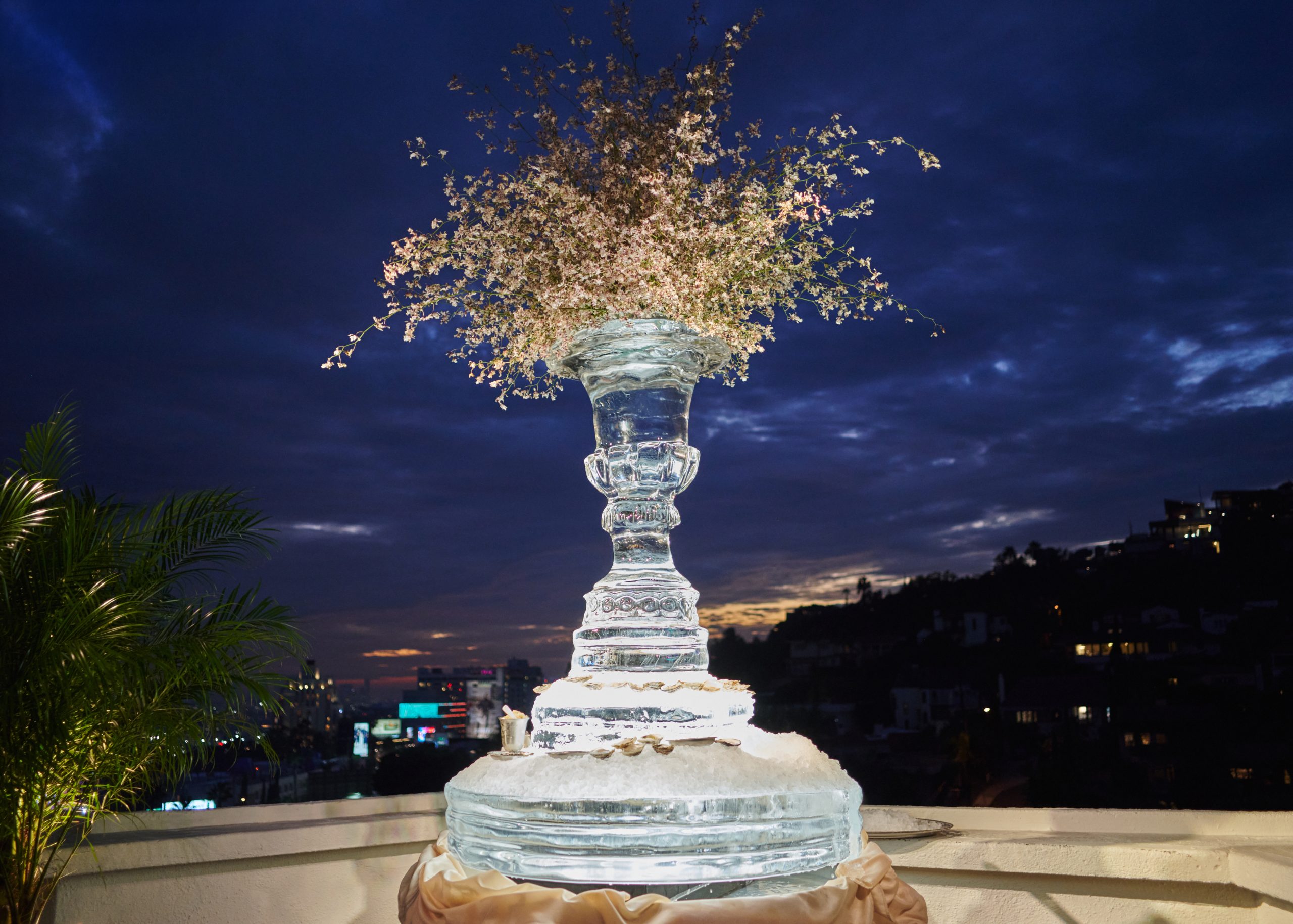
It was so exciting to be asked to produce a cocktail party with Goop and Maybach. Obviously, we’re obsessed with Gwyneth (Paltrow), and the creative opportunity to lead the design was amazing because we got to lean into everything about classic Hollywood, and the Goop team deeply understood how much the details matter. My favorite part was the ice sculpture we designed, and Michael from Pretend Plants and Flowers finished it off with a perfect oncidium bouquet.