Courtesy of Karoline Vitto Studios
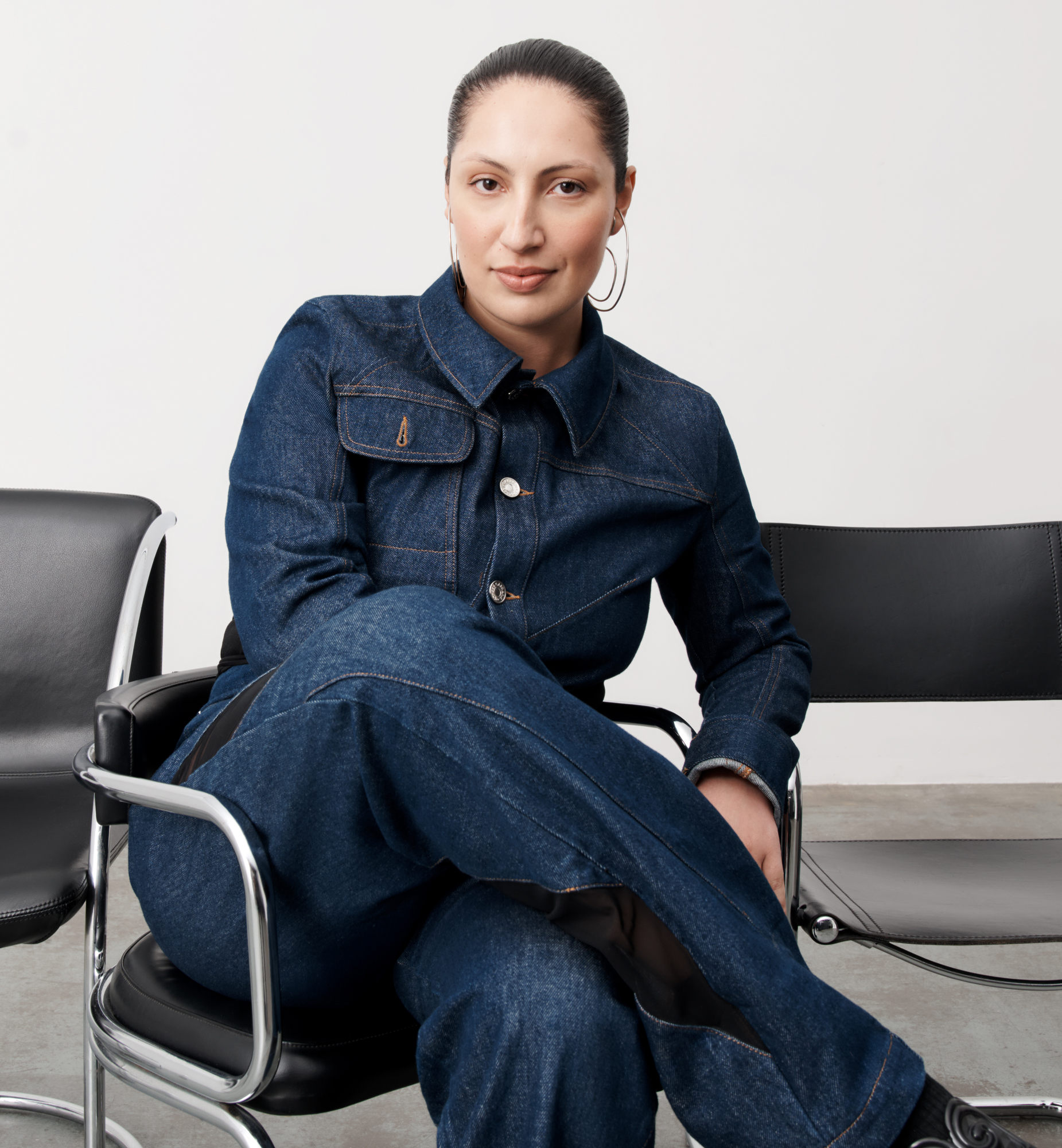
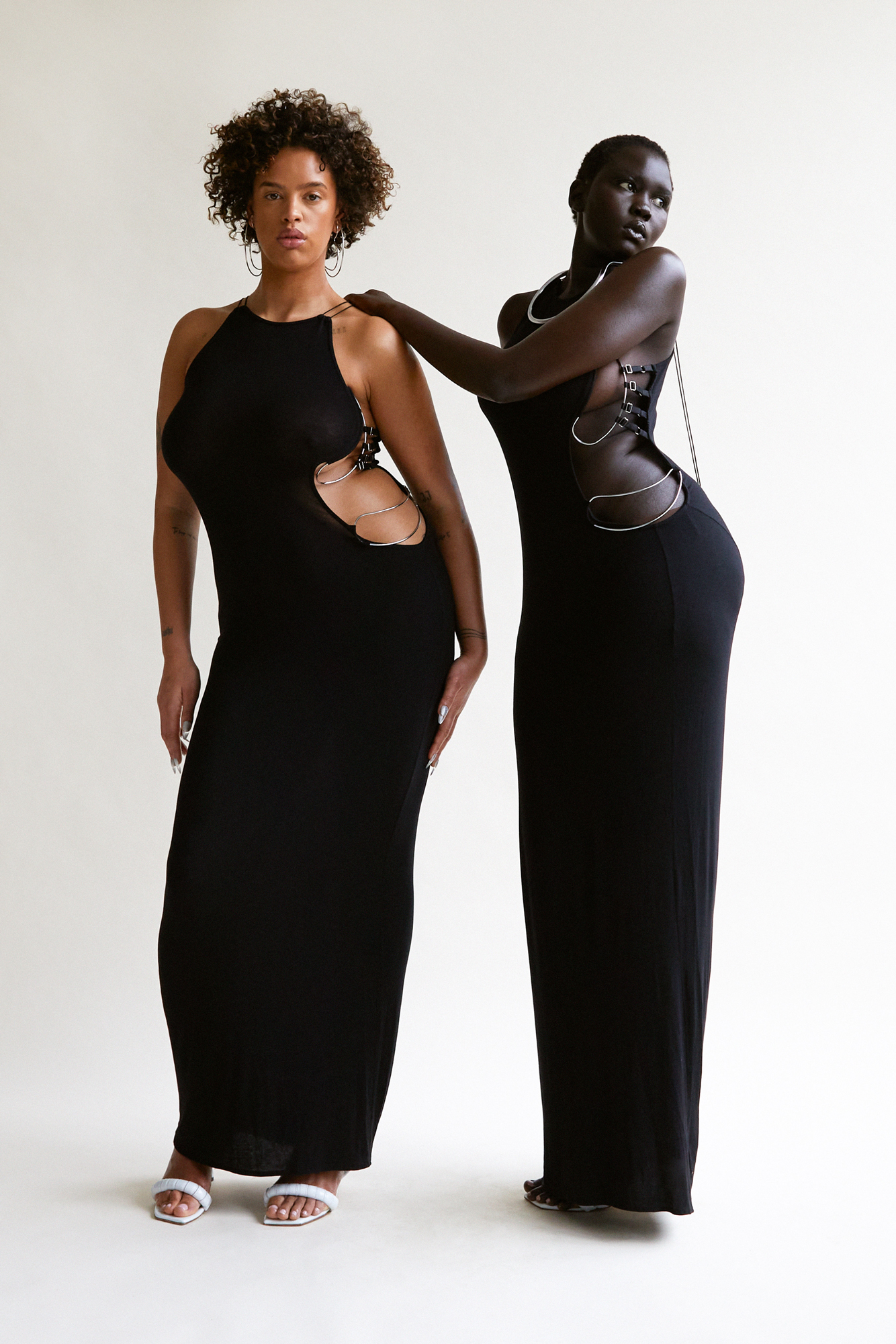
Karoline Vitto has had a busy year. Speaking from her freshly unpacked East London studio, her third studio space in six months, she has finally found a moment to pause. Since February, Vitto has presented two runway shows, one in London and one in her home country of Brazil, worked on a project designing a t-shirt with the Paul Smith Foundation and the Tate, collaborated with Pull&Bear, and seen her work enter the Metropolitan Museum of Art’s Costume Art exhibition. After this impressive list of accolades, “I’m kind of hoping I can enjoy the summer,” she says. Since launching her label during the pandemic, Vitto has steadily built a practice centered on technical innovation and integrity, consistently platforming a diverse range of bodies in an ever-changing industry governed by rigid beauty standards. Sculptural silhouettes and fluidity that celebrate the female form are foundational to her designs. Working with the body as a starting point, Vitto creates garments that adapt to the wearer, with sizing ranging from XS-2XL alongside custom options. A graduate of Fashion East and now approaching the end of her tenure as part of the British Fashion Council’s Newgen program, Vitto has become one of London’s most compelling independent voices. Here, she discusses with Models.com contributor Georgia Moot the realities of building and sustaining an independent fashion brand, the importance of community, crediting much of her success to her team, including Head of Atelier Stella and her sister Nicole, and her unwavering commitment to her values. As she puts it, “I’d rather bury the brand than change it into something else.”
Courtesy of Karoline Vitto Studios
You grew up in Brazil before building your label in London. How did you get started with your brand?
I was raised in Brazil, in a small town, and moved to London at 26 to study fashion. I started with a Graduate Diploma at Central Saint Martins before completing a Master’s in Fashion Womenswear at the Royal College of Arts. That was where I really started to develop the ethos of the brand. When I graduated in 2019, I carried that work forward through Instagram, sharing my research, designs, and visuals. I had no real intention of starting a brand; I was actually interviewing for jobs. But then the pandemic broke out, and no one was hiring anymore, so I started making pieces. I started drawing digitally and posting them online. People began asking to borrow pieces that didn’t actually exist yet, so I started making them. Soon after, people were requesting loans and asking to buy through instagram DM’s, and that’s how the brand started. It was all very organic. I was lucky with the timing, it was a good time for emerging brands. During the pandemic, people were buying and supporting small brands. They were keen to find a niche thing, and people did have some disposable income. Everything was made-to-order because I had no funding, but I had lots of ideas. For the first two years, I made everything myself, even when I applied for Fashion East, I was still doing everything on my own.
How has your upbringing in Brazil influenced your designs and shaped your practice?
I think it influenced me in a lot of ways. I learned to sew with my mum, and my grandpa was a shoemaker. I grew up surrounded by creation and by people who were incredibly resourceful. My grandma made clothes for my mum, and my grandpa used to make her shoes, so I was always exposed to craftsmanship. It gave me this mentality of “if you can’t find it, you have to make it” and instilled a deep appreciation for crafting and for the makers. I’ve never been afraid of sewing; from the beginning, I’ve loved making. In terms of Brazil itself, it definitely influenced the story of the brand and shaped the core of what I do. Growing up, television and media weren’t particularly inclusive. The beauty standards were very narrow; you saw blonde, tall supermodels on TV, but that wasn’t reflective of the people you saw around you.
In Brazil, the body faced so much exposure, but it wasn’t necessarily seen as something sexual; it was just as it is. So it was a strange combination of unrealistic beauty standards and bodies in reality constantly being on display, but very few people saw themselves represented. When I started the brand, this was partly a personal response to that experience. Aesthetically, Brazil influences the clothes too in their design. Swimwear, activewear, stretch fabrics, straps, and cut-outs all come from things I grew up around and experimented with as a teenager.
Earlier this year, you returned to show at Rio Fashion Week. What did it mean to bring your work back to Brazil, and how did this experience differ from showing in London?
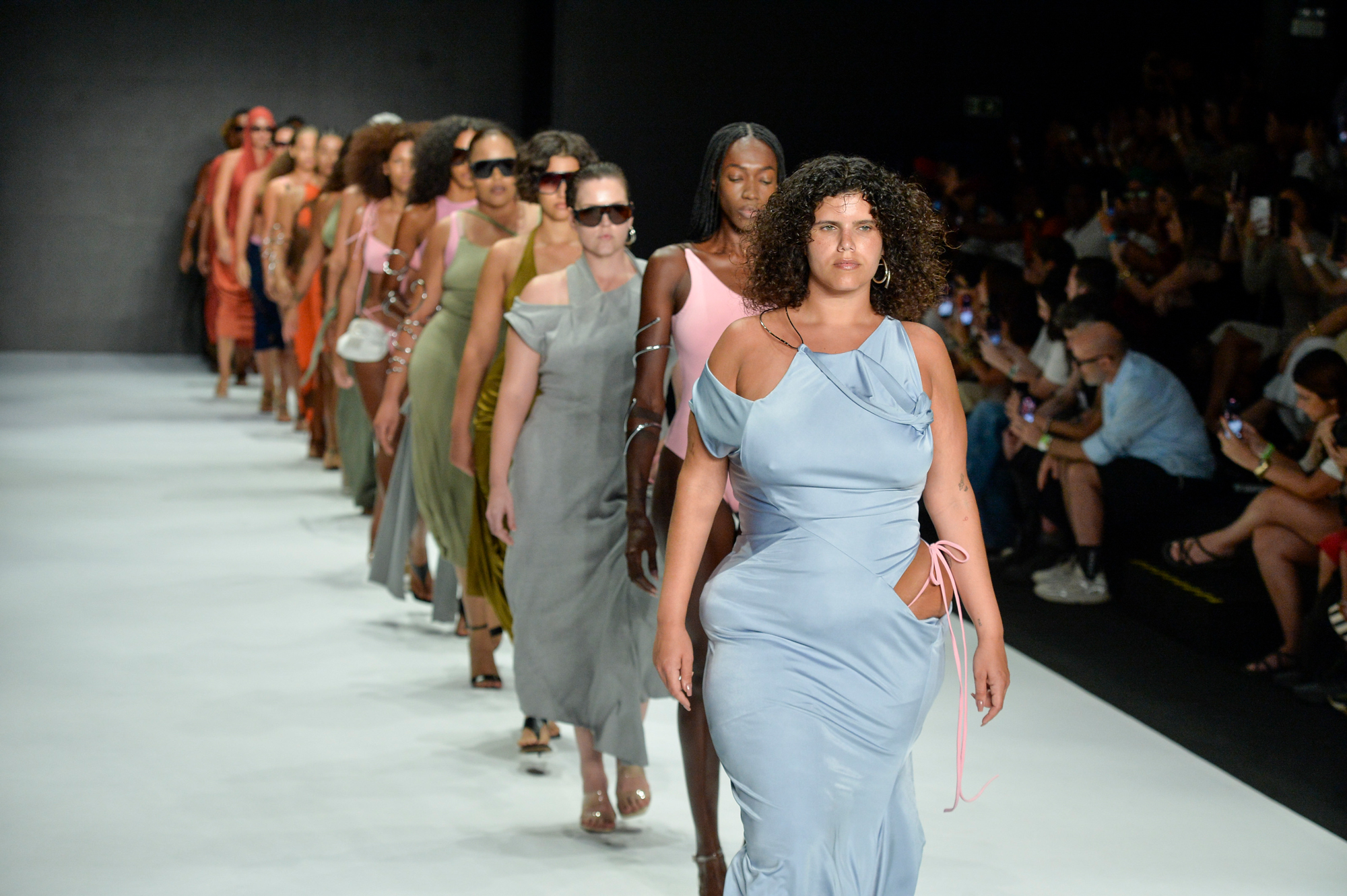
It was amazing. Rio has so much of the essence of what I love about Brazil: the energy, the warmth, and the community. I’ve lived in London for a long time, but there are certain references, jokes, and ways of communicating that only fully make sense in your own language. There was a real sense of homecoming for me there. The casting was particularly exciting. Half of the models were from Rio and the other half were from São Paulo. I knew many of the São Paulo girls already, but meeting so many Rio-based models was refreshing. It was amazing getting to work with a lot of people whom I had been aware of or connected to online, but not had the opportunity to work with in person. It felt fresh to work with a completely different group of people. Fernanda, closing the show, was especially meaningful. She is from Rio and has been with me since my first show, so we wanted her to have a special moment with this one. We also approached styling differently. It was interesting how we translated the clothes, because a lot of pieces had already been introduced in other contexts, so we restyled some things, introduced new styles, shifted ideas, and gave it a little bit of a different flavor to match Rio’s energy. It made a lot of sense. Looking ahead, I’d love to continue building the brand in Brazil. The response was incredible, and there’s a really exciting momentum around emerging designers there right now. Hopefully, this show leads to more opportunities in both Brazil and London.
Courtesy of Karoline Vitto Studios
Your work is currently featured in the Metropolitan Museum of Art’s Costume Art exhibition. How did that opportunity come about, and what does that level of institutional recognition mean to you?
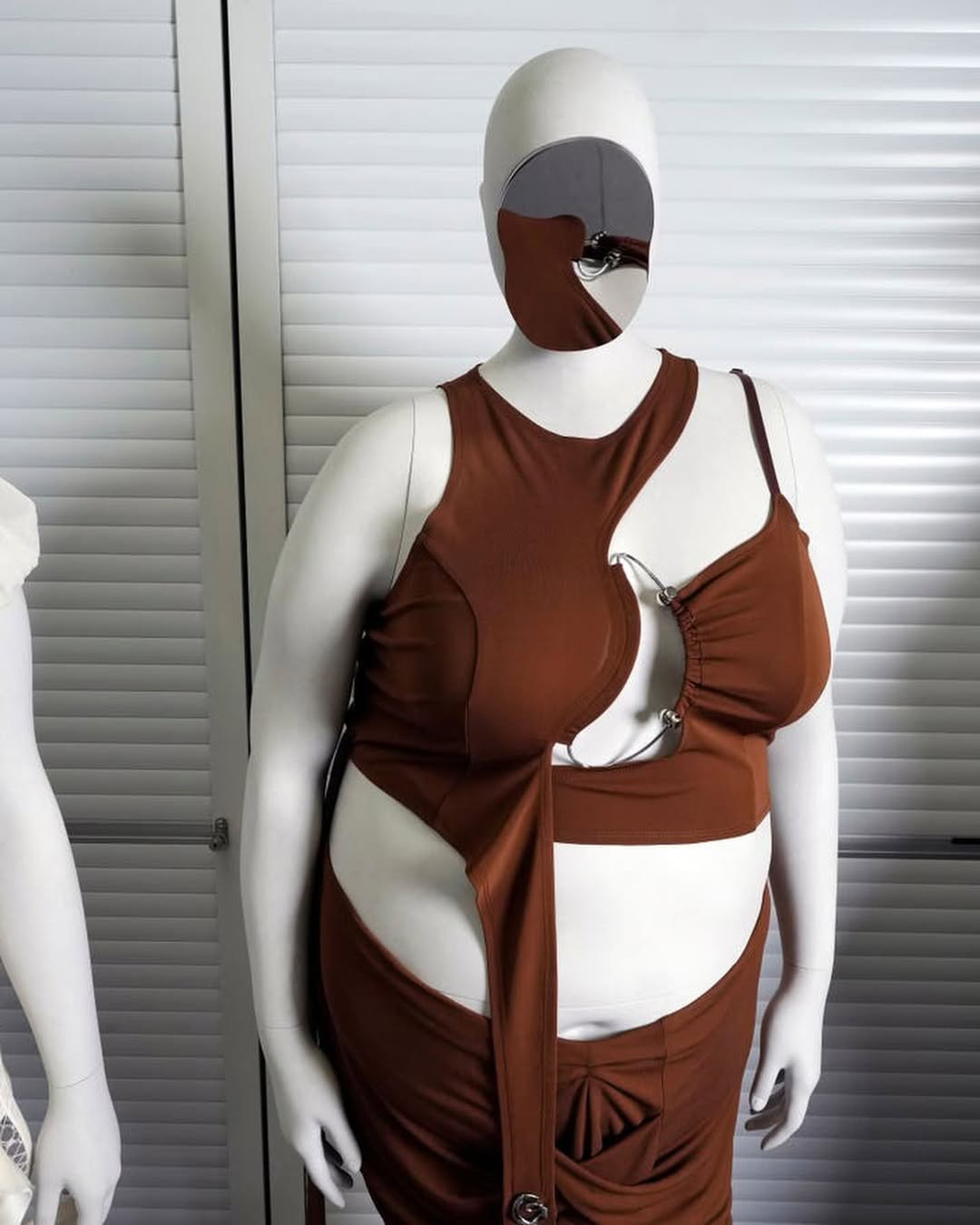
It’s huge. About a year ago, I received an email from Andrew Bolton’s office about the exhibition. At the time, it was still being developed; they didn’t have a name yet, but the central idea was exploring the body through art and fashion. The team explained that they planned to pair artworks from the museum’s collection with contemporary fashion pieces, and they’d already begun conversations with designers, including myself and Sinead O’Dwyer. He (Bolton) showed the curation of the space and relayed the idea of these mannequins that were going to be body scans, and they’re going to have mirrored faces (the exhibition’s mannequins were developed from the bodies of curve models and feature mirrored faces designed by artist Samar Hejazi), creating a completely different relationship between the garment and the body. We spent several months discussing which piece would be acquired. Once the model’s measurements were finalized, I remade the garment specifically for the exhibition and shipped it from London. The technical aspect was fascinating. The scans really excited me, because it creates a different layer of having to fit someone. A body moves and changes; it’s got a squishiness to it, whereas a mannequin is completely fixed, so the garment has to be approached like a sculpture. Institutional recognition like this puts a stamp on the work. It feels very contemporary and of its time, but placing it within a museum context gives it historical weight. It means people will be able to understand the work and its context long into the future. The museum even now has these mannequins as a blueprint for the future and used for new projects. Being exhibited alongside other designers who are pushing conversations around the body forward was also incredibly meaningful. It really marks a sense of “we’ve been making some sort of difference”, even though it doesn’t feel like it at times, but when you see it all together, you’re like “Oh wow, actually there is something happening here”.
The body is so integral to your work, as reflected in the sculptural elements and silhouettes that respond directly to moment and shape. How do you continue to reinterpret these ideas each season?
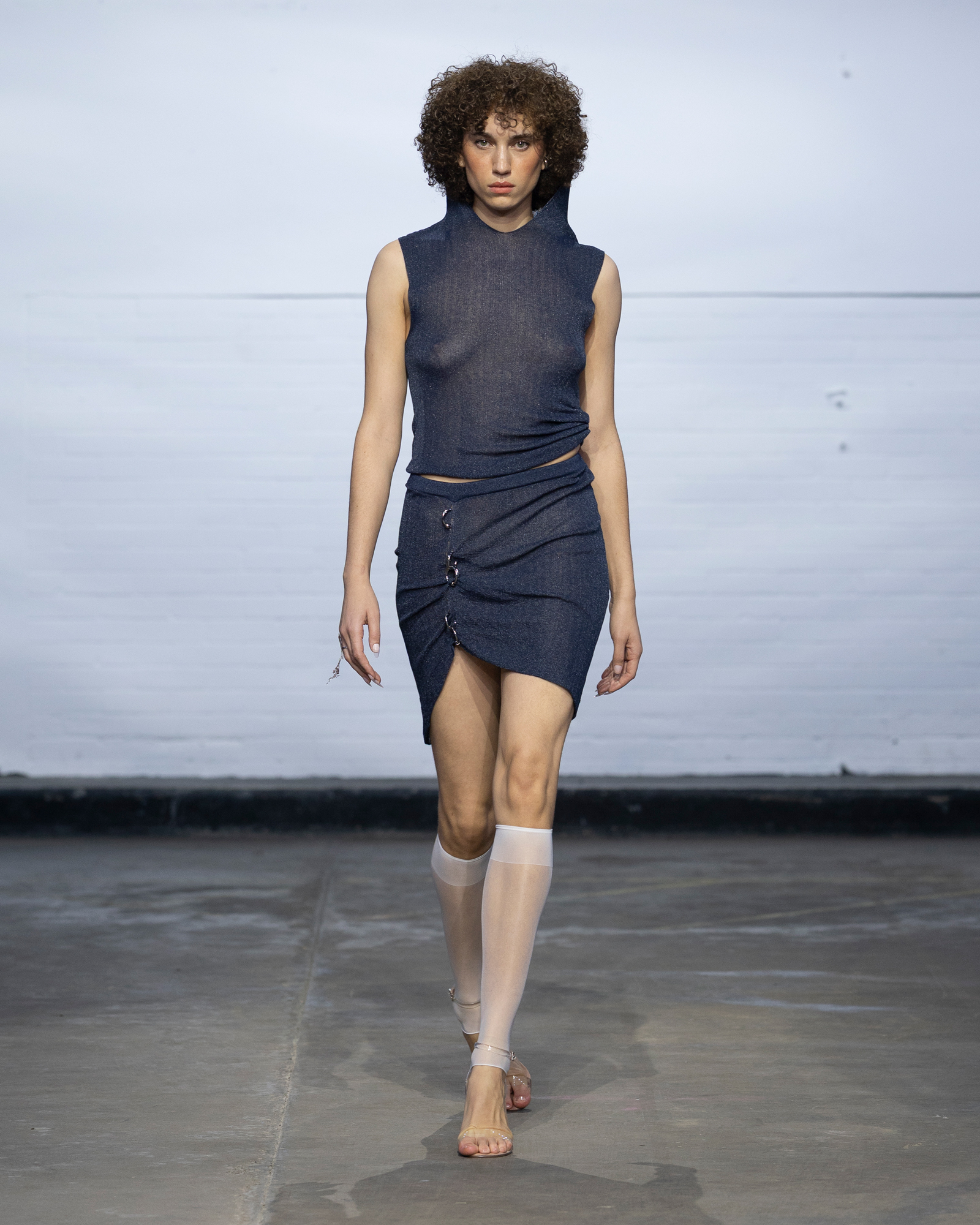
I think each season there’s a nuance of what I want to push. It’s not that every season I come up with a completely new idea. Usually, there’s a specific feeling that I hyperfocus on, or, as Stella says, a motif that we’re following. For example, for S/S 25, I became obsessed with cowl necks and how they usually don’t work for me personally because I have bigger boobs. I wanted to find the perfect cowl neck for the girls with boobs, so we developed one using a technique called subtraction cutting. It often starts with a technique of an element that solves a specific problem, and then see how we expand it into other areas of the collection. The process feels quite investigative. We explore these things obsessively, which makes each season feel like a continuation of the previous one rather than a complete break. Most of the time it’s about the cut, the construction and how the garment can support certain aspects of the body.
I think a lot of designers begin with a story and know exactly what they want to say from the start. I’m not really like that. When I begin, I don’t necessarily know the story – just that I’m telling something. Somewhere in the middle of the process, it starts to reveal itself. It usually comes together when I decide the music for the show. I’ll be listening to lots of different things, trying to understand what connects with the work, and then suddenly there’s one piece of music where I’m like “that’s the story”. Everything follows from there. My sister Nicole always tells me, “Please, this season let’s start with the story.” And every season I’m like, “I can’t, it reveals itself to me.”
I had the pleasure of walking your Autumn/Winter 26 show in London, and it was amazing to see the creation of the show and the behind-the-scenes. Can you talk us through the process and timeline of a show? From concept to the final runway?
Ideally, you’d start as soon as the previous show ended. Every season I tell myself that’s what I’m going to do. In reality, I usually start around two or three months beforehand, which is quite late, but I prefer it that way. The timeline really depends on production. If we’re making pieces in Brazil, I need to start around six months in advance because of prototyping, sampling, and shipping. If we’re making things in-house, we can work much faster. The first thing is always the practical side, confirming budgets, sponsorships, suppliers, and where everything is being made. That’s really the foundation of the show and the collection. For A/W 26, we had just moved into our temporary Vauhaull studio and had a completely new team of interns, so there was a lot happening at once. By the time everything was settled, Stella and I looked at each other and realized we had about two weeks to get everything completed. We went into full panic mode for a moment, then sat down and made a very strict plan. We spent a week sampling, another week making final garments, and then the final stretch was the fittings with all of you (models) coming in.
Courtesy of Karoline Vitto Studios
Something that stood out to me was the energy and intimacy of your team. How important is it to you to cultivate a positive and collaborative working environment?
Every season I have Stella and Nicole with me. Stella started as my first intern and is now Head of Atelier, and Nicole is my sister. I genuinely don’t think I could do a show without them. They both know the brand inside out because they’ve been there since the beginning, and we complement each other really well in terms of energy. Nicole is incredibly good at keeping me focused. She’ll come over and say, “I need you for ten seconds – this is what we are finishing right now.” She’s also incredibly creative. Last season, she and Jess, one of our previous interns, made all of the resin accessories. I basically said, “I want it to feel like a flower blooming out of ice,” and they completely understood. It’s amazing to see when people can go inside of your brain without having to say much. Stella is the same; she has been with me since the beginning, so she understands how I think. She contributes so much to the construction of the garments, the finishing, and the technical side of making things work. She’s also an amazing people person and can lift everyone’s mood. When it comes to the interns and the wider team, I always want people who genuinely care about what we’re doing. Of course, they’re there to do a job, but I also want them to feel a sense of agency, that they can contribute ideas, be excited about the clothes, and be part of the conversation.
Casting seems like such an important part of your show and of your work. What conversations are you having when selecting models, and how do you ensure the casting reflects your vision?
I love working with [casting director] Chloe (Rosolek). She gets it. Honestly, we don’t need that many conversations because we’re already very aligned. When we start casting each season, we’re constantly sharing ideas, sending each other model profiles and saying, “We should try this look on her,” or “What about this person?” There’s always an energy we are looking for as a brand, and each season, there might be a slightly particular energy we are looking for too. Sizing isn’t usually a major conversation because Chloe already understands how we work. Occasionally, we will have a sample made in a specific size that can’t be adjusted, so we need to find someone who fits it, but for the most part, we’re very open. The majority of our samples are either a UK18, UK16, UK12, or sometimes a 10 or an 8. I’ve never done a show where every piece was made in the same size. The way that we work is the way that is natural for me to work, as a brand, but also as a designer; it’s how I’ve always done things. I can’t imagine anything else. For us, the biggest puzzle piece is actually the styling rather than the casting. We might have a range of people we really want to work with, but then it’s about finding the right look for the right girl. Not just because it fits, but because it feels right.
As a recipient of the BFC Newgen program, you’ve also collaborated with Pull&Bear through its partnership with Newgen. How important is collaboration in your work, and what opportunities can support from other brands create for independent designers?
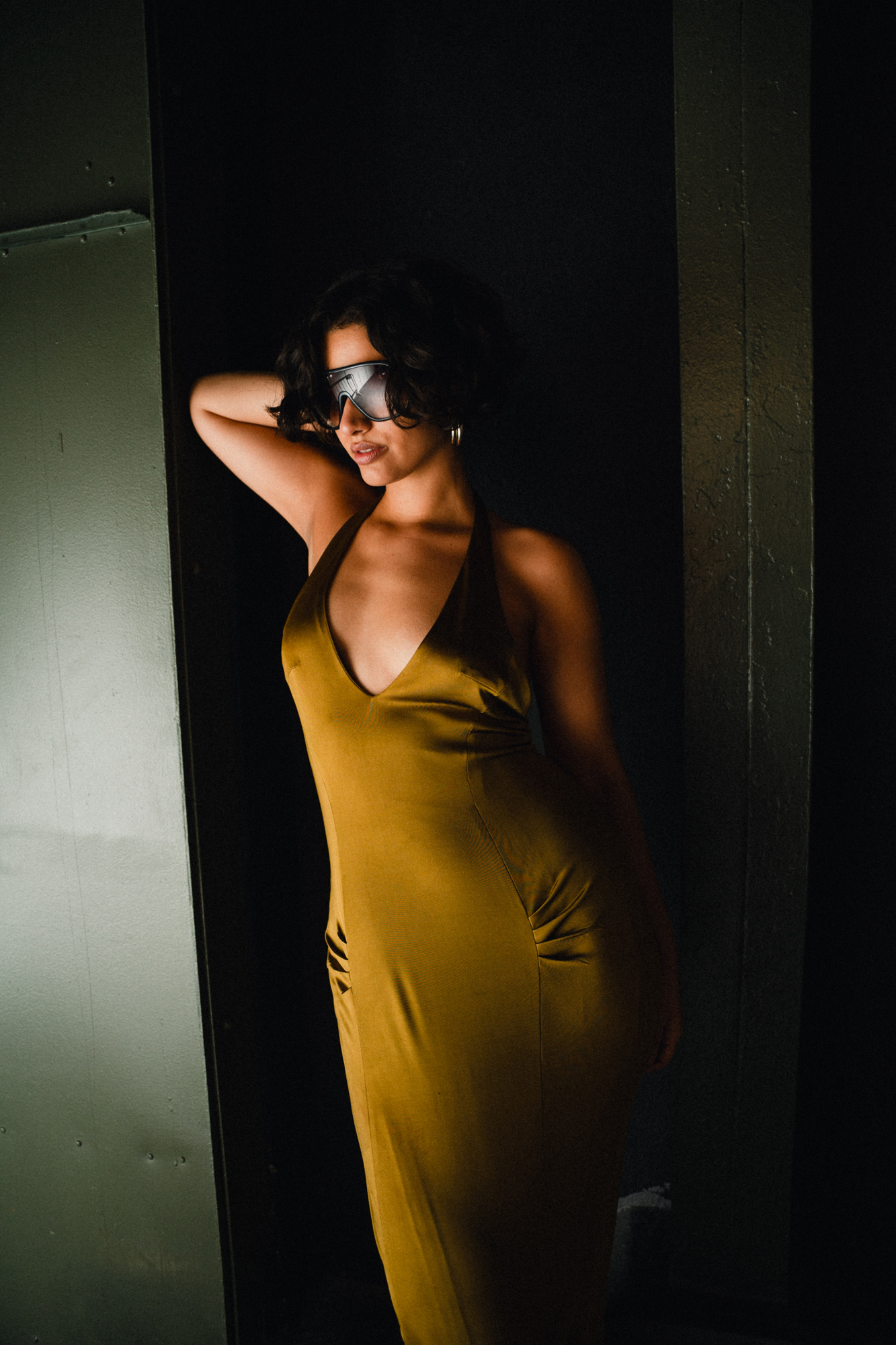
Collaborating with Pull&Bear was an amazing experience. I’ve never worked with a brand that big before, in terms of production, so I learned a lot. Having access to the resources of a company of that size allows you to create things that would normally be difficult for an independent brand. Denim and knitwear, for example, often come with high minimum order quantities, so having access to those factories and production capabilities was really fun, it gave me a level of freedom to create without restrictions. For emerging designers, collaborations can open doors to processes that might otherwise take years to access. They’re incredibly valuable for that reason. Without support from larger brands, there are certain things that simply aren’t possible. For me, it was a really positive experience, and it’s definitely something I would want to do more of in the future.
Courtesy of Karoline Vitto Studios
How do you maintain your creative integrity when collaborating?
Part of it is practical. There are contracts, conversations around intellectual property, and all of those things need to be in place for a project to work successfully. Beyond that, I didn’t have any issues because the team was incredibly open and genuinely excited about this project. It felt like a true collaboration. We worked with existing Pull&Bear materials, trims, and silhouettes that made sense within my universe, and then I brought ideas from my universe that felt right for them. We found a happy middle. I think with any collaboration, it’s important to remember that they’re working with you because they’re interested in what you offer. Otherwise, they would’ve collaborated with someone else. You have to trust that your vision is part of what they’re looking for.
How does it feel to be designing for diverse bodies in an industry where ideals surrounding the body are constantly shifting, and how do you root your practice within those changing narratives?
It feels different every month, to be honest. Sometimes it feels really positive to be one of the brands trying to change how things are perceived. After a show, when people cherish the brand, there’s press, there’s excitement, and a commotion around it, it feels hopeful. It feels like we’re being welcomed. But there are also moments that feel a little hopeless. You do a showroom and buyers aren’t interested, and that’s when you start feeling what you’re doing is not necessarily what the industry wants. You have to have both your feet on the ground. It’s important to remember that there is a group of people who have genuinely invested and are interested in the brand and what it stands for. Maybe it’s not what the entire fashion industry wants, but it’s what some people want, and that’s what’s important. So yes, it can feel bittersweet at times.
Your work receives significant attention for challenging norms. Do you feel that increased visibility is being reflected in meaningful change within the industry, or is there still a disconnect between the conversation and the reality?
This is something I talk about a lot with other designers who work in the curve space. Sometimes it feels like there are people in the industry who appreciate having us around because we are doing something positive. There are definitely people who genuinely support what we are doing. But there are also moments where it feels as though some parts of the industry simply like being associated with inclusivity. It can feel quite weird at times. I think certain parts of the industry love to be seen as if they are changing, and I think there are people who benefit from having us around. That said, there are also people who truly believe in what we are doing and show that through their support, and who want us around because they truly believe it. They believe that what we do is good for them in terms of growing the industry and making it a better place. I think there’s a disconnect. When I started the brand around 2021, 2022, it felt like a really hopeful moment. Curve models were being booked show after show, and it genuinely felt like things were changing. Recently, not so much, and obviously that has to do with shifts in beauty standards and the industry controlling women’s bodies, essentially. But it did change before, so it can again, hopefully at some point, because it’s cyclical and it changes with time. I do think there are practical things the industry could do. In Brazil, for example, 50% of a show’s cast must be non-white, because 50% of the Brazilian population is not white, so that needs to be reflected in the cast. Why can we not do something like that here with body diversity? That’s a relatively simple rule, but it creates meaningful change. It would only bring more positive change to the industry, there’s a lot that would change with a simple addition.
What’s next? Because you said that you’re not showing in London this September.
I’m not showing in London this September. Instead, we’re producing a smaller collection with just a lookbook and a line sheet, but I’d really love to return to do a show in February. It’ll be my final season as part of Newgen, so ending with another winter show in London would feel special. I’d also love to spend time in New York. I’ve never been, and I’d love to do a pop-up there at some point. I’m working through the logistical side of things to make that happen, but it would be amazing.