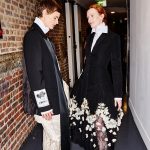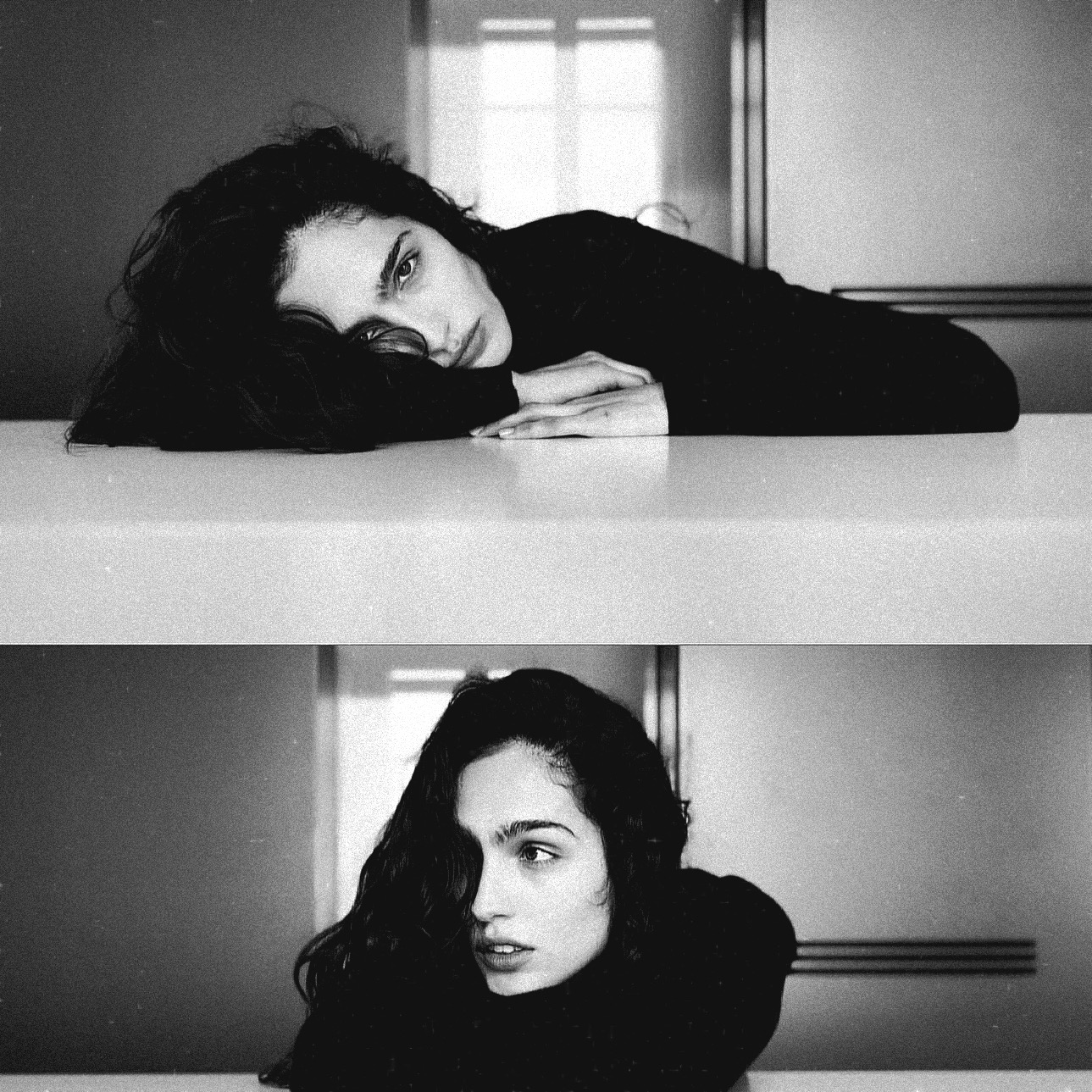
Sara Caballero | Image courtesy of Evane Boulanger
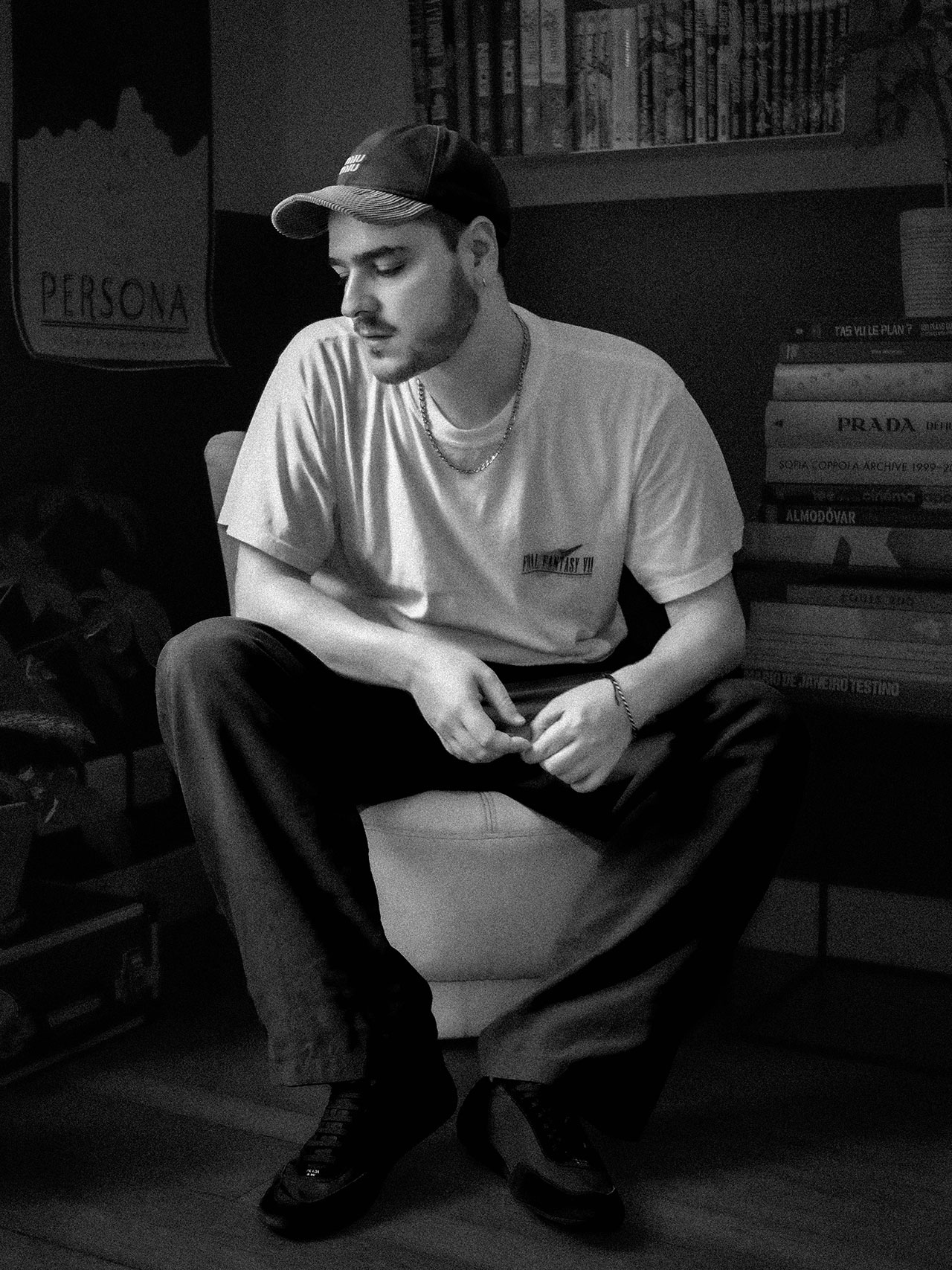
By day, Evane Boulanger works in the New Faces department at Elite Paris. By night, he makes films exploring the identities we construct and the past we leave behind. His latest short, MARBRE y formica, centers on a woman who encounters a younger version of herself over a game of chess. The idea began with a conversation with his partner about family, prompting Boulanger to reflect on his identity. “I had built the person I wanted to become, but is the person I am today actually who I wanted to be, or is that simply who I am?” he asks. That interest in identity extends to Boulanger’s approach to filmmaking. Having spent years working in fashion, he wanted to explore what a model could bring to a character on screen. He cast Sara Caballero, the Top 50 Chilean-Spanish model, who first explored acting as a child. Having previously worked with Boulanger on another film, Caballero found a different kind of freedom in acting. “There’s nothing to sell, just emotions,” she says. Models.com spoke with Boulanger and Caballero about collaborating on the film and their goals to explore filmmaking and acting beyond fashion.
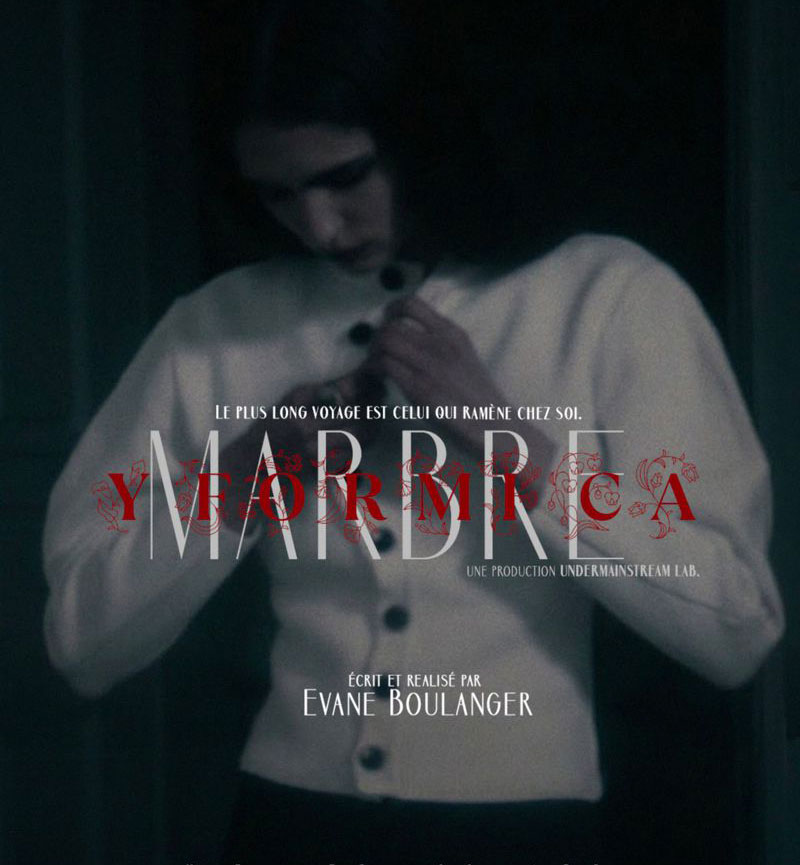
Sara Caballero | Image courtesy of Evane Boulanger
Where did you grow up, and what were your first memories of beauty and hair as a child?
Evane Boulanger: I’ve always loved cinema and having a camera in my hands. Since my first camera, photos or video, I needed to make something. Music, sound, and images all affect me. More than ten years ago, Gordon von Steiner started releasing behind-the-scenes videos for Vogue Italia. There was one called Broken English, with Karen Elson and Edie Campbell, set in a castle in the UK. It was all about sound and moving imagery, and I thought, okay, we can do this. I can combine cinema and fashion, my two passions. I come from a little town where everything seems far away, and nobody around me had the vocabulary to tell me it was possible, except my sister, who encouraged me. I ended up in an agency as an assistant at 21 without really knowing what an agency did. When you’re outside the industry, you can see, Mariacarla Boscono on a campaign at a bus stop, and you don’t know how it’s made or that agents negotiate it. When I understood this job existed, I went for it.
You wrote the script after a spontaneous conversation following a night out. Could you walk me through that night and how you turned it into a script?
Evane Boulanger: It started with me trying to dig into my life and seek something deeper. I had made films before, but they were very crafty, since I never studied film. I work in fashion, so everything I had done was about the image and the music, everything that makes me feel something. But I wanted something that dug under my skin.
I remember saying, “I don’t know what to write anymore. Everything I write turns into fantasies.” Then one night, my boyfriend and I were talking about how close he is to his family, which made me realize how I’m not close to mine. He asked, “What’s wrong with your family?” and a word came out of my mouth that I had never said to myself, not even in my head. I said, “I despise them.” Just hearing myself say it, I thought, “No, I don’t.” But I had said it, and I thought, “Oh my God, I have my scenario. I have my plot.”
By the end of that night, I had the logline. It made me realize I had gone to great lengths to build myself on my own, my own culture, my own taste, everything I wanted to be. I had built the person I wanted to become, but is the person I am today actually who I wanted to be, or is that simply who I am? The film became a form of introspection. I wanted to get to know myself better and realize that, at 36, maybe I’m still searching for who I am. Everything I had done before was based on my taste, but taste changes every six months, so I wanted this film to be truly coherent. I told myself, “If I’m honest and true to my own truth, then this can’t be wrong.” I wrote the opposite version of myself through the young character, based on souvenirs and memories.
What was your first reaction when Evane (Boulanger) brought you this script? Did you relate to it?
Sara Caballero: When I first read it, I was shocked. It felt like he knew so many things about my story, even though I hadn’t told him anything at all. Evane reads people very deeply. The script is very personal to both of us, and we can both relate to it.
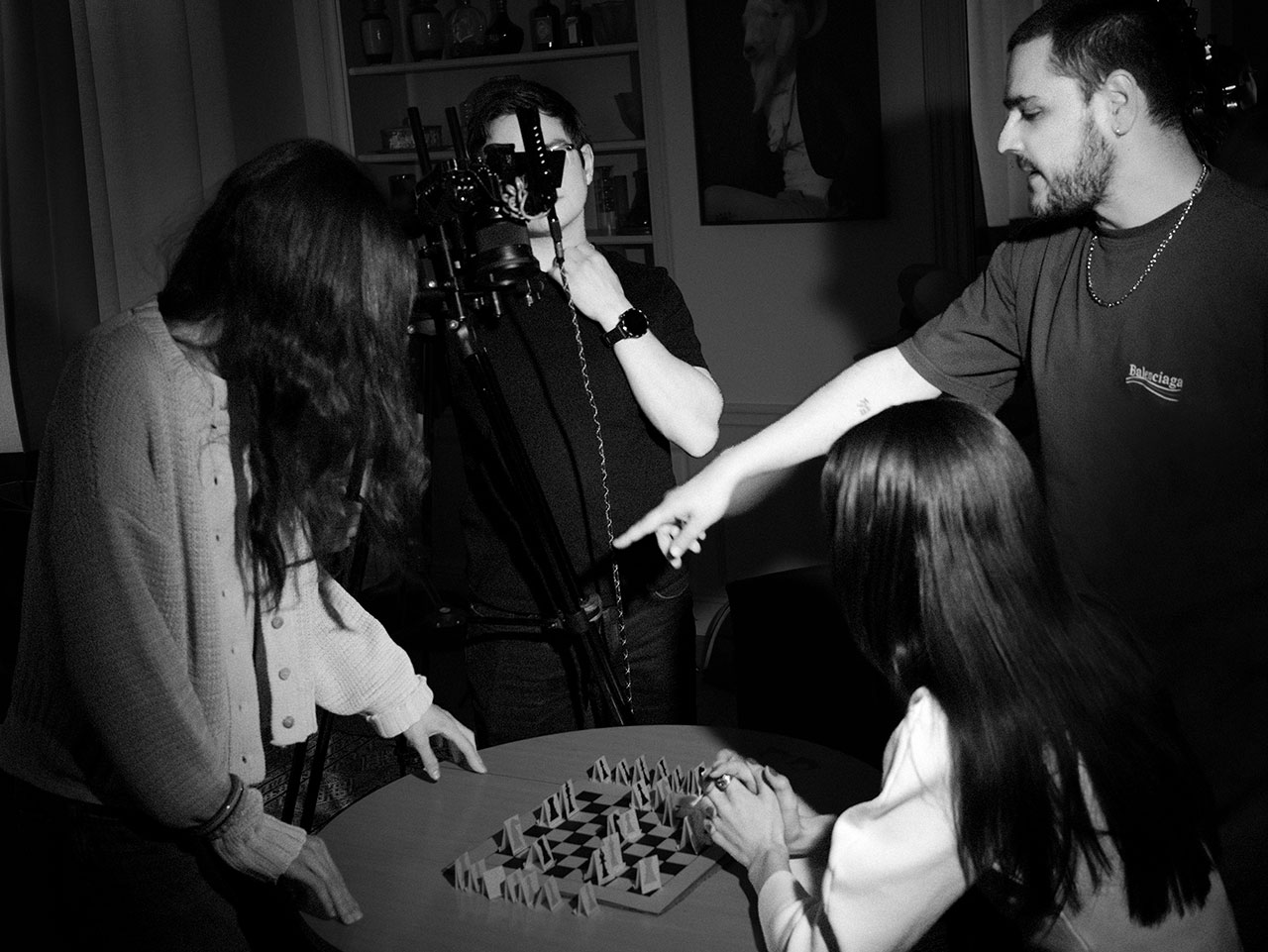
Evane Boulanger & Sara Caballero | Image courtesy of Evane Boulanger
Why did you cast Sara (Caballero), and did you know she had been a child actress?
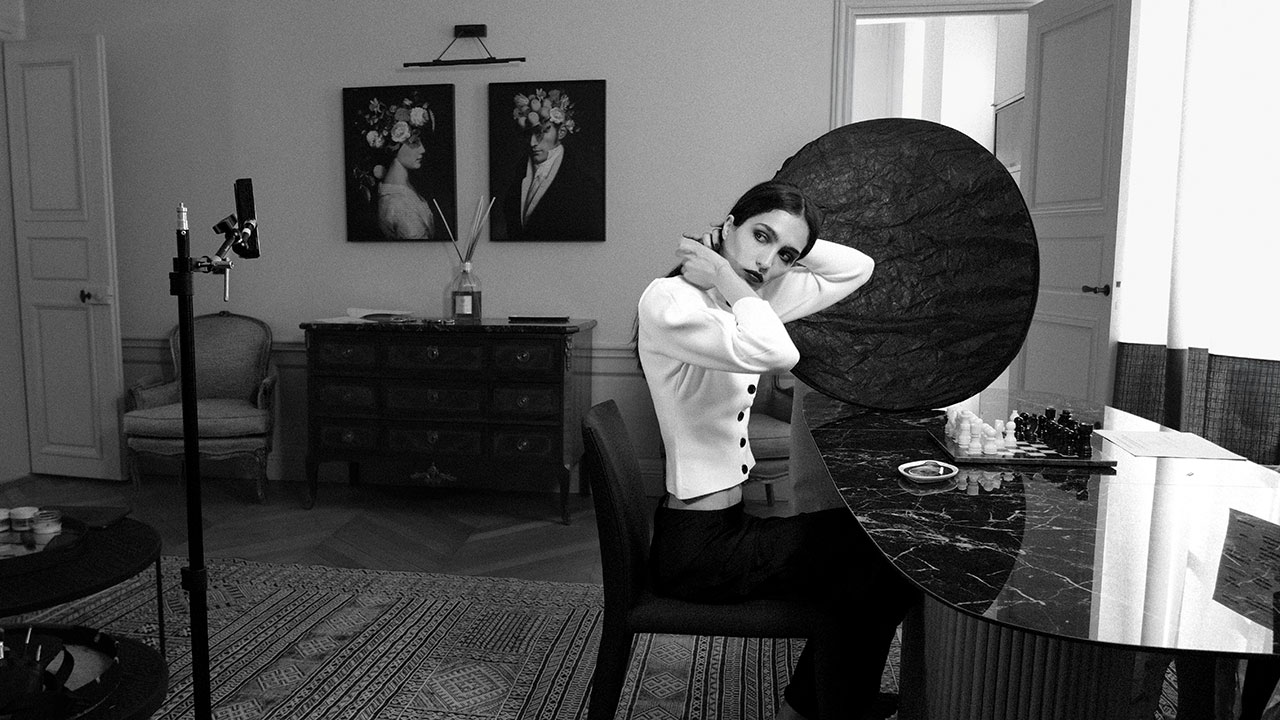
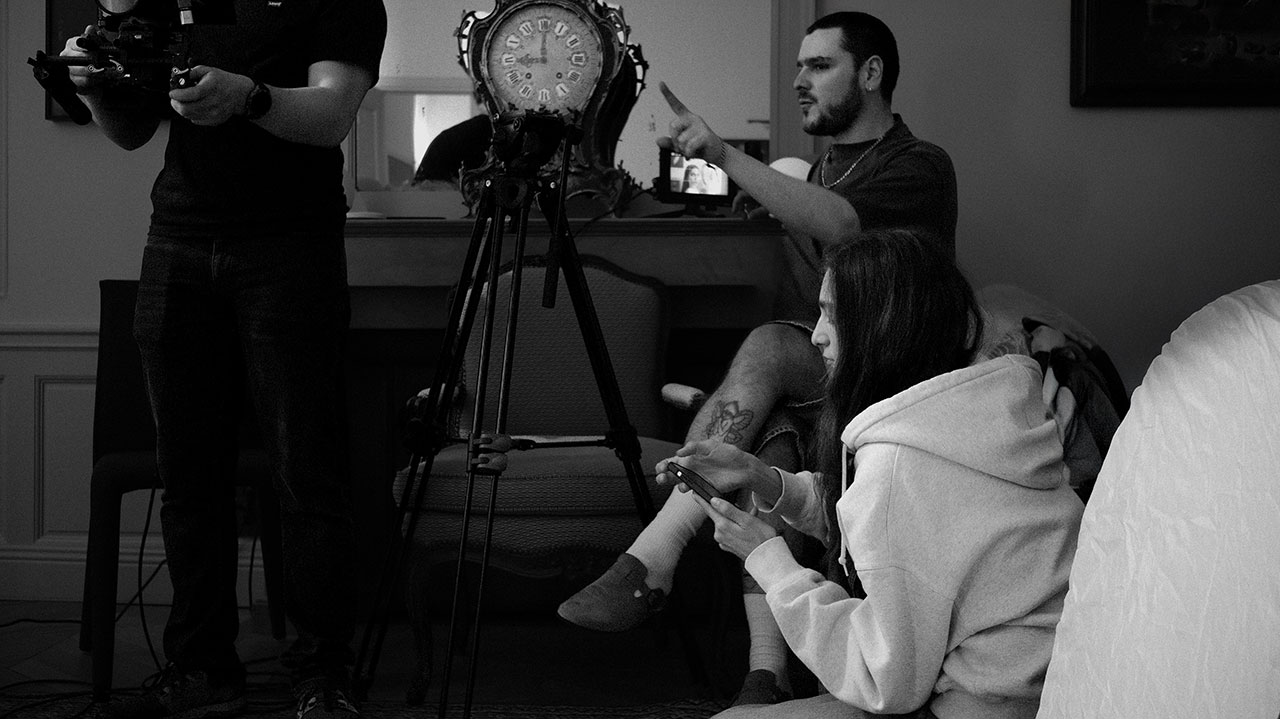
Evane Boulanger: I figured that out after we first worked together. I could tell she knows how to act. I don’t even know if we should call it acting, because she’s just herself. She delivers, and it’s a good match. I always had that in the back of my head while thinking about a scenario, and then everything came together. She’s a natural. We filmed in one day, so there wasn’t time for many takes, but every detail was thought through in advance, from the lighting and framing to the reflections and the placement of each object.
Was this your first time acting since you were a child in Chile? What skills came back, and what had to be relearned?
Sara Caballero: A year ago, Evane (Boulanger) and I made another film called Entrée, plat, dessert. He made me deeply interested in acting again and has been such a mentor. I learned to act very young, which helps me feel comfortable in front of the camera and not ashamed of failing, but it’s very different once you grow up, because the level of self-consciousness is different. I also had to act in French for the first time. It’s my second language, as I went to a French school, but it’s totally different to act in a language that isn’t your mother tongue. I loved the challenge.
How did you and Sara (Caballero) build the character together? Was she playing you, or herself as well?
Evane Boulanger: We rehearsed about three days before, since Sara is very busy. She approved the scenario and was very flexible. I committed to giving her the part even before the rehearsals showed me whether she could do it. Now, when I see people’s feedback, nobody has the same story, but everyone feels something, relates to it, and thinks about it. When she read the scenario, it brought something back for her. It became so natural that we didn’t question the character she had to embody. It was like Christmas morning, when you open your gift and think, “Okay, this is exactly what I wanted.”
Sara Caballero | Image courtesy of Evane Boulanger
How much input did you have in shaping the character, and how did you and Evane (Boulanger) collaborate?
Sara Caballero: We met a few days before to read the script together many times. Evane explained the feeling and the tone, and then we performed it together, intimately, with no one else there. That let him shape the character by seeing how I embodied it. He said you don’t really see anything until someone gives it life, so we were both curious to see how she would come out. He wasn’t afraid of me not saying the script perfectly. That was even better, because little mistakes make the feeling more real.
There’s a clear contrast between the character’s older and younger selves in the film. What informed the wardrobe choices for each, and did you collaborate with a stylist?
Evane Boulanger: I developed the character on mood boards, because I’m a very visual person. I worked with a friend who isn’t a stylist but has taste and was motivated to work with me. This time I gave him a challenge. I told him, “Read the scenario, and based on how you picture the character, find clothes that make her come alive.”
The Marble character wears something defined and sharp, but not too fashionable. I didn’t want her to appear as a fashion queen. She had to look established, polished, and a bit cold. I didn’t want Sara (Caballero) the model to be seen as Sara (Caballero) the model. The character had to take over. That’s why it takes a few minutes in the first part of the movie even to see her face when she opens the fridge. I had amazing shots of her entering, but I decided, “No, that’s not the purpose.” I didn’t want people to recognize her right away and think, “Oh, a fashion movie.”
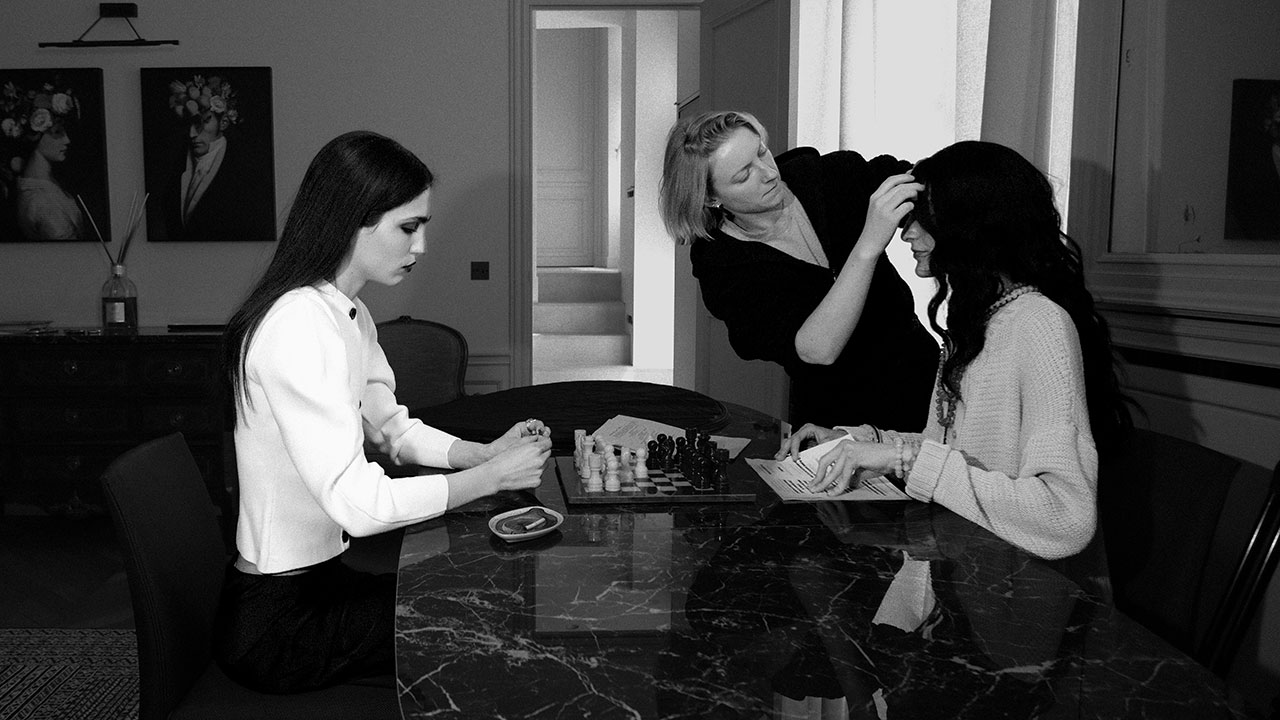
The second character was trickier, because she was supposed to be a bit unfashionable. It’s a wrapped dress, pinkish beige with flowers, very childish. When the two face each other, an understudy stands in for her. We wanted to create a feeling more than a style, because the movie is too short to define a character through style. There’s also the sound of her cheap necklace with colored pearls, and the purple sweater she wears. I would never consider those stylish. So we focused more on characters than on fashion.
I read that when you’re back in Mallorca, you stop being “Sara the model” and become Sara Caballero again. Did that split show up on set?
Sara Caballero: Yes, exactly! That’s what I love most about acting. I deeply disconnect from the model, and it’s purely me. There’s a feeling of freedom, of impersonating any feeling that we want or are searching for. We don’t care how I look; there are fewer limits, there’s nothing to sell, just emotions.
Sara Caballero | Image courtesy of Evane Boulanger
Where do you land on the ending overall? Is she choosing one world, or is that left unresolved on purpose?
Evane Boulanger: I used chess for what the game inspires in general: this duality and hierarchy. The dialogue is built that way too. You can’t show your strategy right away when you want to bring someone to a point, because the cold main character can be offended. You need to play it carefully. The marble also produces a very distinct sound when you play, which marks your position. You’re in this marble bubble. In the end, we created a cheap paper chessboard, recalling an old chess game I played as a kid. I love the moment when she tries to touch it, and the other one says she’s scared to connect with her roots, because that’s where she’s from. It’s still chess, but it’s the old one, the cheap one, and she doesn’t want it.
By the end, the main character wins in a way and says, “I always win.” If you follow the dialogue, at some point she lets slip Spanish words, or gets triggered by what she hears. At one moment she says “de gritar,” which means “screaming,” and when she wins, she speaks in Spanish, “siempre gano.” When she says that, they are the same person. She gets there by digging through her memories in the flashback in the yellow light. A song from a cartoon on TV plays, bringing the memory back.
The final shot of her tearing into that can of beans felt like she was finally accepting her roots. Did you have a connection to that specific can?
Evane Boulanger: It’s from when I was a kid. We used to have this can of beans with sausage and pork, what we call a cassoulet in France. Sometimes I would even eat it cold. It brings back my memories and my past. I wanted her to connect with her inner child, which was mine, in a kind of symbiosis, where she embraces it and can make a mess and not care. We filmed it in only one shot. I wanted several, with inserts and close-ups, but I knew the cold beans would be a bit painful for Sara, so I said, “Let’s do it together, in one shot.” She embodied it so well, as if it were genuinely important to her.
Actors frequently appear in fashion campaigns, while models are less often cast in acting roles. Did that dynamic inform your decision to cast a model in the film?
Evane Boulanger: That’s actually my logline. I see actors and actresses end up in campaigns where we don’t use what they’re good at. We just use their fame, their renown. So I thought, I’m going to use models in my movie, but in the opposite way. I’m going to make them have a voice. Take Jonathan Glazer’s Prada campaign with Scarlett Johansson. She is actually acting, but the way fashion campaigns are made in film is abstract. When I first wanted to make a movie with models, I thought, let’s not do it like that. I wanted consistency, like an actual movie, but inspired by fashion. Yorgos Lanthimos is another reference of mine, and both he and Glazer have done things I would like to do one day, like filming for fashion houses.
Evane Boulanger | Image courtesy of Evane Boulanger
How does modeling overlap with acting for a role like this, and does one change how you approach the other?
Sara Caballero: In a role like this, it accentuates the feeling that I have to forget that I’m a model. On the other hand, when I’m modeling, I have to act! Acting has definitely changed my modeling approach. Modeling is also about a character, and it’s not that important how you look. What’s important is to perform what the creative wants.
What’s next for you?
Evane Boulanger: My next piece is something I wrote before this one, but I can’t make it on my own. I would need a budget and a production team, because I pay for everything myself. It’s deeper and bigger, and this film is a nice start. It will give people more material, actually, to see me. It’s supposed to be with two models again, two I’m really close with. I don’t choose models for their appearance. I choose people I’m close with and get to know, and I want to give them a voice. I see a personality in them that we don’t really see in fashion jobs.
Evane Boulanger | Image courtesy of Evane Boulanger