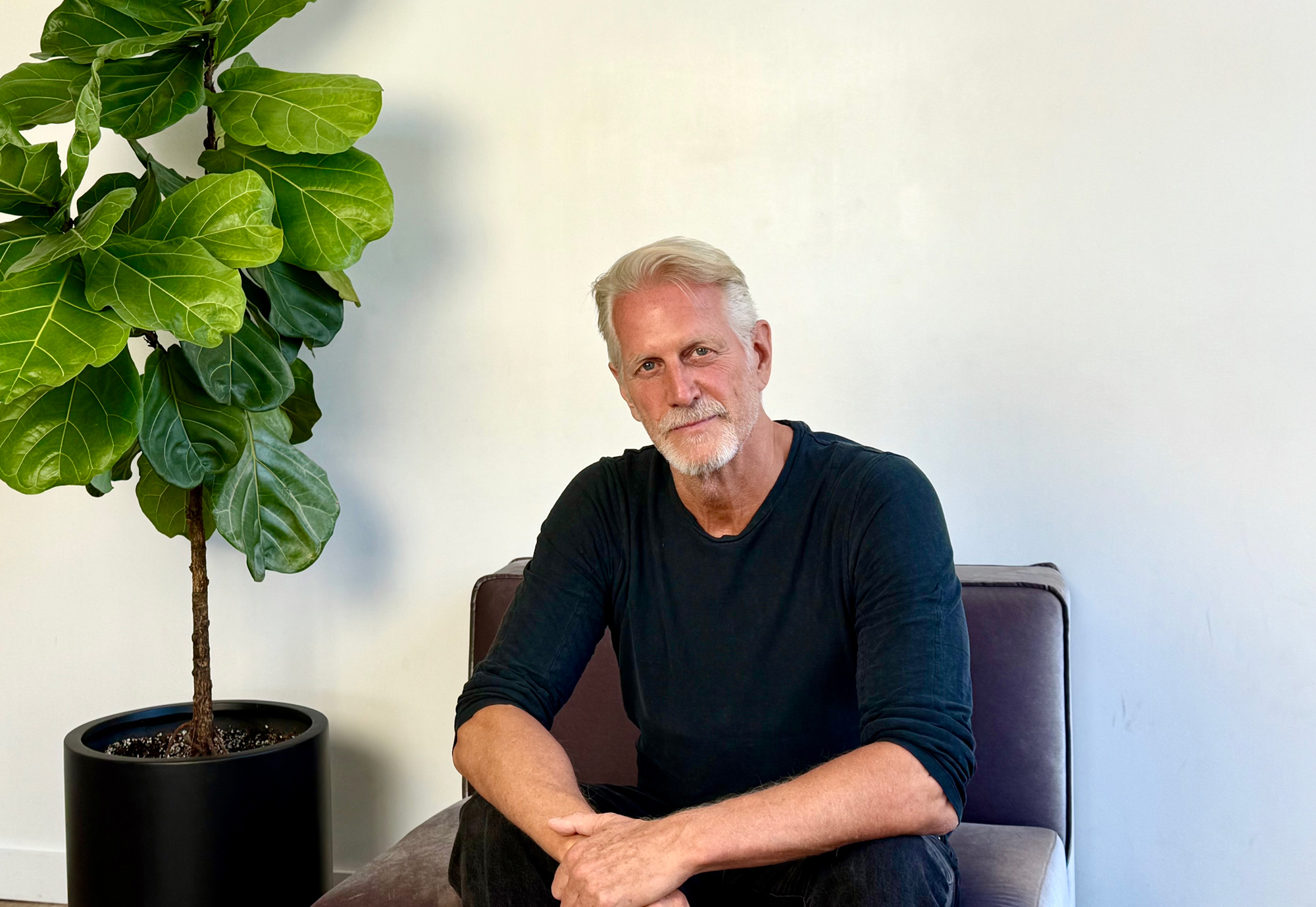
Hoyt Richards by Betty Sze
The 1980s were a decade of decadence. Hair was big, shoulder pads even bigger, and the era of the modern-day supermodel was dawning. As the public began to know Cindy, Naomi, Christy, Linda, and Claudia on a first-name basis, a slew of male models also rose to prominence. No one was bigger than Hoyt Richards, the Princeton graduate turned brand favorite who became the de facto face of the industry. If you opened a magazine back then, you were guaranteed to see Hoyt’s face: chiseled, blonde, and emblematic of the ’80s taste for drama.
Cue 26 years later, and this past June, a three-part docuseries debuted on HBO, Bring Me the Beauties: A Model Cult, detailing what was going on behind the scenes of this seemingly glamorous life. The series documents Hoyt’s journey from his introduction at 16 to Eternal Values’ cult leader to his current role as a multi-hyphenate actor and cult deprogrammer. The New York Times, Rolling Stone, Vanity Fair, Interview Magazine, and multiple other outlets talked to Hoyt about this unbelievable story. But we also wanted to hear from him about his life in front of the camera, his experience in the industry at the beginning of the supermodel era and his view now of the tumultuous time depicted in the series.
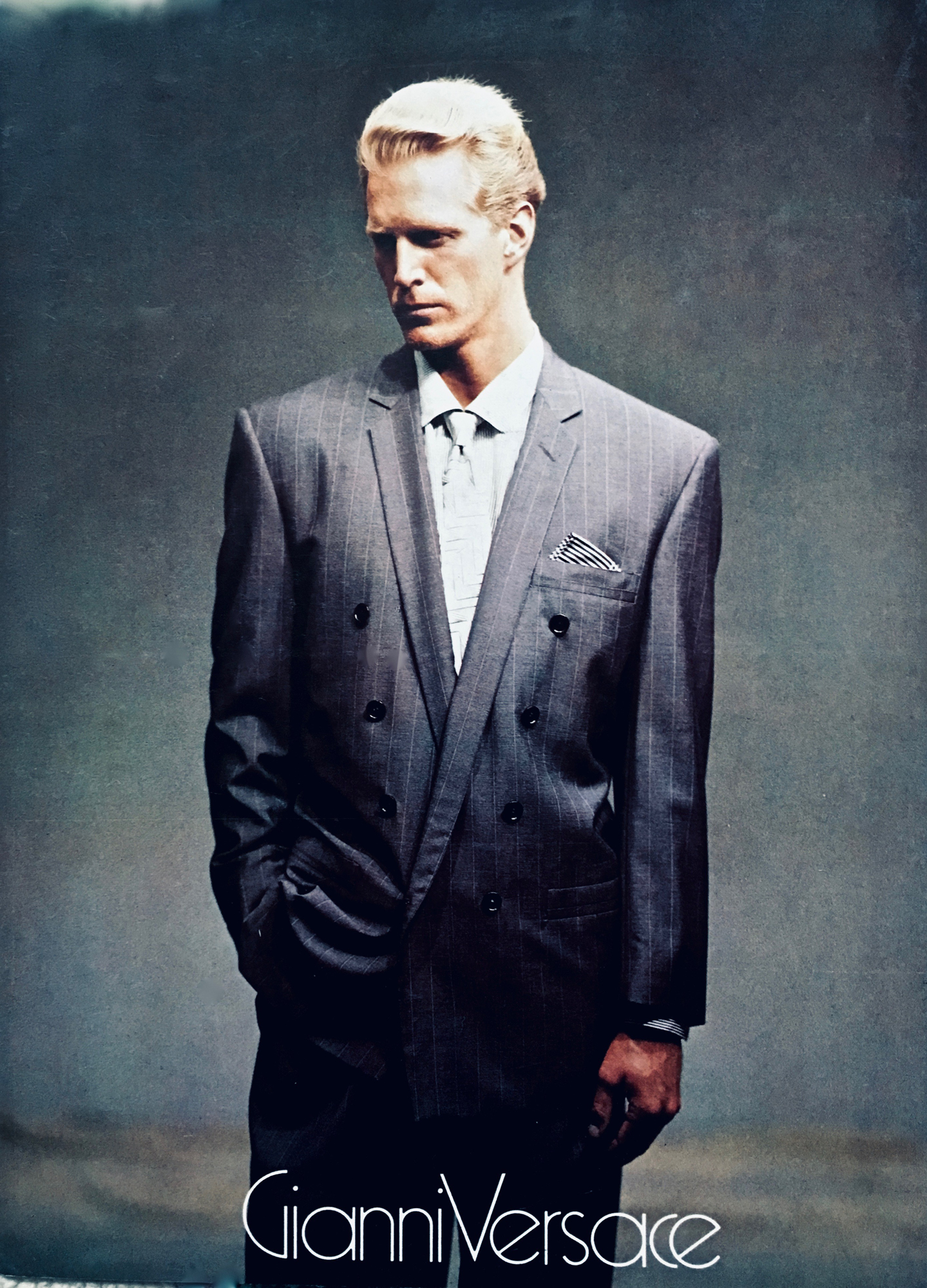
Versace by Claus Wickrath | Image courtesy of Wilhelmina NY
Tell us about your earliest days in the industry.
That whole era was incredible. When Cindy, Claudia, Naomi, Christy, and the others became supermodels, there was a point when people were like, “Well, what about the guys?” My career just happened to be peaking when people were asking that question, so I fell into that conversation. It’s a very subjective perspective: who becomes a supermodel? It’s not some crown you get, or a box you check.
There’s no prerequisite to getting involved with the modeling business. It’s just: did you win the genetic lottery or not? And because that’s the only criteria, there are so many people from different walks of life within the fashion industry, which I loved. Male models have this shared discomfort of being guys in a field dominated by women, but that creates camaraderie. We had this fellowship where it was like, “As long as I work, I’d like you to work too.” I still have dear friends from that era, and I’m just so grateful for it. I got to travel the world: one of the best educations you can get. Americans, as a rule, don’t travel enough, so I felt incredibly privileged to experience some of the most beautiful places in the world. It opened my eyes to how much was out there and how much I had to learn.
Well, that brings us to your travels and your big fashion moments, starting with your first big show, which was for Gianni Versace. Gianni participated in Rome’s Donna Sotto le Stelle (Woman Under the Stars) 1986 gala, broadcast by Italian television, showcasing the country’s biggest houses.
Versace was one of my first shows. When I first started working with Ford, I was about to start my senior year in college, and they invited me to the Christmas party. That’s where I first met Christy (Turlington), and I thought, Oh my God, I’ve never seen anyone so beautiful. She just had this incredible face and presence. I had started that summer and met Bruce Weber three weeks later, which put me on the map. Bruce booked me for Jeffrey Banks, which was my first big campaign. The pictures came out around Christmas, and I started getting all these calls from my agents asking, “Can you be in Paris? Can you be in Milan?”
And I was like, “I have a test on Tuesday, so I can’t just jump on a plane.” But in the fashion industry, if you’re unavailable, they want you more. By the time I graduated, I had all these jobs lined up. I ended up in Rome on the Spanish Steps for this Versace show, with U2’s “With or Without You” blaring from the speakers. I felt like a fish out of water, like, How did I even get here? But it started me on this adventure and invigorated my wanderlust to see the world, meet other people, and experience other cultures.
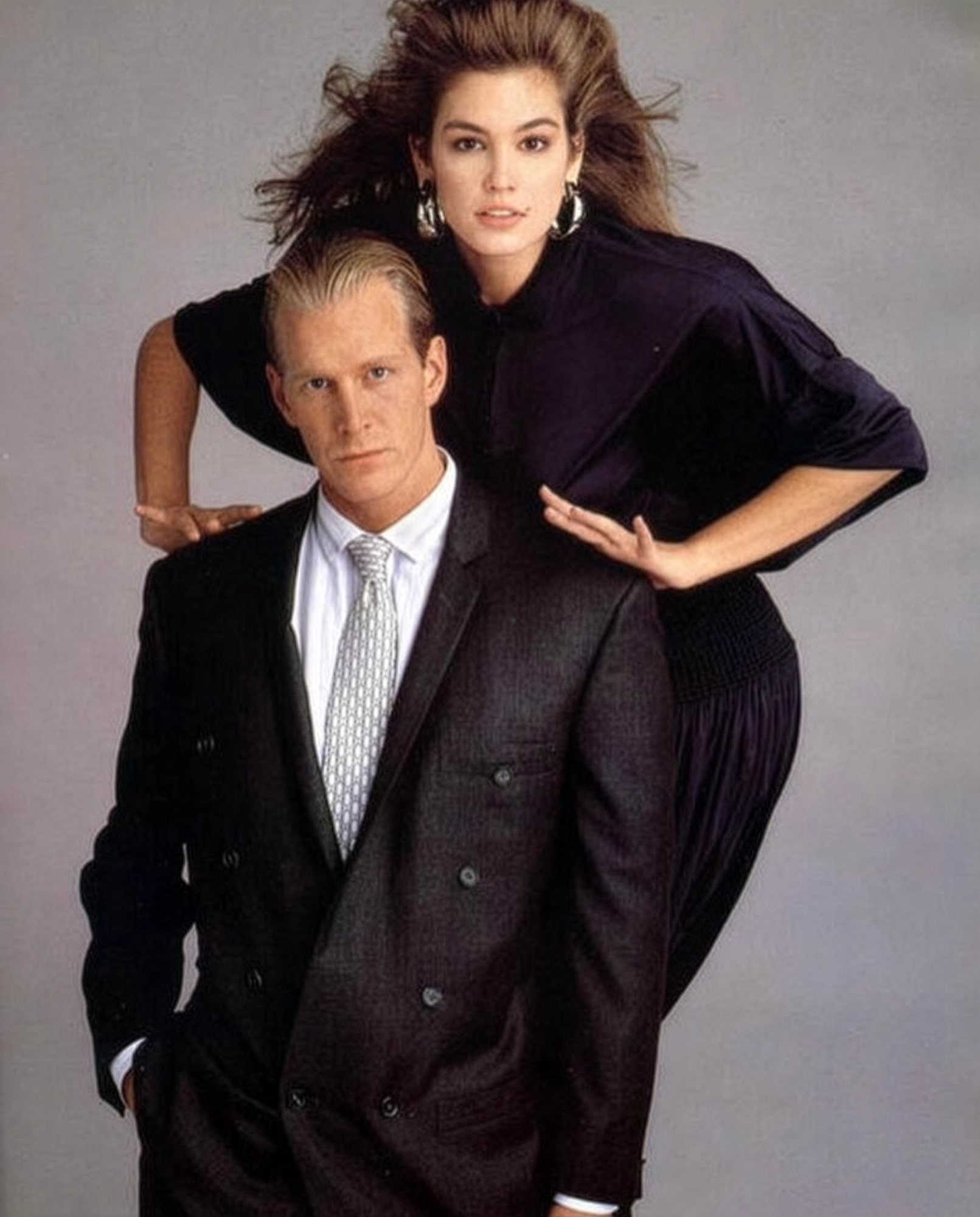
Versace with Cindy Crawford by Richard Avedon | Image courtesy of Wilhelmina NY
Can you talk about some of the campaigns you did?
For Versace with Avedon alongside Cindy, it was an interesting campaign—we were “bodies” for the girls to pose on. I’d already worked with Avedon at that point for a couple of other things, and he was just a lovely man. Avedon was one of the first people who used retouching, so if something was not quite right, he would say, “Oh, no, I can fix all that.”
That’s when I learned that the image itself is the starting place, and one can massage it into something more through artistic vision. It wasn’t just what you saw in the camera. My era was a time when photographers were the image makers. They were the icon builders and icons themselves. A photographer could cherry-pick and put you on the map in a way that just isn’t done today. They held the power position, even when dealing with big clients. A client might say, “Oh, I’m not seeing the label,” but the photographers were able to push back to achieve their vision. Now everything’s digital; you’ve got a young art director attached to the camera telling you what to shoot. That would have never flown back in the day; we were dealing with artists, and that is what made it special.
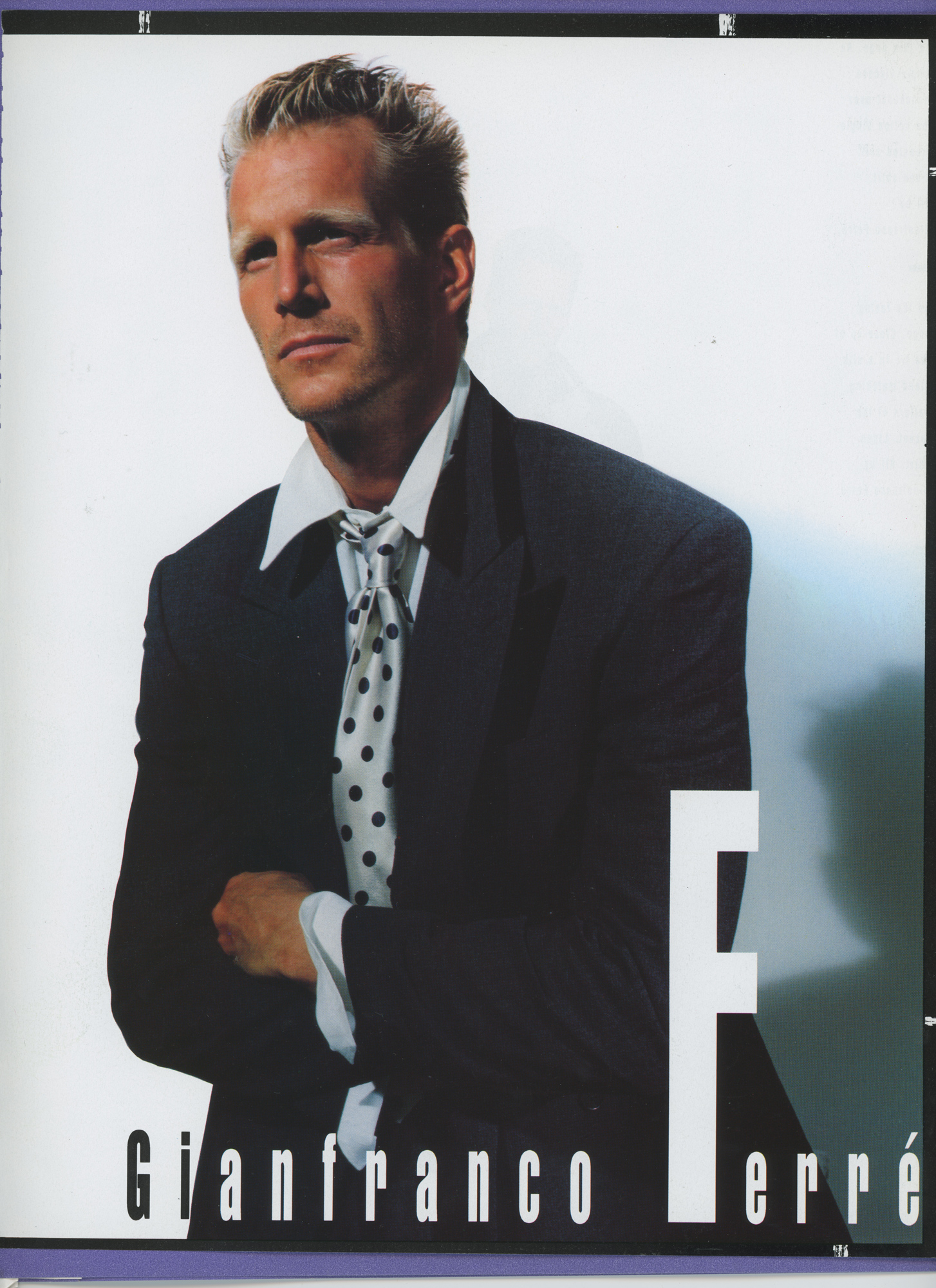
Gianfranco Ferré by Gianpaolo Barbieri | Image courtesy of Wilhelmina NY
Gian Paolo Barbieri passed away in December 2024, and I know you worked a lot with him.
Gianpaolo was one of the sweetest guys you could ever meet. The first time I met him was for the Ferré campaign, along with Marco Riotti, who was the art director and editor at L’Uomo Vogue. At that point, I worked a lot with L’Uomo Vogue, and they said, “We want you to do this campaign, and we’ll fly you to the Seychelles.” I was like, “Oh, great. Seychelles sounds good. I’ve never been to that part of the world.”
So we flew down, and Gianpaolo had an incredible home there. I can’t even describe it. He had this huge pool and a white wall he would move depending on where the sun was. His whole rationale was that the sun was different in the Seychelles—it wasn’t like anywhere else in the world—so we had to capture that light.
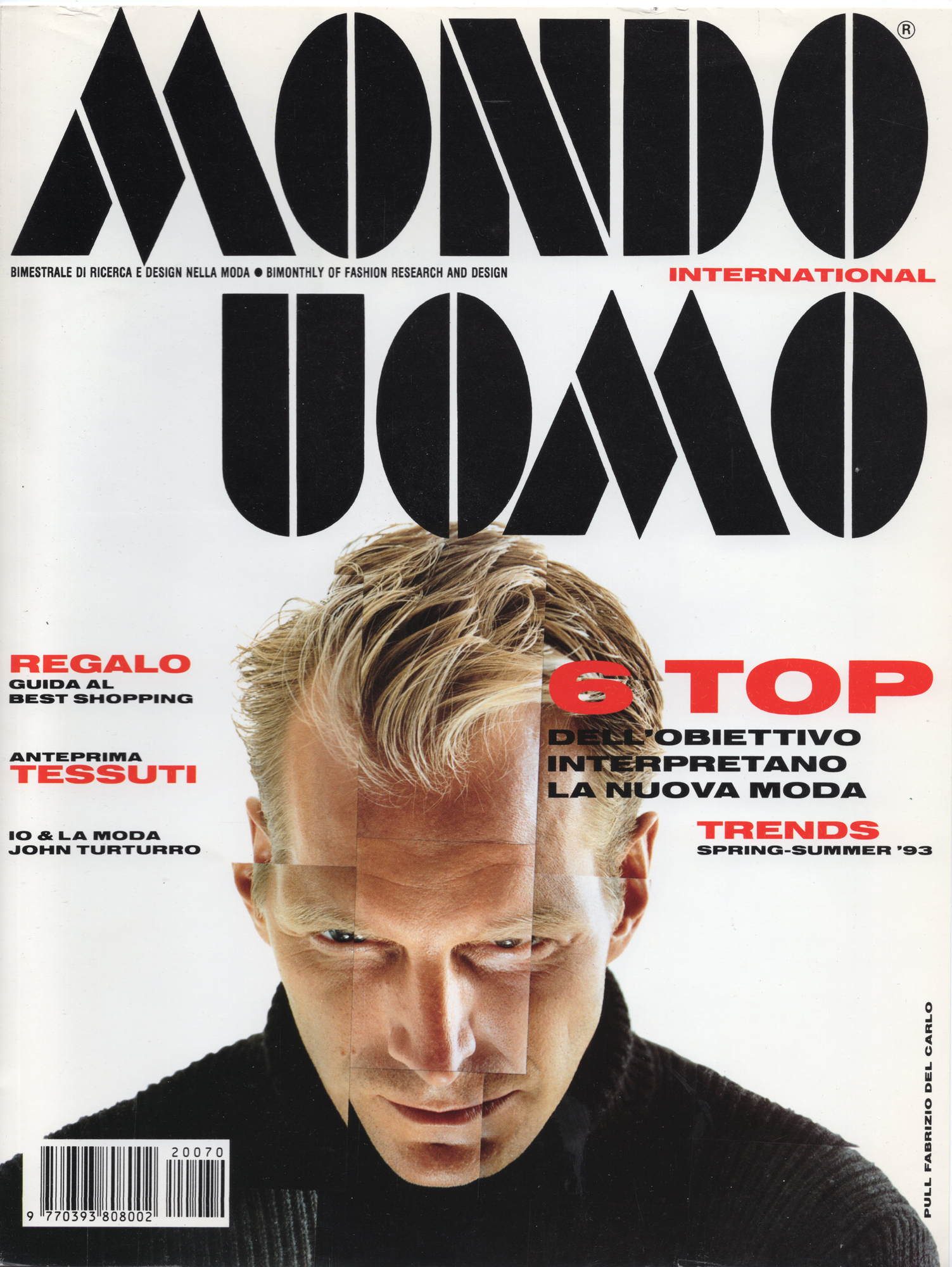
Mondo Uomo by Bruce Weber; special issue curated by Hoyt Richards | Image courtesy of Wilhelmina NY
Mondo Uomo was another one of your big shoots.
It was an incredible opportunity, and I don’t think anyone’s ever done it since then: 58 pages featuring just one model across all the editorials. At that point, I had a great relationship with the editor, Mauro Rotini. Lovely guy. He didn’t speak great English, and I spoke poor Italian, but we had a synergy and a connection.
Of course, I said yes because I loved what he was trying to do, to break in and compete with L’Uomo Vogue at that time, and Mondo Uomo was a much smaller magazine. I said, “Listen, let me do something that could help. If you’re willing to give me creative control on this, I can go to Bruce Weber, Peggy Sirota— people who would probably not work with your magazine because it didn’t have the elevation of L’Uomo Vogue yet. But if I can approach them and say, ‘Listen, we can do whatever we want,’ I think I can get these people to come on board.” And so he said, “Listen, here’s your budget. Bring back the magazine.”
So that’s what I did. I went to Bruce, Peggy, Greg Gorman, and Nadir. All my favorite photographers. Also, Margaretha Olschewski and Claus Wickrath, whom I loved and who are also no longer with us. It felt like a once-in-a-lifetime thing. It also gave me such an appreciation while I was working on it. I kept thinking, I wish other models would get this opportunity to see how hard it is to pull a magazine together, how much is involved. As a model, you are a bit privileged and take things for granted, not realizing what actually goes into a photoshoot: what’s involved, how to organize it, and how to pay people. I think you’d have less ego if you knew all the moving parts. I wish more models had that experience.
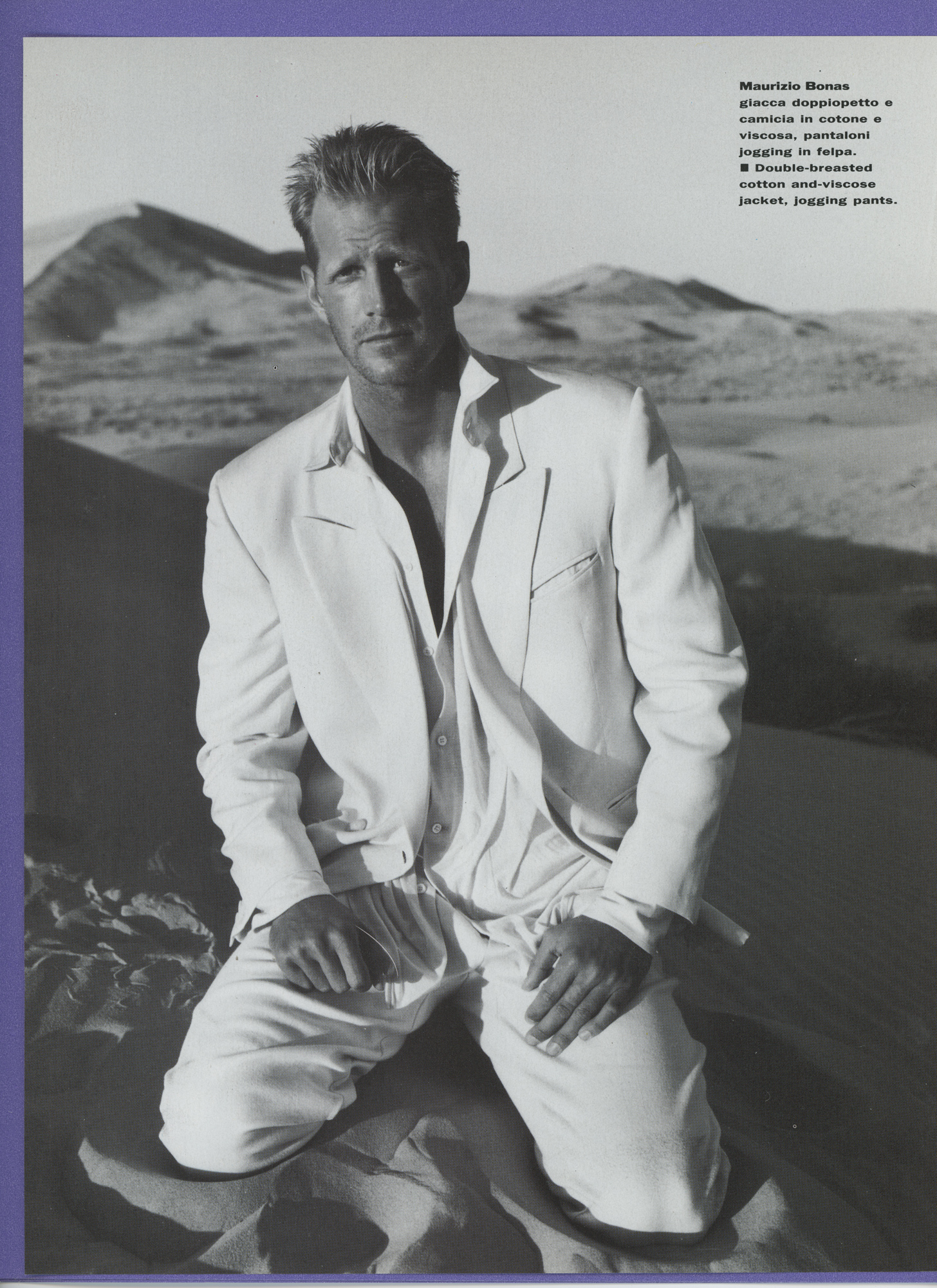
L’Uomo Vogue by Fabrizio Ferri | Image courtesy of Wilhelmina NY
Let’s talk about your Fabrizio Ferri shoot for L’Uomo Vogue with Karen Mulder, who is currently having a resurgence after taking years off after calling attention to abuse in the industry.
It’s so heartbreaking what happened to her. I only shot with her that one time with Fabrizio Ferri, but my God, she’s gorgeous. She looks just like a Disney princess—out of a storybook; just kind and gentle. It was a wonderful shoot we had with Fabrizio. It was shot outside of Palm Springs in the desert, but he only shoots in the afternoon light. So you don’t start the day until 3 o’clock. In the morning, you just sit by the pool and have a nice, leisurely breakfast. Normally in fashion, you’re up at the crack of dawn, take a break in the middle, and then grind through sunset.
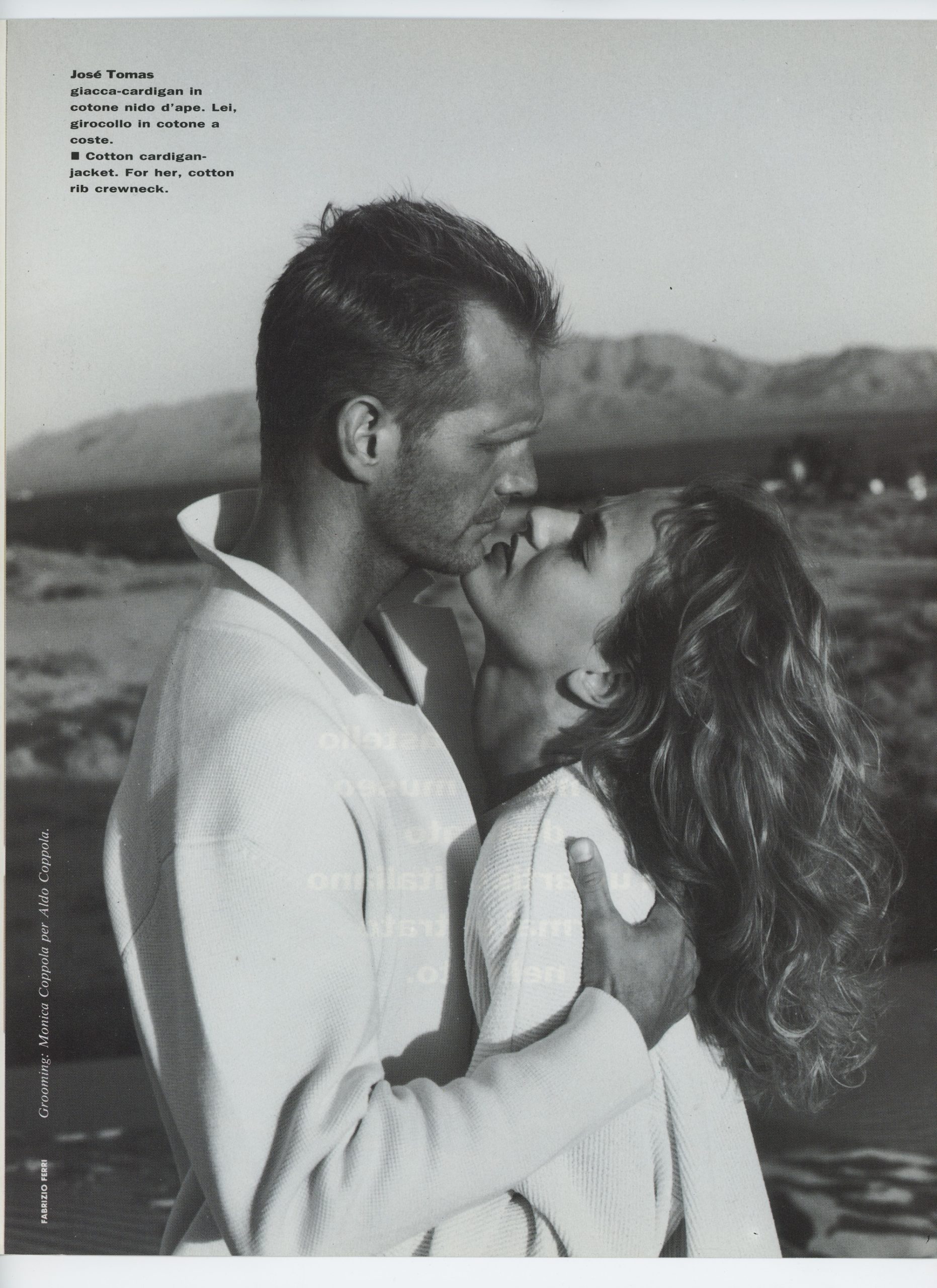
Hoyt Richards & Karen Mulder for L’Uomo Vogue by Fabrizio Ferri | Image courtesy of Wilhelmina NY
He was like, “Nah, let’s take the morning off, relax, and have a good time.” At 3 o’clock, we’d start to rip, and then he would shoot in that beautiful light. That was how we got that shoot done. That’s one of my favorite shoots. I love when there are moments happening between models; I love pictures that capture a cinematic moment. A beautiful person just posing and looking beautiful isn’t very interesting to me. I love the idea that you capture a little moment in time where something is happening that will never be captured in that same way ever again—when a picture comes to life, and it almost feels like you’re a fly on the wall preserving something you’re not supposed to see. Eventually, it becomes timeless and less about the fashion and more about the image.
Tell us about the Cartier commercial with Herb Ritts and Tatjana Patitz—two people who are also no longer with us.
I know, it’s so sad. That was shot in LA, I believe. They had one of these beautiful, long, cigar-type boats. I grew up on motorboats, so I loved doing this; I think we were all in white. I did one of my first campaigns with Herb for Gianfranco Ferré. Herb was just one of those kind, soft-spoken, easygoing people and a real artist who wanted to do something beautiful. He had such an iconic history of images that made me look at photography in a way I’d never considered before.
One of the things I love about the HBO documentary is that you get to see my father. I’m making a short film called My Father, the Documentarian because he documented our whole lives growing up. I had 25 hours of home movies (Super 8, Super 16) and about 10,000 photographs. At the time, you’re like, “Dad, stop taking another picture,” but he left us this incredible heirloom. He was from a generation where he wasn’t comfortable showing his emotions, offering words of encouragement, or giving hugs. But it’s very clear when you look at this body of work he created just how much he loved his family. That was his love language.
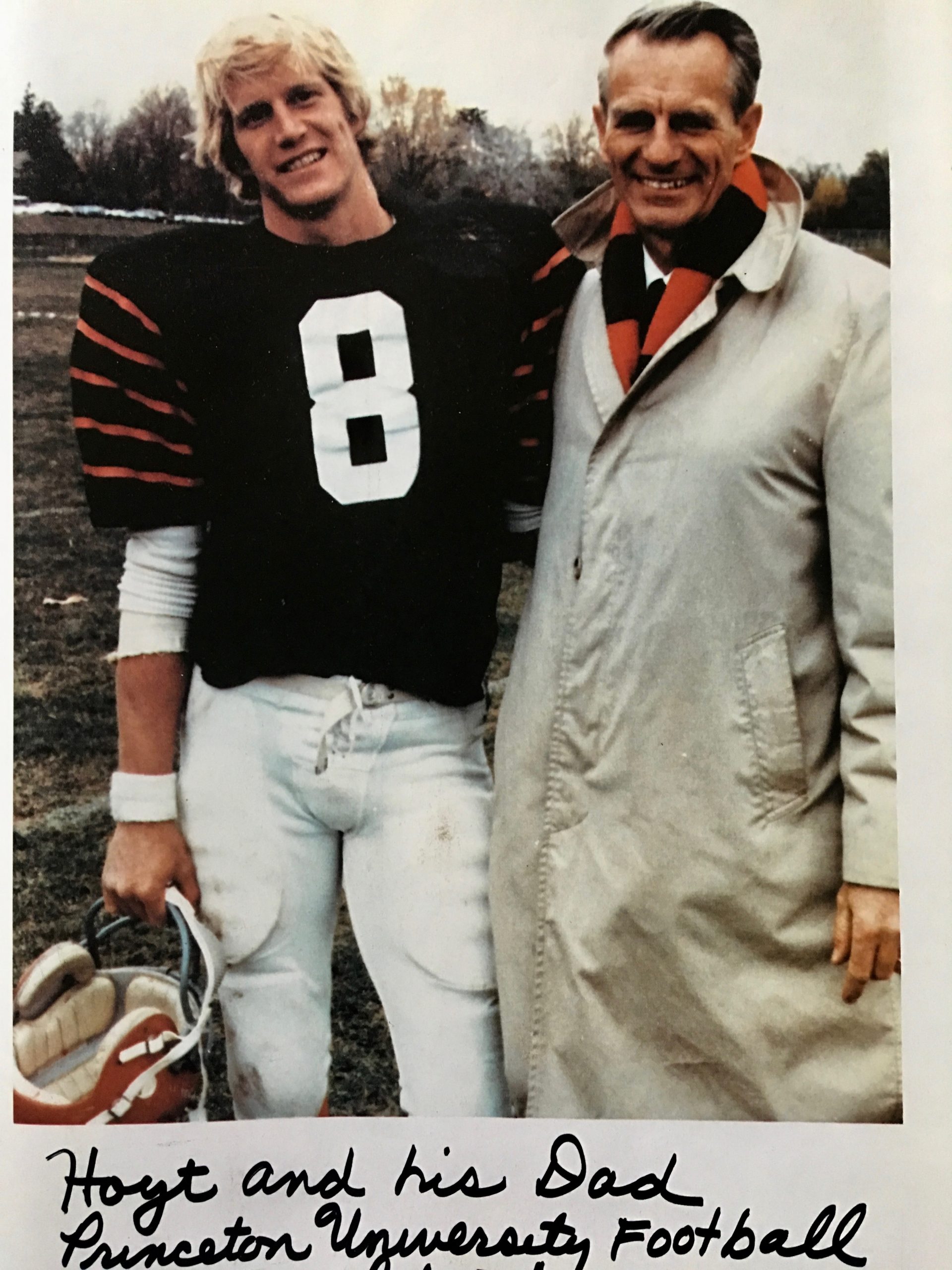
Hoyt Richards & his dad by Terry Hoyt | Image courtesy of Wilhelmina NY
What a gift to you. Also, you see where your artistry comes from, now that you’re a filmmaker yourself.
Exactly. The funny part is my dad got to model as well. During my senior year at Princeton, I had just started working, and I was getting a lot of grief from the football players: “What are you doing? What’s happening?” So I was trying to keep it off the radar as much as I could. I got a call from Donald Sturzen, who worked with Ralph Lauren, GQ, and Bruce. He said, “Yeah, we’re looking for an older model for Ralph Lauren, and we thought maybe you could ask one of your professors.” I was like, “Are you crazy? I’m not gonna go up to one of my professors and ask if they’ve ever thought about modeling.” And they said, “Well, just imagine yourself at age 50 or 55.” I said, “Well, my dad’s 56.” They said, “Send us some photos.” So I sent them a 4×5 photo of my dad. They said, “Great, we’ll take him on the next trip.”
And they worked with him for 10 years! My dad couldn’t go anywhere without showing his family to everyone; he had all his photos in his wallet. It was so beautiful. He showed Bruce (Weber) my brothers Garth and Christian. Christian shot with Bruce for Calvin Klein. My dad stayed in the business for 10-12 years and worked with Albert Watson and some of the best photographers. It was wonderful to see the family photographer become the one getting photographed. He loved being around the greats and learning from them.
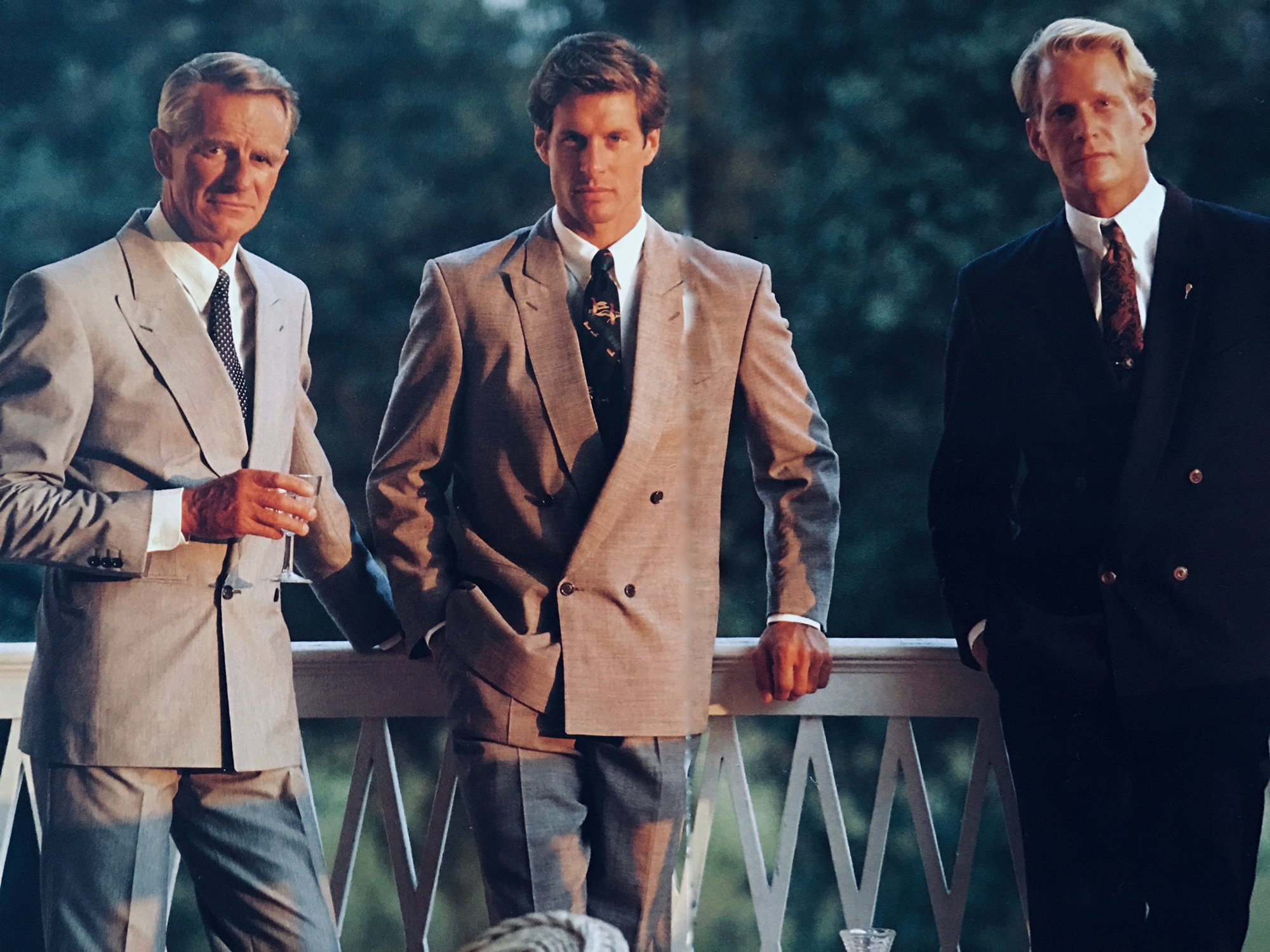
Hoyt’s dad Bob, Jeff Aquilon, and Hoyt Richards for Pocoloco by Knut Bry | Image courtesy of Wilhelmina NY
Let’s talk about the Revlon commercial with Cindy which we sadly cannot find online.
Cindy was one of those people I always admired. We met early on in the business. I had this big hangup when I came into the business because I went to an Ivy League school, I wasn’t “supposed” to be doing this job. Cindy had been valedictorian at her school, so she was someone I identified with. We would have dinner together, and I came to enjoy her as a friend.
I remember when she told me about Playboy. At that point in her career, she was rising, but she still wasn’t “en vogue” per se. She was super professional, which I admired because that’s how I tried to run my career. She’d get to work early and be professional and kind on set, but there were other girls who were succeeding who would show up after coming straight from the clubs, and she felt like she was considered “boring.” So she said, “I’ve got to shake this label—I’m going to do a shoot for Playboy.”
And I was like, “What?!” Then she said she was doing it with Herb (Ritts), so it was going to be tasteful. It was a smart move, because the truth is, men don’t look at Vogue magazine, so they wouldn’t know who the top model is. But put her in Playboy, which men do look at, and they say, “Oh, this is the top model,” and then it becomes the truth.
That’s where publicity can be extremely powerful. That catapulted her into a whole new category; she leapfrogged over all the rest of the girls because she became a name that men and women knew. That’s when she started doing the Pepsi commercials and everything else. So when I got to do the Revlon commercial with her, directed by Rebecca Blake, it was just a fun shoot. We had to do this intimate kissing scene, but we couldn’t stop laughing because it was so contrived. She’s a lot of fun— Cindy’s one of the good ones.
Citroën commercial with Claudia Schiffer
How was working with Claudia Schiffer for Citroën?
That was a fun commercial. Claudia, having grown up in the business, didn’t know how to drive back then, but in this commercial, she’s supposed to. Because she didn’t drive, they had to put the car on tracks. I’m the scientist guy running the test, so I’ve got glasses on and everything. Claudia was another one who was so professional and ready to do the job. On set, it hit me how photogenic she was. Meeting her in person, she’s very pretty, but when I watched her on the camera monitor, magic happened. She was just incredible. Some people just have it, and she was one of those.
Speaking of all these great shoots, let’s talk about the Lawrence of Arabia shoot for L’Uomo Vogue.
Yes, that was Peggy Sirota. She likes to tell stories, and Lawrence of Arabia is such an iconic story. I remember it was a big job that a lot of us wanted. It was right up my alley: I got to ride a motorcycle, do all this fun stuff, and create beautiful pictures I’m proud of. I’m such an admirer of Peggy’s work. She was one of the first successful female photographers, a tiny powerhouse who couldn’t be kinder or more fun to work with.
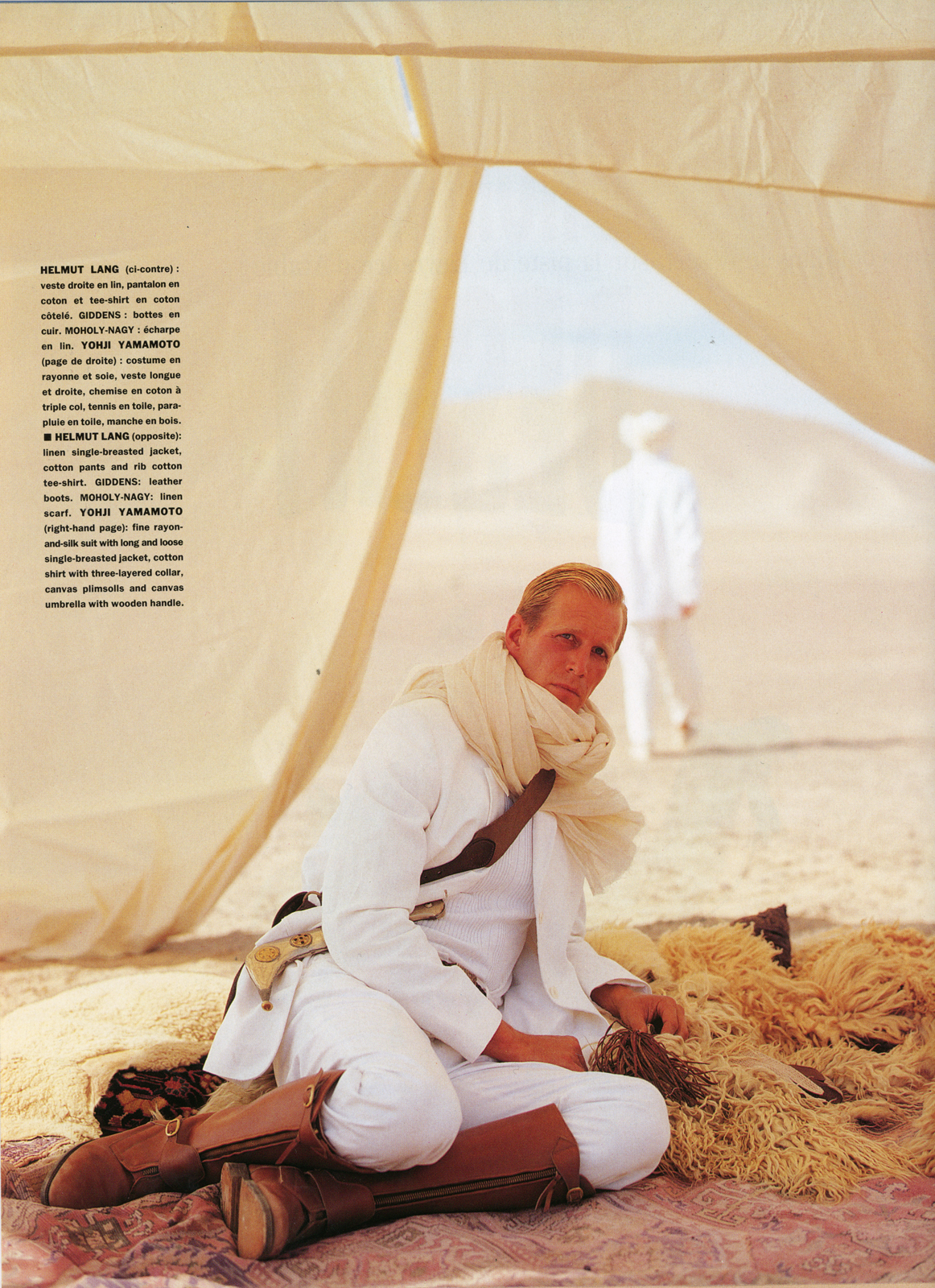
Lawrence of Arabia shoot for L’Uomo Vogue by Peggy Sirota | Image courtesy of Wilhelmina NY
When I think back on the artists I got to work with, I feel blessed. I worked with Horst, who was fascinating. He showed up in this beautiful suit, used just one light, and didn’t move it during the whole shoot. Then I remember working with Helmut Newton, who, of course, was more interested in the women than the men, but because I’d seen his pictures, I had an idea of him beforehand. I thought he’d be outrageous because his pictures are definitely racy. But at the shoot, his wife was there, and he was a total gentleman— incredibly elegant.
You take it for granted when it’s happening because you’re young and think it’s going to last forever, and then it doesn’t. The life of a model is a lot like a pro athlete: eventually, you age out. I’m talking to some people about doing a documentary about male models in particular. In male modeling, you generally can’t make enough money to live off it for the rest of your life, so the interesting story is: what do you pivot to? Some people succeed incredibly well in other fields, and some struggle. There are great stories to be told, and the personalities I’ve met in the industry are incredible.
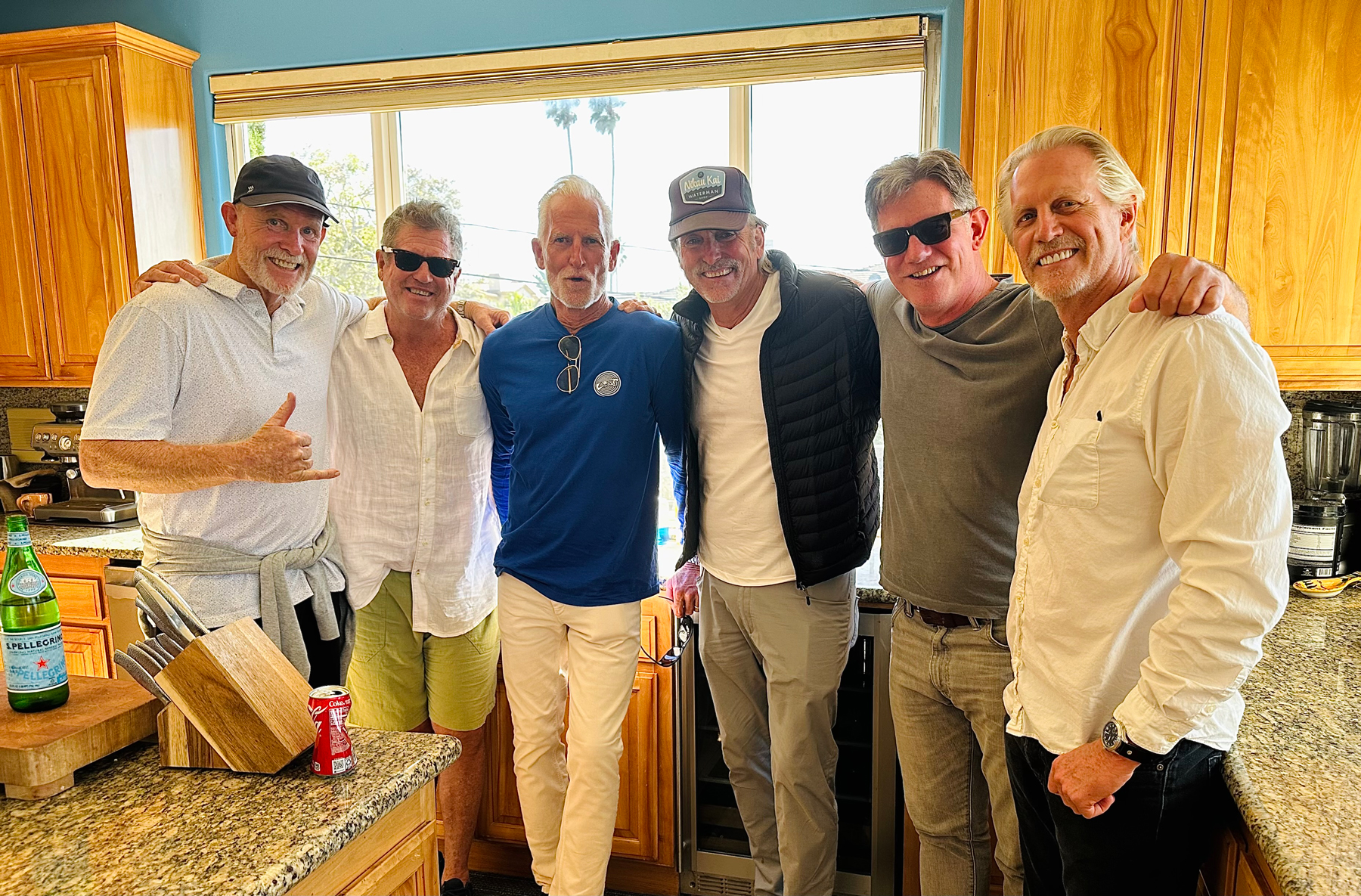
Hoyt Richards & friends | Image courtesy of Wilhelmina NY
Three years ago, we had a male model reunion. It sounds like the title of a bad movie, but it was a blast. You get all these guys together: John Pearson, Omar, John Anderson, Todd, Eric Hottenroth… people who were just so much fun. There’s this camaraderie because no one understands what that lifestyle was like except the people who lived it.
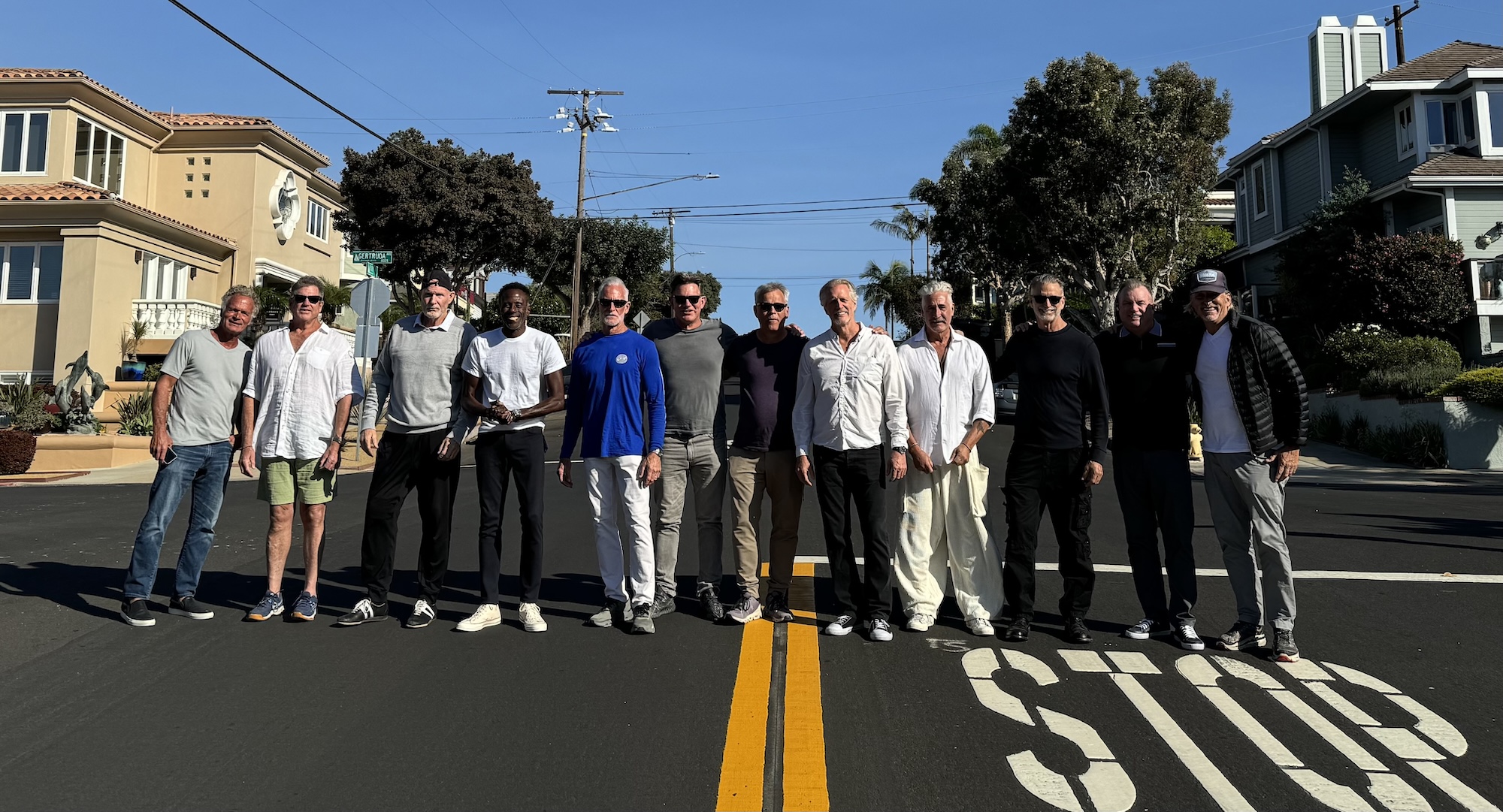
Hoyt Richards & friends | Image courtesy of Wilhelmina NY
How have you balanced a highly successful work life with a very turbulent personal life? Do you have any advice for models in that regard?
Actually, that’s one of the things I’m proud of about the documentary: it’s the first time I’ve seen any format, movie or television, humanize models—especially Jackie Adams and Fabio. I’m actually working now to do a documentary about Fabio because I feel like models get an archetype presented to them that isn’t accurate to the real person.
The important thing to understand is that as a model, you are human. It’s challenging to be in a business where people offer positive feelings and compliments based on the costume you’re wearing.
My spiritual journey back then was not an anomaly within the industry. It was during the time when the whole New Age movement was starting, a pushback against traditional religions. People felt like that stuff wasn’t working for them. There was a desire for an alternative approach: yoga was starting to become mainstream, health food and herbs were being explored, and outside-the-box ideas were everywhere. Pursuing a spiritual path didn’t make me feel different; I felt very in tune with what everyone else was going through. People wanted to look good and take care of themselves because they were in the beauty business, but they were also seeking an answer to the question: Who am I outside the costume?
By being in the cult, I was seeking a place where I could figure it all out so I could do things right and go on cruise control. But I see now, we don’t live in a binary world— things aren’t black and white, and living in the shades of gray forces you to think critically. The trap of thinking you’re going to arrive at a place where it all makes sense isn’t realistic, and it can get you into hot water. We’re here to learn; as long as you’re breathing, you’re still in class.
That was the situation I found myself in: having someone tell me, “Oh, I figured it out, and because you’re special, I’m gonna give you the system.” Now I know that’s not accurate, real, or how life works.
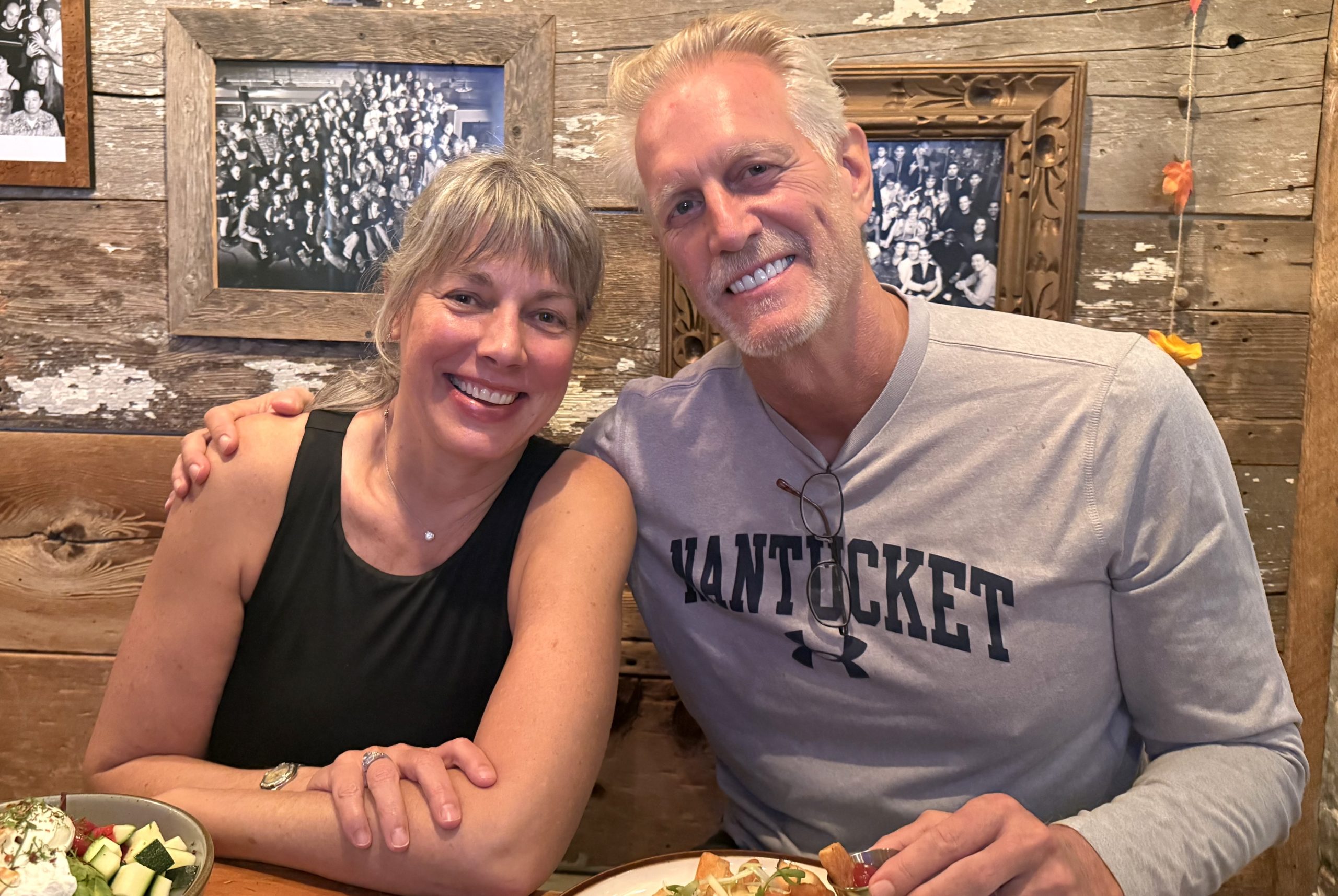
Donna and Hoyt Richards by Betty Sze
I’ve heard you’re getting married to Donna, the woman the cult told you to break up with. Congratulations! What an amazing story for you two to reconnect after all these years.
Thank you. It is a beautiful story; I’m a very lucky guy that she’s still around and available. She played such an important role in my leaving the group. That was a real gift. Sometimes the one you think got away doesn’t.That’s why I feel survivor stories are so important. When people think about that subject matter, it usually becomes a true-crime “villain” story: what happened to the cult leader, how many lives did they ruin, all this carnage? Which is a pretty depressing story.
The truth is, the survivor story is about hope, inspiration, and education. It’s about asking: How did I get myself into the situation? What was it like when I was there? At what point did I realize I needed to leave, and what did I learn from all of this? That’s a valuable story that says: “Listen, we’ve all come up against challenges, but ultimately it’s for our own benefit if we choose to lean into the trauma and learn from it.” Then it becomes a reservoir: I went through things I never imagined I’d find myself in, and look at what it taught me about myself and the world. The more common thing is to put it in the rearview mirror and run from it, but that doesn’t serve people very well.
The doc was incredibly important because, especially for men to see, there aren’t many examples of men in the public eye, having been at the highest levels of their field, saying, “I came through this, and here I am.”
One of the hardest parts about healing from abuse is moving past the feeling of, “I didn’t want this.” The crucial next step for me was saying, “Okay, that’s all true, but I also participated.” Along the way, there were micro-compromises. I fell in love with the narrative of: “There’s this group we’re forming with like-minded people, we’re gonna do wonderful things, you’re gonna become more spiritual and a better version of yourself, and you’re gonna help the planet and your fellow man.”
It sounded awesome— much better than my “no plan.”
But as information came in that was contrary, if not flat-out hypocritical to those themes, I chose to either act like it didn’t happen or tell myself those were dark forces trying to feed me inaccurate ideas. Either way, I wasn’t listening.
I held on to that narrative so I could keep going. It was only when I finally had the humility to admit to myself: “No, actually, I got duped”, could I see it was a cult, and then things changed.
Analyzing is where the work takes place. Admitting it doesn’t make me look very good, but it’s honest. What it taught me is that no matter what type of situation or influence I’m under, there’s a part of me that always knows better. Learning that lesson is valuable, but you have to admit those things about yourself.
I think that’s where people struggle. But when you do admit it, it’s incredibly empowering because it allows you to say, “Listen, I’m flawed. I make mistakes. I’m learning, and I’m gonna get better.” Taking an honest perspective serves you far better going forward than trying to sugarcoat it and say it was all their fault and you’re completely innocent. We all have to own our piece of the pie.
I find that approach helpful, and that’s where I see other survivors struggle. I encourage them by saying, “Listen, it’s okay.” People appreciate transparency because we are all flawed creatures doing the best we can. The more transparent and vulnerable we are, the better. That’s why I love Brené Brown, she’s the one who said that the real antidote to shame is vulnerability, and the best way to be vulnerable is to tell your story honestly, warts and all. Whatever our circumstances are, there’s an opportunity to grow if we choose to deal with it rather than run from it.
This whole period has become gasoline for my creative engine. Living through something that sounds like a movie made me fascinated by stories, because they are how we communicate our lives to each other most effectively. You go through your day, come home, and say, “You’re not gonna believe what happened to me today!” This experience turned me into a storyteller. I look at the world now asking, What’s the story? What’s happening? Through that lens, you realize it’s not just about a good guy or a bad guy.
That’s why I’d love to see models humanized more going forward, because they’re people too. When a model has a captivating facade, it’s tempting not to look past it. It’s difficult for an outsider to see beyond it, leaving the model to wonder, Is that all I am? Is that all you see? This is a job—it doesn’t mean it’s who I am.
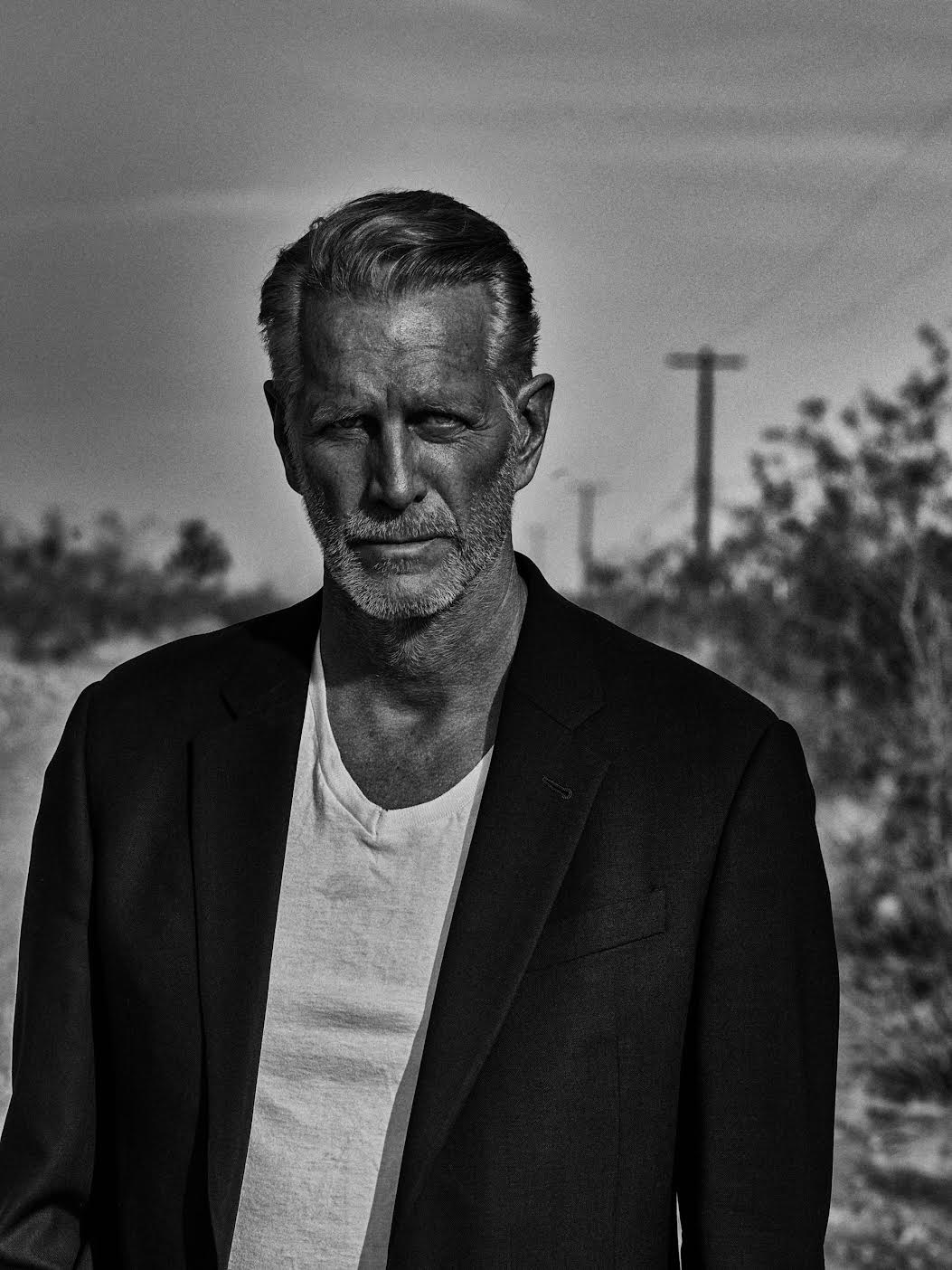
Hoyt Richards by Steve Lyon | Image courtesy of Wilhelmina NY
Do you have any words for younger models starting in the industry?
The most important thing is to learn to love yourself in spite of all the ups, downs, platitudes, and criticisms you’re going to get. At the end of the day, what’s most important is the relationship you develop with yourself. Self-love is one of the hardest things to develop, but the more we lean into that, the more we’re able to love others in a genuine, honest way.
Being honest with yourself and accepting both the rosy and dark things allows you to relate to people. The truth is, we bond more over pain than we do over good things. We have friends we can go out and have fun with, but the people you can talk to—where you can offer up the demons you’re facing and the struggles you’re having—those are the real friends. That’s what you’re looking for: relationships where you feel that bond and know you’re not alone.
That’s good advice for everyone, not just people in the industry.
When you’re young, you’re insecure about where you fit in and what it all means. For me, I felt guilty for a long time. I thought, Why was I dealt a “winning hand”? Winning from the point of view that I did well at school, did well in sports, and made friends easily. Certain things seemed to come easily to me, so I wondered what I was supposed to do with it all.
That’s where I was most vulnerable when I got involved with the group. Having no game plan when you feel like you “should”; creates vulnerability. So when I met someone who was excited about their game plan, and it sounded a lot better than mine, I said, “Tell me more.” That’s how it starts. So I would encourage young people to know that it’s okay not to know. It’s okay to figure it out as you go, and there’s nothing wrong with being a late bloomer. Life is a mystery, and the pursuit of “figuring it all out” can become a trap.
What do you consider your crowning achievement? Obviously, there are many parts of a person’s life—reconnecting with your family, your films—but specifically for fashion, what would you say it is?
Mondo Uomo was my “Oscar” because it had never been done before, though of course I didn’t know that back then. I was the “creative director,” so I could hand it off to people who knew what they were doing and lead the ship. It was an incredible opportunity. I got to work with people I loved, let them express themselves in a beautiful way, and put it together in a 58-page capsule that captured why I loved the business and how grateful I was to do it.
What haven’t you done in your career that you’d want to do next?
That’s a good question. At this point, I definitely want to do more public speaking. I still love filmmaking, so I’ve got projects I want to do and scripts I’ve written that I enjoy bringing to life. I don’t see myself retiring, I don’t know if that’s something I would enjoy. I love doing things that are creative, I love writing, and I love connecting with people. I’ve been very grateful to reconnect with my family and friends after going through what I did.
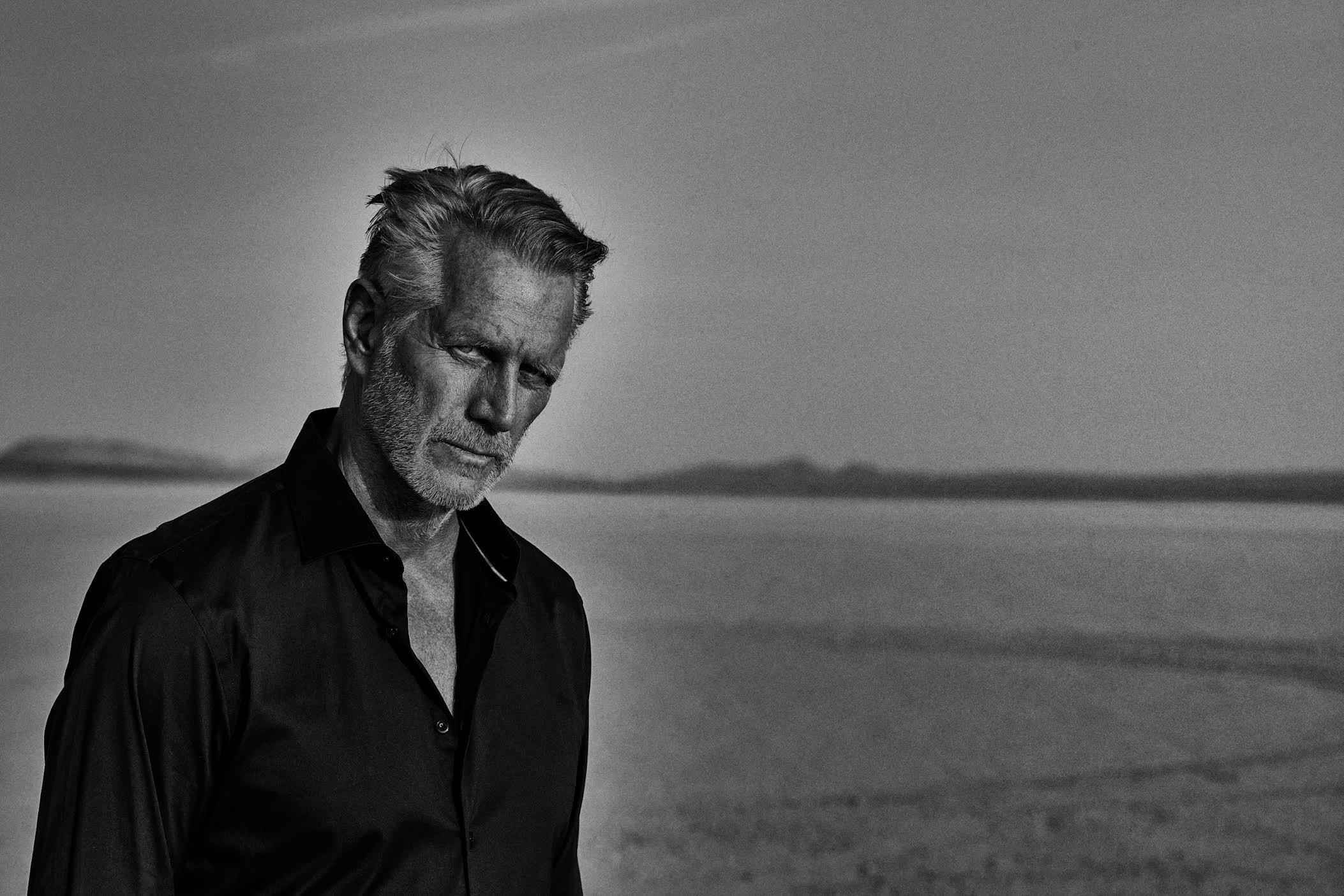
Hoyt Richards by Steve Lyon | Image courtesy of Wilhelmina NY
What do you miss about the fashion scene from the ’80s and ’90s?
I’m sure every generation believes theirs was the Golden Age, but I do feel like we were the golden age of fashion in the sense that there was serious money involved. It was an opulent time in America in the late ’80s and into the ’90s. The whole supermodel phenomenon emerged, and it felt fascinating. There was real glamour. The female models were dating celebrities, and the culture expanded into the stratosphere; instead of being limited to fashion, models became pop icons.
One of my best friends, Fabio, is a true pop icon. It became a colloquial thing to look at someone and say, “Who do you think you are, Fabio?” Everyone knows what that means. It’s wild to see how that era created those personalities and archetypes. I just don’t see that anymore, it doesn’t even feel like the same business.
And the fact that it’s so tied to social media now… words like “influencer” and “followers” sound like a cult to me! But that’s the world we’re living in right now, and I try to look at it as everything being the way it’s supposed to be. In the ’90s, all we were two-dimensional images in a magazine; people didn’t get to know our personalities. I think it’s good that people today get to see more of the actual person behind the photo.

