Behind the Image is an ongoing MODELS.com series taking a more personal look at both established and emerging creative talent.
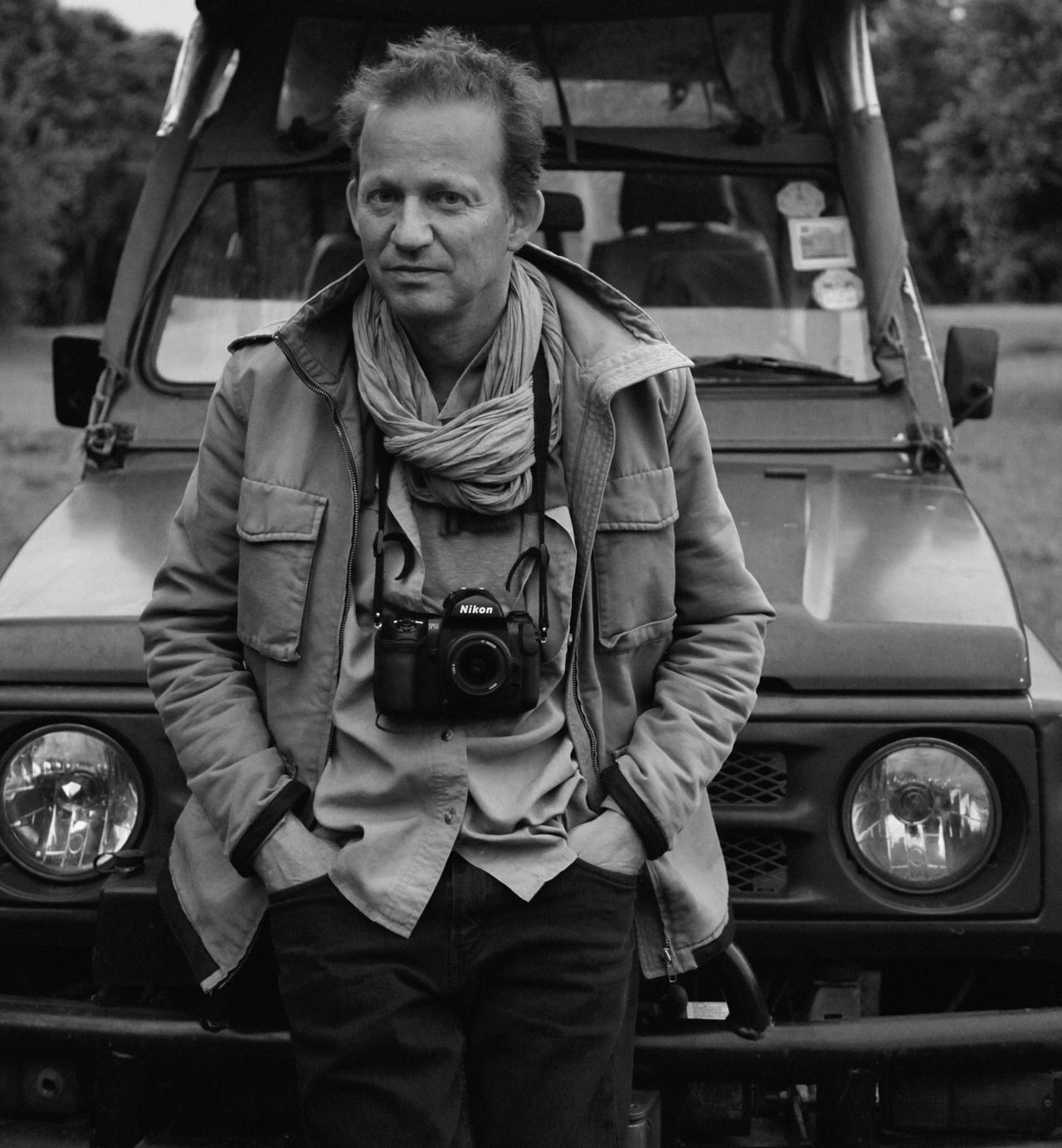
Vincent van de Wijngaard
Vincent van de Wijngaard, Photographer
Hometown: I was born in Leiden, a small town in The Netherlands. I lived with my parents and brother in a small village, Warmond, for a very long time. This changed when I started studying graphic design, and after one year, photography, at the Royal Academy of Art in The Hague. During my studies, I lived in The Hague, then decided to move to Amsterdam.Saskia de Brauw (my partner) and I eventually moved to Paris, then NYC, and now we are back in Paris again. Paris is my hometown. I think because of the many moves and travels, I have somehow lost the connection with my home country.
Based: Paris, France
Representation: Art + Commerce
You studied at the Royal Academy of Art in The Hague. How did you first discover photography, and was there a defining moment when you knew it would become your career?
My father is a photographer, so I grew up with photography around the house. I would always help out my father on shoots during school holidays, long before I ever thought of becoming a photographer. I set out to become a violinist, not a photographer. After my grandfather passed away, I inherited his camera, a black Nikon FM, and so I started to explore my near surroundings. Gradually, the circles became a bit wider. I met Kenneth Hope, a British photographer, while studying. He used to assist Frank Horvat and Guy Bourdin. I would assist him, but he would always tell me during a shoot, “you can do this!” Not long after I had graduated, he asked me to be the photographer on a shoot where he was the director.
We shot in Bimini, a tiny island with a small population in the Bahamas. The D.O.P. on this shoot was Ed Lachman. His work is incredible. Late at night, we drove up to a bar named ‘The Sandbar,’ Ernest Hemingway’s hangout when he lived on the island, discussing photography and film deep into the night. I had become very interested in the work of photographers such as James Nachtwey, Don McCullin, Franco Pagetti, Christopher Morris, Anthony Suau, Eugene Richards, Gilles Peress, Danny Lyon, Lee Friedlander, Raymond Depardon, and Larry Burrows, photojournalists and documentary photographers. I collected their books, and when a new story came out in Time, Life, or Newsweek Magazine, I would buy these and study them before I went to sleep.
I found that the camera suited what I wanted to tell. With the camera, I could explore and enter places where others were not allowed. I spent days and days, week after week, month after month in the streets. It is still what I love doing. This is where I find my ideas. I never imagined doing something like a fashion story. This was never my intention. This only happened when I befriended stylist Anna Schiffel and she asked me if I was interested in shooting a fashion story.
How would you describe your work?
My work is about observation, I don’t add or take away – a mix somewhere between documentary and fiction. My photographs are full of contrast, but then there is a softness as well. I strive for simplicity. Reduce as far as I can.
What’s your trademark?
There is a certain silence in my photographs, something pure – it is an ongoing search.
Your work often builds rich narratives across different settings, from expansive landscapes like the Lighthouse of Alexandria to the energy of cities like Manhattan. What draws you to a location, and how does it shape the story you want to tell?
I love places that have history and are still, more or less, authentic, raw, and unpolished. Places where the remnants of history are still tangible. For instance, when we lived in New York, I spent a lot of time delving into the history of writer and poet Edgar Allan Poe, whose work I greatly admire. There is a lot to learn from the way he constructed his stories. I certainly took a good look at that. It is very modern, in fact. I had to see the streets he walked, the bridge he crossed, the houses where he had lived, and so on. This certainly sparked my interest in Upper Manhattan. In the meantime, I explored that part of town with my camera, of course. I also shot with Saskia (de Brauw) in Upper Manhattan, mainly following Broadway, an ancient pathway in fact. This became part of a collaborative project named “Ghosts don’t walk in straight lines.”
In Tangiers, I started to follow Henri Matisse’s footsteps. What an incredible inventor he was. The hotel Matisse stayed in, where I stayed in what used to be his room, and the exact places where he sat in the streets when he painted. Slowly, I began to understand more about the man. While exploring Tangiers, I got to know the town pretty well. That is how I started to think about possibly doing a fashion story there. I did a story with Vanessa Axente and Malgosia Bela. With Saskia, I had explored the town before. We see similar things. Saskia always says, “with you I always end up standing on a heap of garbage, far out of town.” I think she is right. LOL. These are just a few examples. There are many more, I am afraid!
Your career has taken you to over seventy countries. Has any place left a lasting impression on you creatively, and why?
There are many, but it is fair to say Morocco has had a great influence. During my very first trip, I became captivated by the light, a sense of mystery, people disappearing into the shadows. How much does one really need to see to understand the fabric and narrative of an image? More recently, I have started traveling to Egypt, which is, in a way, the source of many things. I have a lot of work to do in Egypt, photographically speaking. I have only just started. I have made some new friends there. I take a great interest in Ancient Egypt. A few years ago, I worked on a project for Cartier and was very fortunate to explore the country with two incredible people, both Egyptologists. I took part in Photopia in Cairo, a festival founded by Marwa Abou Leila. I gave a seminar and had an exhibition. My exhibition brought back home the series “Sense of Place.” It felt very appropriate. The most rewarding part for me was meeting young photographers from that region and seeing what they were working on, and also what was on their minds. One of the participants showed work she had made in Lebanon, documenting funerals. We all fell silent as we looked at her photographs.
There’s a sense of intimacy in your work. How do you build trust with your subjects?
Well, taking pictures with people is always an exchange. In general, I would say that if you can have a pleasant dinner with someone you work with, it will reflect in the work. That is why it is so important to have a bit of time when you are working in a particular environment. Then, there is the factor of trust. People should feel that your actions are honest. I think integrity is the most important aspect in photography. In my latest story for M Le Monde, I was lucky to collaborate with two of my very favorite people, Imaan Hammam and Imruh Asha. There is an energy there, something close to a feeling of discovery. I cannot quite put my finger on it, but I really cherish this. I also have to mention Harper’s Bazaar US, Samira Nasr, and Natasha Lunn. I am really proud of this relationship.
What do you love most about what you do?
I feel incredibly fortunate to do what I do; to explore with a camera and take my presents (the photos) home! I love to collaborate and share ideas – when you put your ideas together, you have a much bigger universe to choose from.
What have you watched, heard, or read lately that has inspired you?
There are quite a few things:
1. I loved revisiting the old museum in Cairo. They have a magnificent collection of Egyptian artifacts on display. The museum itself is a museum.
2. I have just heard some new tracks from my dear friend, Grammy Award winning keyboardist and producer Jeff Lorber, which I loved. He sends me a lot of his music, and I send him my pictures. As he lost his house and studio in the wildfires in LA, it is so inspiring to see that he has not slowed down and continues to do what he loves, making music.
3. Saskia (de Brauw), my partner in life, is working on some new woven pieces which are very interesting and refreshing. Sometimes she incorporates found objects in her weavings, reflecting her fascination with traces left by people.
4. My friend Moises Saman released his book Glad Tidings of Benevolence. It is an exemplary book, both in its storytelling and photographically.
What’s something outside of your work that you would like people to know about you?
I love cooking and playing the violin! Also, I am an avid collector of antiquities, sometimes objects, but also letters, drawings, photos, etc. Things within my range of interest. Often, I use these as a point-of-departure for my stories.
Who’s one to watch?
Zomer, of course, the brainchild of both Danial Aitouganov and Imruh Asha. I really appreciate their approach and not being too serious! ….I mean: they are serious, but far too many people take themselves too seriously – it is a much better idea to have a playground.
Selected Work
By Vincent van de Wijngaard | Image courtesy of Art + Commerce
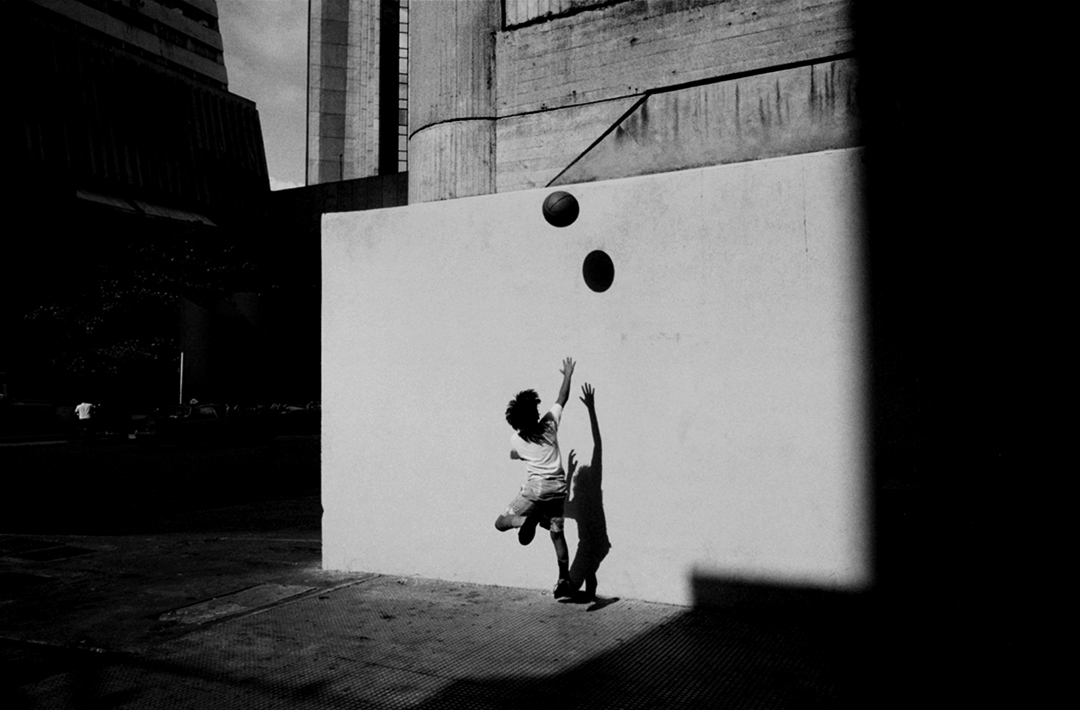
Personal Project
I took this photograph in 1991 in Caracas, Venezuela, just before I decided to study photography. It has many of the elements I still use today, and in some ways, it feels as if I shot it yesterday.
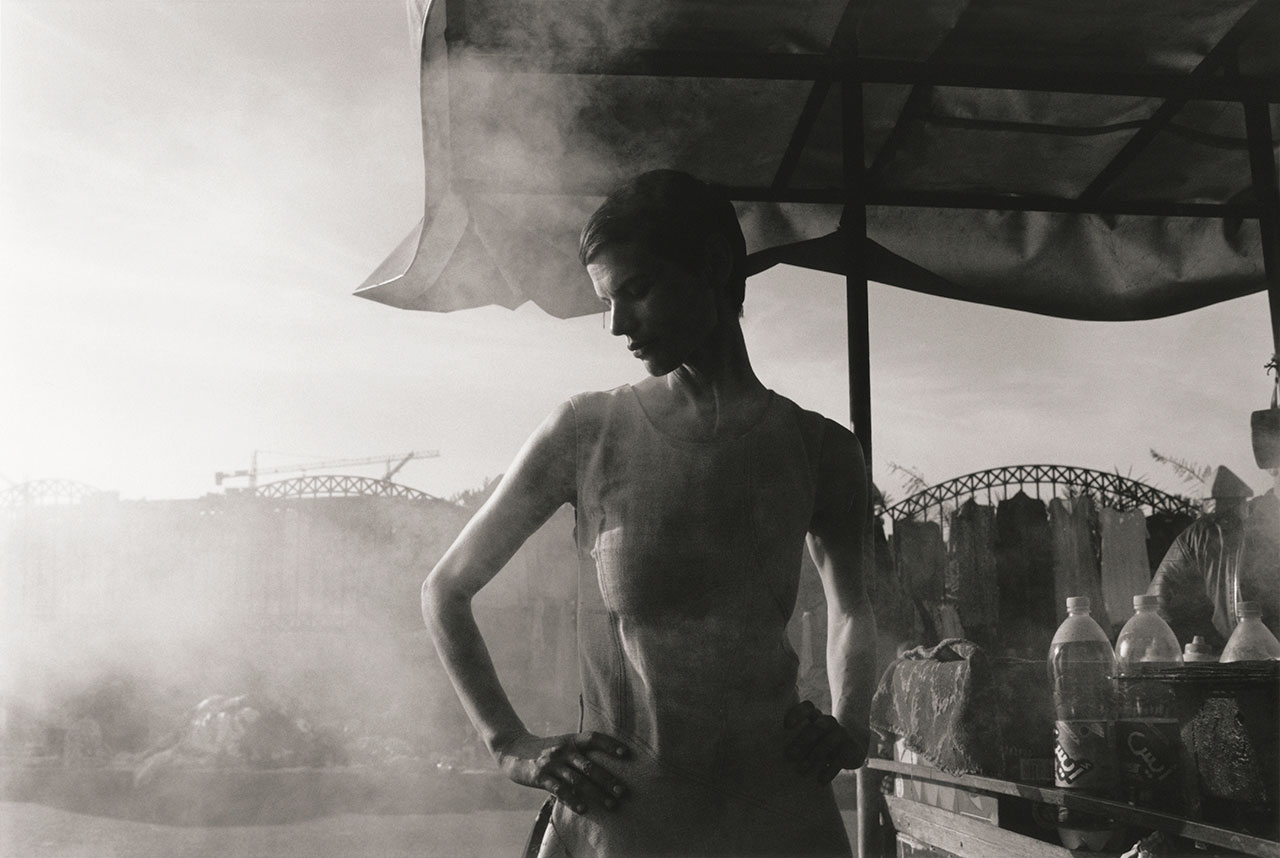
Saskia de Brauw by Vincent van de Wijngaard | Image courtesy of Art + Commerce
Travel to the Sun for Zomer
Shot on the outskirts of Marrakech with Saskia (de Brauw) and Imruh (Asha) as part of a book project for Zomer titled Travel to the Sun. We shot this book very quickly and were very fortunate that the design was done by M/M Paris. They definitely added their magical touch. Besides Saskia featuring as the main character in the book, she also wrote the text.
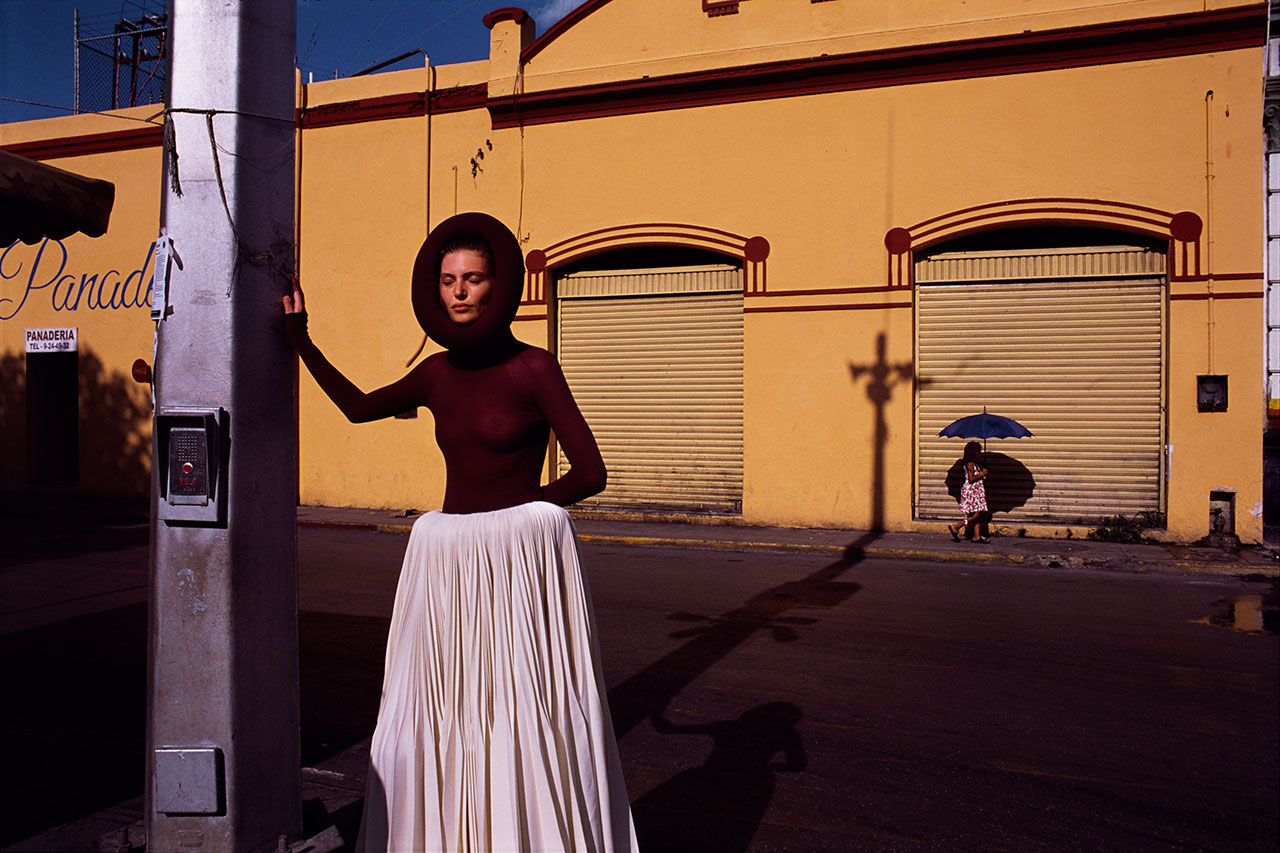
Bibi Breslin by Vincent van de Wijngaard | Image courtesy of Art + Commerce
Living Color for Harpers Bazaar US
I more or less started taking photographs in the Caribbean, Mexico, Cuba, Guatemala, Venezuela, and Havana in the late mid nineties. I think I found my voice during those trips. So, in a certain way, this was a return to a part of the world I had not traveled to in a very long time. Some streets were exactly the same as when I photographed them back then. In the photograph with Bibi (Breslin) leaning against a telegraph pole, I saw the shadow on the wall first. Imruh (Asha) had chosen a dress by Alaïa. The scene, all of a sudden, reminded me of something religious, almost like a prayer picture. Bibi was just so perfect for this story. There is something very close to acting in her movements and expression, I found.
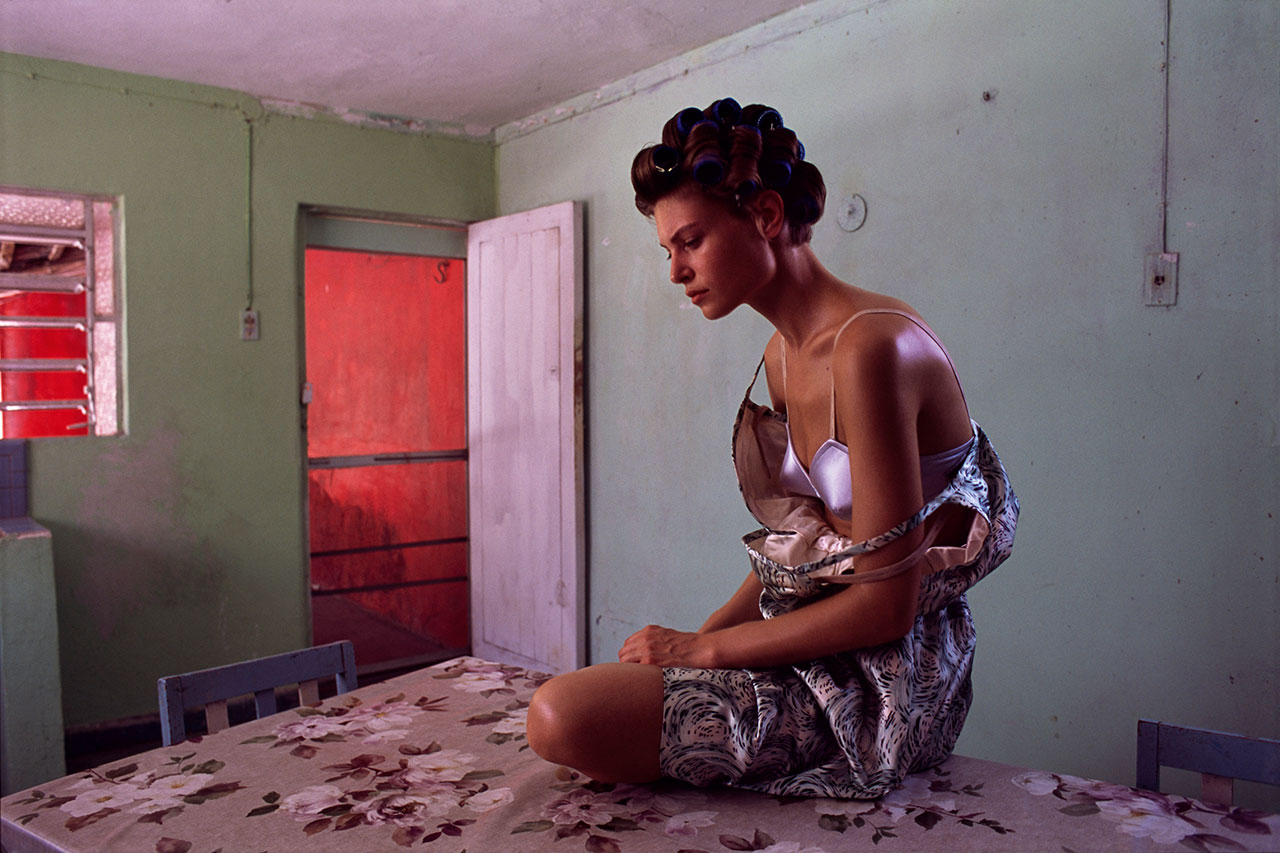
Bibi Breslin by Vincent van de Wijngaard | Image courtesy of Art + Commerce
Living Color for Harpers Bazaar US
The other photograph with Bibi (Breslin) has this unusual color juxtaposition, pink and green, which instantly made me think of Matisse’s painting “The Piano Lesson” (1916) when I walked into the kitchen during the location scout. For Mexicans, green represents the color of life, fertility, and hope.
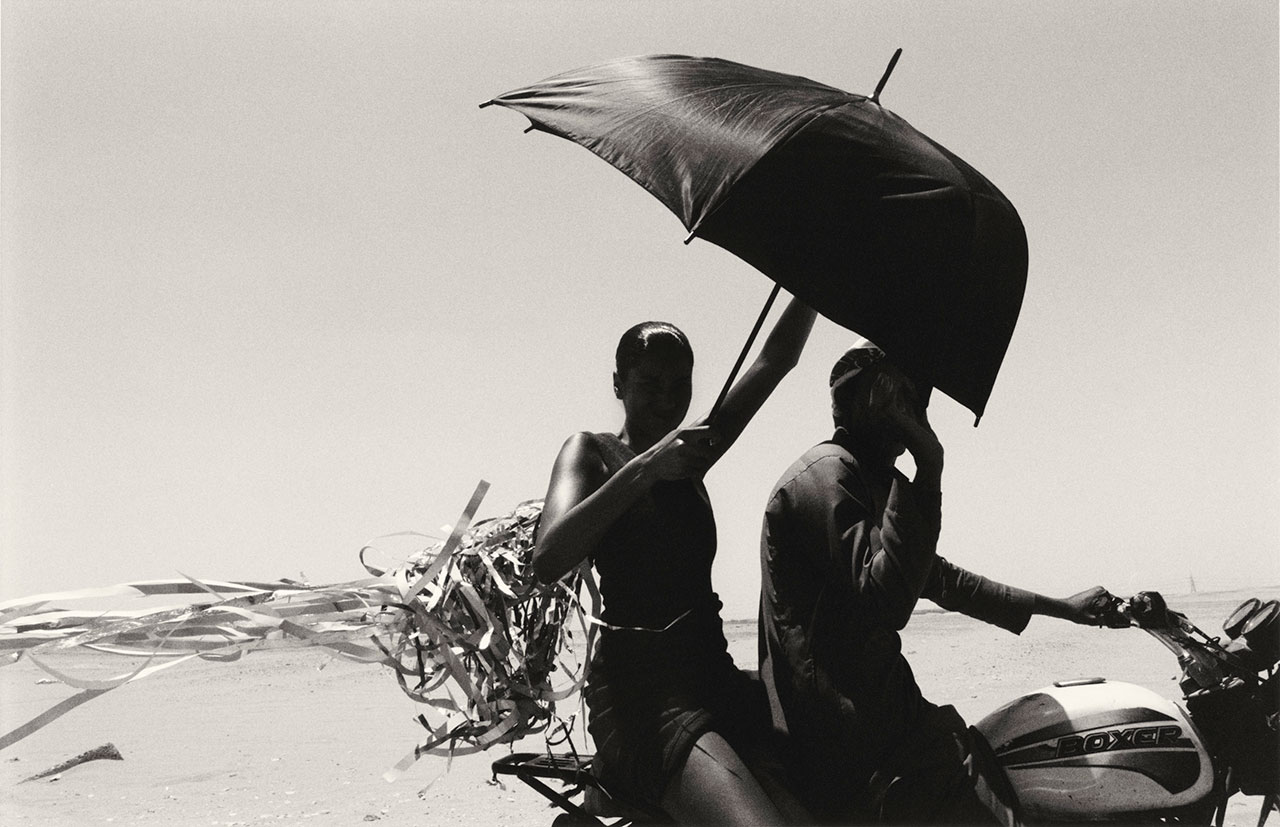
Imaan Hammam by Vincent van de Wijngaard | Image courtesy of Art + Commerce
A Sense Of Place for Harpers Bazaar US
This is probably my favorite photograph from the story “Sense of Place,” featuring Imaan Hammam and shot for Harper’s Bazaar US in an area called the Red Desert in Egypt. It is a photograph that nearly slipped away, as the car we were in was already packed while I was trying to capture the scene.
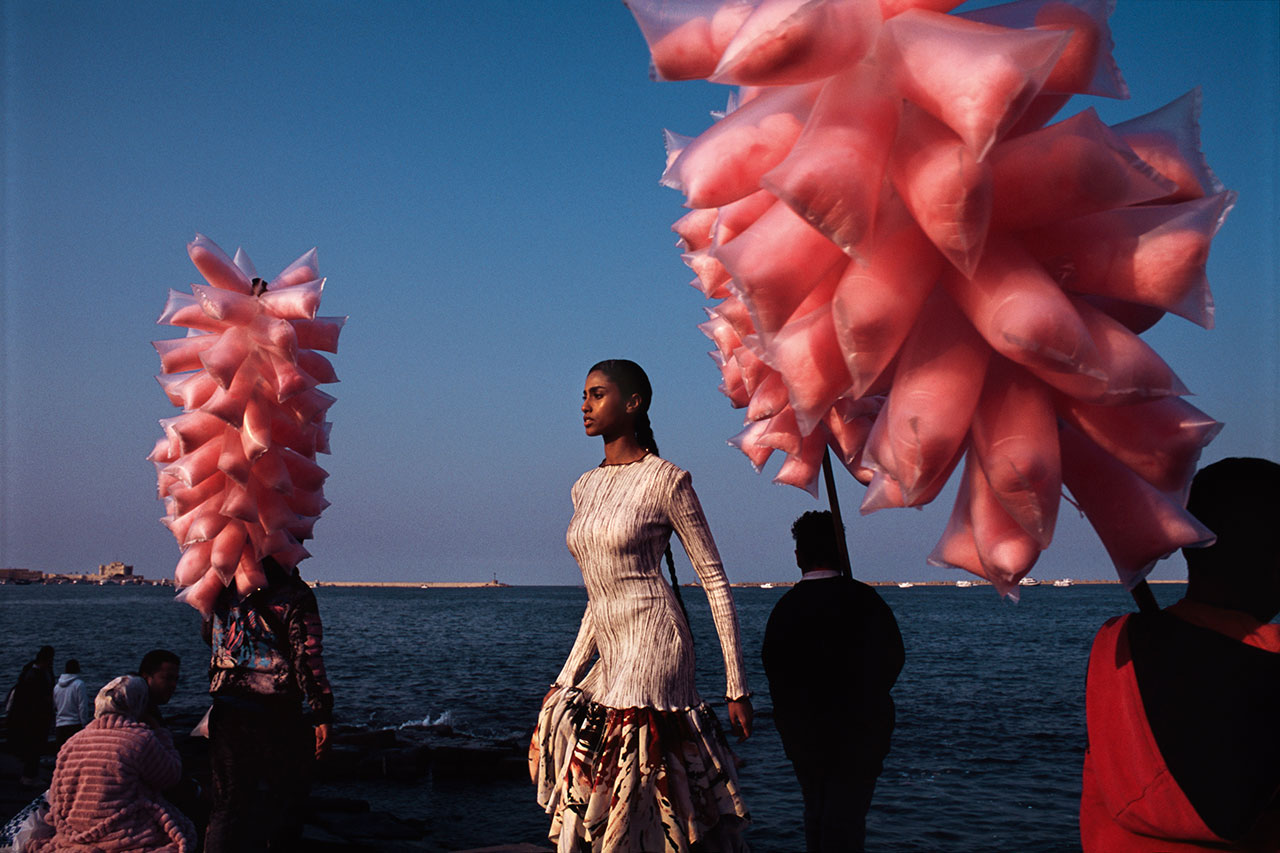
Imaan Hammam by Vincent van de Wijngaard | Image courtesy of Art + Commerce
La Passagère d’Alexandrie for M Le magazine du Monde
Near the seaside in Alexandria, there are many candy floss sellers. I knew Imruh (Asha) would love them. I asked two boys to come over the next day, then all of a sudden, there was a third boy, Imaan, who started to talk to them, so we ended up shooting all three of them.
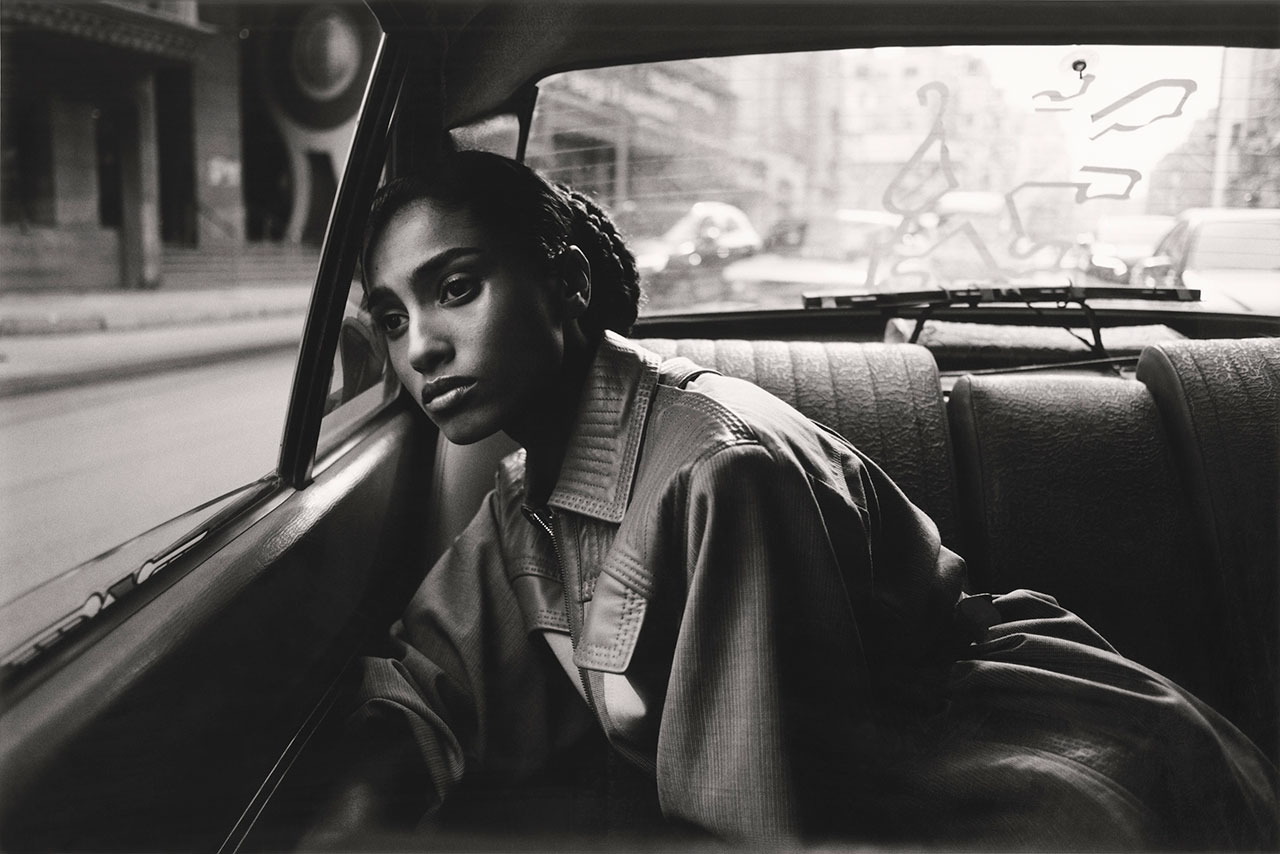
Imaan Hammam by Vincent van de Wijngaard | Image courtesy of Art + Commerce
La Passagère d’Alexandrie for M Le magazine du Monde
Imaan (Hammam) intuitively improvises so easily in such an environment that it seems as though she belongs there. This photograph was originally shot for “M Le Monde.” The story itself is very close to my roots in photography.