Behind the Image is an ongoing MODELS.com series taking a more personal look at both established and emerging creative talent.
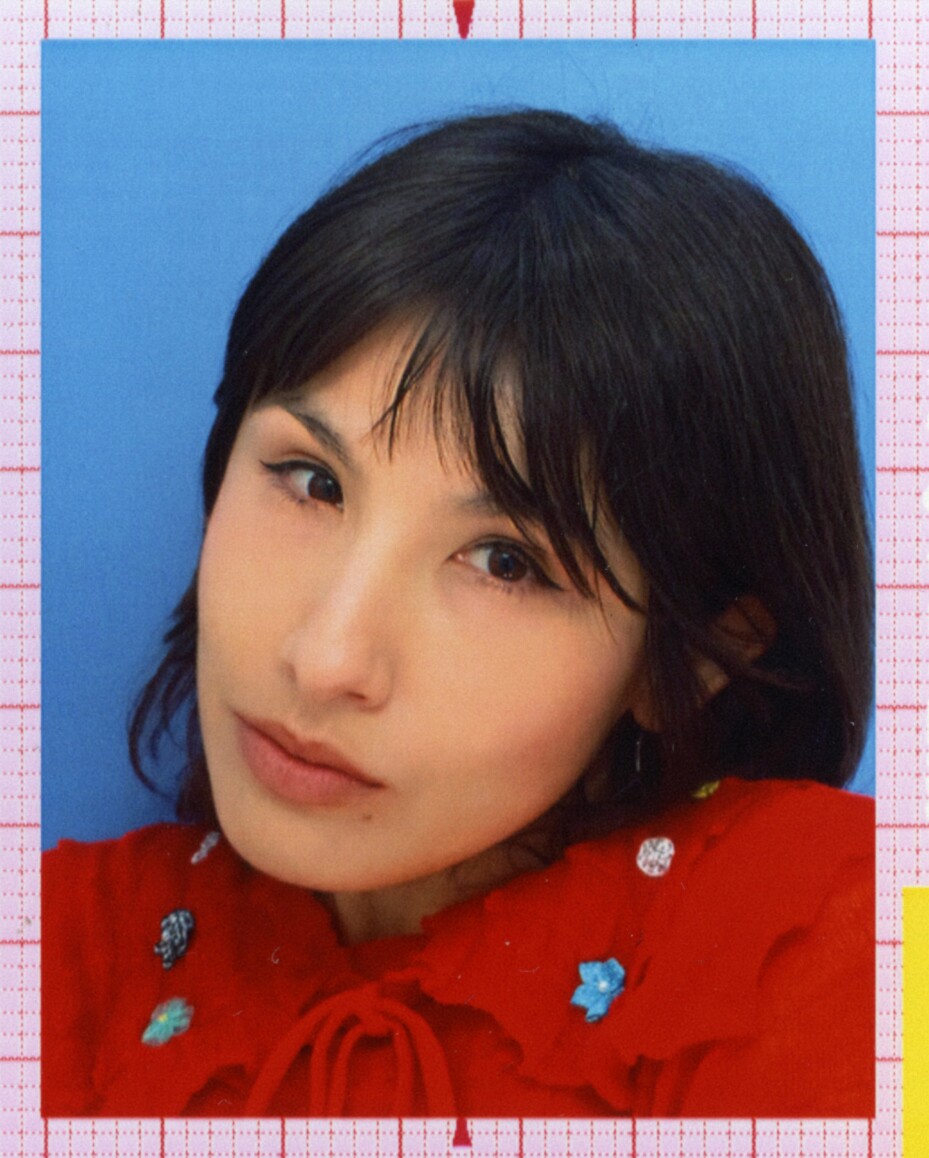
Daria Kobayashi Ritch | Image courtesy of Daria Kobayashi Ritch
Daria Kobayashi Ritch, Photographer
Hometown: Los Angeles, California
Based In: Los Angeles and New York
Representation: SN37
What sparked your interest in photography, and was there a defining moment that made you pursue it professionally?
Photography has been a part of my life for as long as I can remember. My parents really embraced and nurtured my creativity, so there wasn’t one defining moment that led me to it. Rather, it grew out of the opportunities I had as a child to explore my voice through art. One of my earliest milestones was winning a photography competition in fourth grade with a series of images of my dad teaching my very scared younger brother how to ride a bike. I think the prompt was “courage.” As a preteen, my love for photography really grew alongside social media, MySpace in particular. Think peak Tumblr-era creativity: my friends and I covering ourselves in paint, taking moody black-and-white photos, or making dresses out of caution tape. This is such a millennial answer, but it really was a pivotal creative outlet for me and my first introduction to developing and executing visual concepts. I began seriously considering photography as a career during an independent study in high school. Over two years, I developed a series of projects that culminated in my first gallery exhibition, and it was through that experience that I realized photography was something I wanted to pursue professionally.
You studied fine art before moving into fashion photography. How does that foundation seep into the way you approach a shoot?
Studying fine art at UCLA changed everything for me. Beyond giving me an outlet to explore art in many different mediums, the program is heavily focused on art theory and the intention behind the work you create. Class critiques centered almost entirely on the “why” rather than the technical execution. Having your work dissected by your peers forces you to think critically about what you’re putting into the world and to develop a meaningful answer for why you felt compelled to create it in the first place. That foundation made me far more conscious of the purpose behind what I create and the ways an image can communicate and connect with people.
How would you describe your work? What’s your trademark?
I think the trademark of my work is capturing authentic moments and building a real connection with my subjects. My work is built around the person in front of the camera. I’m not interested in imposing an idea onto someone or creating a version of them that doesn’t feel true. My photographs are honest and rooted in observation. More than anything, they document the relationship that forms between me and the subject, even if that relationship only exists for the length of a shoot.
Your images have a quality that feels lived-in, like you’ve caught something intimate rather than constructed it. How did you develop that visual language, and was it a conscious pursuit or did it emerge more instinctively over time?
I was introduced to that visual language at UCLA, but I think it really developed when I met Paul Jasmin at ArtCenter College of Design. He was a truly pivotal role model and taught me how to bring fashion and portraiture together. It’s hard to say whether it was conscious or instinctive, because I honestly feel it was a bit of both. I think I’m instinctively drawn to this type of documentation, and mentors like Paul helped me see that. It made me more conscious of it and pushed me to focus on honing that voice.
What draws you to a subject, and how do you build trust with the people you photograph?
Choosing a subject is one of the most instinctual parts of my practice and one of the hardest to put into words. I’m often drawn to people who have a certain depth to them: a strong sense of self, an interesting story, or simply a presence that I find compelling. It’s not something I can always explain; it’s just something I respond to. I build trust with the people I photograph by being human: having a conversation and taking the time to genuinely connect. I try to understand how comfortable or uncomfortable someone naturally is in front of the camera and meet them where they are. The goal is always to create a space where people feel at ease, and I think being soft-spoken and easygoing has helped me foster that sense of trust.
What non-fashion influences (art, film, literature, music, etc.) shape your creative perspective?
My heritage has had a huge influence on my perspective. I’m Japanese, Italian, and German, and growing up with a multicultural background has deeply shaped the way I see the world. Although I’m a fourth-generation Japanese American, my mom instilled in me an appreciation for Japanese culture and traditions from a young age, and I spent time in Japan as a child. As I’ve gotten older, I’ve become more and more drawn to that part of my heritage, and I see it increasingly informing how I express myself creatively.
What have you watched, heard, or read lately that has inspired you?
I recently watched Love & Pop by Hideaki Anno and was really inspired by how visually experimental it is. The film was shot almost entirely on digital Handycams and is full of unexpected camera placements and POVs, along with extreme lens choices, image overlays, and aspect ratio shifts. I’m drawn to films that challenge me to think beyond conventional framing and perspective. Seeing the same kinds of images and angles over time can make you forget to stay open to experimentation.
What’s something outside of your work that you would like people to know about you?
I’m happiest when I’m in the mountains. I love being in nature, having no cell service, swimming in natural bodies of water, and climbing rocks. I love spending uninterrupted quality time with the people I love, away from the rest of the world.
What’s been the most challenging moment in your career, and what did you take away from it?
One of my biggest challenges has been staying inspired and learning how to keep growing while still maintaining a sense of self. I was fortunate enough to jump straight into my career the week I graduated from college, but for the first several years I gave everything to work and didn’t really have time to come up for air. When things eventually slowed down, it hit me harder than I expected. It was the first time I really had to sit with myself and think about who I am outside of my work, and what I’m actually doing all of this for. I think these moments are important, both as a human and as an artist, but they can be difficult to move through when you’re in them. As a freelancer, I’ve also had to learn how to sit with the slow periods as much as the busy ones. Any lull can feel like the end of everything, and then a month later things are suddenly intense again, and I wish I had just enjoyed the quiet instead of spiraling. That’s part of why I go to the mountains. It’s a way of stepping out for a moment and appreciating the slower stretches.
Who’s one to watch?
My younger brother, Aron Kobayashi Ritch. He’s a producer, mixer, and engineer, and he’s part of the band Momma.
Selected Work
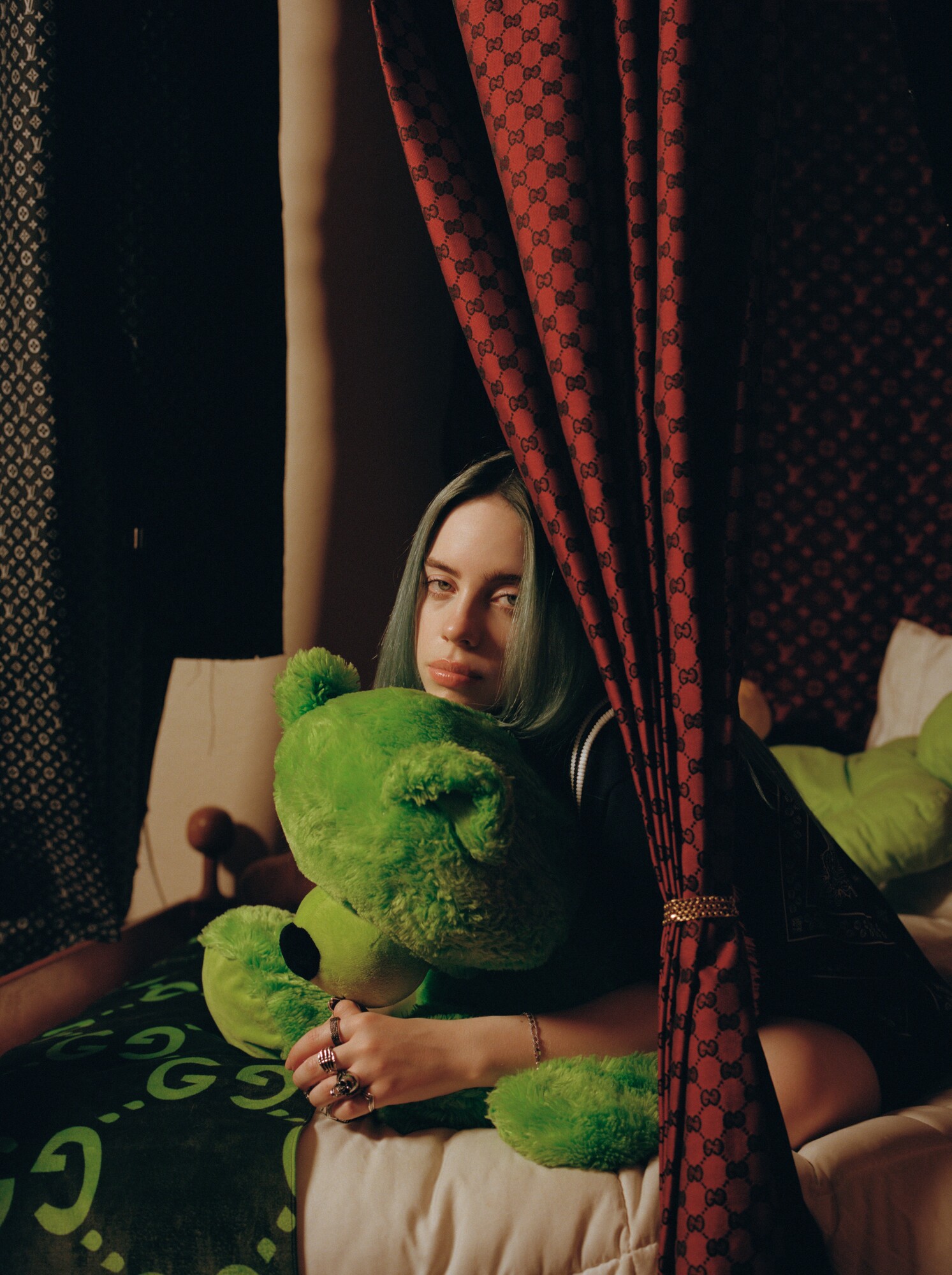
Billie Eilish by Daria Kobayashi Ritch | Image courtesy of Daria Kobayashi Ritch
Who Is Billie Eilish? for The FADER
I photographed Billie (Eilish) on her bed, beneath a canopy made of knock-off designer fabrics, at her childhood home. I chose this image because I had the opportunity to document Billie on the brink of fame, right before she released her debut studio album, When We All Fall Asleep, Where Do We Go? It was a small, intimate shoot. I spent the day getting to know Billie and her family and seeing the real person behind the artist. I got to see the height marks on the wall, the bedroom-turned-recording-studio where she and Finneas created the album, and the collection of fan gifts that filled her space. This image represents one of the greatest things about photography to me: the ability to capture a moment in time that can never be recreated, and the privilege of stepping into such an intimate part of someone’s life. It’s access that not many people get.
Alysa Liu by Daria Kobayashi Ritch | Image courtesy of Daria Kobayashi Ritch
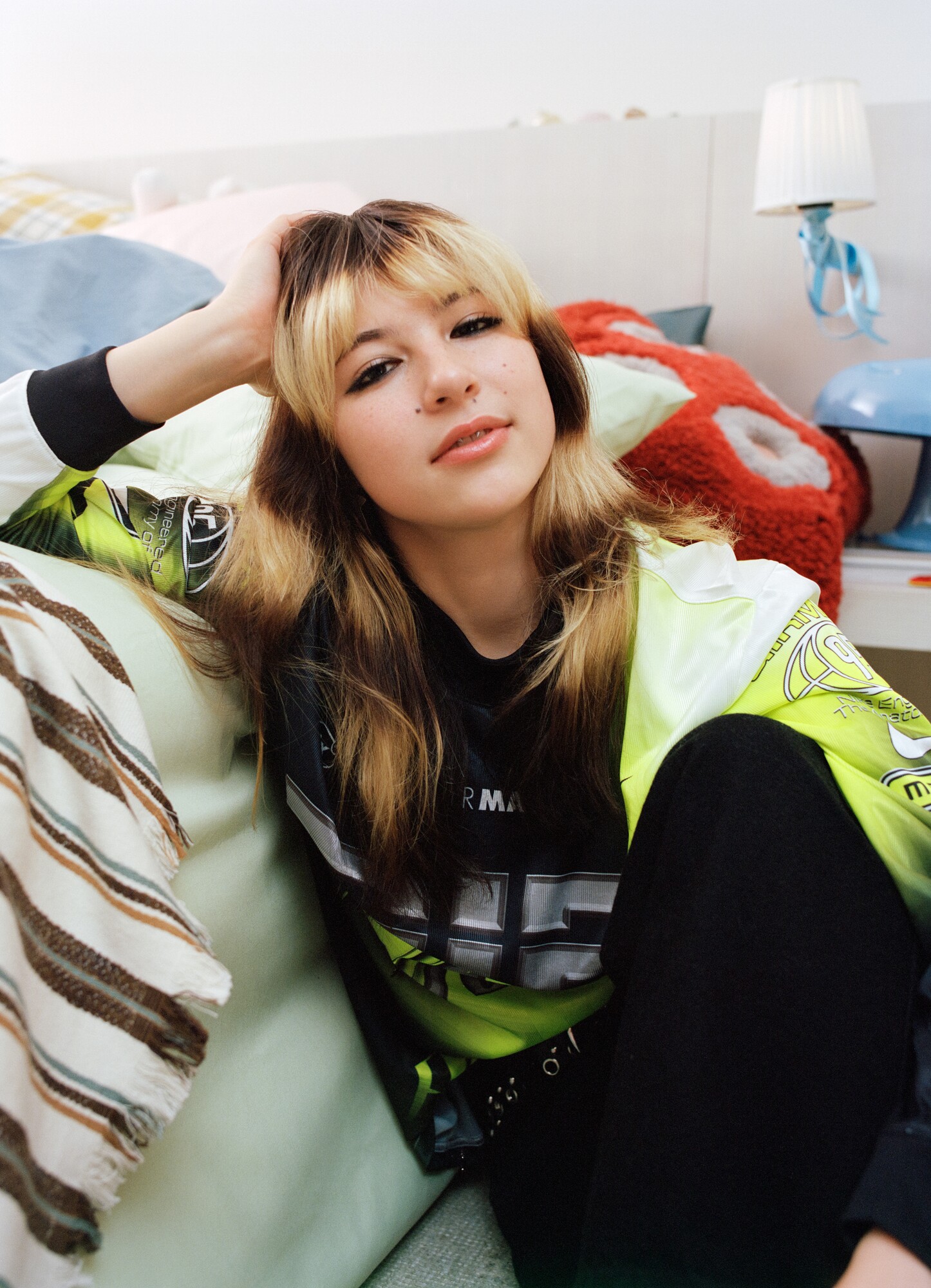
Alysa Liu for Nike Sportswear
This was Alysa’s first shoot after winning two gold medals at the 2026 Winter Olympics. I was a huge fan of hers during the Games and, like so many others, was drawn to her story and everything she represented. As a fellow Asian American California girl, I had hoped to photograph her one day. Luckily, the stars aligned, and within a week I got the call from Nike to work with her. I immediately hopped on a flight to New York. Alysa (Liu) arrived around 10 p.m. after driving into the city, and we had just one hour together to create these images. It was a whirlwind, but such a special moment to document.
Olivia Forte by Daria Kobayashi Ritch | Image courtesy of Daria Kobayashi Ritch
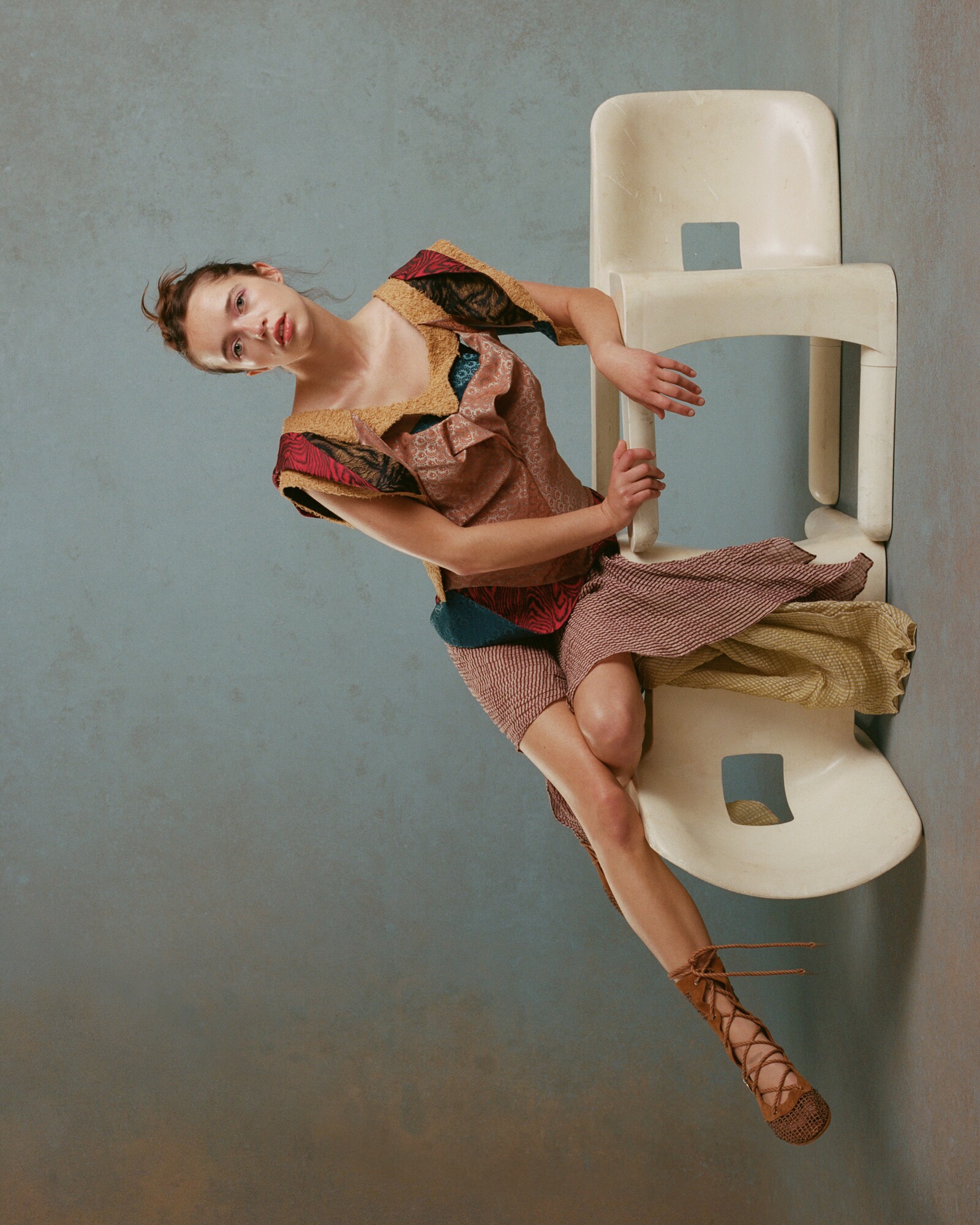
SS26 for Kiko Kostadinov
I chose this image because it’s from a shoot I created with my close friend and creative director, Mindy Le Brock. We were commissioned by Kiko Kostadinov to conceive and execute a shoot around the brand’s SS26 womenswear collection. I’ve really been enjoying collaborating with designers on creative projects that allow for more freedom and experimentation. I think it’s a really exciting way for designers to expand how they share their work, while also giving creatives the opportunity to build something they’re genuinely passionate about.
Serena Motola by Daria Kobayashi Ritch | Image courtesy of Daria Kobayashi Ritch
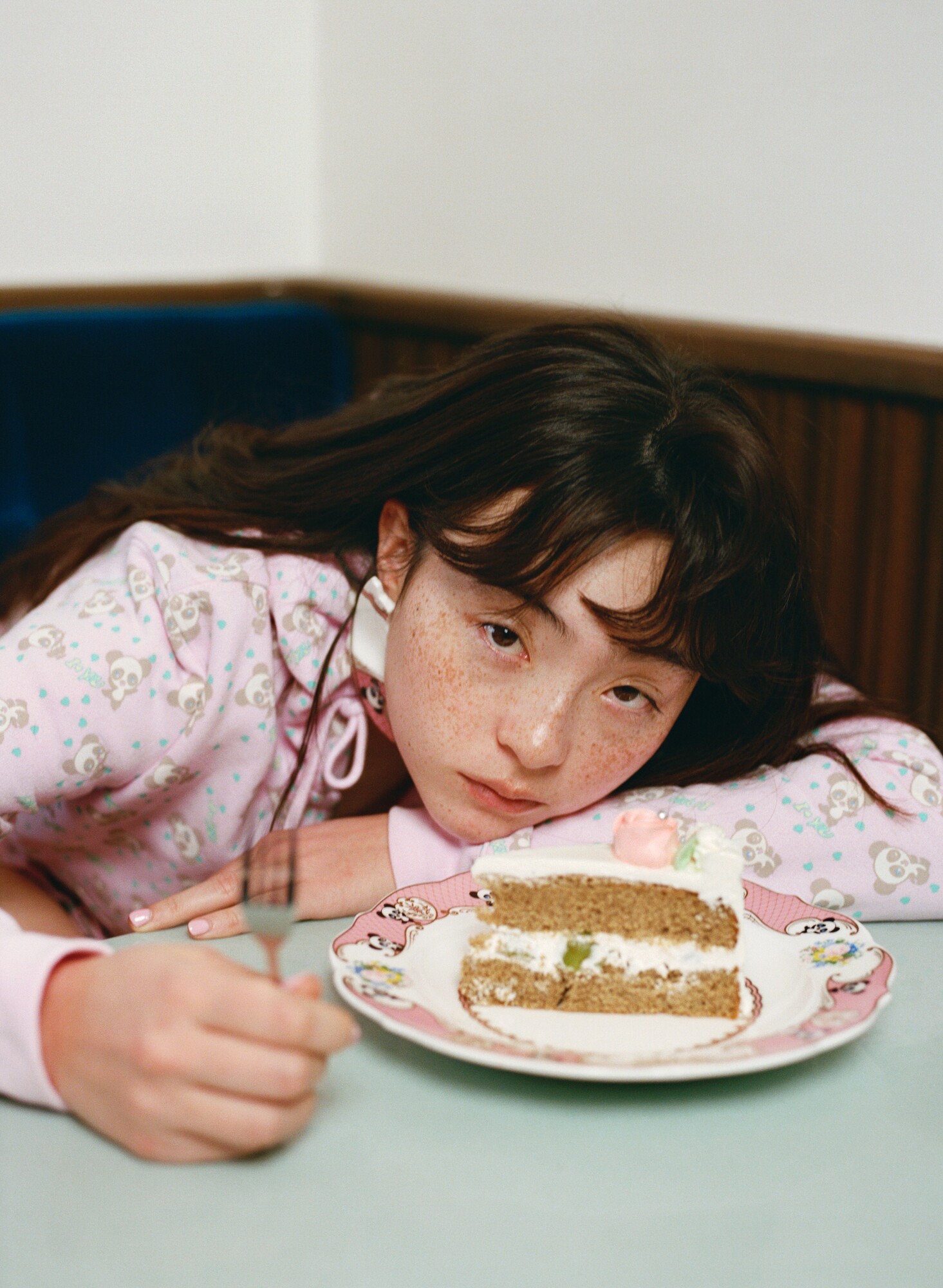
Kissaten Diaries for Ashley Williams
I spent a month in Japan this past January and made a point of working while I was there. I reached out to Ashley Williams, a designer I’ve had the pleasure of working with a few times, and she was kind enough to commission a project. The concept was to photograph Serena Motola with different specialty desserts in kissatens throughout Tokyo. One of my favorite parts of this job is that it takes me to places and introduces me to experiences I might never have discovered otherwise. We only had one day to shoot, so we weren’t able to visit as many kissatens as we had researched, but I can confidently say I’m now your go-to person for kissaten recommendations in Tokyo.
Sandy Liang by Daria Kobayashi Ritch | Image courtesy of Daria Kobayashi Ritch
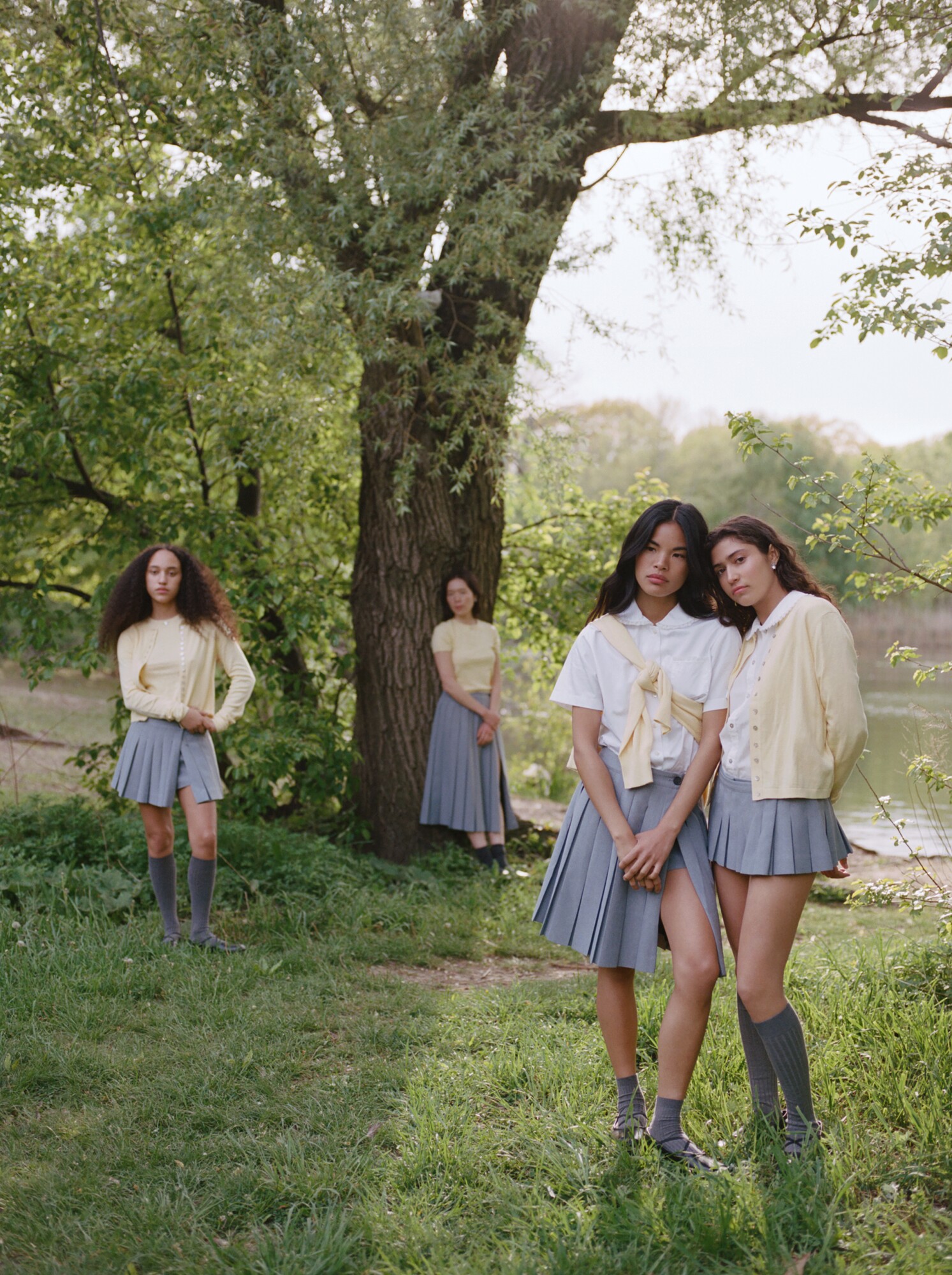
Your New Uniform for Sandy Liang
Sandy (Liang) and I have been working together since 2019. I feel very aligned with her vision, and our creative relationship has been a pivotal part of my career. Part of what makes our collaboration feel so natural is that we share many of the same childhood references and inspirations as Asian Americans who grew up in the ’90s and 2000s. This image is from my favorite shoot we’ve done together. The concept was based on her uniform collection, and we were drawn to the idea of multiples. I pulled inspiration from old images of Japanese schoolgirls, K-pop imagery and, more specifically, Yoshiyuki Okuyama’s Pocari Sweat series.
Konoka Lulu Smith by Daria Kobayashi Ritch | Image courtesy of Daria Kobayashi Ritch
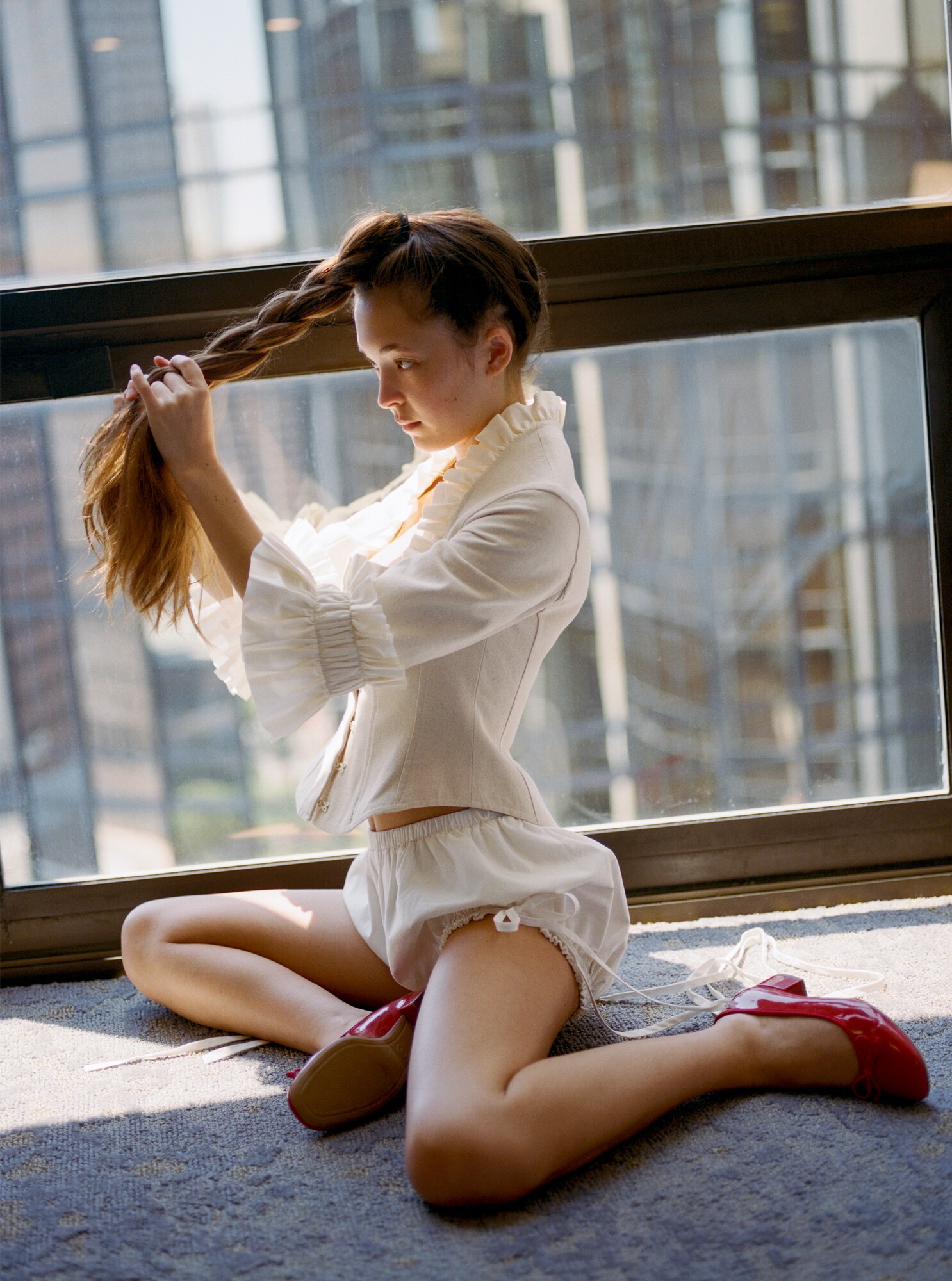
Kono for Tae Park
I chose this image because it’s currently one of my favorite photographs I’ve taken. It’s such a simple moment, but I love the way the window light outlines her figure, and the pattern of the building in the background. I was also really drawn to the shape and movement of her body. The pose was inspired by a woman my friend and creative director, Sarah Brown, saw on the street braiding her hair this way.
NewJeans by Daria Kobayashi Ritch | Image courtesy of Daria Kobayashi Ritch
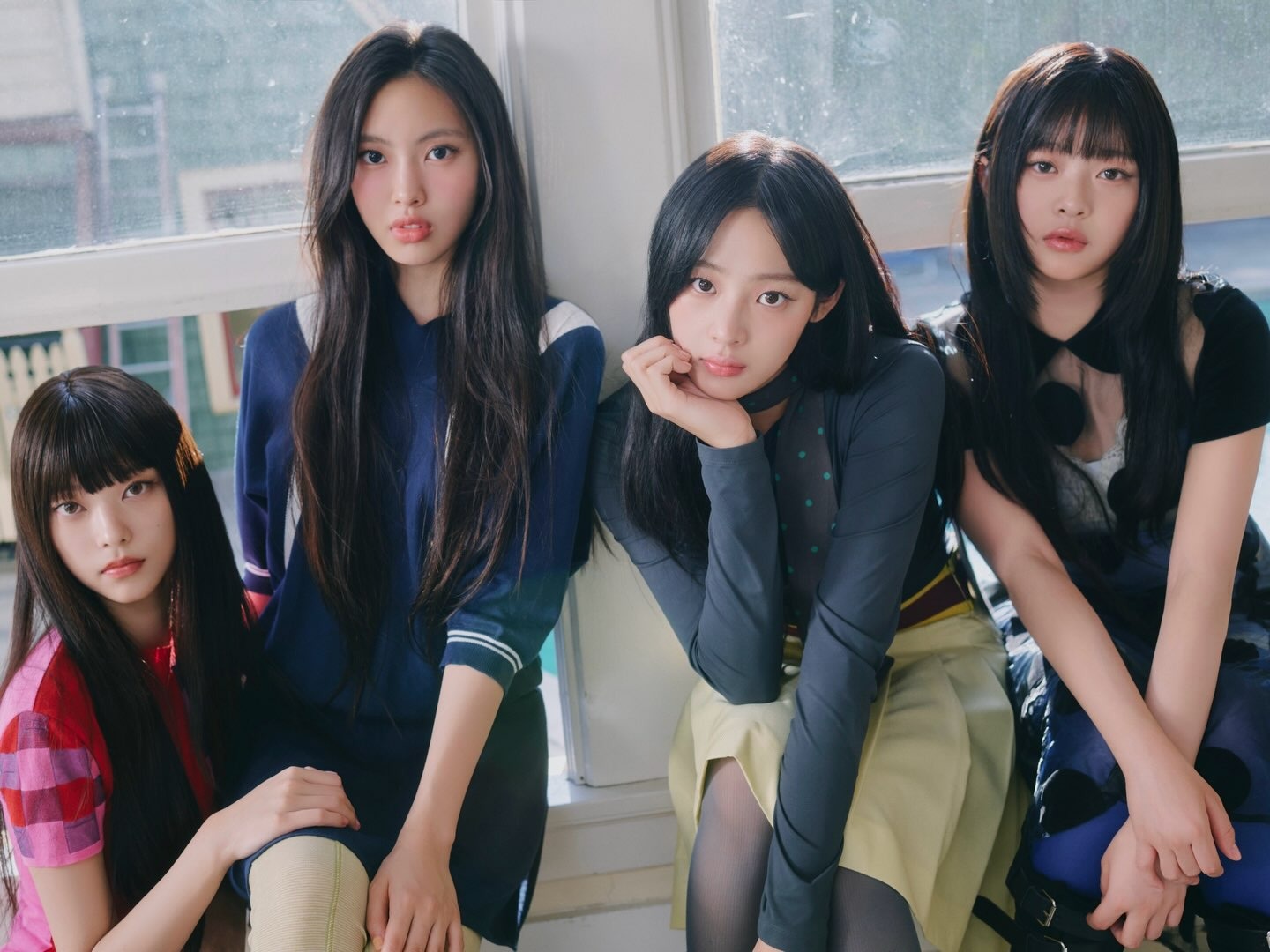
2026 Summer of NewJeans
This shoot is a true testament to the power of manifestation. At the beginning of the year, I made a vision board, and NewJeans was on it. I’ve had a soft spot for K-pop for the past few years, and NewJeans has been my favorite group. Being asked to photograph them for their first official shoot in two years, marking the start of their return after so much uncertainty around the group’s hiatus and future, was such an honor and a true highlight of my career. What made the experience even more special was the amount of creative freedom I was given. It’s rare to have that level of trust on a project of this scale, especially with artists of this caliber. Even at such a pivotal moment for the group, there was room for me to bring my own perspective and create images that genuinely felt like my work.