
Linda Evangelista by Steven Meisel | Image courtesy of Bryant Artists
There are hairstylists who follow the moment, and then there is Ward Stegerhoek, who has spent over four decades quietly shaping it. The Dutch-born hair visionary is behind some of the most enduring beauty images in recent memory, among them the look he created for Björk in her “Big Time Sensuality” video and Milla Jovovich’s neon-tinged, texturized bob in The Fifth Element. Stegerhoek grew up in a small farming village just south of Amsterdam, dreaming of becoming an architect, and discovered haircutting entirely by chance at fifteen. After beginning his career in Amsterdam, where he first crossed paths with Christiaan Houtenbos, he eventually followed him to New York for the shows, finding himself backstage with Cindy Crawford, Christy Turlington, and Linda Evangelista before any of them were household names. The career that followed was as unplanned as the haircut that started it all: decades of Vogue covers and creative partnerships with photographers, like Inez and Vinoodh, a friendship rooted in the late 1980s, when Stegerhoek was doing hair for Vinoodh’s fashion shows while Vinoodh was still designing clothes, and Inez was walking in them. In parallel, he also spent seven years as Art Director and Product Developer at Bumble and Bumble, then co-founded Living Proof and, with a team of fresh graduates, developed 17 patented materials that had never existed in hair care. “I have been doing this for over forty years,” he says, “but tomorrow I will go to work as if it is still my first day, with that same enthusiasm.” That quality, is what runs through everything Stegerhoek creates. Models.com spoke with him about growing up far from fashion, his inspirations, and why the best hair, like the best luck, is simply an opportunity well prepared.
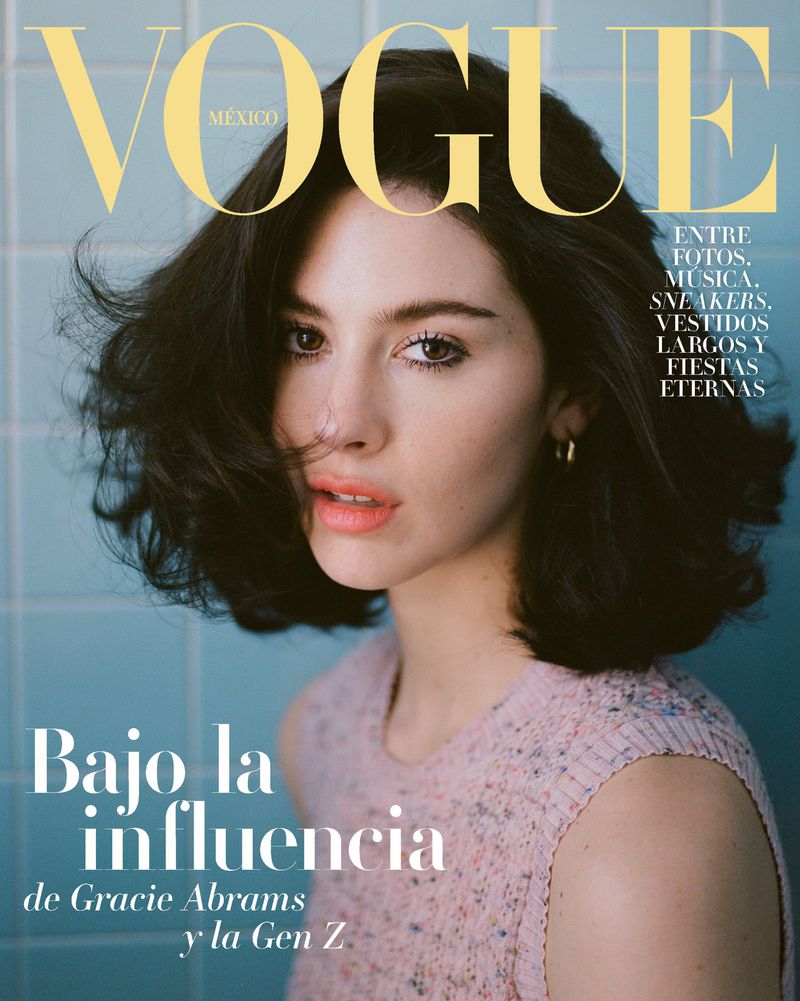
Gracie Abrams by Sebastian Faena | Image courtesy of Bryant Artists
Where did you grow up, and what were your first memories of beauty and hair as a child?
I grew up in a very small town in the Netherlands, about fifteen minutes south of Amsterdam, just to give people a sense of location. It was really a small village full of farmers and lots of cows. We had lakes and boats and a bit of summer tourism around boating. We did not talk about fashion at all, and it was not something we really concentrated on. Quietly, though, I was always observing things. I was always attracted to people who had more of an individual style, people who were creating their own world. Fashion was not in our family at all, to be honest.
So how did you eventually make that transition into the industry?
It happened completely unplanned. I wanted to be an architect when I was a teenager, but I happened to fix a friend’s hair with a buzzer one evening when we were fifteen, and I had no idea what I was doing. I did not know how to connect the long hair on top to the shaved hair in the back, so it was a complete disaster. We were supposed to go to the local disco that night, and I had ruined his evening because he ended up with a line from ear to ear, long above, and completely shaved underneath. He almost did not go out. But once we convinced him and got there, the girls at the party were the ones who loved it. It became a small trend in my village. By Wednesday, the first three boys came to get the same cut. From there, it just developed, and eventually, girls were getting similar little buzzed pieces too. I still did not own a pair of scissors. I did it all with my father’s ear clippers. What made sense about it from the start was that hair, in a way, has the same ingredients as architecture, structure, textures, scope. But it was more attractive because you are working with a living person. It is spontaneous. You have to react in the moment. I enjoyed it very much.
What happened after that first accidental haircut took off?
My mother eventually kicked me out of the house because of all the hair on the carpet. So I ended up going to a local salon, where there was a stylist called Ronnie Stam, who had worked as an assistant to Christiaan (Houtenbos.) Every time Christiaan was in Holland, he would work in that salon, and when Christiaan was in Paris or New York, Ronnie would be there with him. I managed to get Christiaan’s number from Ronnie and started calling him. I was told to call back, called back, and was told to call back again. Eventually, I was told to call back in September. I called in September, and on that last call, I was told to come in October for the shows in New York. At that point, I was not making much money, so getting there was a real commitment. I saved up for the trip and put myself up for nearly two weeks. I ended up assisting Christiaan, and it was very exciting because this was just before the 1990s supermodel era really took hold. On my first show, it was Donna Karan or Bill Blass, and then we did Calvin Klein and Antonio Lopez, who was still alive. That show became my favorite right away. I met Christy Turlington, Cindy Crawford, Tatjana Patitz, Elle Macpherson, and Pat Cleveland. Cindy is exactly my age. We all met when we were sixteen or seventeen. Backstage at Antonio’s show, it became a real party, that Studio 54 feeling, with Keith Haring, Andy Warhol, Grace Jones, and Blondie all there together. That was the moment when everything clicked for me, I realized I did not want to work in a salon, I wanted to work in fashion.
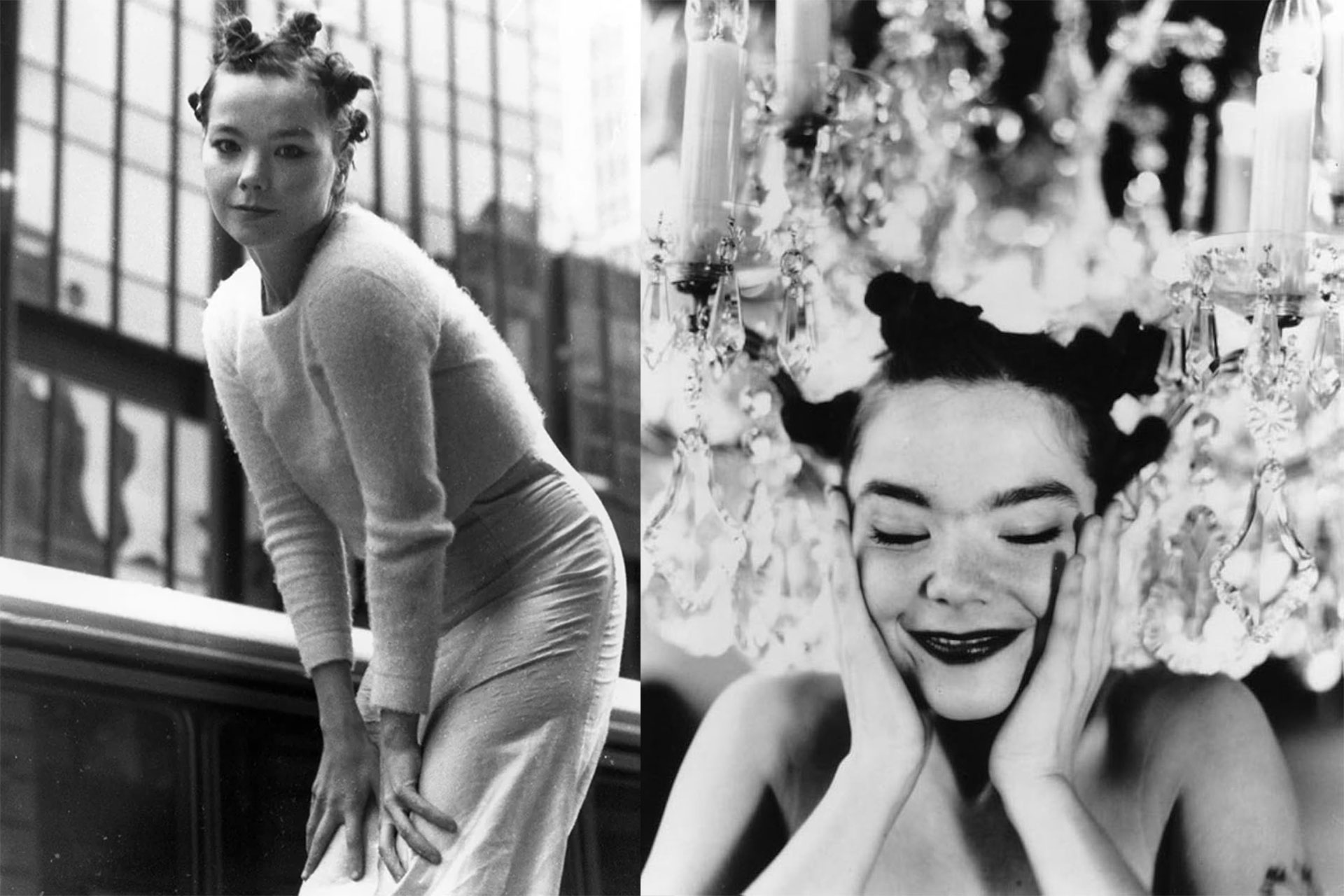
Björk by Stéphane Sednaoui | Image courtesy of Bryant Artists
What was the turning point that took you from assisting to working independently?
At the end of that first week, Christiaan told me I was not assisting material because I had too many ideas of my own. At first, that felt like rejection. One of the people I most wanted to learn from had turned me down. But in hindsight, it was a real blessing, because it allowed me to become self-taught, to develop my own style, and to leave behind a strong signature after forty years of work, rather than becoming someone’s understudy. Christiaan and I have since become very close friends. I did his hair for the Comme des Garçons show, and I even saw him recently at the Inez and Vinoodh exhibition opening at The Hague. I thank him for it now, he was right.
What was your creative world looking like before you made it to New York?
I had already been working before that trip, doing test photography every weekend with young photographers from the School of Photography in The Hague. I did hair for free for years. That is also how I first met Vinoodh. He was a fashion designer before he was working with Inez, and I ended up doing my first fashion show as lead hairdresser for him. Inez was actually one of the models walking in that show. So we have known each other since the 1980s, a good twenty years before most people became aware of our collaborations.
You have been working with Björk since early in your career. Can you speak to the visual direction behind the hair in the “Big Time Sensuality” music video?
At that point, I had already worked with Björk several times over several years, and we were like two kids playing around. She is already in a whole room when she walks in. She has this aura. So for me, it was never about proving a point or showing the world what I could do with hair. We were standing on a flatbed in New York with the Twin Towers behind us, and I just said, why don’t we do Tower Inferno, like the movie? So we ended up with these coils on the hair, inspired by the towers. That is as simple as it was. It was not a preconceived concept worked out days before. Up until the very last minute, we were just hanging out, and then it was like a jazz musician reacting to the moment. That coil hairstyle became a huge thing, but it certainly wasn’t part of the plan. It was an accident again. I think that is why you have to be patient, keep working hard, and always stay present. Luck is an opportunity well prepared, as they say.
“You have to be patient, keep working hard, and always stay present. Luck is an opportunity well prepared, as they say.”
Who were your cultural and creative references growing up?
I was not aware of idols in the traditional sense. I was more inspired by people who created their own world, whether through music, art, film, or even a biologist who had discovered something incredible in nature. Very ordinary people with very personal style also inspired me. Amsterdam was already a very liberated city in the 1970s, and there were lots of colorful people around who dressed outside the norm, and those people really spoke to me. At the time, I was quite country, doing a lot of water sports, trying to keep up with school. Of course, I loved Iggy Pop and Blondie and listened to all of that, but the cultural shifts felt so organic back then. If you think about punk, it did not arrive in the shops. It came from the street, and it was a year or two before you could even find punk shoes in a store. Every five years, there was a real cultural change, from ska to reggae to disco, and it came from genuine sentiment. Styles grew out of that. We did not have social media, so we actually acted it all out instead of experiencing it on a screen in a private room.
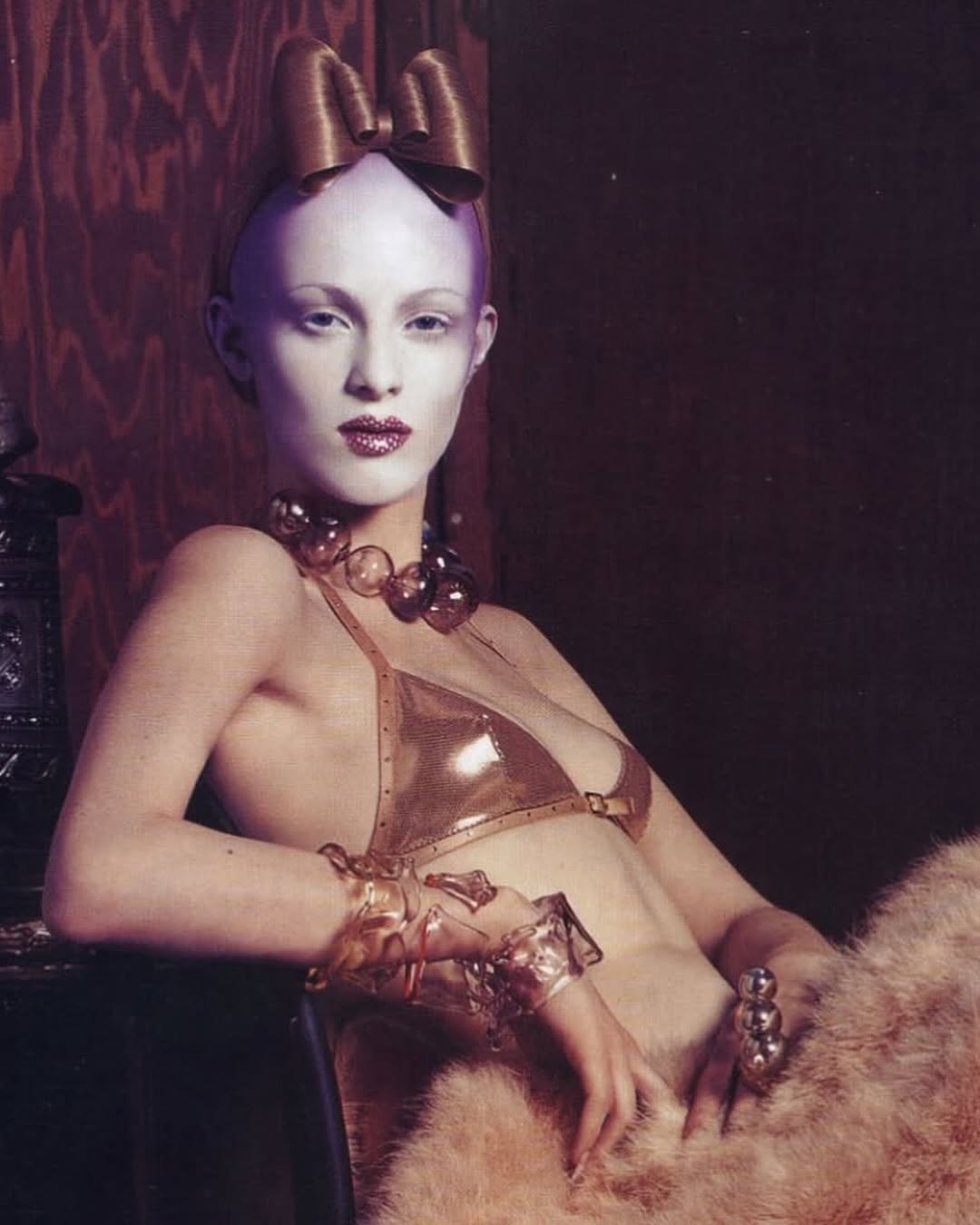
Karen Elson by Steven Klein | Image courtesy of Bryant Artists
Your approach seems deeply intuitive. How would you describe your process when working with a subject?
I have never had the nerve to be so presumptuous as to say I know exactly what to do with someone’s hair before I get there. I am more someone who works with feelings rather than fixed ideas. I get to know my subject carefully. I work with them at the mirror. Sometimes very little needs to be done. But when a big transformation is happening, it is essential that it be done together with the person, because she is the one transforming. The psychology has to change alongside the hairstyle. The body language, the attitude, the mindset. The subject herself has to really believe in the new character she has become, because she will project it. That is ultimately what makes the image stand out. Of course, there are all the other elements on a shoot, makeup, styling, and the client’s vision. In the end, it is about the whole image working together rather than any one element in isolation. You want a character who leaps off the page, someone the viewer wants to dress like, not just a photograph of a hairdo or a handbag.
How do you approach finding the character in a subject?
A person with style is born from their character. Björk is someone you do not need to add anything to. It is more about working with who she already is than adding something on top. When something is very styled up, wigged out, done to the nines, you stop seeing a character, and you just see style. There is nothing wrong with that approach, but it is not my perspective. When I was in my twenties, I did all of that too, the big arts-and-crafts hair, and that is actually a good thing because in the process, you become a master of your craft. You could build a table out of hair if you go far enough. But as I matured, I came to understand that what actually walks in the street is the simple haircut. The difference of half an inch, or a fringe that is just slightly wider, it is always the small things that add up. The big yellow wig only gets applause from other hairdressers. That is how you do hair for hairdressers instead of for people.
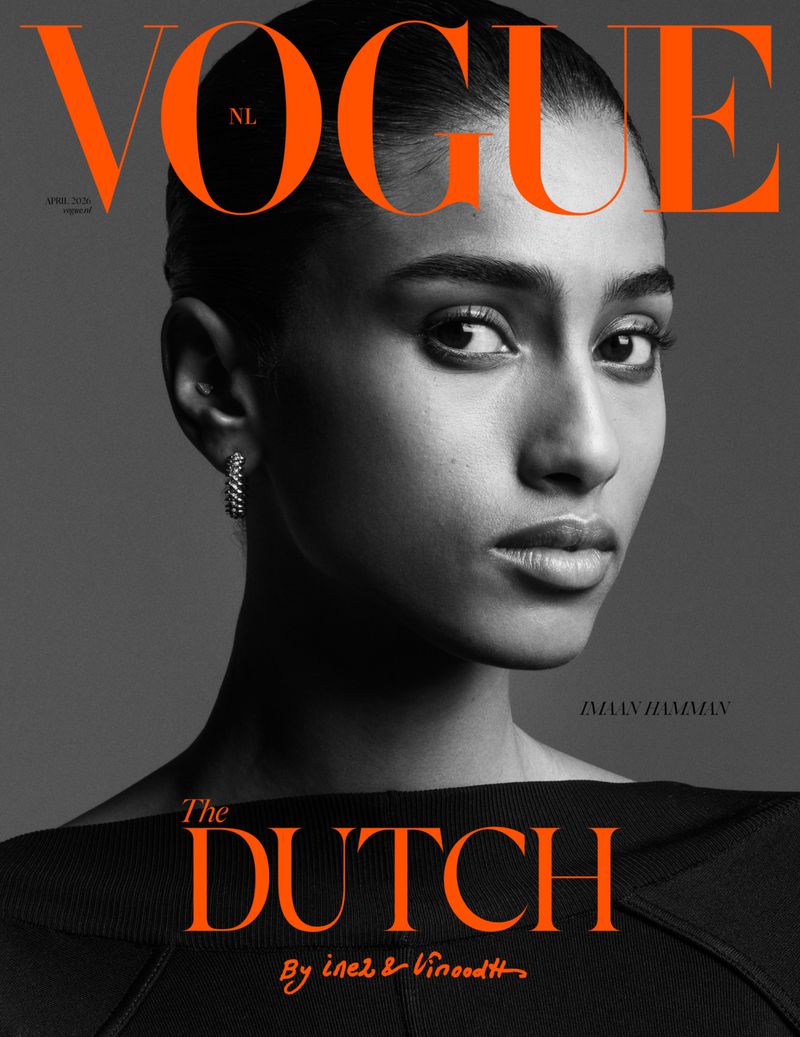
Imaan Hammam by Inez and Vinoodh | Image courtesy of Bryant Artists
Can you speak about your creative process works with collaborators you have known for decades, like Inez and Vinoodh and Fulvia Farolfi?
Between the three of them, there is so much shared history that not everything needs to be explained. I first met Fulvia (Farolfi) when I moved to New York in 1991 or 1992 because we had the same agent and kept getting booked together. With Inez and Vinoodh, there has never been a mood board on set. No computer. No printed references from books. We still work in that old-fashioned way, completely in the moment. I am the same. I do not bring references to a shoot. Fulvia neither. We receive our subject for the day, and the first thing is a sit-down. A coffee, whatever it takes to put someone at ease. We start really looking carefully, and from there it is gentle, maybe something here, a slight texture adjustment there, a small chop. We work together quietly. We also make mistakes and have to undo things, and I think that is important. If you only ever do what you know will work, you just keep doing the same things. There is value in trying a different technique, because a different technique gives you a different result.
Where does your inspiration come from?
From people and from nature. It is not the big wild effects or the trending things. It is more the small things that stay with me and accumulate over a year or two, and then instead of doing something trendy, I end up doing something timeless. That takes patience. If you refuse to follow what just came down the catwalk, you are on your own, swimming in deep water. Editors often come in with a reference from the last show they loved. But if you do that, the whole team becomes the punchline because everyone knows where it came from. It is better to do the opposite if you want to be original.
You have also spent years in product development, with Bumble and Bumble and then Living Proof. How did that part of your career come about?
When Bumble started, I helped them build their entire line, and through that, I learned how lab work functions, how the industry around it operates, and the real value that comes from owning the copyright on a new material. After Bumble, I decided to try again with my own line. Everyone was going green at the time. I brought together some investors and some people who wanted to start the business with me, but they still wanted to spend a fortune on marketing companies to forecast where to invest. Both companies came back and said, Go green. I had a different idea. I said to the group: “Do you want to go to Central Park with all of New York and try to find a private spot to picnic on aloe vera and tea tree oil, things you cannot own and have no real market value? Or do you want to go in the completely opposite direction, walk into a deep scientific laboratory while the rest of the industry is not doing any real research at all?” That is how Living Proof started. We did six years of discovery work before we ever formulated a product. I asked for six recent graduates, not a single person who had ever worked in hair care before. I wanted people who would find new ways of doing things rather than people who already knew the standard approach. Over sixteen years, we developed 17 patented materials that had never existed in hair care, including antidotes to silicones. When Unilever eventually bought Living Proof, what they were buying was not a brand name. It was the intellectual property. They already had 60 haircare lines. They needed real estate, meaning materials they could actually own. My materials are now in all of those products, and they will be in people’s bathrooms for hundreds of years.
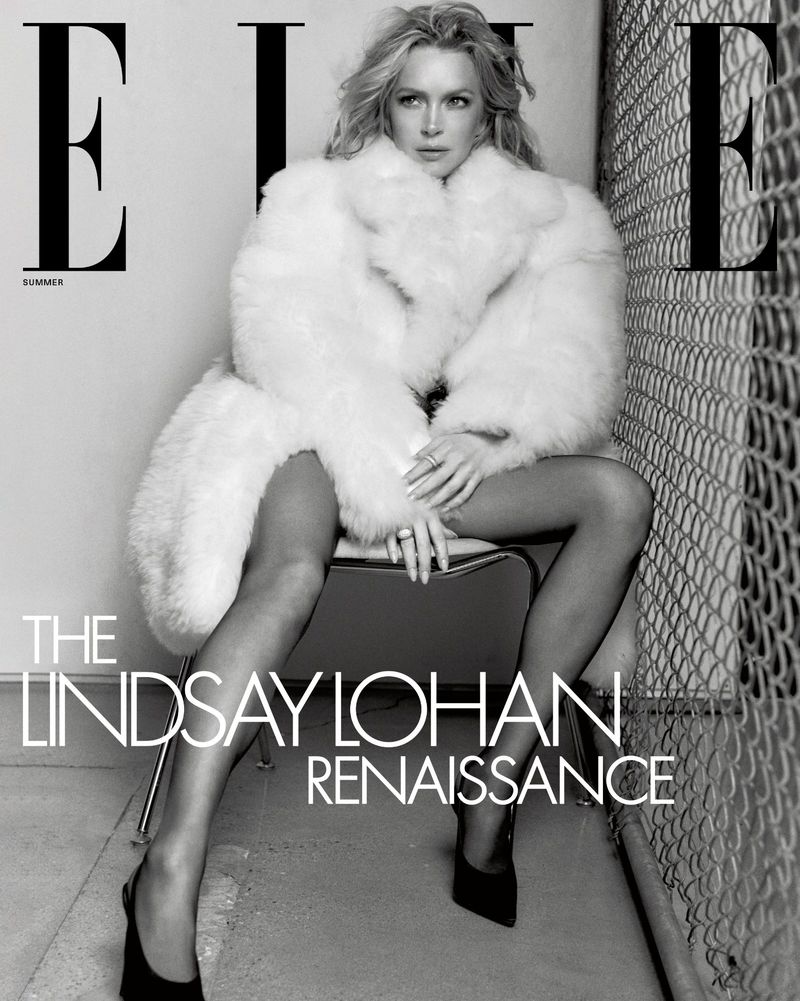
Lindsay Lohan by Chris Colls | Image courtesy of Bryant Artists
What qualities matter most to you in a product?
I like products that can be dialed, a small amount gives you a subtle effect, and a larger amount gives you something strong. That is very different from what the market generally wants; a hairspray that sets in the morning and holds all day. Set products are more like a foundation from a high-end beauty counter, where you can still see the skin underneath, as opposed to a theatrical foundation that fully covers. You need to be able to brush the product out and reapply it repeatedly throughout a shoot without it going sticky or gluey. One product I have never been able to do anything good with is silicone. Anything with silicone in it ruins my day. It is too heavy, too syrupy. It coats the hair too much. I prefer to work transparently, with as little coating as possible. To me, it is like dipping hair in honey.
Looking back across forty years in the industry, what are the major shifts you have witnessed?
The biggest change is the pace. We are going so much faster, sometimes there are three sets in a single day, social content, film, and photography all at once. The way we consume images has accelerated, and so the demand for images keeps accelerating with it. Budgets stretch thinner. The quality of the work spreads thinner, too, because of the pace. The second major change is where style comes from. When I was growing up, styles came from within culture, from the street upward. Punk arrived because people were angry. The hippie movement, disco, all of it. These were real eras, each about five years long, each genuinely descriptive of its time. I do not really see that now. We are manufacturing styles rather than culturally producing them. I miss the club kids in New York who started gluing foam under their sneakers in the East Village, that whole group around Patricia Fields. That was culture. It became platform shoes and an entire clothing movement, but it started in Tompkins Square Park and the clubs. I hope we find our way back to something real. I am hopeful that what comes next is not just manufactured pop culture.
What advice would you give to an aspiring hairstylist who wants to work in this industry?
Do not follow the trends, try to create the trends. Be patient, and be perseverant. It takes time to build something substantial, there are no shortcuts that lead anywhere worth going.
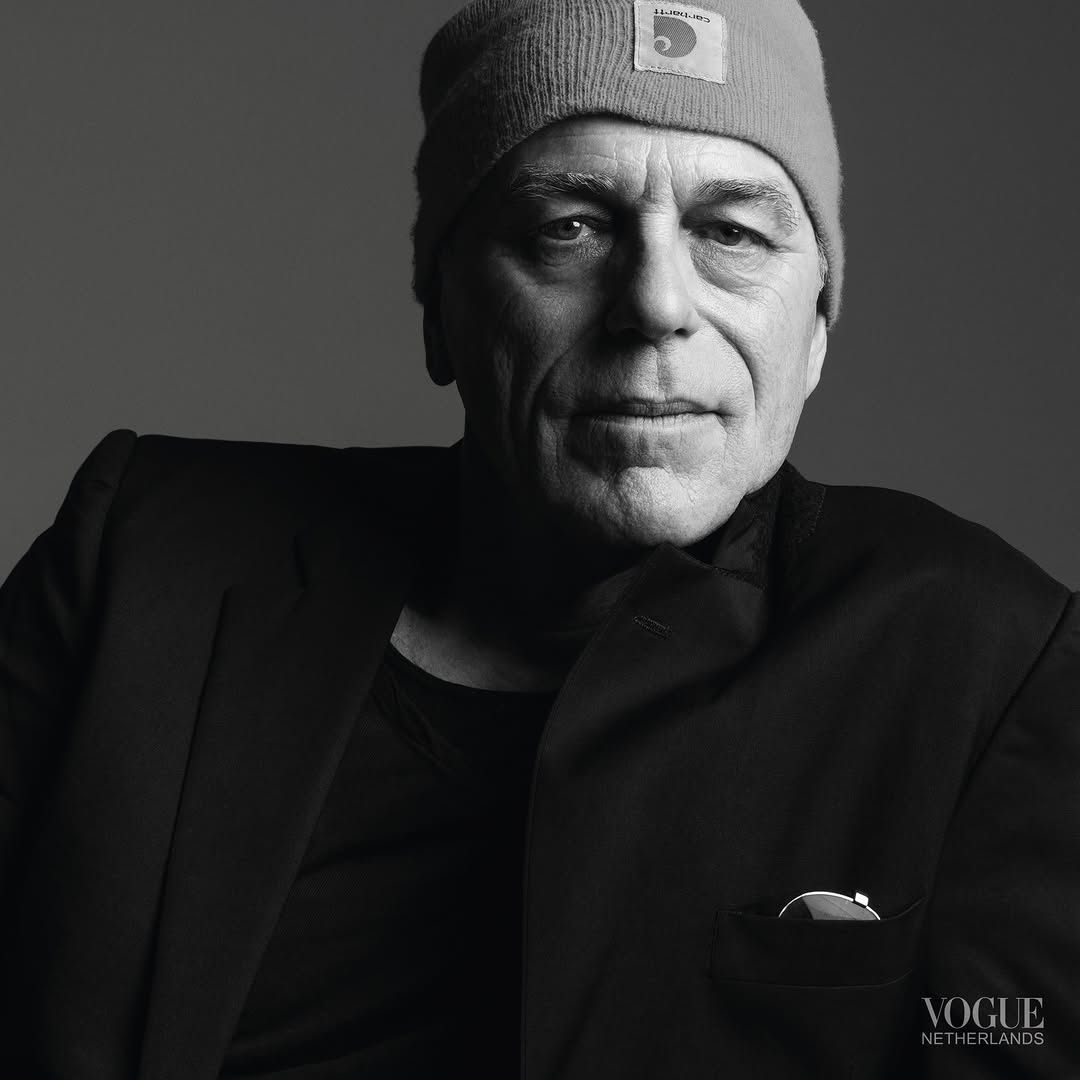
Ward Stegerhoek by Inez and Vinoodh | Image courtesy of Bryant Artists


