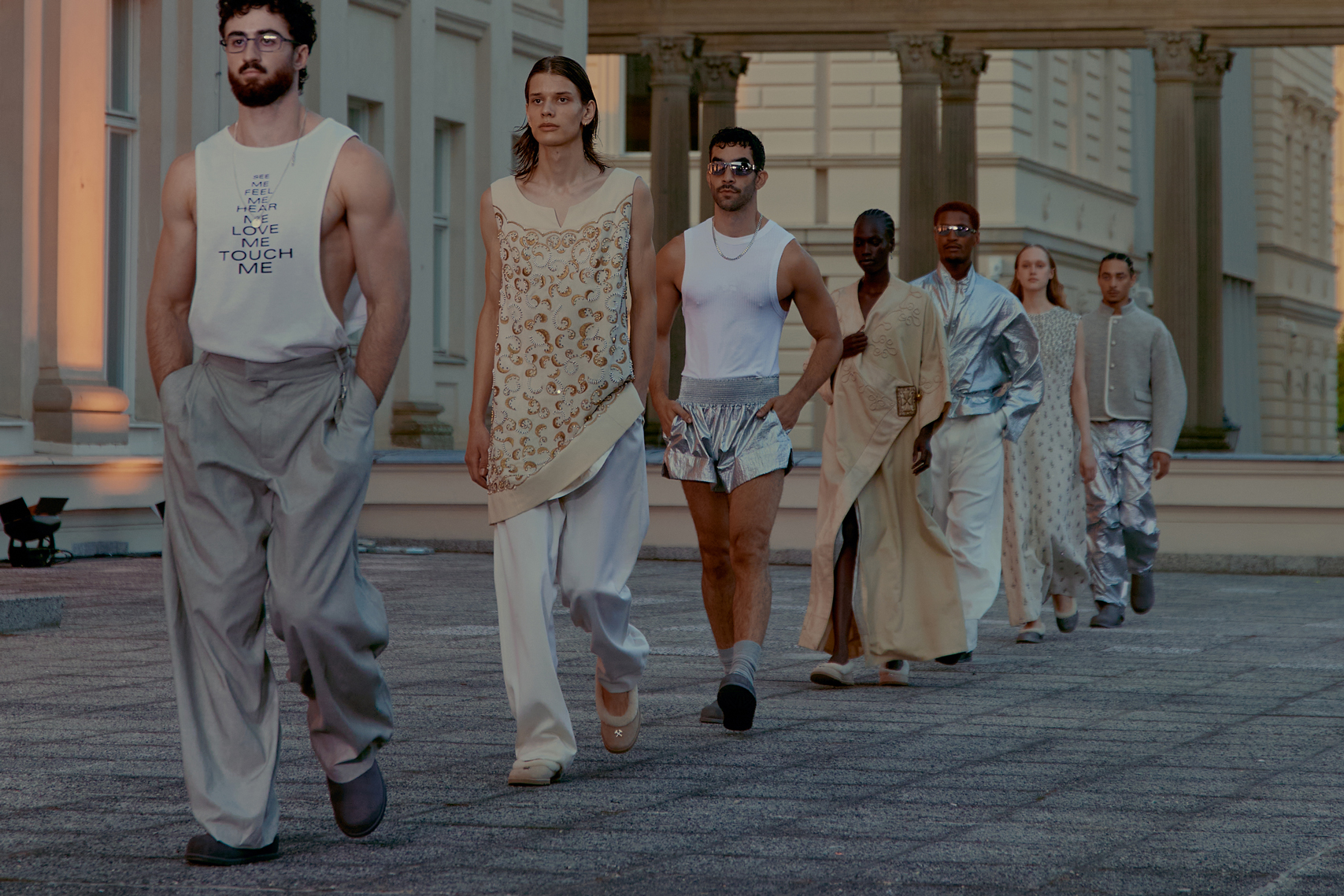
There was a time when Berlin Fashion Week felt like an alternative route through the fashion calendar: a place for experimentation running parallel to the industry’s main conversation. This season, it felt increasingly like the conversation itself. Perhaps that’s because Berlin has stopped trying to imitate the established capitals altogether. Where Paris continues to perfect heritage, Milan crafts luxury, London celebrates eccentricity, and New York prioritizes the bottom line, Berlin has become something else entirely: a city where designers from vastly different locations arrive to expand the city beyond a singular aesthetic. The result was one of the most internationally minded seasons Berlin has staged to date. Designers from Lagos, Tokyo, Kampala, Mexico City, Accra, and Berlin itself explored memory, migration, unique craftsmanship, and identity. The city’s strength has become precisely these points—it doesn’t ask designers to fit into one narrative.
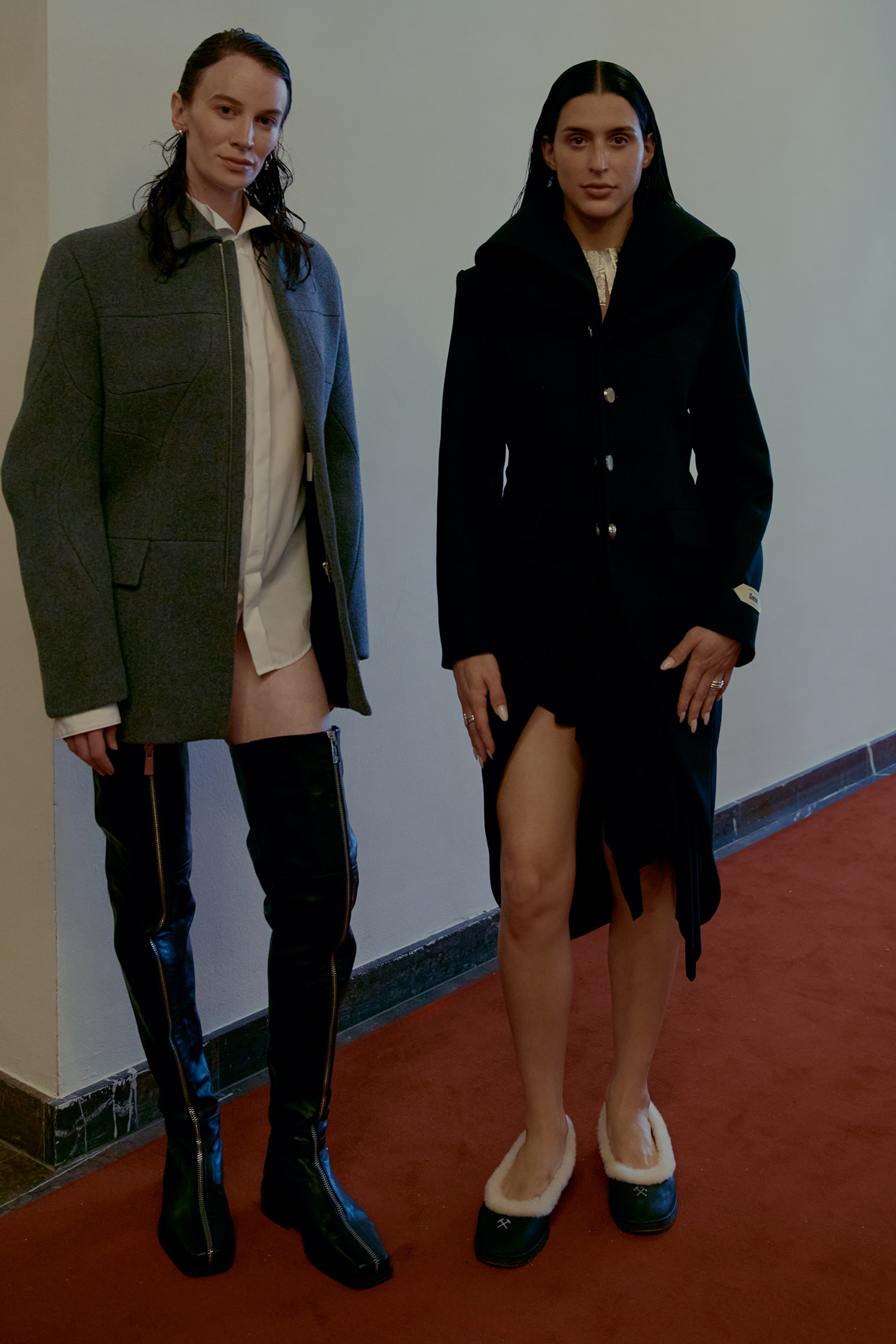
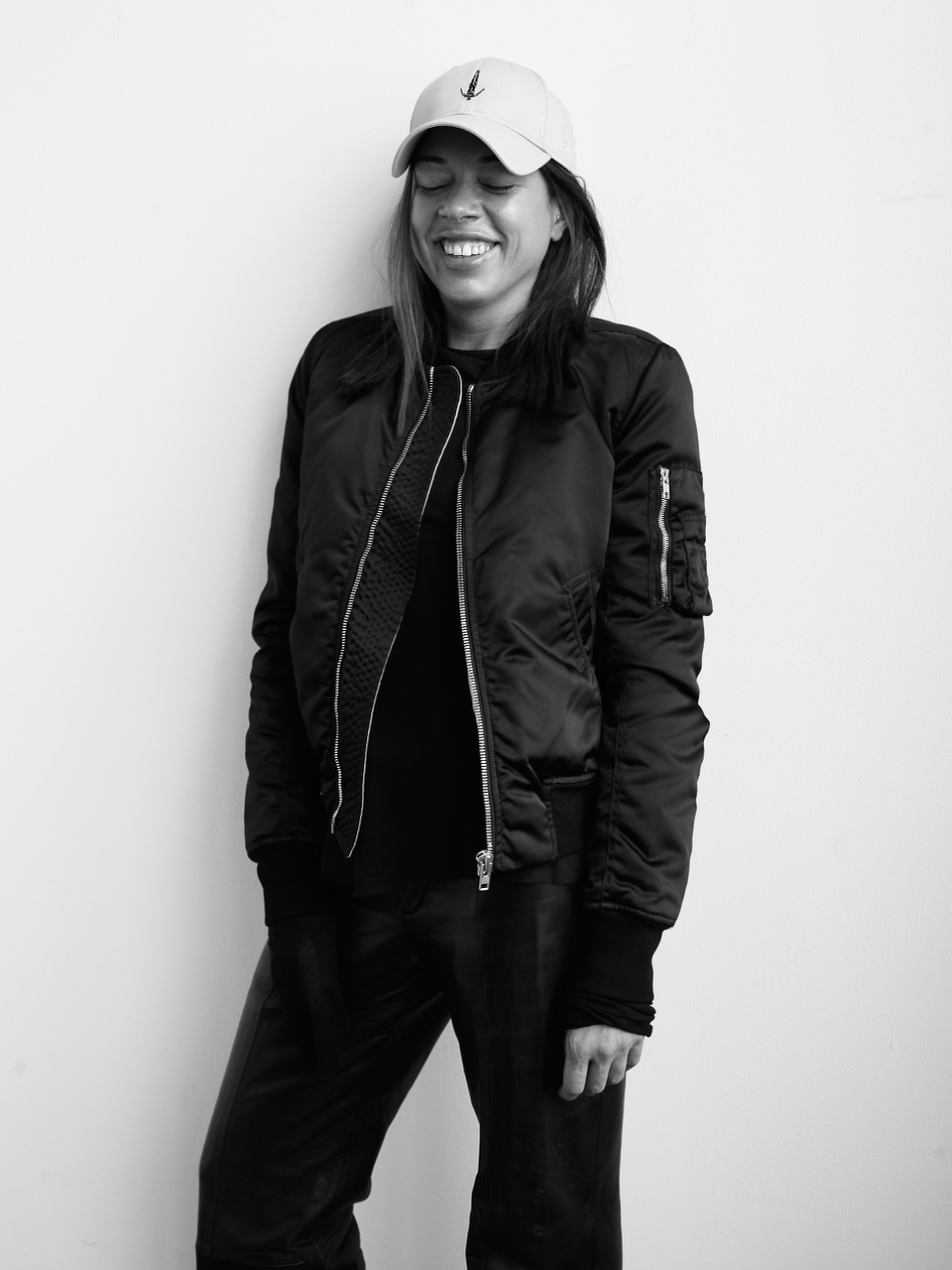
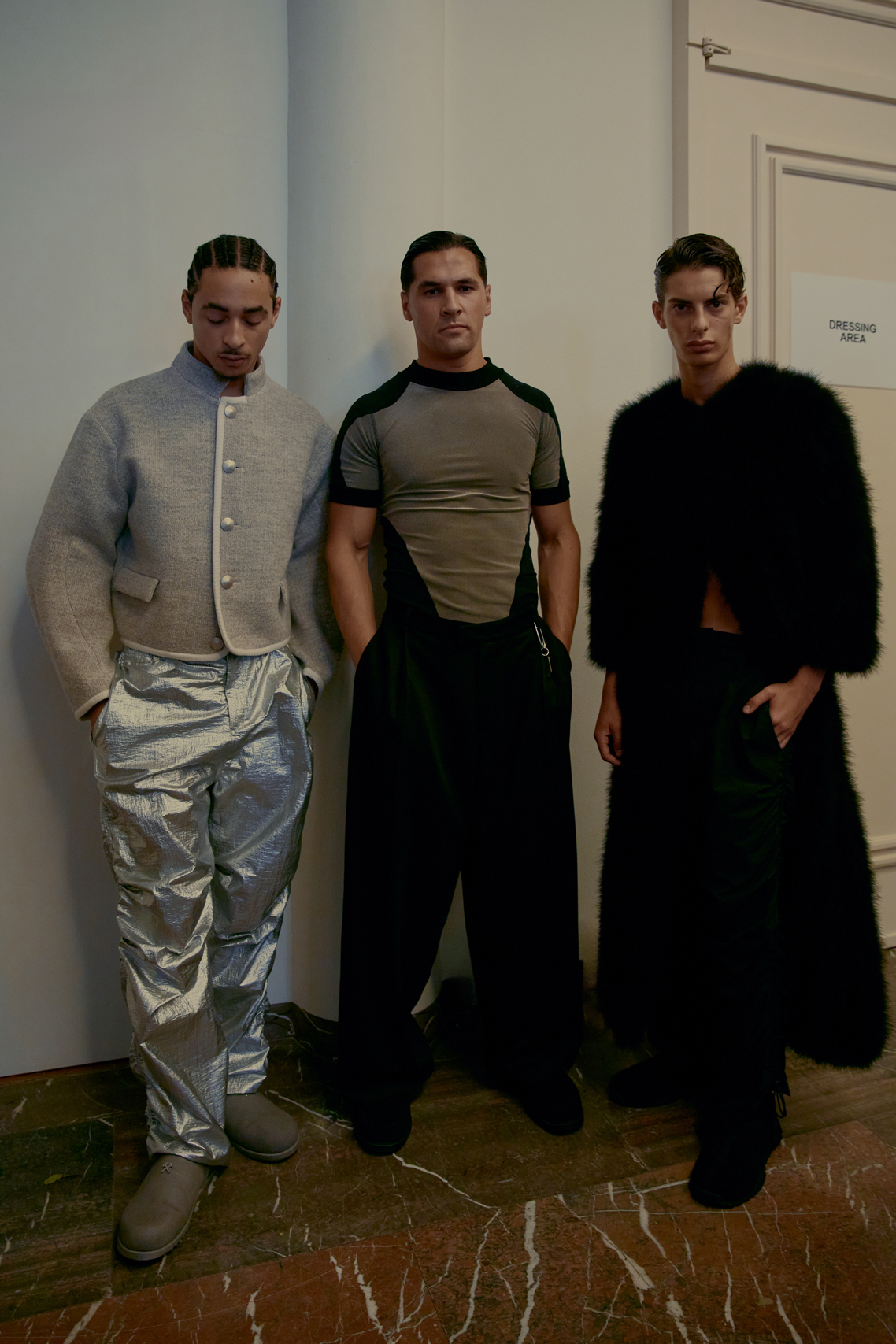
Away from the runways, the conversations carried the same spirit. During the week I moderated two panels: one for Metamorphosis and eBay alongside two fashion giants, Caroline Rush and Scott Lipinski, to discuss the future of fashion ecosystems, and another with fashion legend Edward Buchanan surrounding the re-release of his iconic CHECK YOUR NECK scarves through Sansovino6. Both conversations felt like extensions of the energy itself, asking not simply what fashion looks like, but what it should become. Even the city reflected that openness. Somewhere between early morning venues my driver, Zlatan, mentioned growing up in Bulgaria, a place my mother and aunts often spoke about from their travels decades ago. Berlin remains a city full of surprises, built by arrivals, and where nearly every conversation begins somewhere else before finding itself here. Models.com was there to see all the stellar collections with behind the scenes moments stories photographed by Tonya Matyu this season.
William Fan
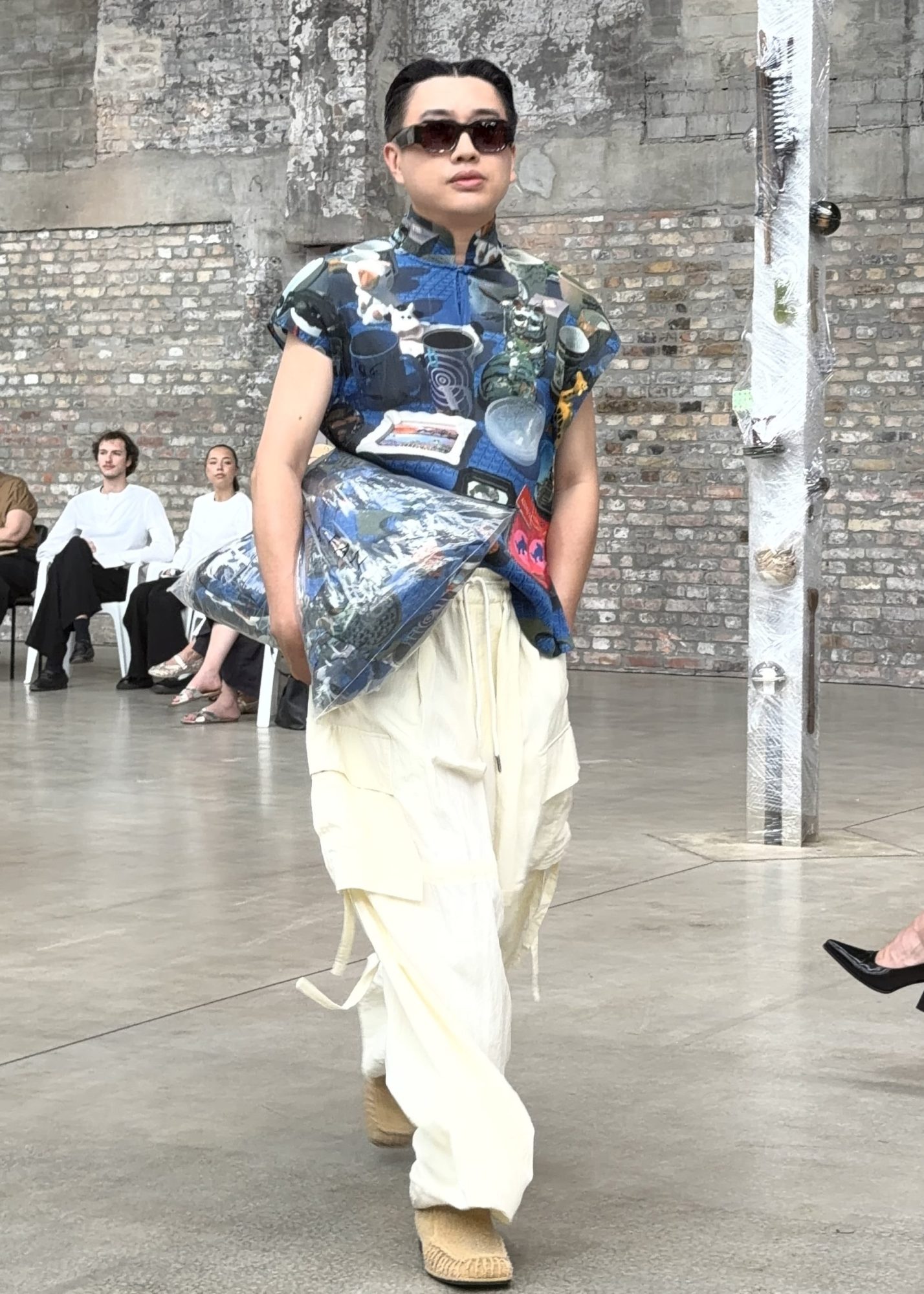
Opening Berlin Fashion Week has become something of a tradition for William Fan, whose collections have long embodied the city’s increasingly international identity. For Spring/Summer 2027, EXCHANGE examined the emotional life of objects and the ways people carry memories across borders. Inspired by marketplaces from Marrakech and Tokyo to Shanghai and Hong Kong, Fan explored collecting not as consumption but as a deeply human instinct: one rooted in cultural exchange. The show’s opening look announced the theme immediately, with a glowing vermillion CURRENCY EXCHANGE sign recalling the familiar spaces of airports and international transit. Throughout the collection, sculptural pleats, flared sleeve endings, and richly hued looks stood out the flock of sportswear with a global twist. The set installation expanded that narrative beyond the clothes themselves: more than 800 objects sourced from FAN PLAZA, the designer’s Berlin gift and souvenir shop, were suspended throughout The Foundry like preserved fragments of memory. Developed in collaboration with USM, custom-designed stools upholstered in fabrics from the collection further dissolved the boundary between fashion, design, and interior, extending the garments into the surrounding environment. Together, the installation reinforced Fan’s belief that fashion exists within a broader ecosystem of travel, design, and personal history. True to form, the cast reflected Berlin’s creative landscape beyond traditional modeling, with fashion editor Declan Chan taking to the runway—following in the footsteps of Susie Bubble, who walked for Fan last season—alongside rapper Wa22ermann, journalists Yasmine M’Barek and Adriano Sack, and a roster of Berlin modeling regulars. EXCHANGE served as an apt opening statement for the week ahead, where the global exchange of ideas proved just as much a part of the season as the clothes themselves.
Fruché
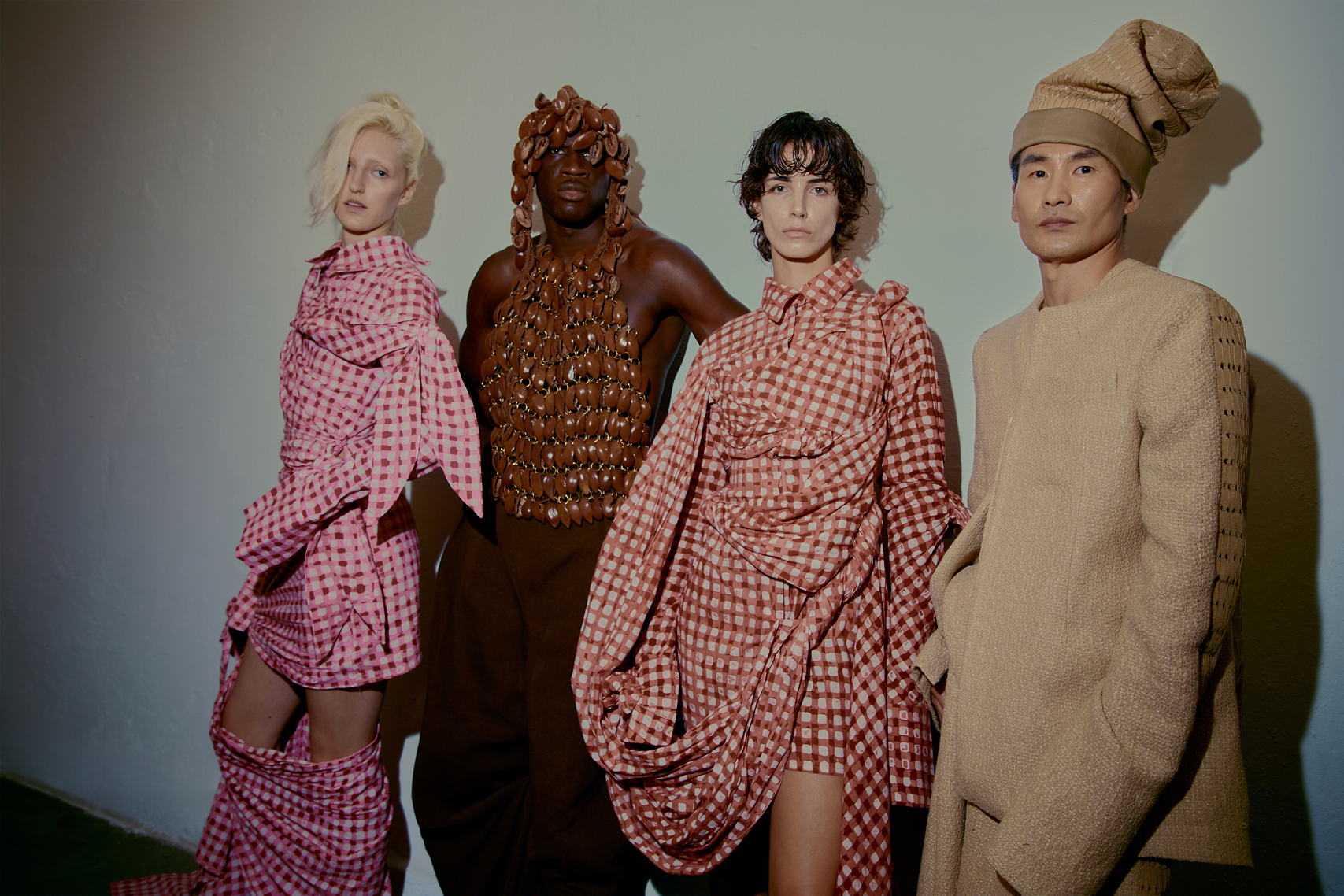
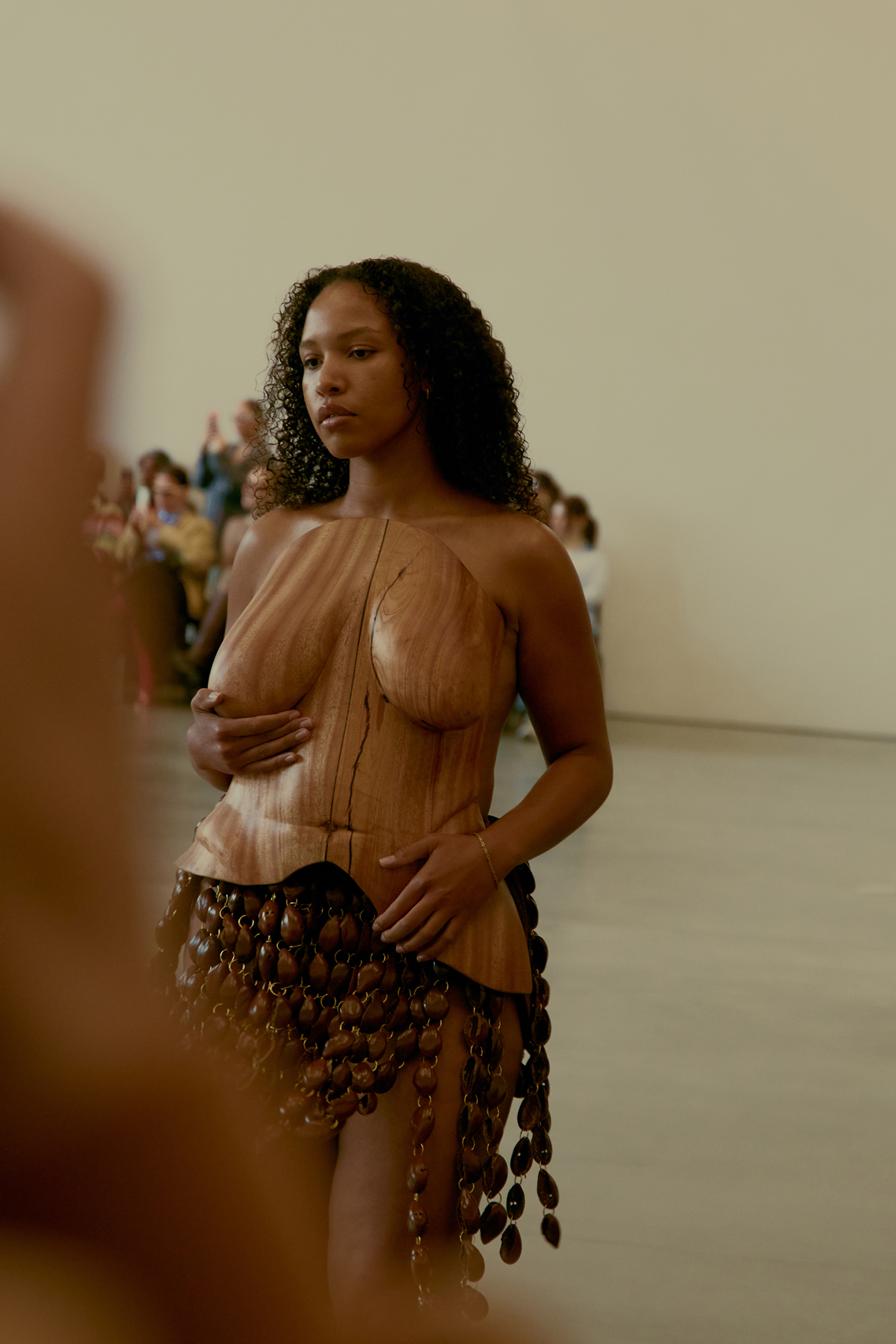
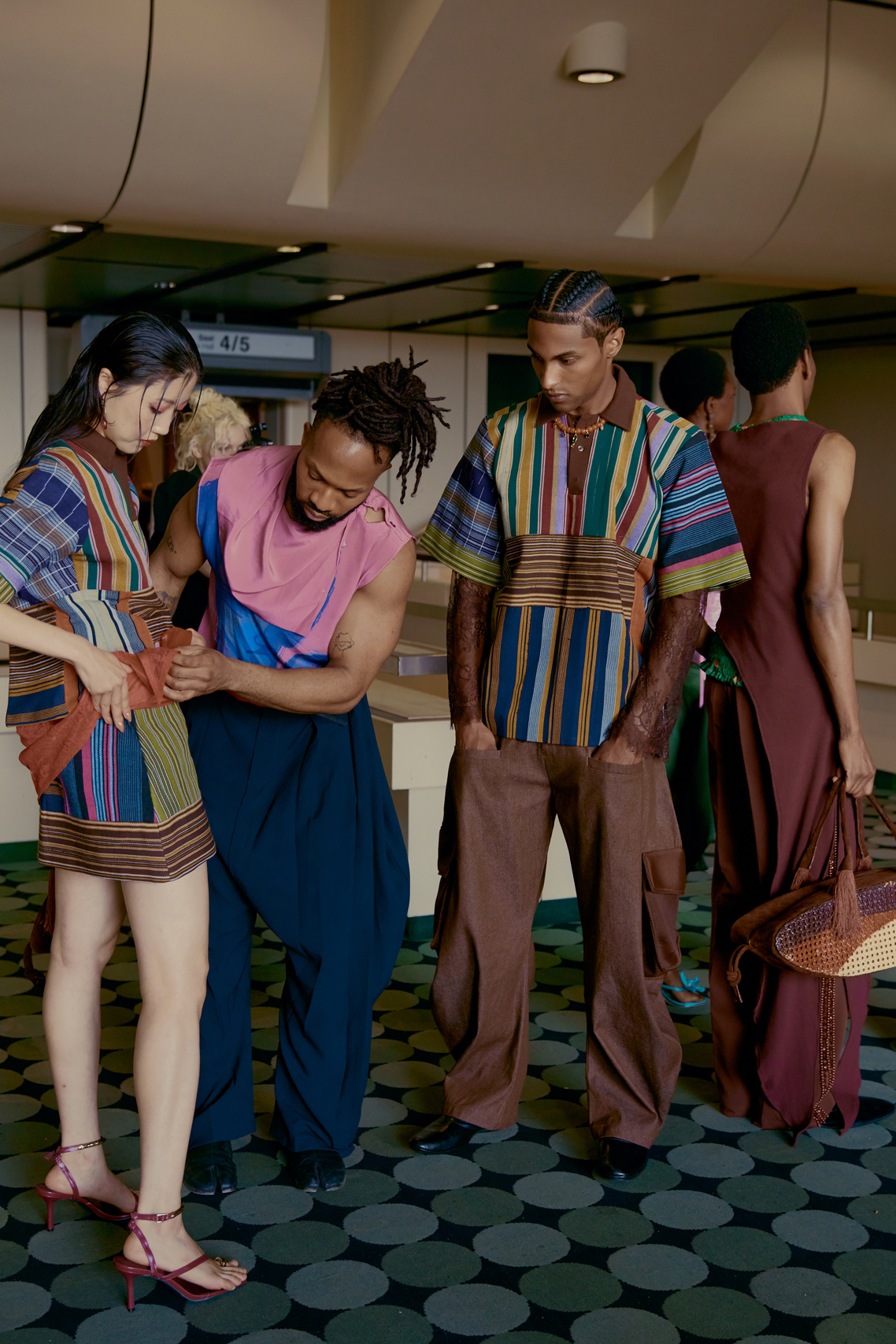
Frank Aghuno’s latest collection, KLEG, reclaimed the Nigerian Pidgin term often used to describe knock knees or something considered “not quite right,” transforming it into a celebration of individuality. Looking back to the school uniforms of his childhood, Aghuno reimagined familiar gingham through handwoven Aso Oke and resist-dyed Adire, pairing the nostalgic textiles with distortedly wrapped silhouettes inspired by the asymmetries, scars, and tribal marks we are often taught to conceal. Drawing on pre-colonial Nigerian craftsmanship, from wood carving and beadwork to handwoven textiles, the collection positioned the body as both structure and living archive. A deeply collaborative effort, KLEG featured hand-painted textiles by the designer’s twin brother, Fredrick Aghuno of Dricky Stickman, alongside sculptural wooden bodices and hats by Nigerian artists Emmanuel Opeyemi and Oluwalere Israel Adewale, crochet by Fola Olopade, and origami-inspired headwear by Dukun. Rather than correcting imperfection, Fruché celebrated it, proposing a vision of beauty rooted in memory, heritage, and authenticity.
IOANNES
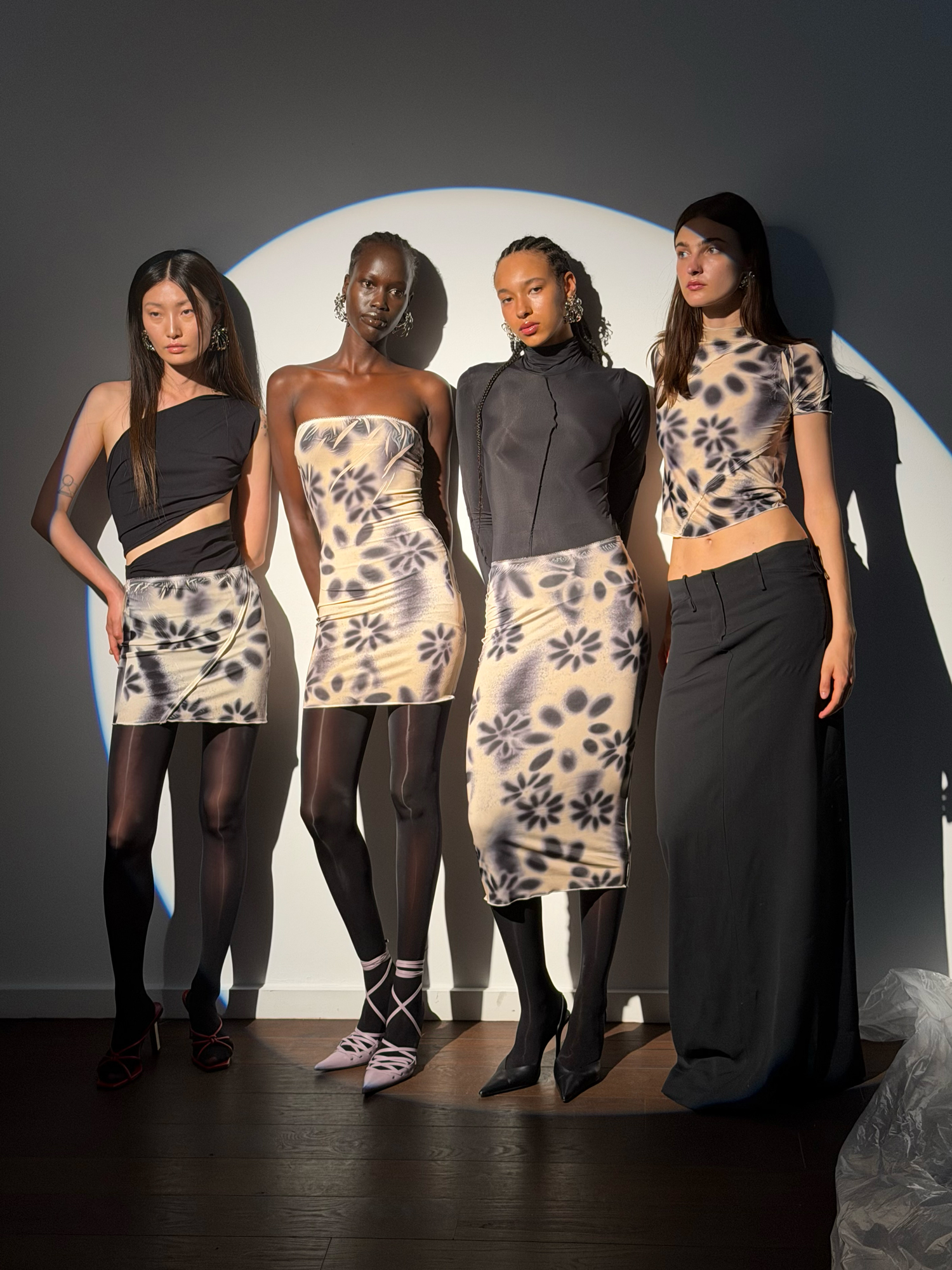
Rather than staging another runway after two standout seasons, Johannes Boehl Cronau invited guests into his own apartment + studio for Salon 01. Clothing quietly inhabited the rooms alongside vintage furniture, collected objects, and an elaborate dinner table frozen mid-soirée, the moment revisited garments from previous collections instead of introducing an entirely new wardrobe, becoming a thoughtful meditation on longevity and the emotional value clothes accumulate over time. Ironically, one of those revisited pieces had already found its way into my own wardrobe—I wore an IOANNES look to Christiane Arp and the Berlin Fashion Council’s hosted Berlin Fashion Week opening dinner mere hours after the presentation.
Kasia Kucharska
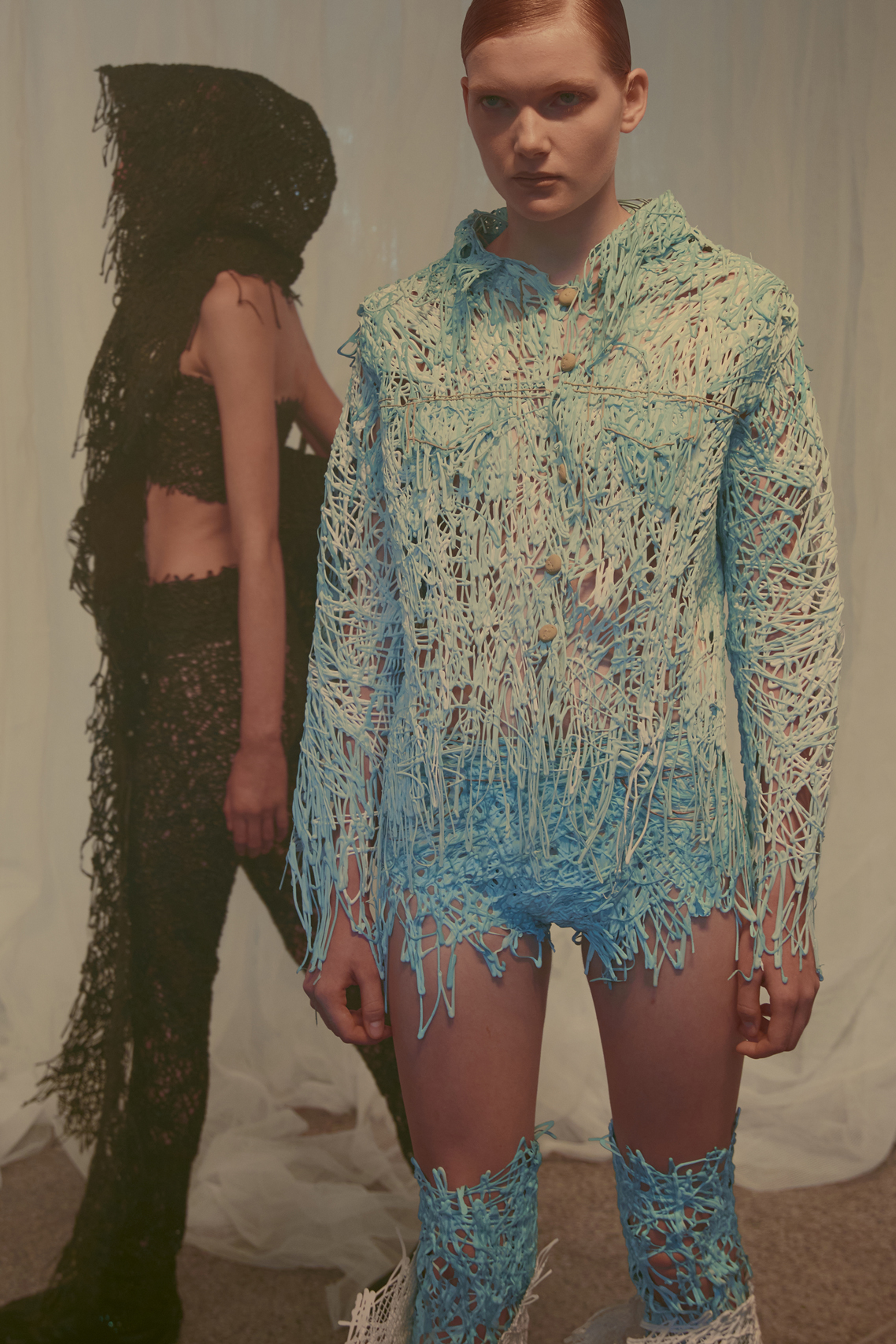
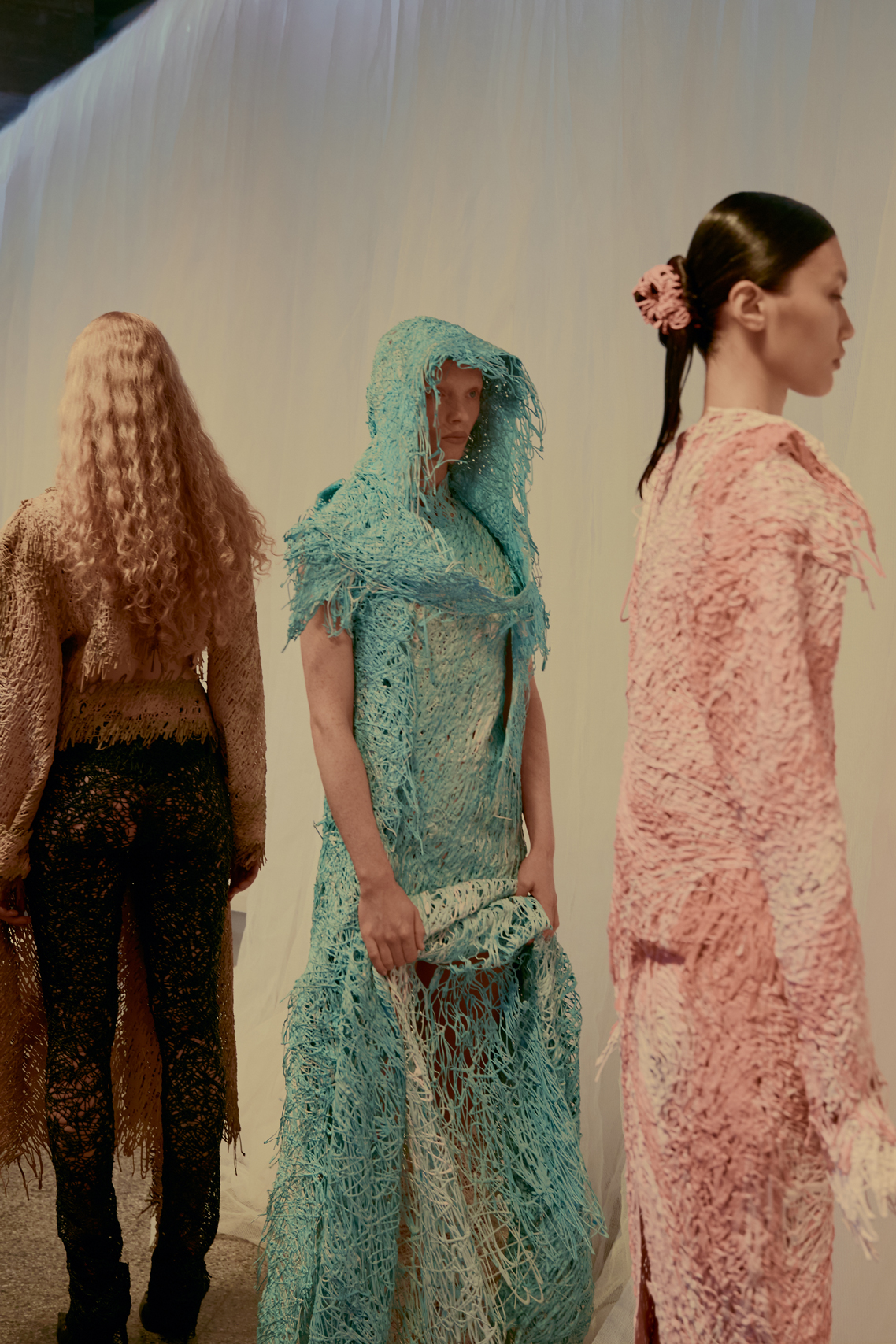
No one manipulates perception quite like Kasia Kucharska. For Spring/Summer 2027, the designer continued pushing the possibilities of latex, transforming familiar wardrobe pieces—namely trench coats, denim, and chunky knitwear—into painstakingly handcrafted trompe-l’œil illusions that challenged the line between appearance and reality. What initially looked ordinary, gradually revealed itself through subtle glitches and childlike scribbles that fractured the illusion. Kucharska’s immersive presentation extended the concept beyond the garments themselves, with models moving through the distorted, foggy gallery space, in collaboration with Nike and spatial designers AAS, turning the installation into an up close analysis of Kucharska outstanding textile work and making the familiar appear just uncanny enough to question everything at first glance.
Andrej Gronau
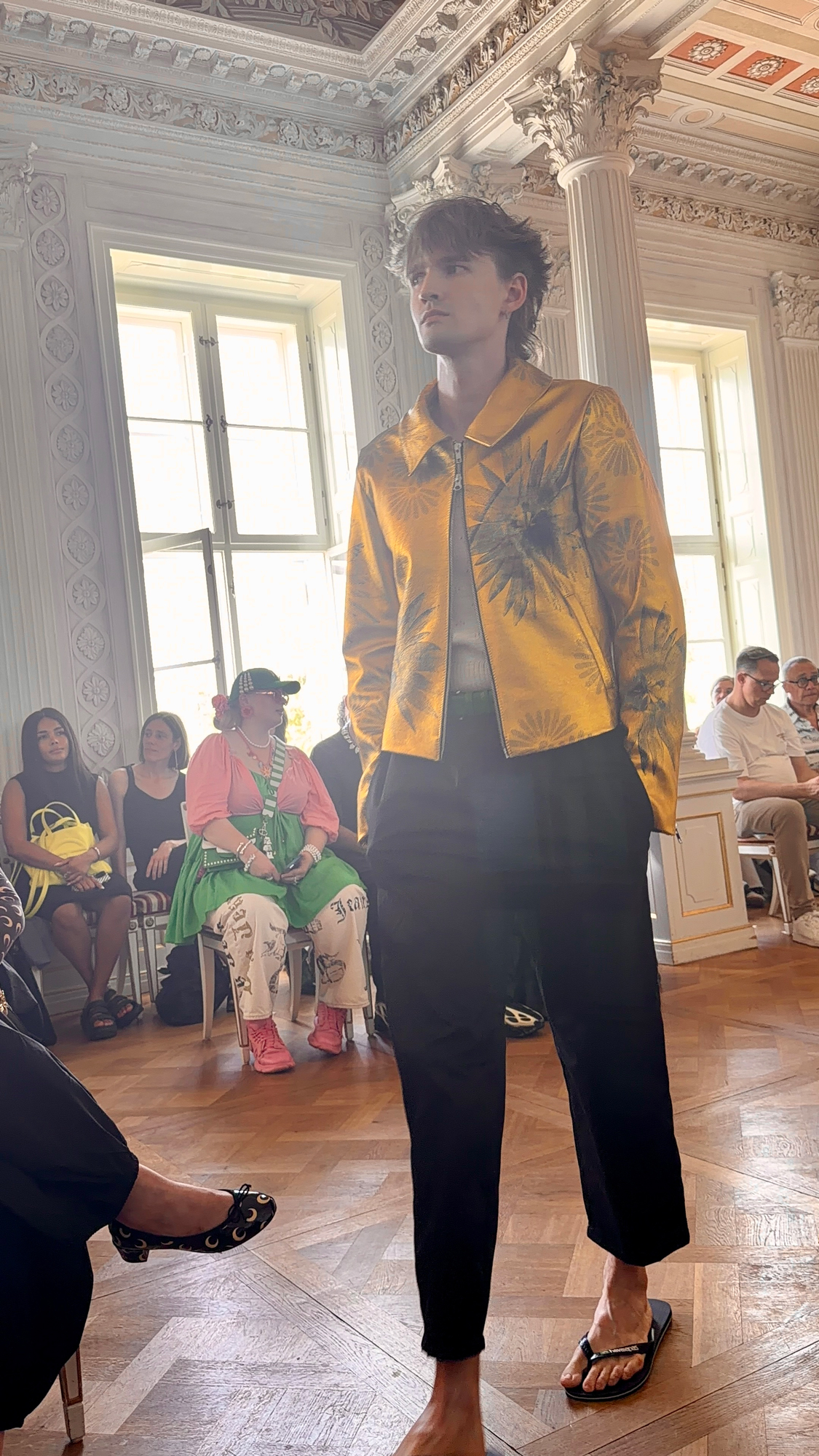
Winner of this season’s Berlin Contemporary Prize, Andrej Gronau continued with Island’s Isolation, presented in the gardens of Schloss Friedrichsfelde, where the historic setting echoed the collection’s meditation on nature as both animal sanctuary and carefully constructed illusion. Drawing inspiration from Francis Bacon’s heightened palette and the imagined ecosystems found within gardens, Gronau proposed metamorphosis through recurring screen-prints of hand-drawn cats, mice, and Karl Blossfeldt’s botanical photographs, viewing the collection did feel like a cat-and-mouse game to guess what would come out next. Throughout the collection, elongated color-blocked knits recalled the stretched, hand-knit sweaters of his grandmother, gilded leather outerwear was a highlight, and gender-fluid pieces created an approachable ease that continues to define Gronau’s work. The collection’s understated on-holiday spirit extended to the footwear with an exclusive collaboration with Havaianas, whose casual flip-flops reinforced the idea that discovery can begin much closer to home.
Orange Culture
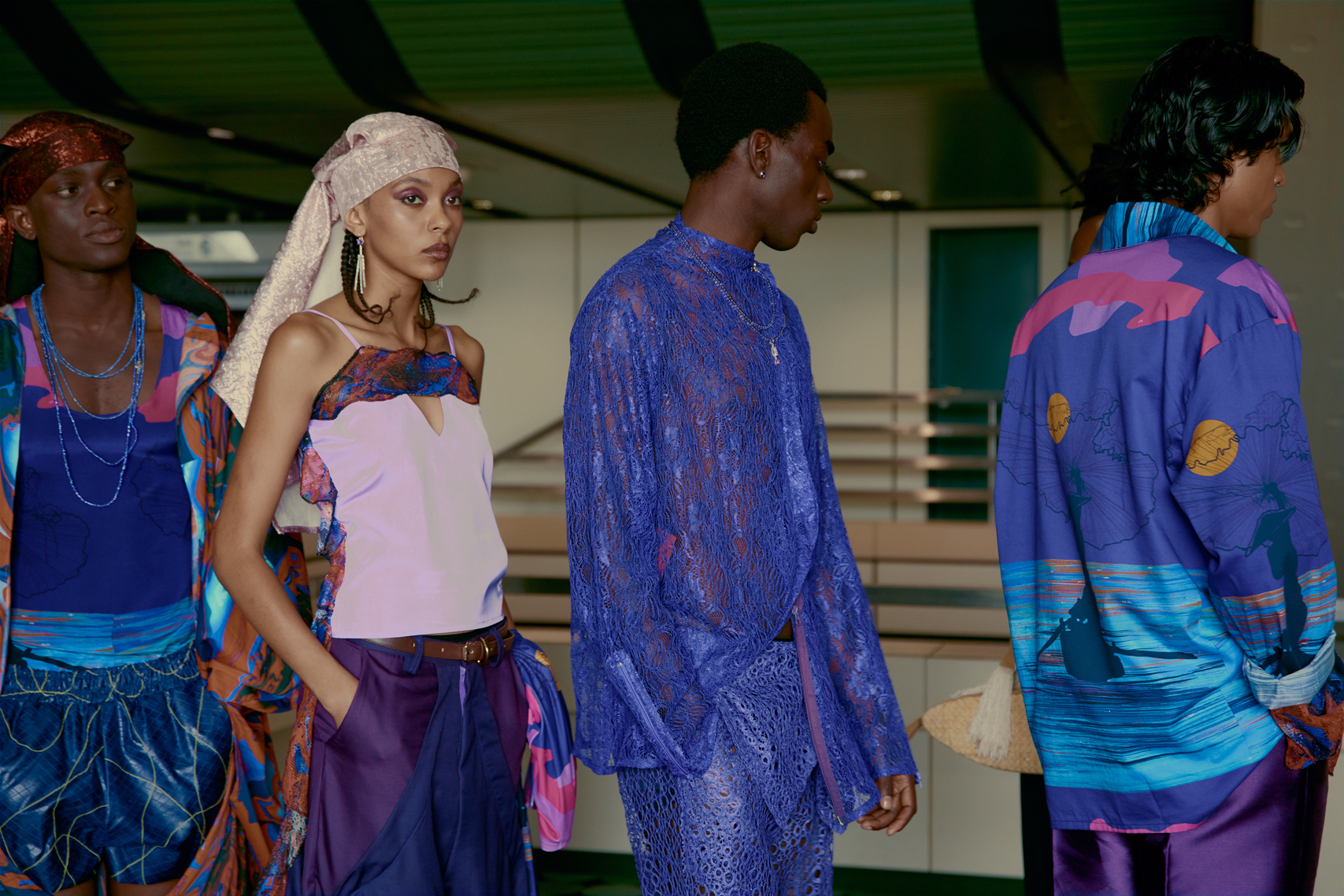
For Water Will Carry Us, Adebayo Oke-Lawal turned to Makoko, Lagos’ historic waterfront community built on stilts and long threatened by redevelopment and displacement. Rather than centering collapse, the collection became a tribute to the resilience of a place where life continues to flourish despite instability. Makoko’s ingenuity informed every aspect of the collection, from imbalanced proportions and layered textures to sheer fabrications and meticulous hand-stitched embellishments that echoed the visual language of scaffolding, shelter, and protection. A striking fisherman casting his net, rendered through artwork by Nigerian artist Paolo Sisiano, anchored the collection as both a literal image of labor and a poetic metaphor for memory, survival, and hope. Throughout, water functioned as more than a backdrop—it became the collection’s emotional current, carrying stories of migration, identity, labor, and transformation while reminding us that uncertainty can also be sustaining. Balancing softness with structure and vulnerability with strength, Water Will Carry Us continued Orange Culture’s remarkable ability to translate deeply personal and political narratives into clothes that resonate far beyond the runway.
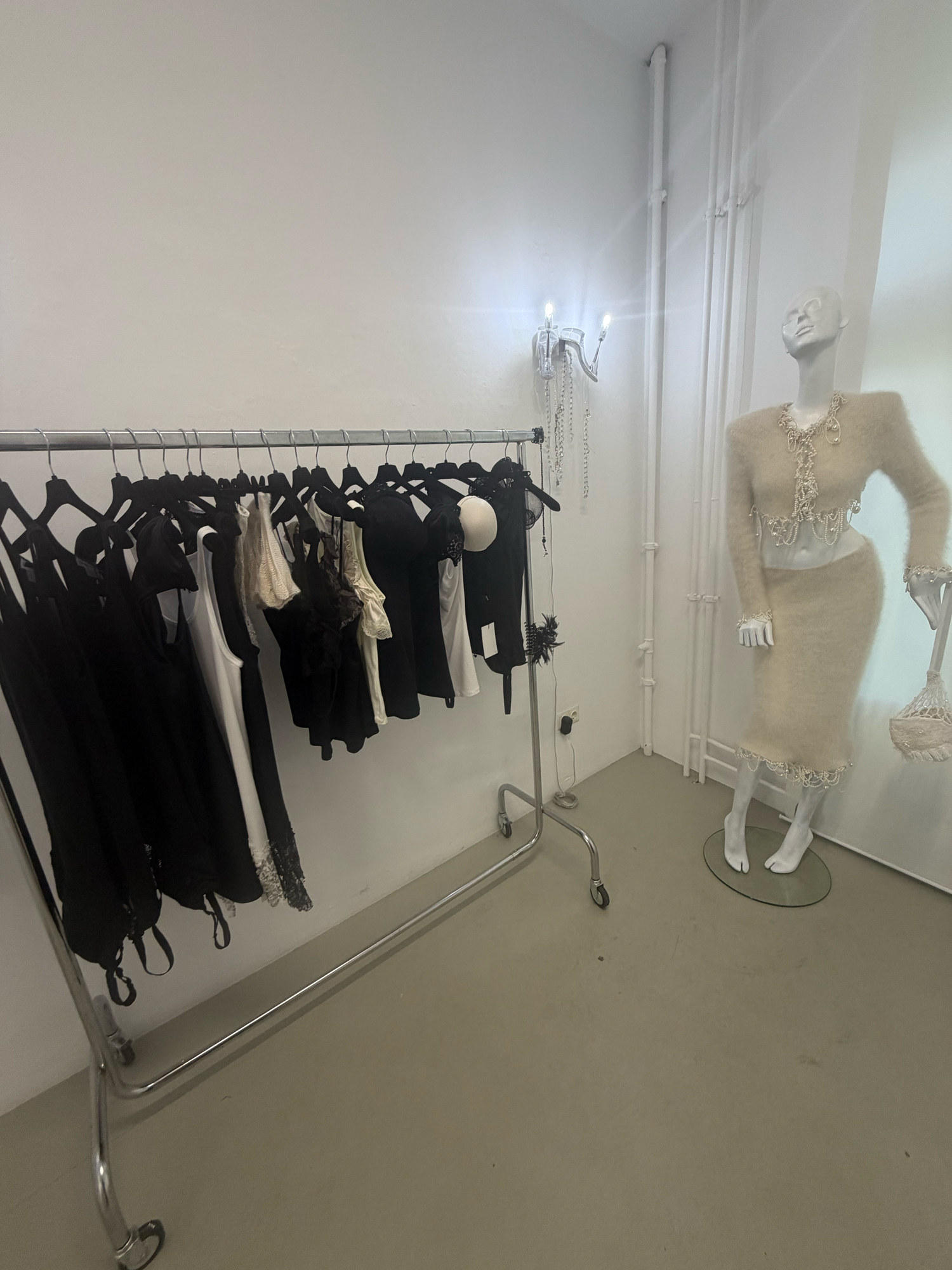
Lou de Bètoly
Fresh off her recent Models.com interview, Lou de Bètoly continued resisting the industry’s relentless seasonal calendar. Rather than presenting another runway, she staged an intimate gallery exhibition showcasing the painstaking handwork and craft that have become signatures of her practice. Showing once a year no longer feels unconventional—it feels entirely consistent with the slower rhythm her work demands.
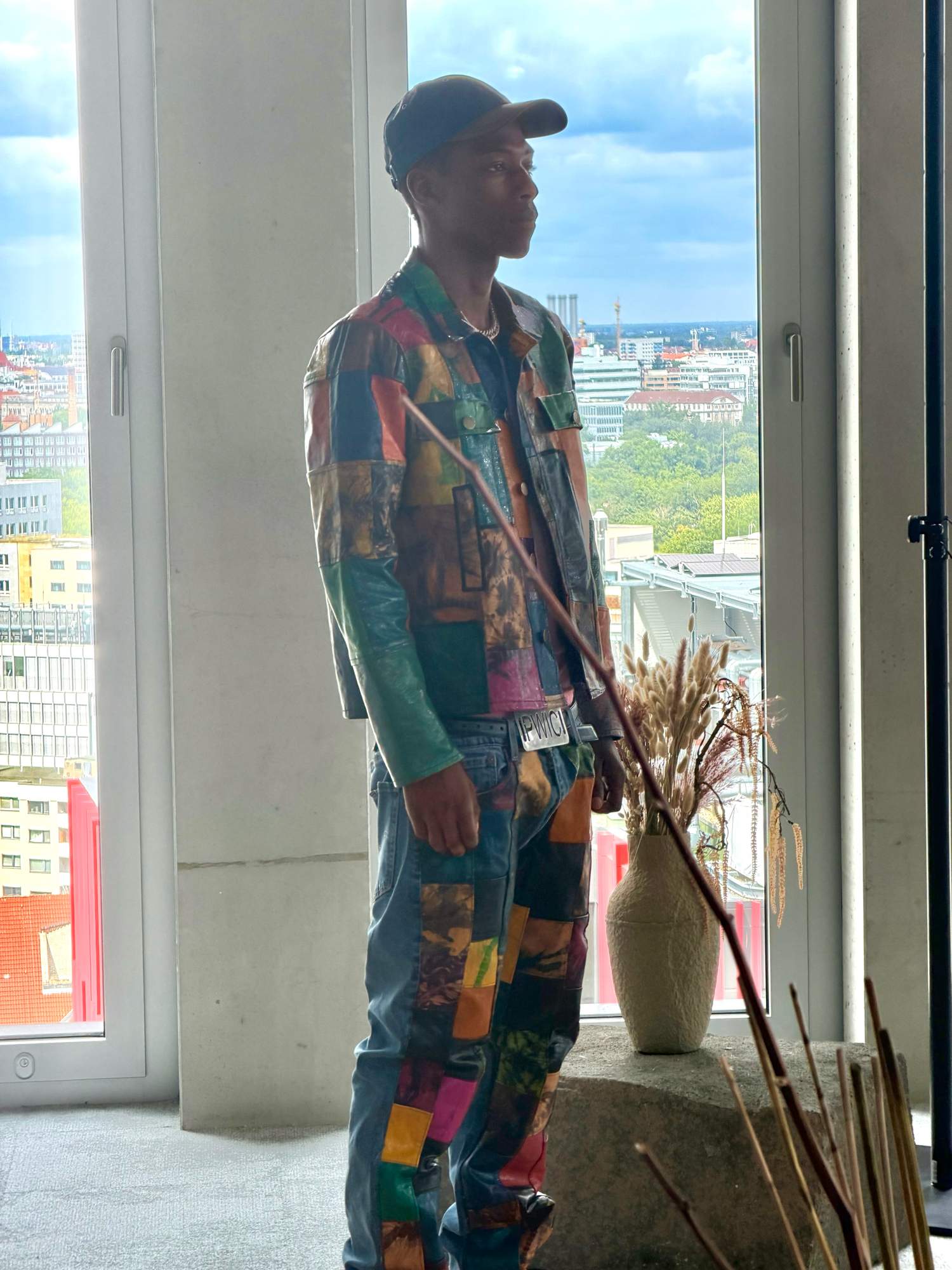
PALMWINE IceCREAM
Kusi Kubi continued building a contemporary African design language through NUBA, drawing inspiration from the spiritual artistry of Sudan’s Nuba people, whose traditions of ash, clay, pigment, body painting, and adornment transform the human form into a living work of art. The collection unfolded as a conversation between Sudan and Ghana, honing in on ritual and leather tailoring, memories of the past and the modernity on the continent’s doorstep. Ceremonial markings found new expression through studded accessories, distressed dye techniques, hand-painted leather, and silhouettes that balanced heritage with experimentation. Every look was handmade in Ghana using upcycled and deadstock materials, continuing Kubi’s commitment to ethical production and local craftsmanship. Highlights included painstakingly quilted leather two-piece look and a celestial leather cap created with Paris-based Finnish accessories designer Petteri Hemmilä, its constellation of metallic stars forming a sculptural mohawk. Bridging contemporary fashion language with the artisanal traditions of Accra, NUBA further established PALMWINE IceCREAM as one of the more compelling voices reimagining African craftsmanship for a global audience.
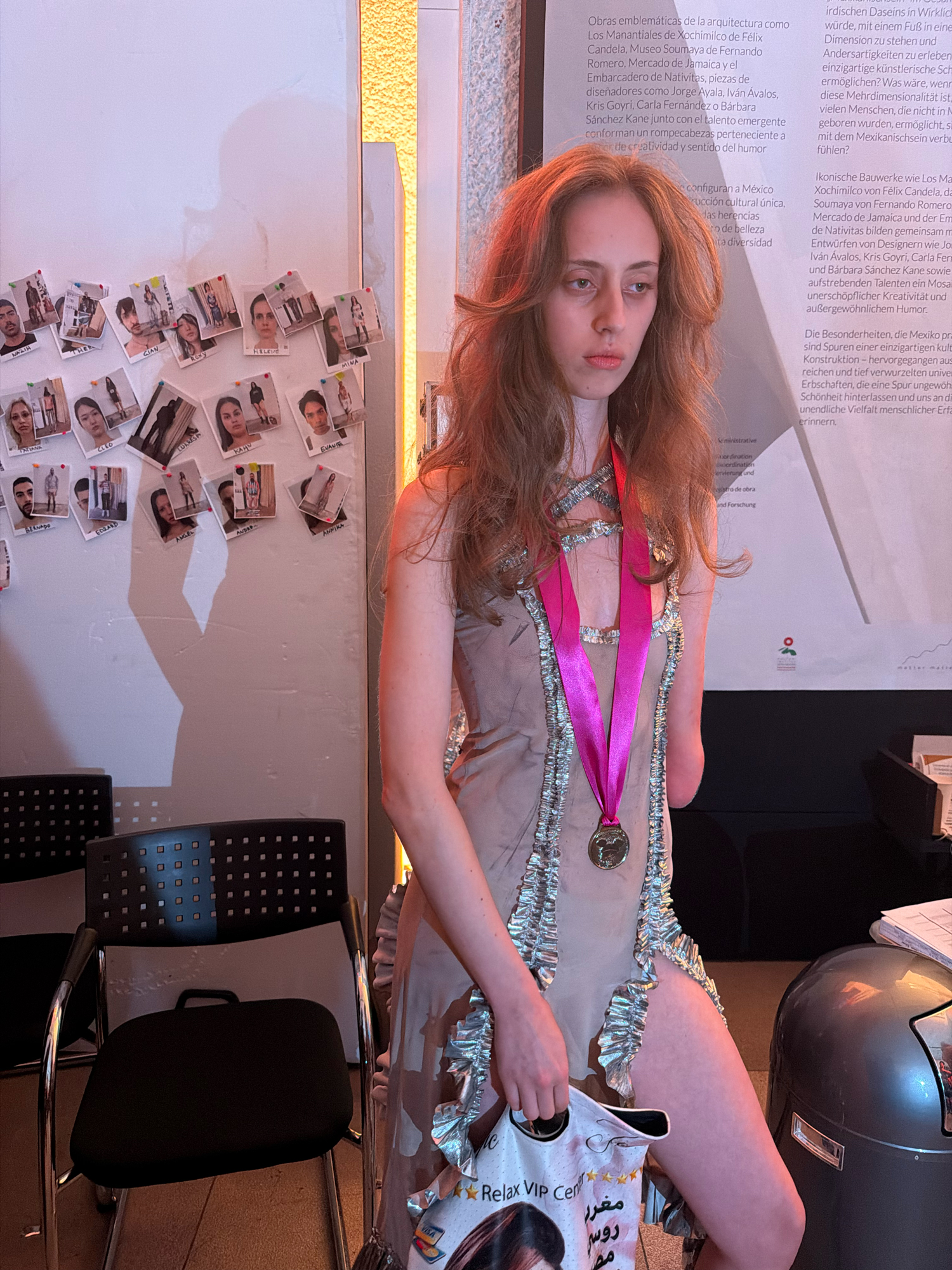
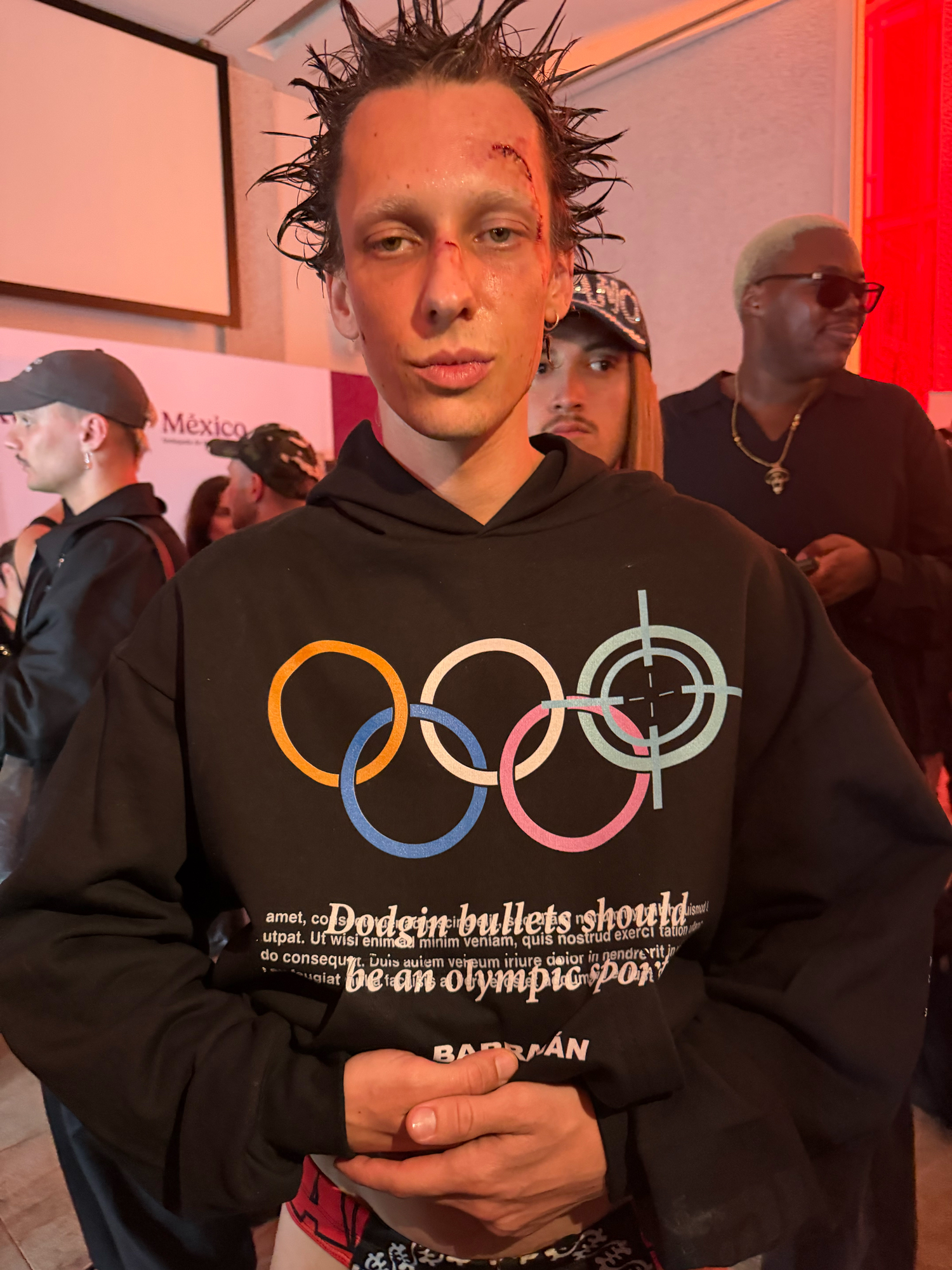
Barragán
Returning to the official calendar after several seasons away, Victor Barragán staged one of Berlin Fashion Week’s most overtly political collections inside the Mexican Embassy, transforming a diplomatic space into a sartorial meditation on migration, borders, and national identity. Titled SS30, the collection imagined a near future while questioning the systems that determine who belongs, using the embassy itself as both backdrop and metaphor: a solitary space defined as much by documentation as geography. Euro banknotes appeared on thongs and swim caps, world flags wrapped around denim and leather, while passport stamps, luggage, and transit imagery reflected the constant movement of people, goods, and identities across borders. Opening with a heavily pregnant model before moving into a cast selected by Taka Arakawa, Barragán balanced sleazy provocation with political precision, continuing his exploration of fashion as a vehicle for expression without sacrificing the sensual, body-conscious silhouettes and hoodies that have become synonymous with the label. In a week shaped by conversations around displacement and belonging, Barragán’s return felt especially timely, reminding audiences that clothing, like all things, is political.
Buzigahill
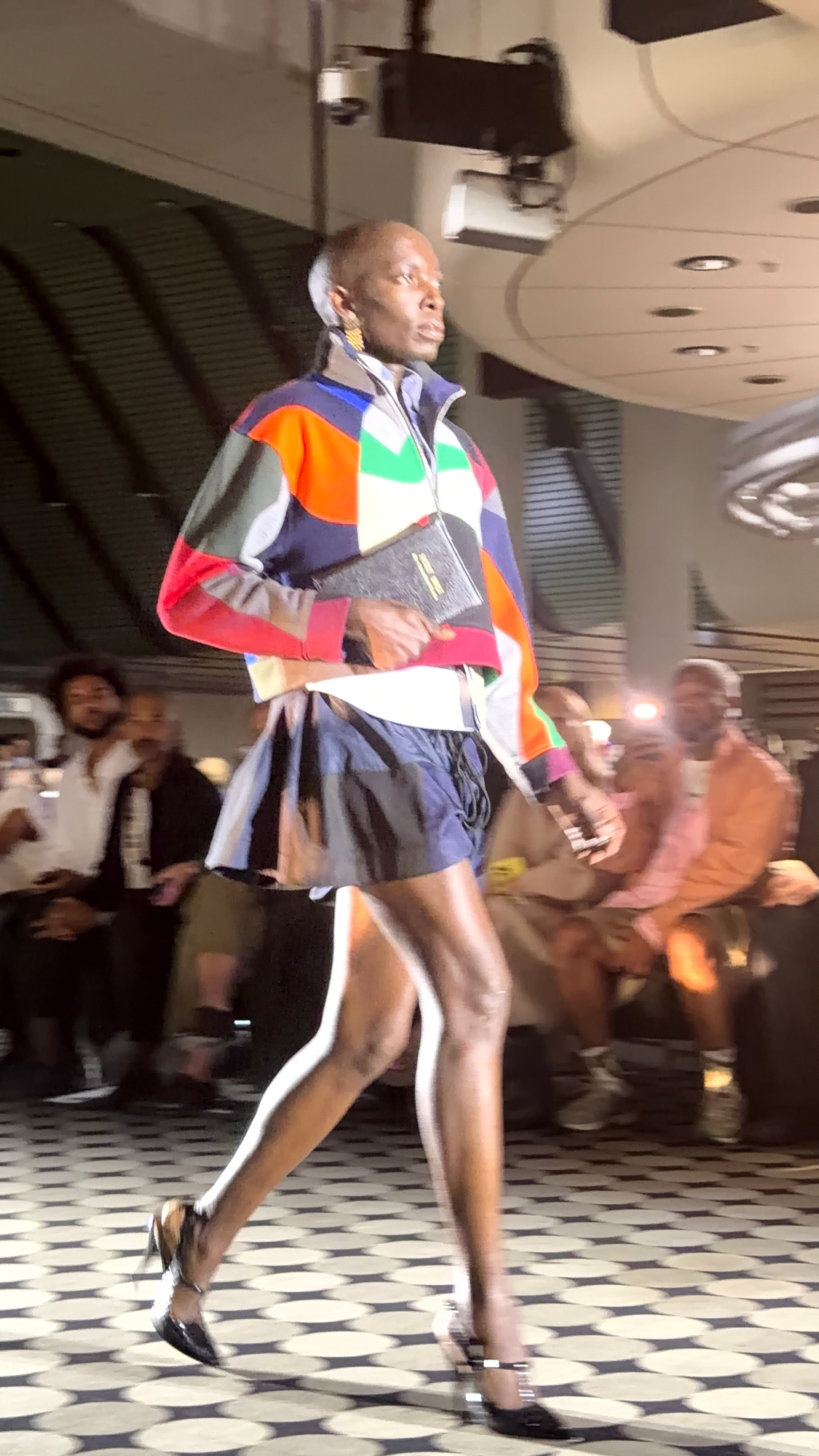
Bobby Kolade continued proving that fashion can function as both design practice and historical inquiry. Built entirely from upcycled garments imported into Uganda through the global secondhand clothing trade, Buzigahill’s latest collection transformed discarded shirting, denim, khakis, and hoodies into sharply tailored silhouettes that questioned the lingering effects of colonialism and unequal systems of consumption. Looking to the optimism that swept across East Africa during the wave of independence movements in the 1960s and ’70s, Kolade referenced figures such as Zambia’s first president, Kenneth Kaunda, whose signature short-sleeved safari suit inspired crisp utility jackets, and Ugandan lawyer and politician Princess Elizabeth Bagaaya, whose effortless 1960s wardrobe informed abbreviated patchwork dresses. Throughout, the collection balanced precise, minimalist tailoring with labor-intensive patchwork assembled from textile leftovers, demonstrating how sustainability and storytelling can coexist. Rather than romanticizing independence, Kolade examined the social, political, and economic realities that continue to shape postcolonial Africa, offering one of the week’s clearest examples of clothing as quiet resistance.
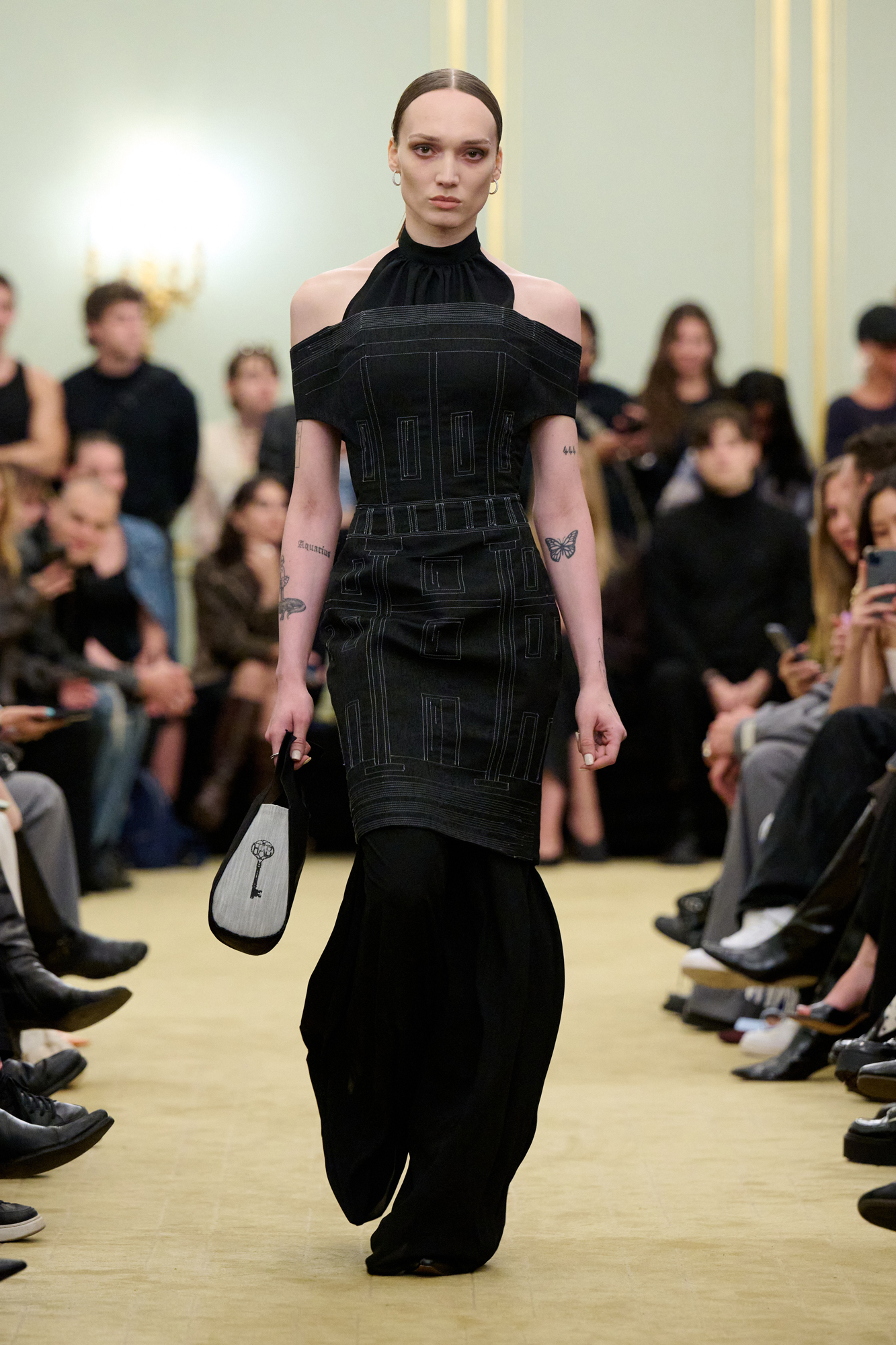
Photo by James Cochrane | Courtesy of Rafael Sergi PR
Haderlump
Johann Ehrhardt continued exploring the emotional architecture of everyday life with ATRIUM, presented inside the Hotel Adlon Kempinski overlooking the Brandenburg Gate. Taking its name from the central chamber of an ancient Roman home—and later, the heart itself—the collection reflected on the invisible hierarchies that exist within grand hotels ala The Grand Budapest Hotel, where guests and staff occupy the same spaces yet rarely truly meet. Characters ranging from concierges to bellmen and late-night wanderers informed a wardrobe of waxed denim, crushed cotton twill, tweed, and Haderlump’s signature experimental tailoring, where exposed waists, rounded sleeves, and draped denim dresses reimagined the rituals of hospitality. Architectural references filtered into every detail, from silverware-inspired silhouettes to key-shaped closures and concierge button plackets, while the brand’s continued use of deadstock materials reinforced Ehrhardt’s commitment to building progressive luxury from existing resources.
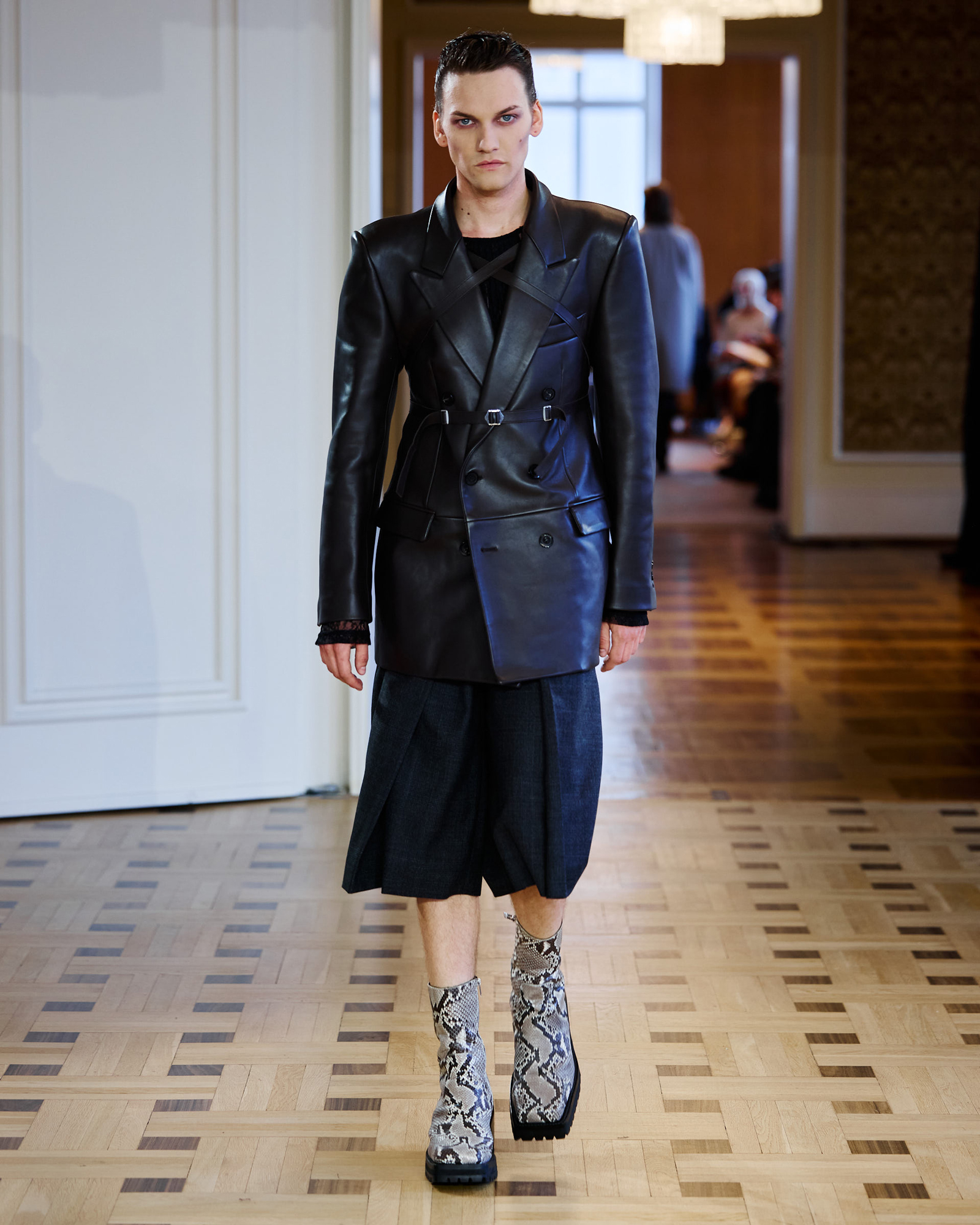
Photo by Finnegan Koichi Godenschweger | Courtesy of Reference Studios PR
JOHN LAWRENCE SULLIVAN
Returning to Berlin, Arashi Yanagawa presented Androgyny, continuing his decades-long interrogation of tailoring through the lens of gender. Inspired by Bettina Rheims’ Modern Lovers portraits, the collection rejected binaries altogether, proposing the body as a space where masculinity and femininity, discipline and desire, beauty and ugliness coexist rather than compete. Vinyl leather, military shirting, peplum silhouettes, cinched waists that evoked Berlin’s more smutty side and kitten heels worn across genders dissolved conventional dress codes with remarkable ease. Elsewhere, the Japanese concept of shibari informed jackets bound with self-fabric ties inspired by Nancy Grossman’s bondage drawings, while python textures and snakeskin motifs became symbols of continual renewal. Cast by Alter with Taka Arakawa and Jose Maria Martin, the show reaffirmed JOHN LAWRENCE SULLIVAN’s ability to make rigorous tailoring feel subversively sensual.
MARKE
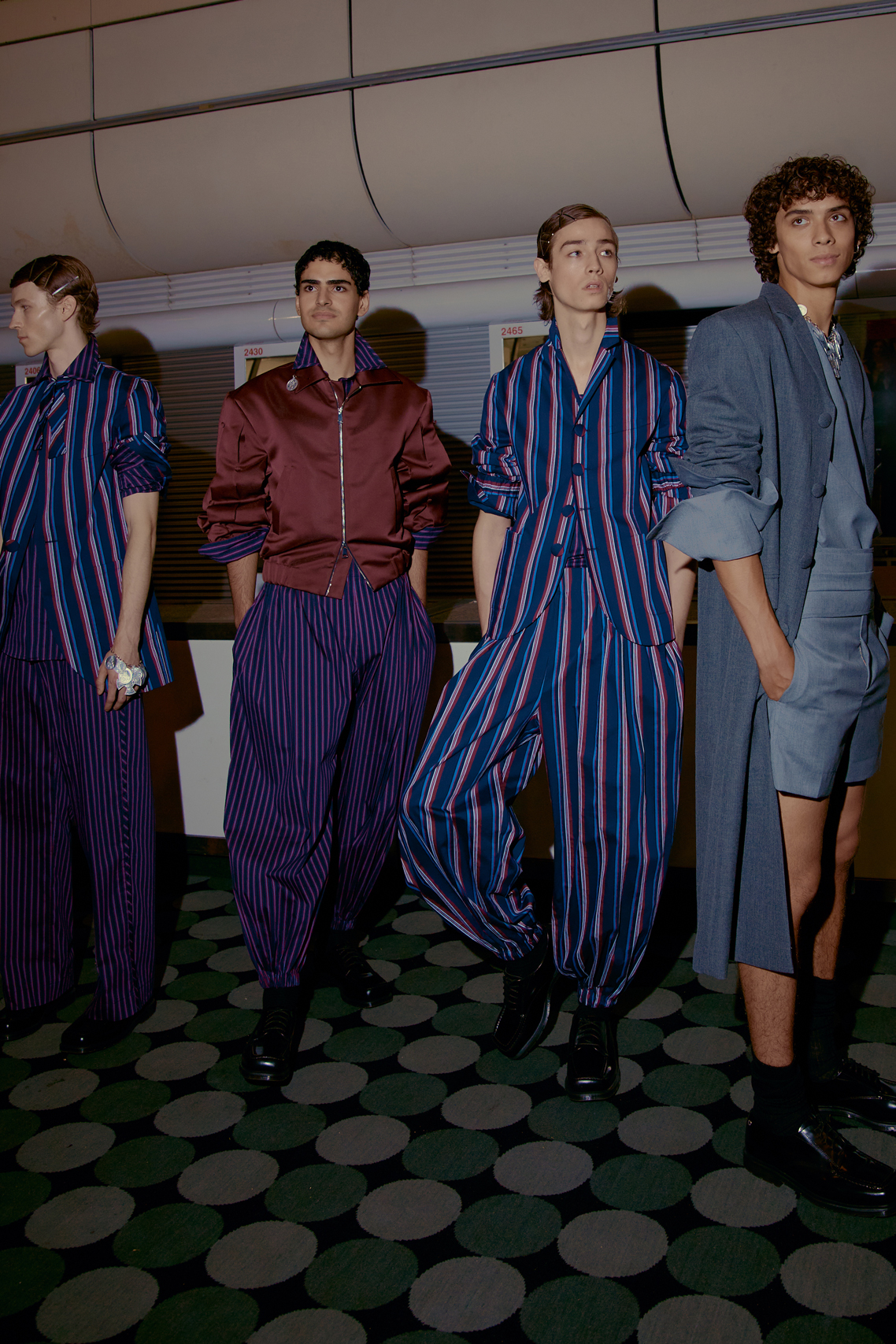
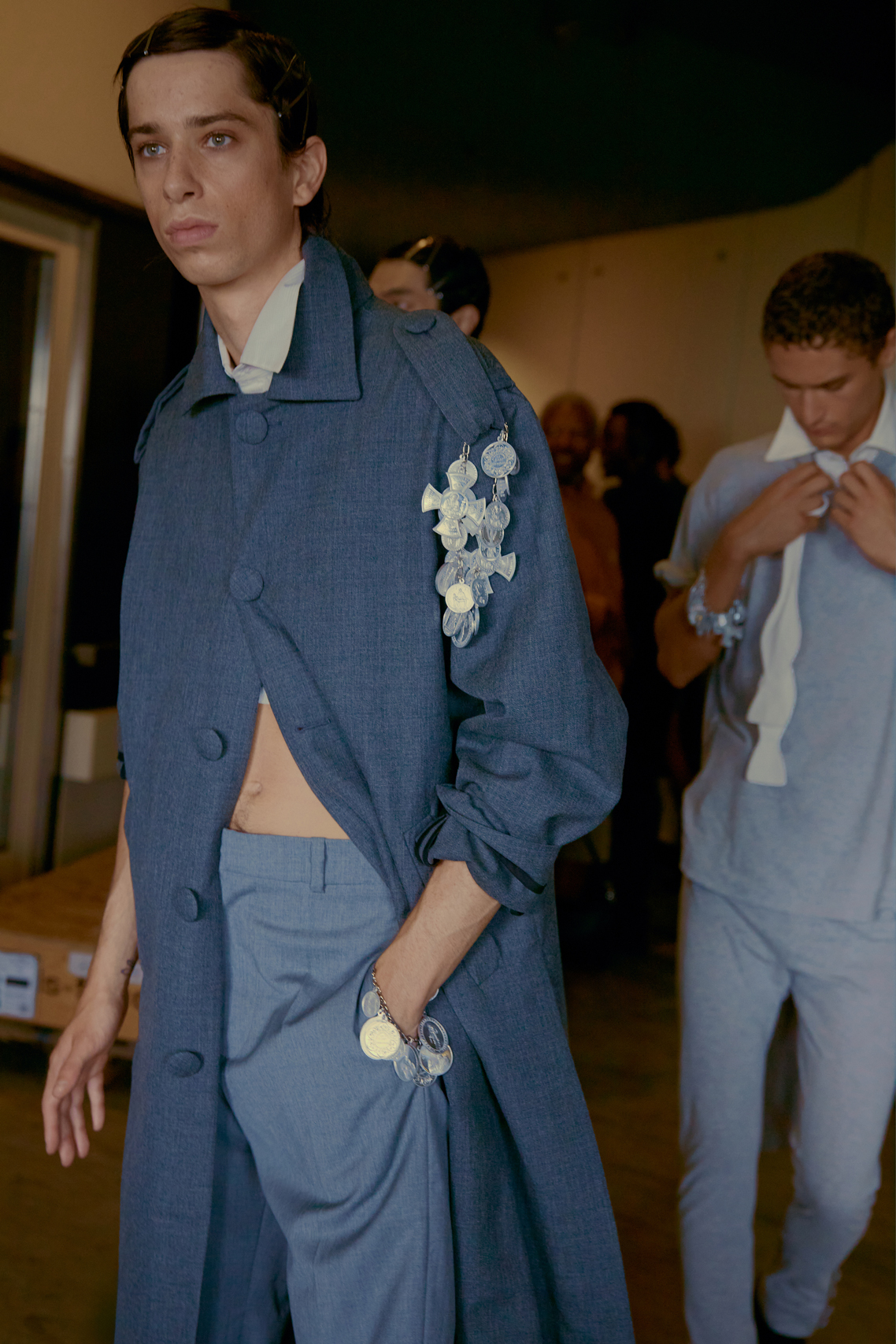
History became something to wear at MARKE. For Relics & Remnants, Mario Keine imagined a solitary wanderer moving across centuries, collecting fragments of memory rather than possessions. Echoing Virginia Woolf’s Orlando, the collection collapsed time itself, allowing Renaissance slashing, Baroque underpinnings, Victorian dandyism, formal evening dress, and ’90s sportswear to coexist within a single wardrobe. Rather than presenting historical references as costume, MARKE treated his menswear like ahistorical garments assembled across generations carrying traces of previous lives. Particularly striking were the hand-pleated bombers and striped voluminous trousers, alongside vintage silver charm jewellery layered like relics. Produced entirely from overstock and deadstock materials in Germany and Poland, Relics & Remnants suggested that history isn’t fixed, it continues evolving with every new body that wears it.
Milk of Lime
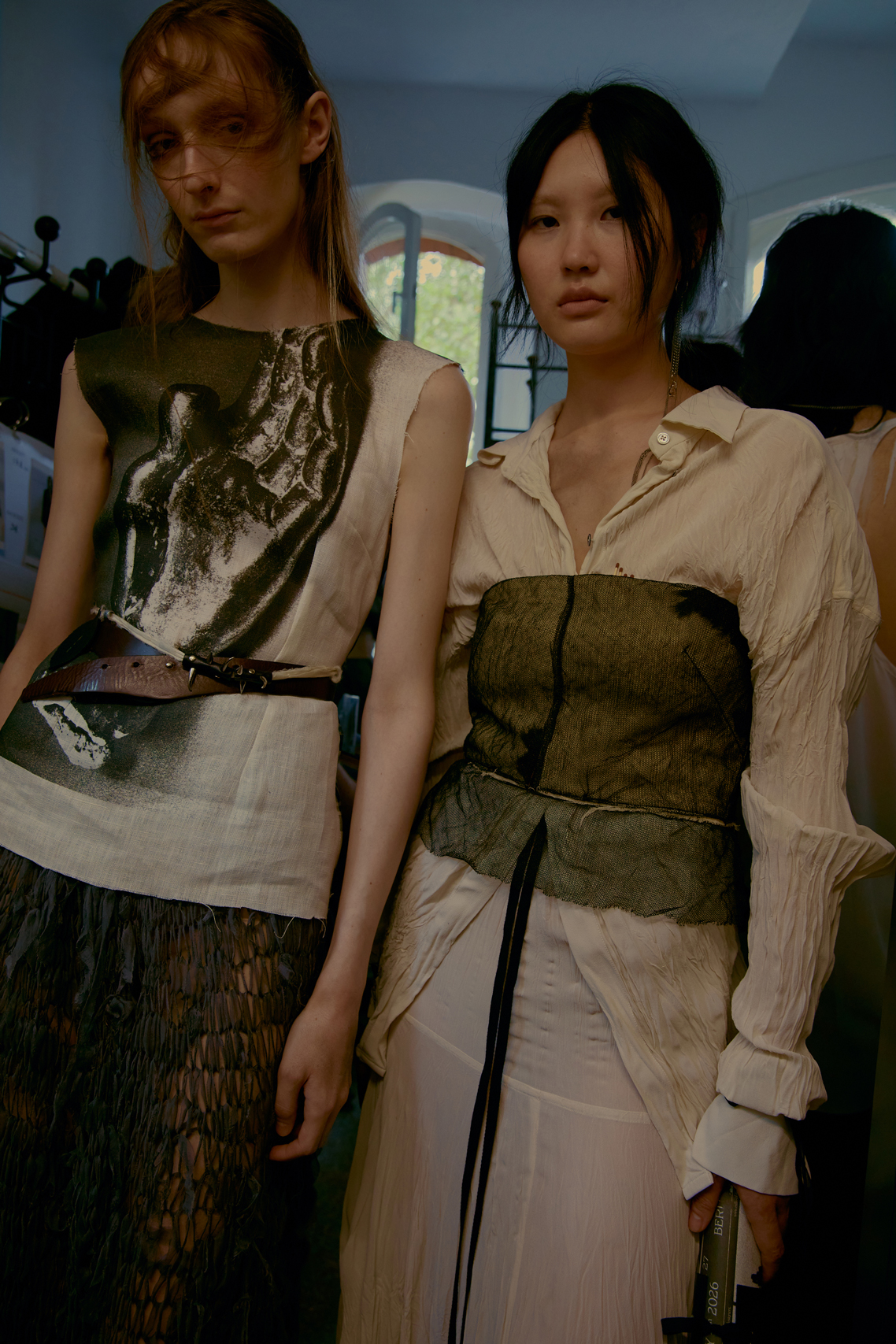
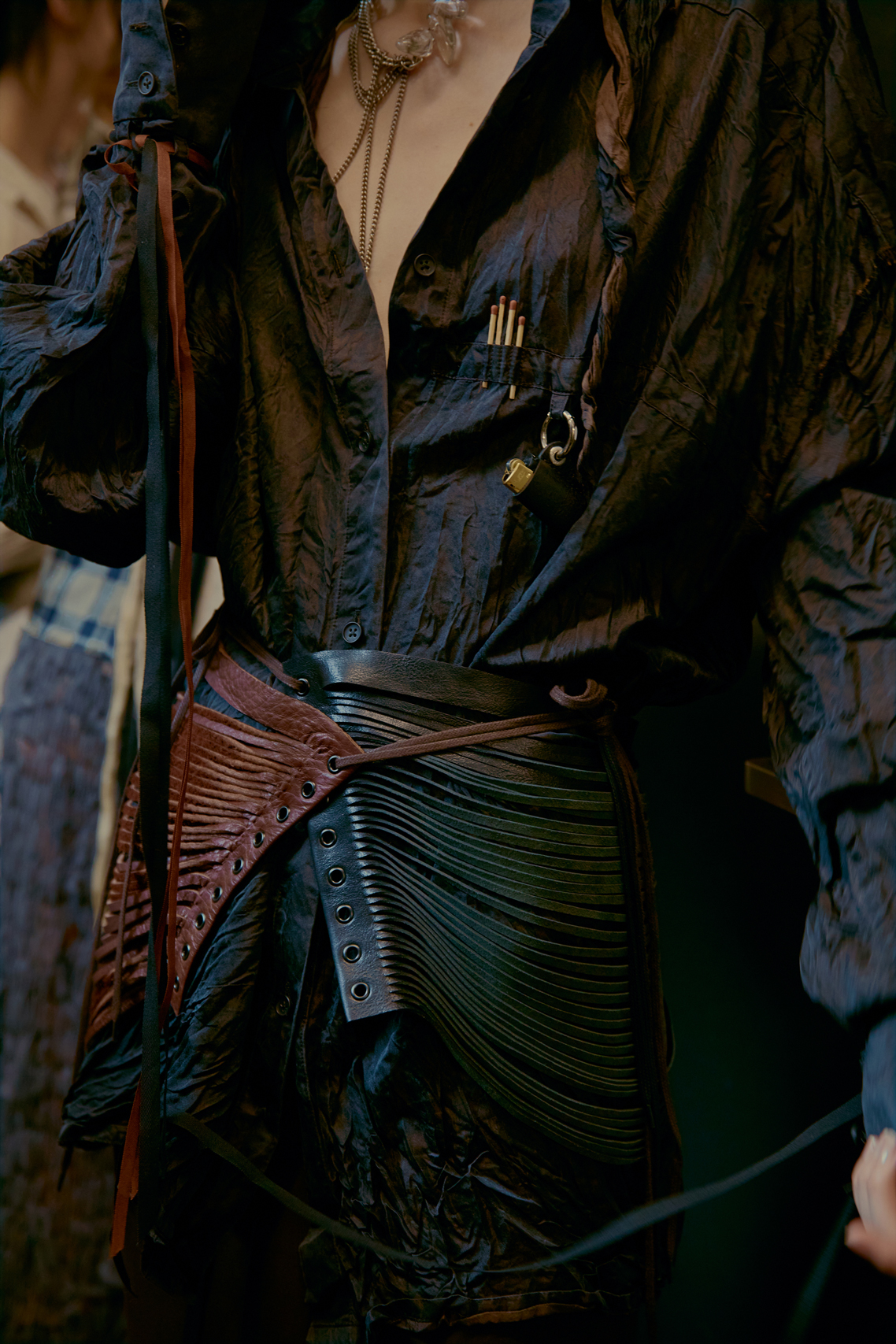
Julia Ballardt and Nico Verhaegen returned to Berlin Fashion Week fresh off winning this season’s Berlin Contemporary competition with ASHES, a quietly poetic meditation on destruction and renewal. Presented against a live score by Belgian composer Innerwoud, the collection found unexpected beauty in endings, transforming those familiar Berlin shades of charcoal, soot, ash, and scorched reds into romantic, tactile silhouettes. Draped tailoring, wrapped outerwear, and knitwear reconstructed from ribbons of torn silk and wool blurred the line between fragility and resilience. Leather belted accessories edged in raw finishes and jewelry incorporating smoky quartz, black tourmaline, and partially charred palo santo reinforced the collection’s ritualistic atmosphere. Rooted in the duo’s rural studio practice and unwavering commitment to craftsmanship, ASHES proved that some of the week’s quietest collections carried its deepest emotional resonance.
SELVA HUYGENS
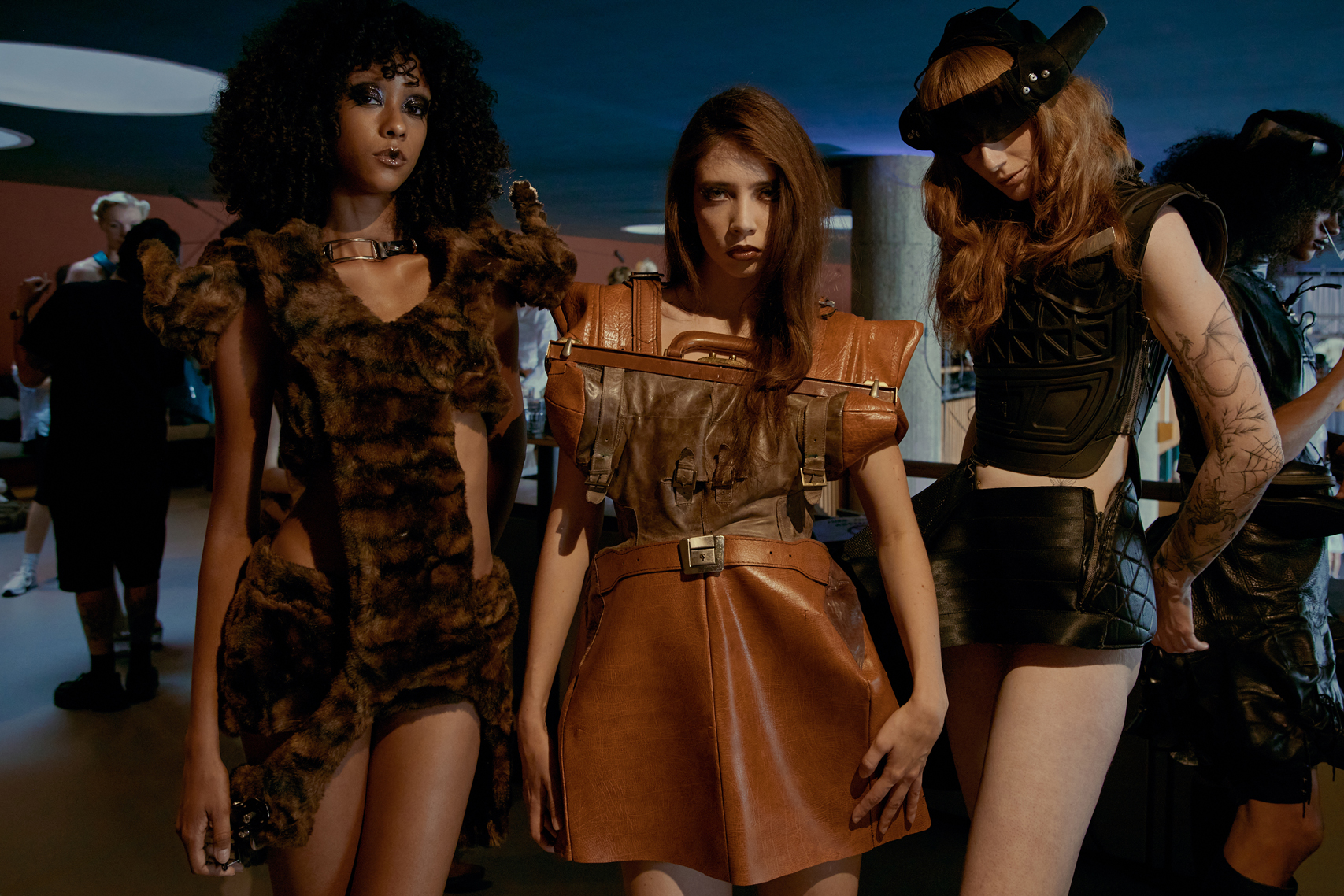
Already worn by the likes of Lady Gaga and FKA twigs, SELVA HUYGENS continues to demonstrate enormous creative ambition. With AEROSPATIAL, founders Cristian Huygens and Natalia Golubenko looked back to the utopian optimism of the Space Age, asking what became of the future imagined in the 1960s and ’70s. Unfolding in three acts—The Dream, The Collision, and Reconstruction—the presentation moved from psychedelic visions of space-age modernism to dystopian realities before arriving at a cautiously hopeful future built from the remnants of the present. Automotive parts became sculptural armor before softening into wearable forms, while more than 90 percent of the collection was constructed from upcycled, recycled, and deadstock materials, including discarded car components gathered across Berlin. The ambition of the concept was undeniable, and while the collection occasionally reached further than its execution, it also suggested a designer duo growing rapidly into their vision. The refinement that comes with experience feels well within reach, and if AEROSPATIAL is any indication, SELVA HUYGENS could be one of Berlin’s most promising talents to watch.
GmbH
Closing the week, GmbH celebrated ten years by returning to where it all began. Revisiting the original moodboards that launched the label, Benjamin Huseby and Serhat Işik reflected on a decade of reshaping Berlin fashion through tailoring, nightlife, activism, and diaspora. Styled by Ellie Grace Cumming and cast by Affa Osman, the anniversary show featured Julez Smith closing a cast that included Arca , Cosmo Suffert, Don Jackoghue, and Luthando Ngema, underscoring the community GmbH has built around the brand.