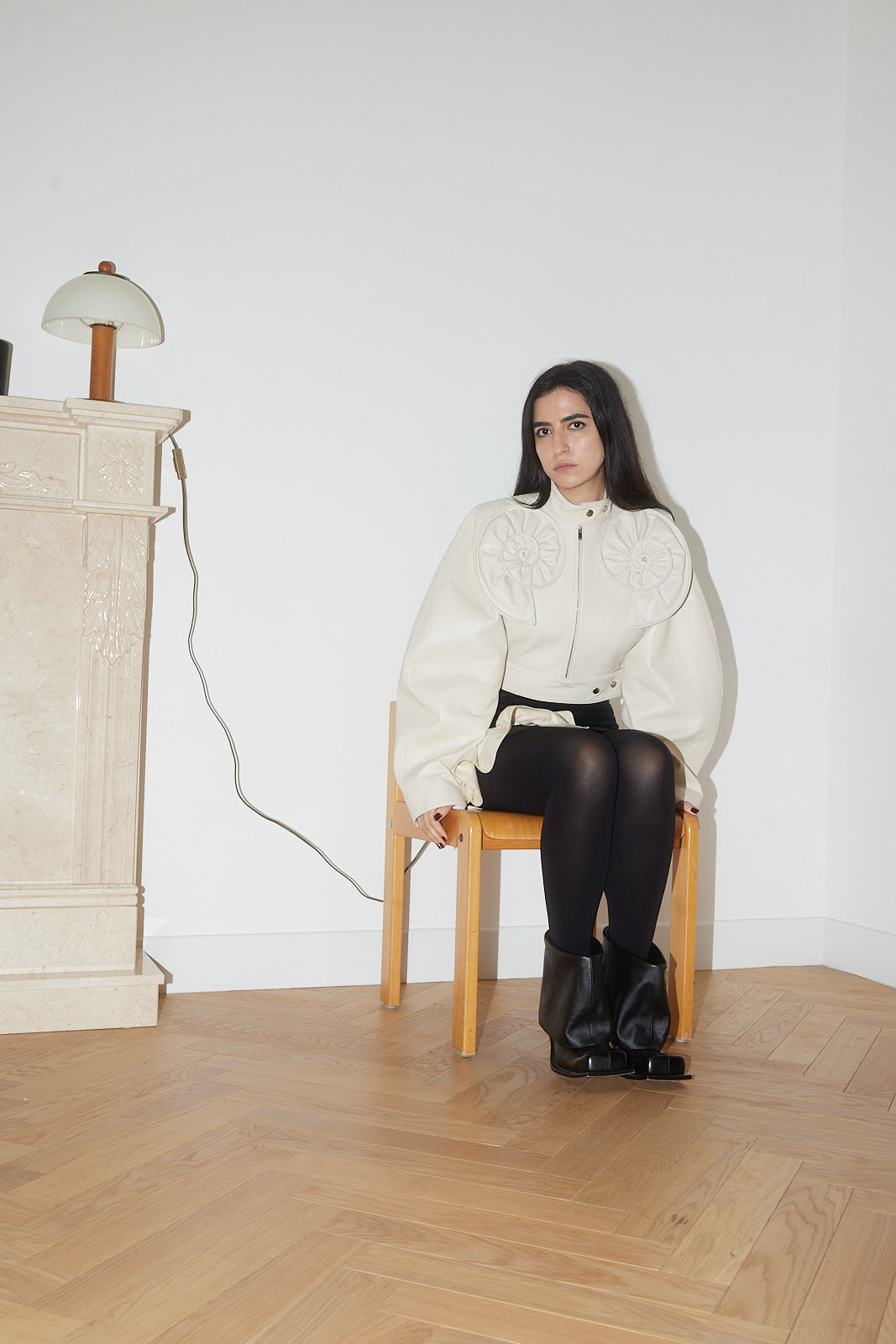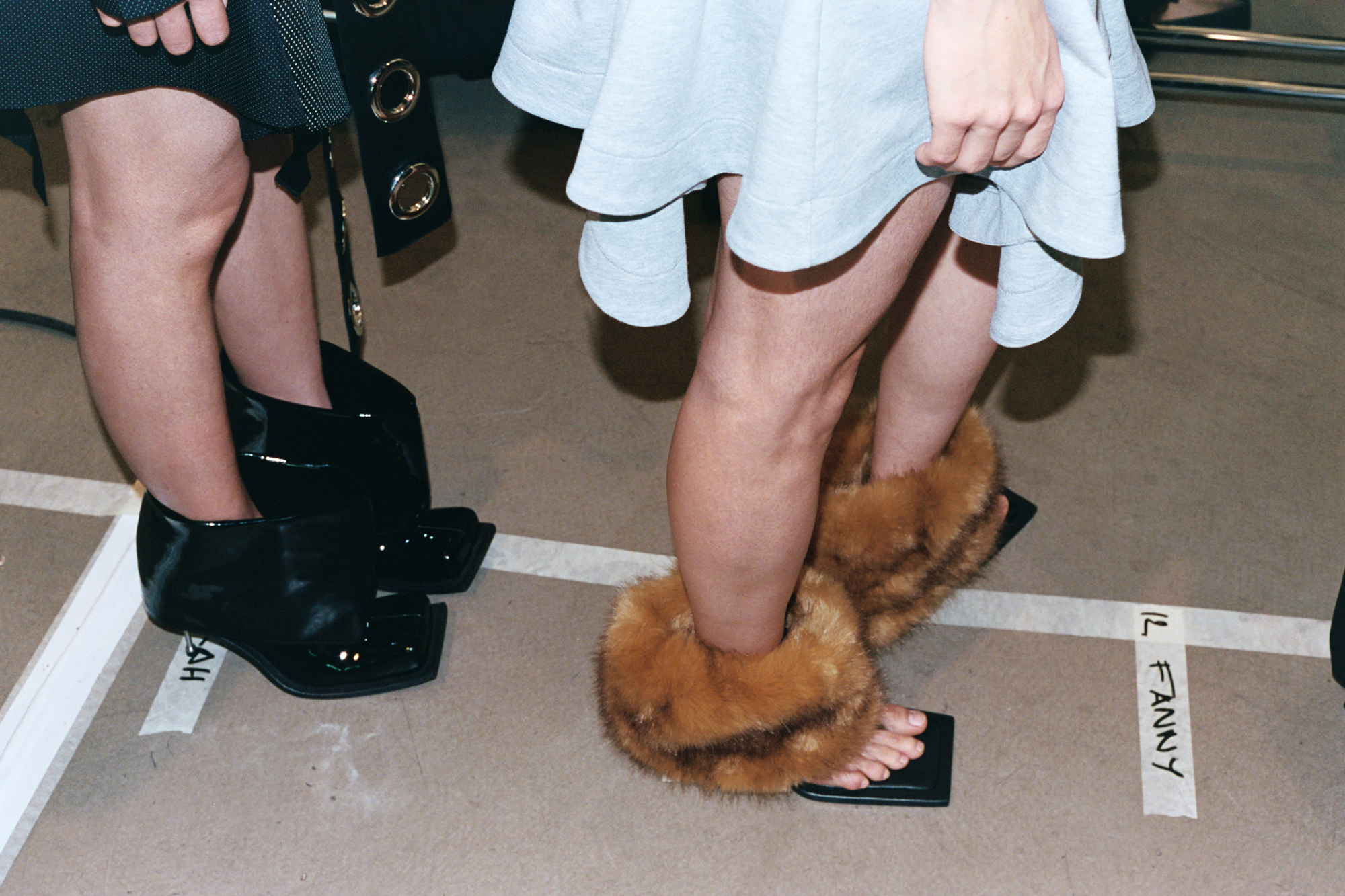
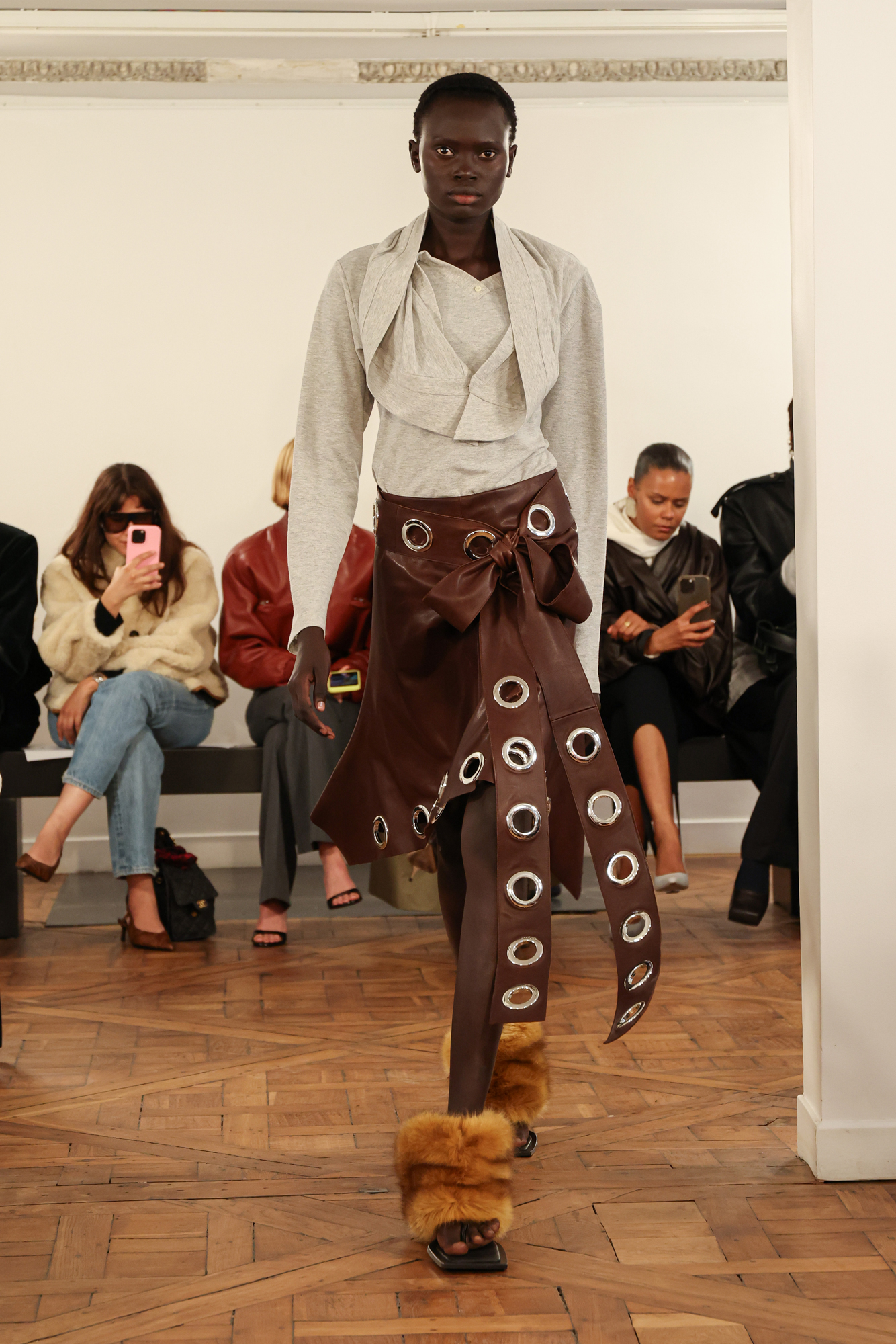
Centered on redefining the notion of modern nostalgia, designer Fidan Novruzova has created a fashion universe antidotal to pop culture’s fixation on the past. Melding modernity, uniformity, and innovation, collections from her eponymous label appear as time capsules from an alternate reality. In the world of FIDAN NOVRUZOVA, basic utility garments are playfully elevated with intricate shapes and proportions, alluding to the designer’s desire to merge domesticity with the bizarre. Launched in 2020, the namesake has garnered the approval of insiders and it-girls alike, with a philosophy rooted in the present and an impetus for discovery at the helm. Novruzova’s willingness to experiment and discover is evidenced by earlier seasons of launching sculptural footwear during the global pandemic. Nonetheless, within months of launching the brand, a conceptual design that originated as a graduate project at Central Saint Martins became an iconoclastic staple in unconventional footwear donned by the likes of Dua Lipa, Bella Hadid, and Chloe Sevigny.
Born in Moldova, Novruzova’s first introduction to the industry was fashion lifestyle channels and websites such as Blogspot, Lookbook.nu, and Fashion TV. Yet, she never thought working in the industry was a viable career path. At nearly 17, she applied to Central Saint Martins without knowing how to draw, sew, or drape, and upon acceptance, moved to London, and fully immersed herself amongst the lauded institution’s culture. There, she realized her talent for collaging and, as a result, gained a sense of color, texture, and proportions for her work. The aforementioned made her visual approach stand out among other designers and ultimately strengthened her brand identity. Newly minted as an Andam Fashion Awards Grand Prize finalist and an LVMH semi-finalist, the designer isn’t crafting for visibility, but evolution. Though born and produced in Moldova, FIDAN NOVRUZOVA is now based in Paris, with a storefront studio at Arts et Métiers in the 3rd arrondissement. Currently musing on her twelfth season of production, the independent designer spoke with Models.com contributor Nia Shumake on inspiration, the state of womenswear, and more.
You were born in Moldova to Azerbaijani immigrants in the 1990s. Considering Moldova gained its independence in 1991, what was the political and cultural climate like growing up?
Sometimes I wonder which aspect of my background I tap more into, but the 90s were full of change in Eastern Europe, and so while there weren’t many systems and structures in place, the wall was gone, and there was an influx of Western media and goods. Many countries in the post-Soviet region were gaining their independence.
You were introduced to fashion through TV– what particular shows were prominent in Moldova, and what were your personal favorites?
As a teenager, I would go on Blogspot and watched FashionTV. There wasn’t much access to magazines where I grew up. I don’t have the typical story where I was introduced to fashion through Vogue; I was not even entirely sure if I could make a career out of fashion. I always thought of fashion as a hobby, and when I had free time I would go on a deep dive and research. As time passed, I had to be honest with myself about fashion, and despite not having the skill set, I had to figure it out. Where there’s a will, there’s a way.
You’ve told SSENSE that in Chisinau, clothing was functional rather than fashionable. Growing up, how were you able to exert your self-expression/individuality?
I was taught the importance of looking good by my mom, aunts, and cousins. They were incredibly well-dressed women, and I observed them attending dinners and weddings. On my mom’s side, there were three sisters out of six siblings. There was a fashionable aunt and fashionable cousins, and they studied in Baku, the capital of Azerbaijan. Whenever I saw the photographs from their college years, everyone was so chic. I sometimes struggle with figuring out how to answer where my taste came from, but I think it came from within.
Let’s talk about your training at Central Saint Martins: when you were admitted, you couldn’t draw, sew, or drape. Was this formal education sufficient for your practice, or did you incorporate other resources? What kept you motivated at CSM as a new creative?
There were months of sleepless nights I spent putting together a portfolio with little to no direction. I didn’t have an art background, so I couldn’t do anything, but I was expressive. Leading art schools prioritize skill sets over ideas, but with Central Saint Martins, they’re open to students expressing their identity. However, starting and seeing everyone’s skills made it one of the most intimidating weeks of my life. I was truly confronted by everyone’s talent. At that moment, I learned to focus on my own work. I interned every summer and learned tremendously while attending CSM. My drawing and pattern-making skills improved, and I discovered that I was really good at collaging. At the time, I didn’t think it was a valuable skill, but it’s actually how artists can gain a sense of proportion, color, and texture. I had a schoolmate at that time who went through my work and told me what was good and bad. There were tons of nights when I stayed up late. But I simply tried, and it worked out.
Fidan Novruzova launched in the fall of 2020, during a global pandemic. What were your expectations for the launch during preparation? What adjustments had to be made considering limitations?
I never thought of it this way, but it’s the same mentality from when I was 17; not knowing what I was putting myself into helped me to just do it. The beauty of the way things were happening was that I didn’t need a big budget. It was an era of people starting projects because there was space to think and plan. I already had the shoes that were a part of my graduate collection, and there was a demand for them, but I wasn’t planning to sell them at the time. When I moved back home during COVID, I thought it was a perfect alignment to just try and see where things would take off. In three weeks, I had three wholesalers locked in, shoes lined up for production, and a direct-to-consumer pre-order. I launched my website and didn’t even know what direct-to-consumer was, but people were placing orders for a product that would take five to six months from a brand that existed for three weeks. Looking back, I’m grateful that my clients trusted me. The beauty of starting around that time is that I didn’t know any other way. I actually had to adjust more when everything returned to normal. In early seasons of the brand, everything was digital. When buyers started traveling, I needed to create something physical; There was more opportunity, more to explore within manufacturing, sourcing, sales, PR, and networking.
What sparked your move to Paris, and how do you manage between two studios in different regions of Europe? How does market research differ regionally, and how does that impact your branding?
I knew I was going to be in Paris when I was 17, and it was the first thing I did as soon as I graduated. I always dreamed of doing a placement year at Raf Simons there. When I had my brand in Moldova, I would move to Paris for periods of time. After I could travel post-pandemic, I was between Moldova and Paris the entire time. Now, the brand is based in Paris, and we only produce in Moldova. It was a natural progression. I didn’t feel the need to alter, compromise, or add anything to my vision due to the market. We have a community in Paris and throw events during fashion week where we celebrate new seasons through pop-ups and sample sales.
You tend to build collections instinctively—what does your creative process entail?
I create intuitively and it varies. Right now, People of the Twenty-First Century by Hans Eijkelboom is sitting on my desk and it’s a great documentation of the modern uniform. I took it out to show our interns because it provides implications on garment identities and what wearing clothes is all about. When it comes to historical references, I end up with references from the 1920s and 1980s. For the coming season, we’re looking into female photographers from the 1920s and 30s. I’m inspired by art, theater, older designers from that era, and movies. I usually gravitate towards the work of a female photographer or a female artist.
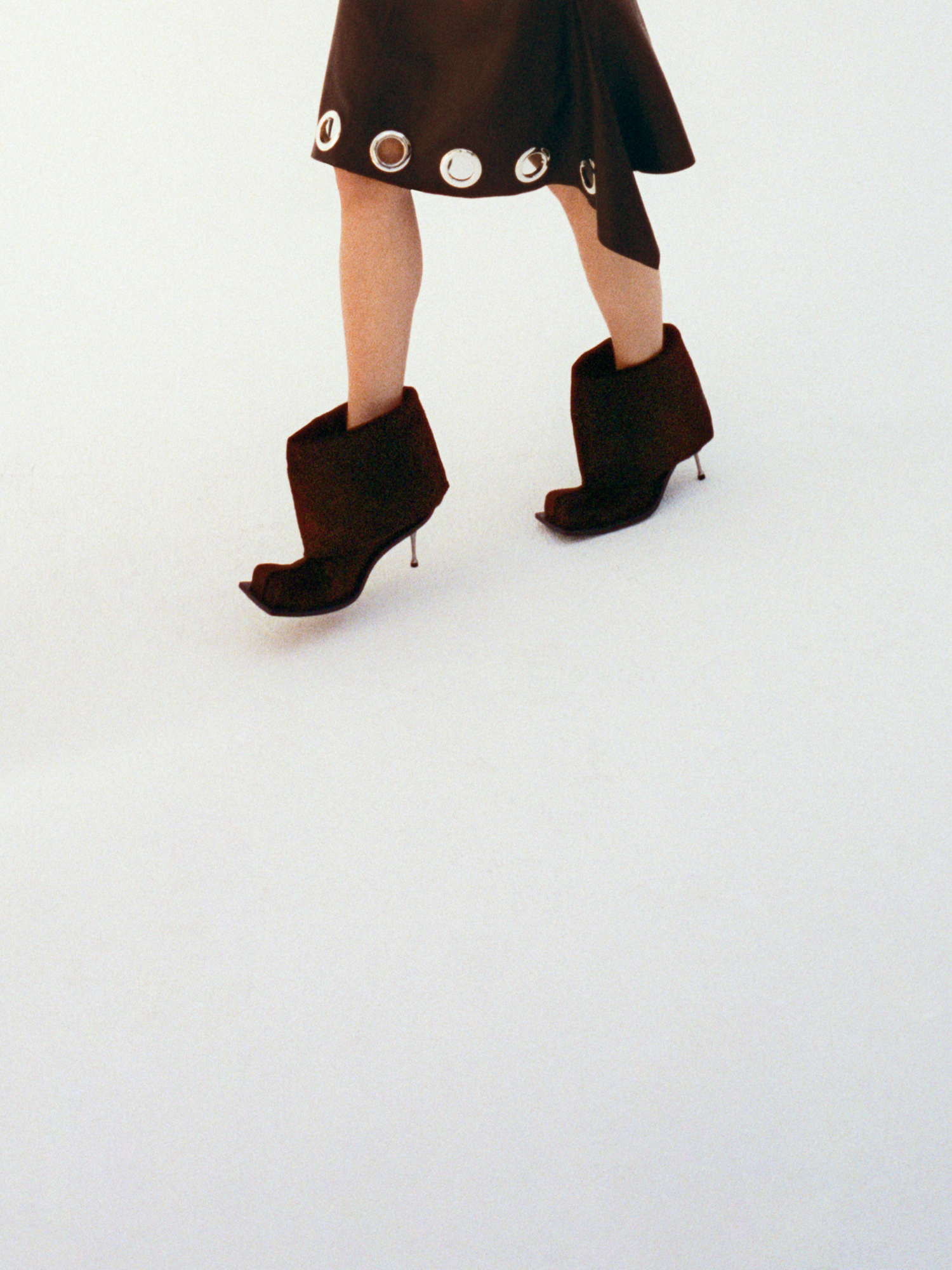
As a woman designing for women, could you speak more about the importance of seeing yourself as a muse, and in retrospect, searching for yourself in your muses?
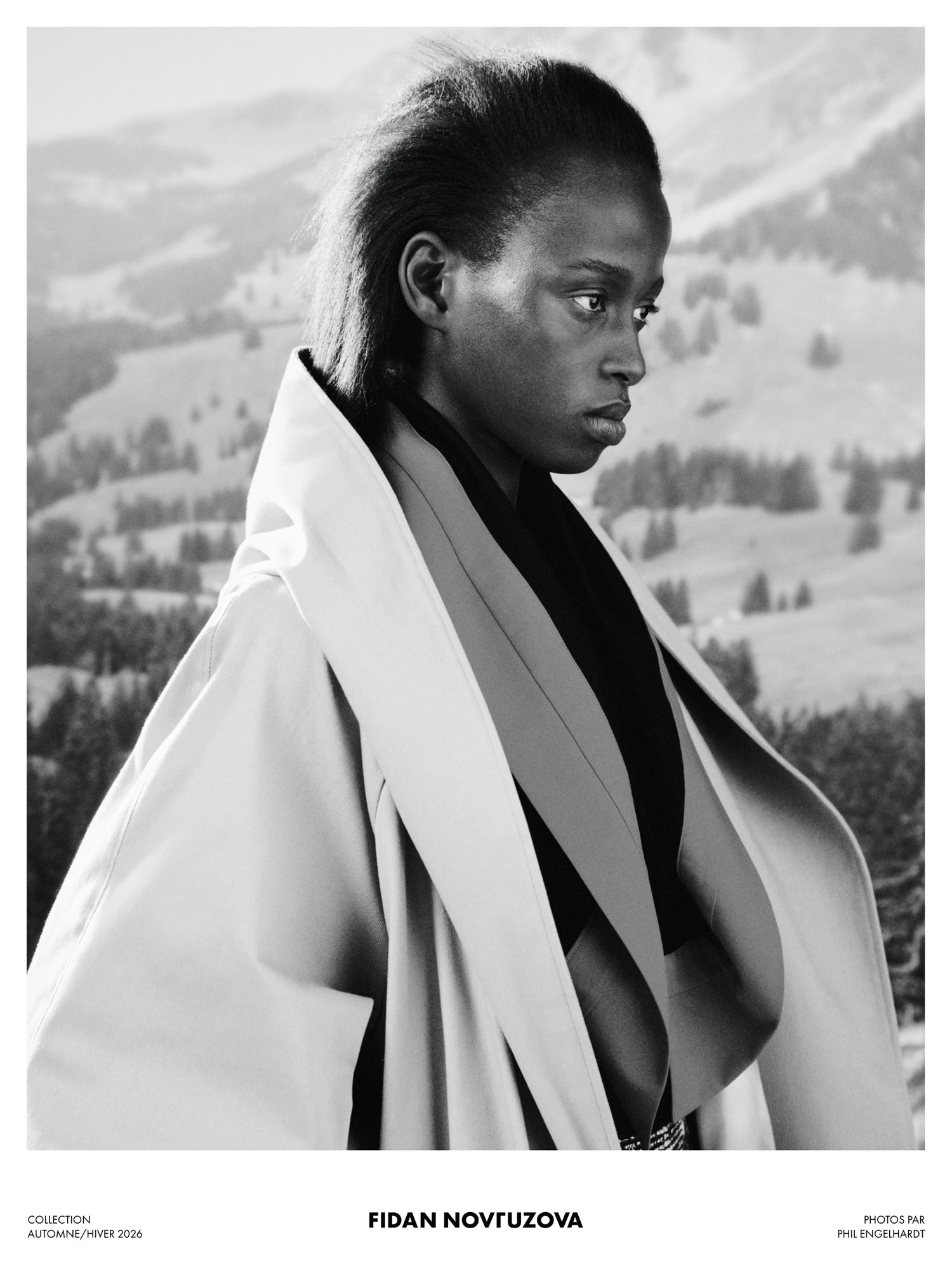
In my Autumn/ Winter 2026 Collection, I was inspired by the artist Tamara de Lempicka drawing portraits of affluent women of her time. When you look at the juxtaposition of Tamara and her portraits, they simultaneously also look like her. I can’t imagine that a female designer can disconnect herself from the final outcome of what she’s doing. For the female designers, I know we all collectively can find ourselves in what we create.
Fidan Novruzova initially became identifiable through footwear. What was the process behind creating the Haava boot, initially ideating this product, and how have perceptions of your brand informed your creative process now as a result?
I started my brand when I was 25 and I was growing up alongside it. When that happens, your needs change, and the things I wanted to put on change. The community that started small kept on growing, and it became a combination of all these things that just like influences your process alongside the classic creative process. I really cared about the life that a piece of clothing could create and its purpose alongside how to wear, style, and make it look flattering, depending on the occasion. It fueled a push from extreme editorial, ready-to-wear to you know, a product that was on brand, creative, and functional for everyday wear.
What was it like collaborating with a footwear brand like ASICS? Is collaboration as a creative essential pertinent for your business, and what makes a collaboration feel worthwhile or do you prefer working alone?
It was a dream of mine to collaborate with a sports lifestyle brand and I was surprised to learn that the majority of the ASICs team were incredible women. The collaboration was outside of my comfort zone because I’ve never designed a sneaker, but I loved the challenge. It was nice to merge our communities and to get visibility from a community that actively buys into every new sneaker release. ASICS was a perfect scenario for me because it aligned with my values.
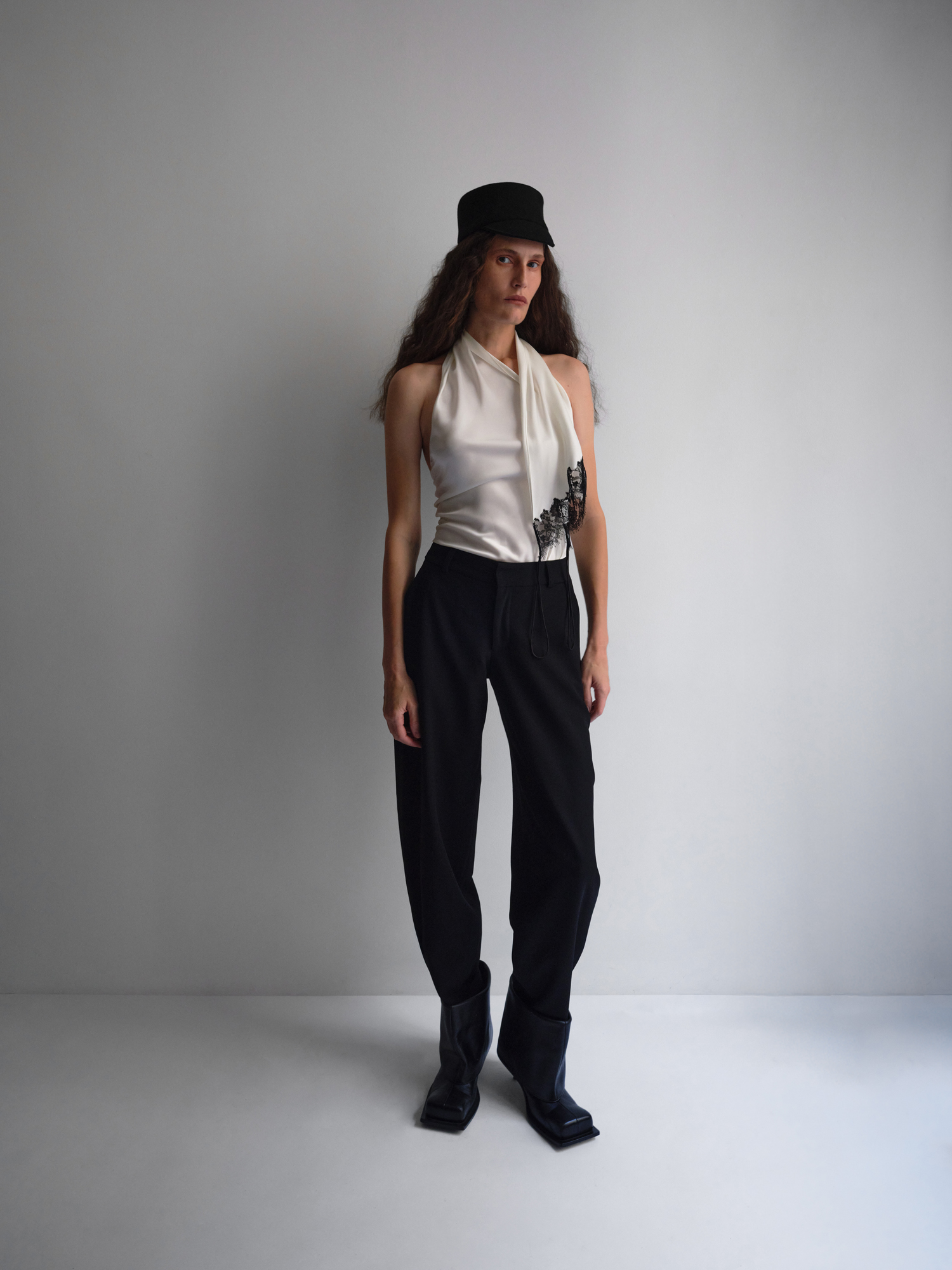
Which designers have been influential to you as an emerging designer? Is there a trajectory you would like to follow?
I love Nicolas Ghesquiere’s work at Balenciaga, the 1980s and 1990s collections from Yohji Yamamoto, and Karl Lagerfeld’s Chanel. I revisit from time to time, but there’s always something new. He’s bold, playful, and iconic.
What excites you about womenswear at the moment? What are you hoping to contribute?
It makes me happy seeing more women at the helm of major fashion houses. It’s easy to get nostalgic and dismiss what’s keeping fashion alive, but there are so many exciting womenswear brands out there. I feel inspired to continue and grow in what I’m doing.
How do you, as a designer, acknowledge history while also innovating at the same time?
Since the beginning, my brand’s motive has been redefining the notion of modern nostalgia. It’s all about a balance for me, remembering, but also being present. Constantly diving deep into nostalgia might be a bit counterproductive long-term because that’s not how growth happens. I’m now on my 12th season, and I haven’t missed a single season, now at five and a half years old. Now working on my 12th season, there’s an evolution of me as both an entrepreneur and designer. I’m now an independent brand that is still emerging so my focus isn’t on being seen and known but rather acknowledging that it’s known and figuring out how to evolve.
At what point did you realize your brand was a cult favorite?
It’s hard to pinpoint one thing, but it’s nice seeing people, whether they’re my friends, people on the street, or people online, buying into the world I’ve created. It’s also really nice seeing celebrities and VIP appearances. There’s so much love from people.