Behind the Image is an ongoing MODELS.com series taking a more personal look at both established and emerging creative talent.
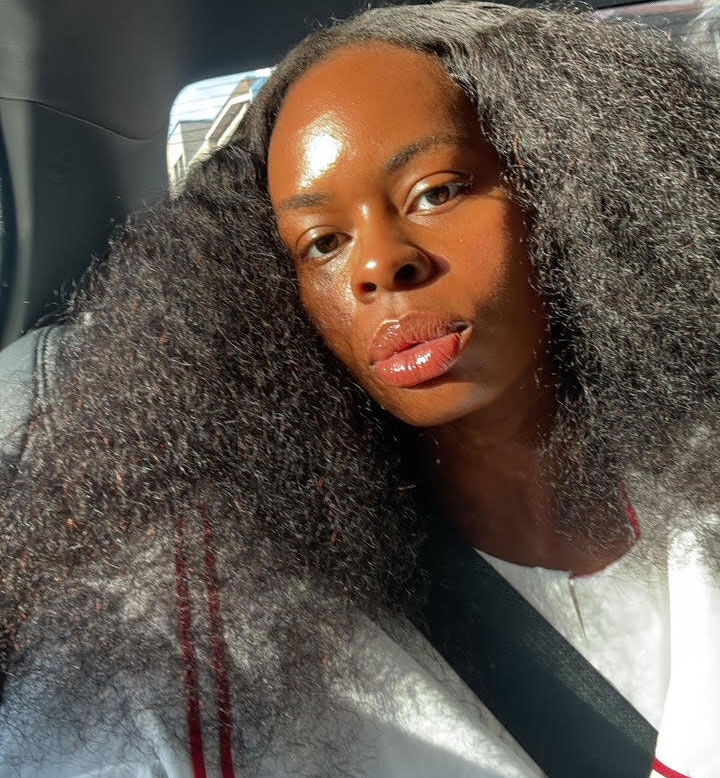
Dione Davis | Image courtesy of Born Artists
Dione Davis, Stylist
Hometown: Mobile, Alabama
Based In: New York City, New York & Paris, France
Representation: Born Artists
What sparked your interest in styling, and was there a defining moment that made you pursue it professionally?
I always loved clothes, but growing up in Alabama, I didn’t really have access to fashion outside of vintage, so I learned to get creative through limitation. Honestly, this career fell into my lap through a chance encounter more than a deliberate pursuit. I was working retail when a stylist reached out asking me to assist on an editorial shoot, but she had actually mixed up the contact. It was a case of mistaken identity that somehow worked out perfectly.
You trained extensively in classical ballet, from the Vaganova method to Balanchine-influenced technique. How does that foundation inform the way you think about silhouette, proportion, and structure in your work?
I’m extremely body-focused when I style. Even when I’m working with layering, unusual silhouettes, or strange proportions, there’s still a line being created that has to make sense to me. When something feels off, it’s usually because the lines of the body are being interrupted or cut off in the wrong place. I’m also very conscious of how the body exists in space in relation to the garments. Movement direction ties into everything for me because it supports how a garment is experienced on the body.
How would you describe your work? What’s your trademark?
I like to play with restraint, whether that’s restraint in color palette, styling, or accessorizing. My work has been described as strange elegance. I never like something that feels too pretty or relatable. I think the most stylish thing in the world is to be unpredictable. I like the wrong shoe, I like an inappropriate accessory. My trademark is also clothing used outside of its intended purpose. I love to manipulate clothing to turn it into an entirely different piece, like a sculpture.
You’ve worked across styling, creative direction, and movement direction. How does thinking about the body in motion shift the way you build out a look?
It really depends on what I’m trying to communicate in the image. When I’m focused on complicated layering, I don’t think about movement much at all. I’m more interested in how the eye moves through the photograph than how the model moves physically. I know some models don’t love feeling limited, but with more intricate styling, precision matters. On the flip side, when a look has more freedom, I like to see how the model intuitively moves before giving too much direction. It’s a collaboration between everyone in the room, and sometimes a model will give me something I never would have thought of. But if the creative is hyper-specific, I’ll give very detailed direction.
There’s been a resurgence of ballet references, from Ferragamo to Simone Rocha. What has stood out to you in the way ballet is being translated into fashion right now?
Ballet feels much more polished in fashion than it actually is in reality. Ballet is sweaty, messy, chaotic, and dramatic behind the scenes. The representation of ballet in fashion reminds me a bit of how Indie Sleaze has been reinterpreted now. The current references feel cleaner and more polished than their origins. I came of age during the Indie Sleaze era, and the kids referencing it now are taking showers. Balletcore, to an actual dancer, looks more like that iconic Harvey Edwards image: feet in fifth position, torn warmups worn for years, tape on the shoes. I enjoy how ballet is being interpreted in fashion, but I’d love to see a more hyper-realistic version. I want to show the shadow side of ballet.
What’s your process for conceptualizing a look? Do you start with references, emotions, or something else entirely?
I think of styling as a form of self-indoctrination. I have a set of internal rules for what feels right to me, and depending on the project, I either want to completely subvert those instincts or refine them further through self-reference. Most of my references outside of myself actually come from outside of fashion. I love old films and the way people used to present themselves. People had wardrobes for occasions and lives that felt fully realized. That’s slowly disappearing now. Editorial shouldn’t feel hyper-realistic to me because we’re still selling fantasy. I always want the subject to feel like they’re going somewhere, even if that “somewhere” doesn’t exist in real life. I also really strive for a look to feel complete. I work until the look makes me feel something. Part of it is being neurodiverse, but I do think there is a right or wrong for me personally as a creative, even if it doesn’t make sense to others. I feel it in my body when a look is finished. I also get a lot of my ideas in my dreams.
What’s been the most challenging moment in your career, and what did you take away from it?
I think navigating success is something people rarely talk about. It can be lonely in a landscape of over saturation. It’s hard to celebrate myself when people are struggling in this country. Everyone talks about how to become successful, but very few people talk honestly about what happens after. A lot of it feels like fumbling in the dark, and getting what you want can be painful at first. Realizing I can be in a much better place than two years ago, but my life doesn’t feel dramatically different, has been hard.
The hardest thing for me has been navigating visibility and figuring out what boundaries make sense for me now that I’m more publicly known. Coming from ballet, I’m used to a culture where people only really see the finished product, not what’s happening behind the scenes, and I still believe in maintaining some separation there. Social media has complicated that. I take breaks from it pretty often because I need space to navigate it in a way that still feels healthy for me.
What advice would you give to aspiring stylists looking to break into the industry?
You need to be curious about everything, not just fashion. You can memorize every look number from every runway season and still not be a good stylist. A good stylist responds to culture and understands how to make looks that feel new. It’s hard to make things feel new now, but really pushing boundaries is so important. Comparing yourself to other people is also one of the fastest ways to lose momentum. Your focus should be on developing your own taste because no one else has your life, perspective, or backstory.
People always ask me how to develop a point of view, and I honestly think it only comes with time. Assisting is important, but you also need to give yourself opportunities to build your own stories and images. It’s expensive and difficult, but finding collaborators willing to grow with you is essential. I really agree with Michael Jackson’s idea that creativity is collective. If you sit on an idea too long, someone else will execute it. I don’t think there’s only one person meant to do something creatively. There are many people capable of arriving at similar ideas, so confidence and execution matter just as much as inspiration.
Who’s one to watch?
I’m usually most interested in stylists whose instincts are completely opposite to mine because I can appreciate the work without projecting what I would do differently. I really admire the work of Dominick Barcelona and Becky Akinyode. Their instincts are very different from my own, and the results are beautiful. Also, Michele Andrews has a similar ethos to mine that is executed very differently, and I love the contrast.
Selected Work
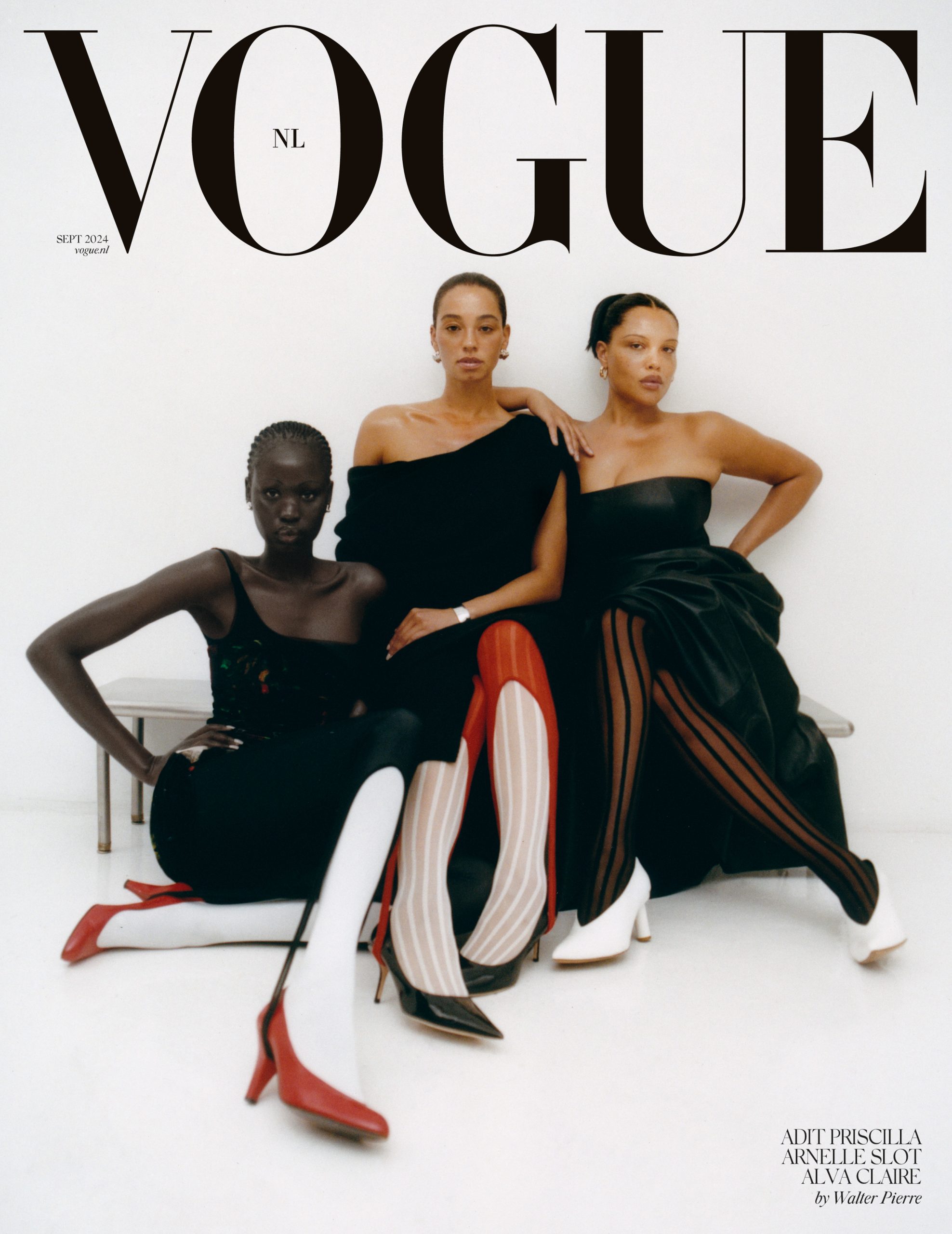
Adit Priscilla, Arnelle Slot, Alva Claire by Walter Pierre | Image courtesy of Born Artists
Vogue Netherlands September 2024 Digital Covers
This shoot is part of a triptych in my mind because Walter Pierre and Laura Yard were visiting NYC for two other shoots, so we did three in a row in one week. It was a marathon week of creativity with such solid teams. This was my first Vogue cover, and it still gets me work to this day. I really invested in this week of shoots, and this is when my career pivoted from chasing to attracting.
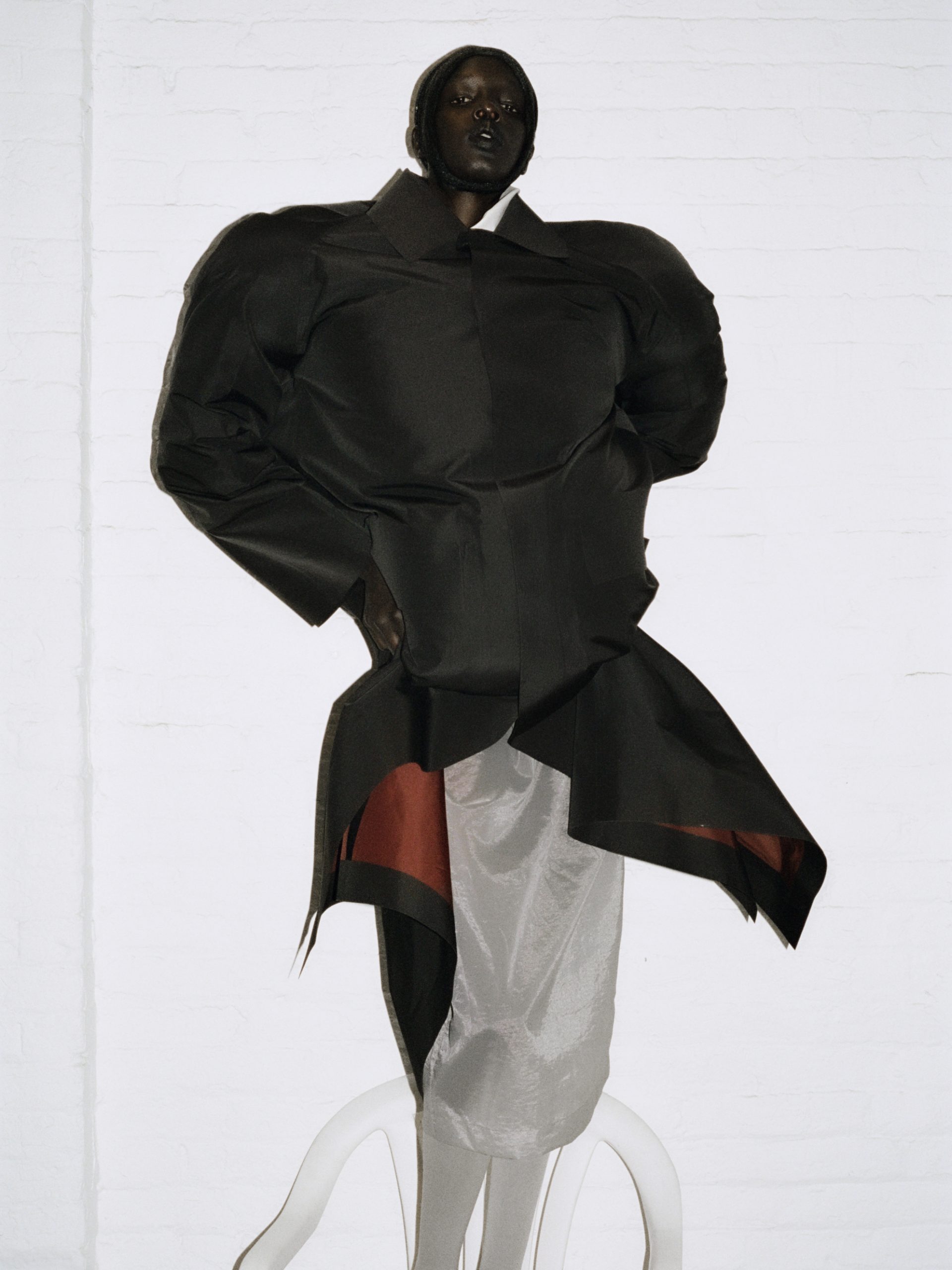
Akuol Deng Atem by Walter Pierre | Image courtesy of Born Artists
Shapeshifter for Heroine Magazine
This shoot was one of my favorites to date, and it’s when I started my obsession with volume. I had been pretty minimal and restrained for a while, and I pushed myself out of my comfort zone. Walter (Pierre) wanted to cancel this shoot because the key looks hadn’t arrived. I’m glad he trusted me enough to pull this off. I pulled some of my pillows and balloons from the dollar store to make the volume myself. I don’t believe in problems, only solutions. I was crying to DHL the night before, then pulled myself together.
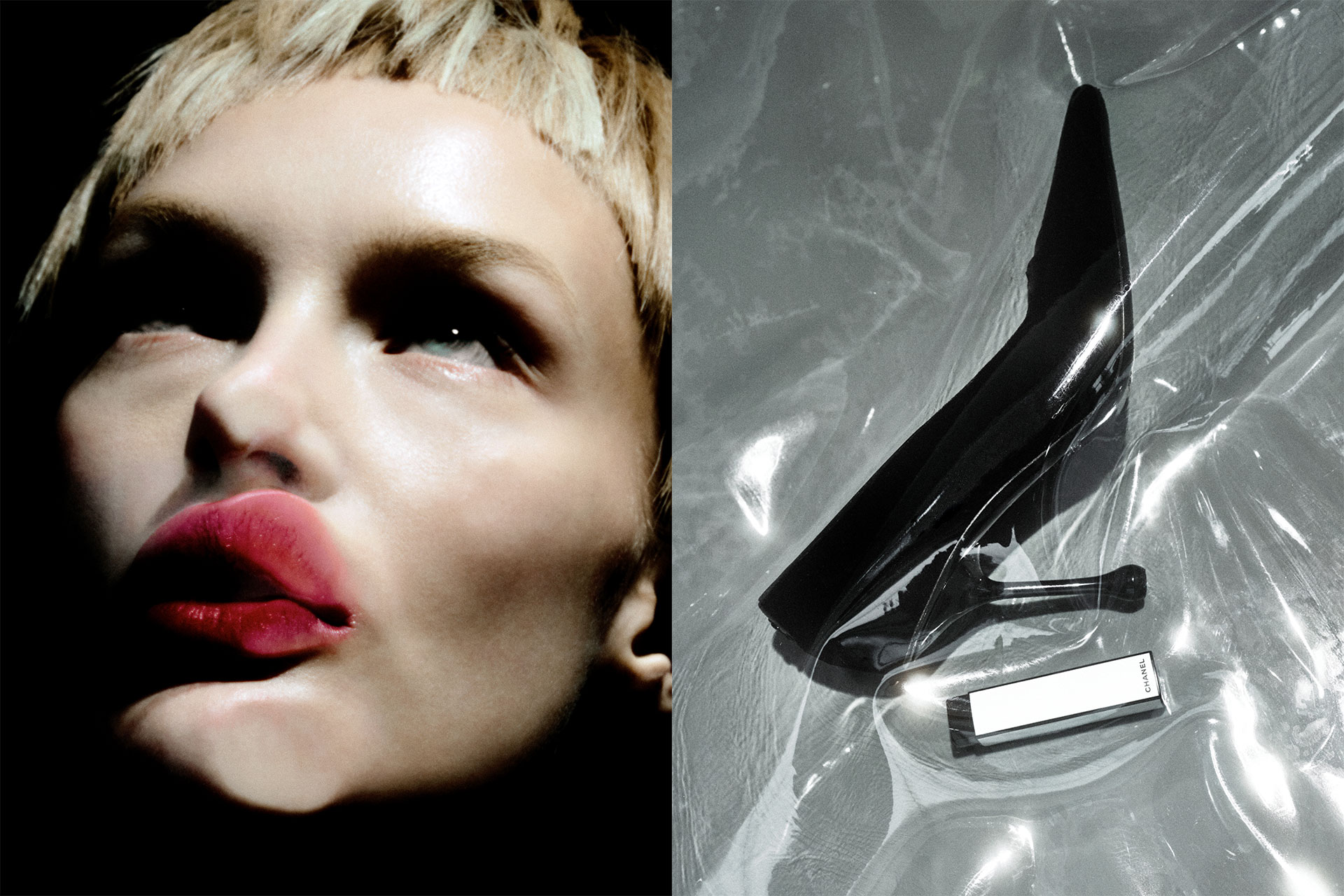
Kris Grikaite by Walter Pierre | Image courtesy of Born Artists
Love Want Magazine December 2024 Beauty Cover
Our cover got bumped from September to January 2025, which was a shame because I loved this shoot so much. I don’t even have a copy of this in print, because it got stolen outside my house. I was really set on having a kiss print shoot. I’m including two here because the prop styling turned out exactly how I wanted in my head, thanks to Lousia (Fulkerson), our set designer, who used my vacuum sealer to pull this off. Walter (Pierre) shot it so beautifully. The team was so strong, and this was shot the same week as the other two. It really made me trust my instincts more as a creative director. Ledora (Francis) really made the wig exactly like I had in mind, which was a reference to Mila Jovovich playing Joan of Arc.
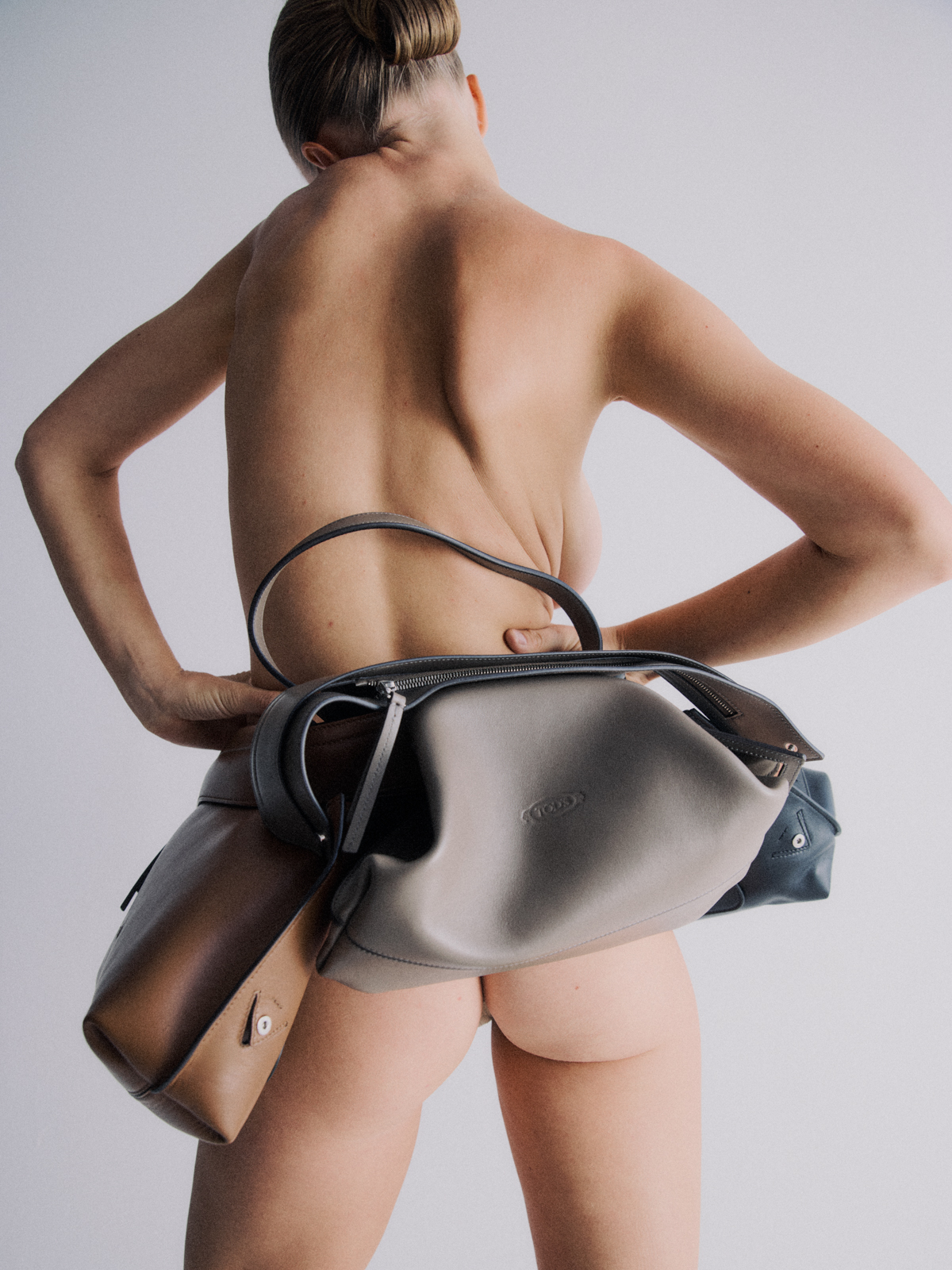
Lou Schoof by Nagi Sakai | Image courtesy of Born Artists
Pulchritude for Carnale Room
I am a sucker for a challenge, and I’m starting to realize how I sort of enjoy pushing myself off of a tree, a bit like a baby bird. Nagi (Sakai) is such a brilliant photographer, and I really trusted him with my first try at something a bit more erotic. It was done so tastefully and really felt like me.
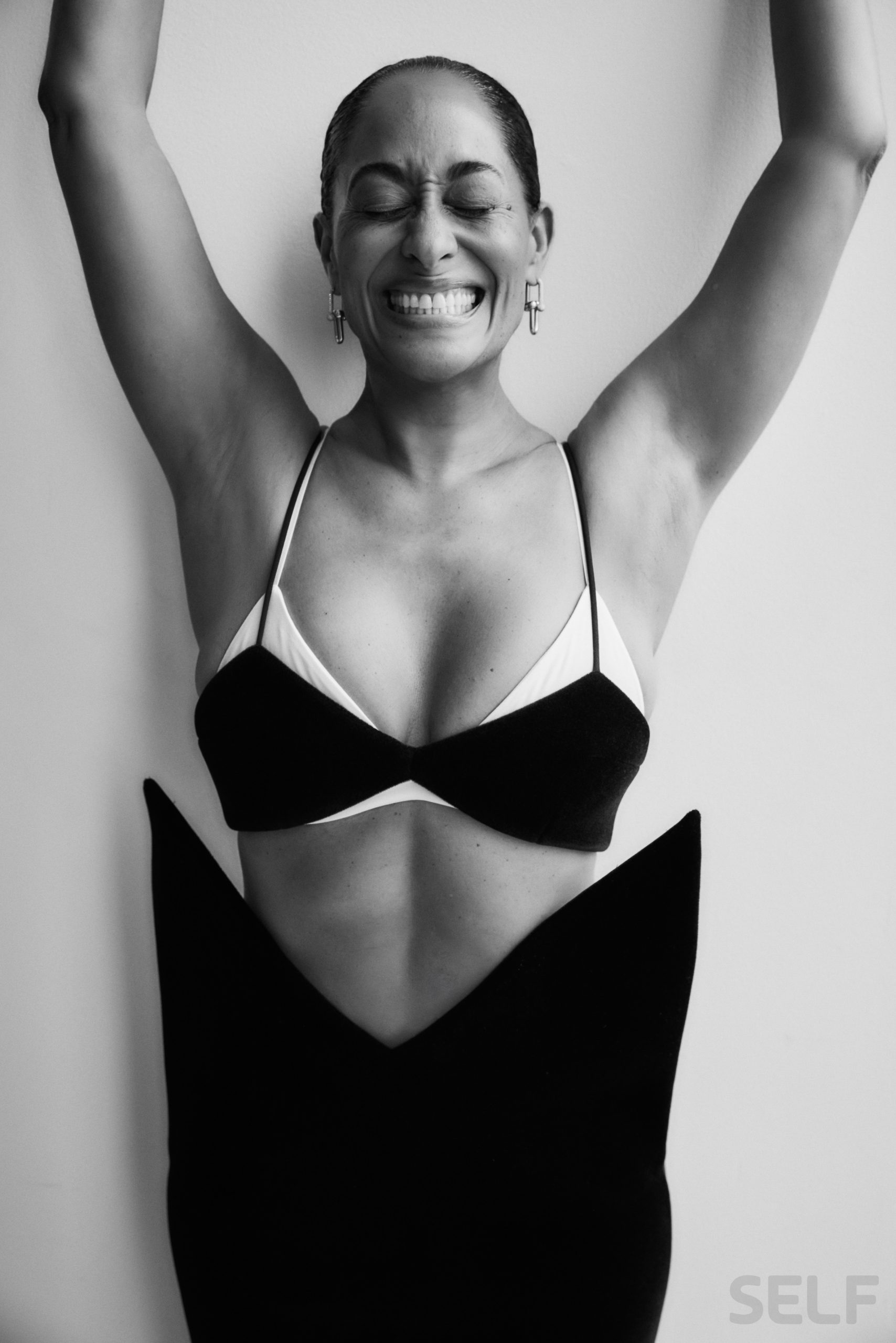
Tracee Ellis Ross by Heather Hazzan | Image courtesy of Born Artists
Tracee Ellis Ross for Self Magazine
Tracee (Ellis Ross) is the blueprint and such an icon, making her the ideal celebrity to shoot. She has real taste and range as a model. We really wanted to focus on her figure and her ability to move. She is so in her body, more like a stage performer than a TV and film actress. I’ve had the pleasure of working with her using most of the same team for her own company. Tracee is not running a celebrity brand; she’s a very hard-working and decisive Creative Director. Seeing her wear multiple hats on set is so inspiring as she runs creative and is a talent at the same time.